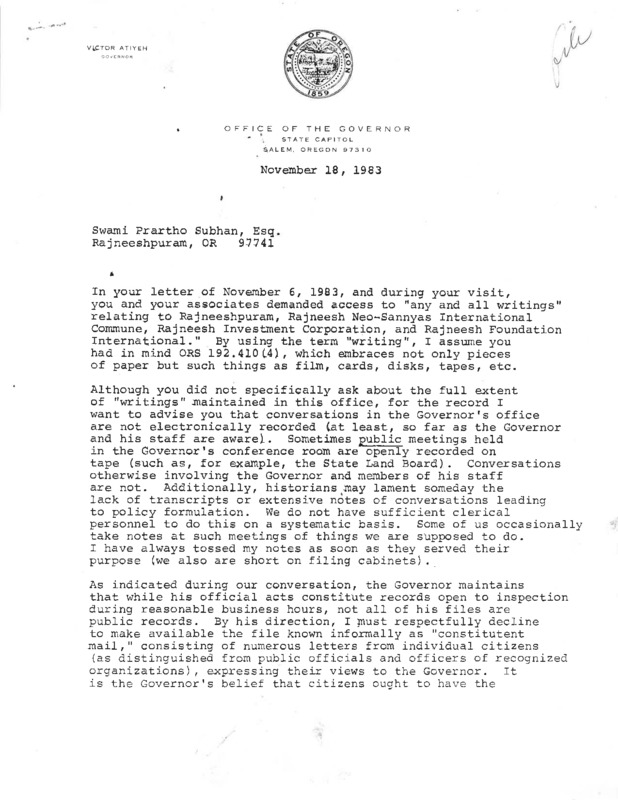
Letter to Swami Prartho Subhan, attorney for Bhagwan Shree Rajneesh from Bob Oliver, Legal Counsel to Governor Atiyeh. Oliver responds to their request under public records laws for access to all of the Governor's files and written information involving the Rajneesh. Oliver denies the release of these documents, including a list of memoranda between himself and Governor Atiyeh, citing various laws that protect them. This item was a part of the papers of Bob Oliver, Governor Atiyeh's legal counsel.
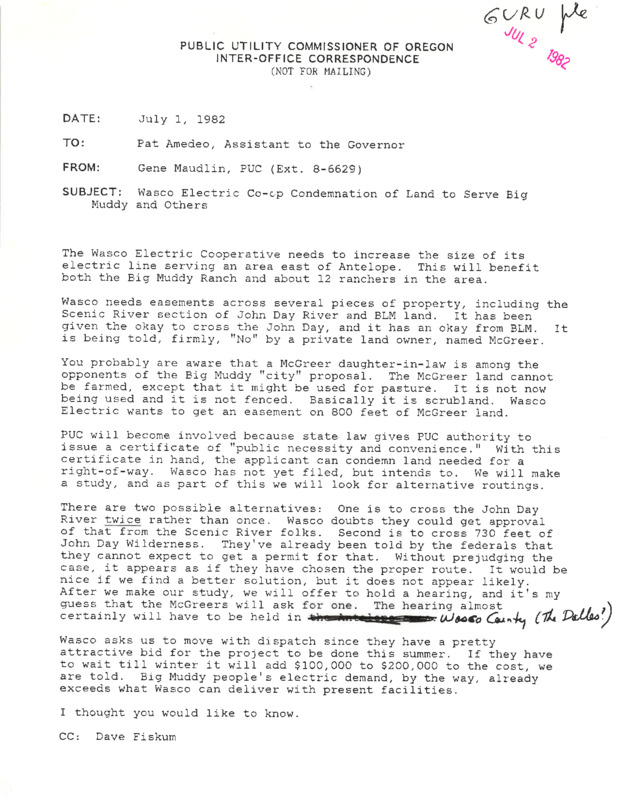
An inter-office letter from Oregon's Public Utility Commissioner, Gene Maudlin and the Assistant to the Governor, Pat Amedeo. Maudlin explains that the Wasco County Electric Cooperative will be forcibly condemning certain land to allow additional electric lines supplying electricity to Big Muddy Ranch. Big Muddy Ranch was the former name of the land that was the site of Rajneeshpuram, a community of followers of Bhagwan Shree Rajneesh. Maudlin notes that their use of electricity 'already exceeds what Wasco County can deliver with present facilities.' This item was a part of the papers of Bob Oliver, Governor Atiyeh's legal counsel.
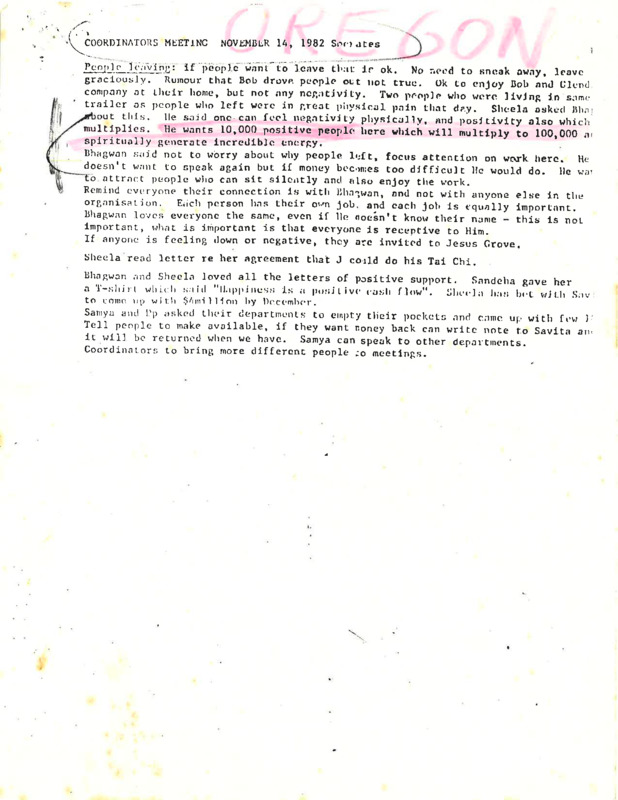
Photocopied minutes from the meeting of Coordinators at the Rajneesh organization near Antelope, Oregon, on November 14, 1982. The minutes provide information about developments in the Rajneesh community. Included are volunteer requests, proposals, reminders regarding upcoming events and proper land use, as well as general announcements within the Ashram. A highlighted and circled section notes that Bhagwan Shree Rajneesh 'wants 10,000 positive people here which will multiply to 100,000'. This item was a part of the papers of Bob Oliver, Governor Atiyeh's legal counsel.
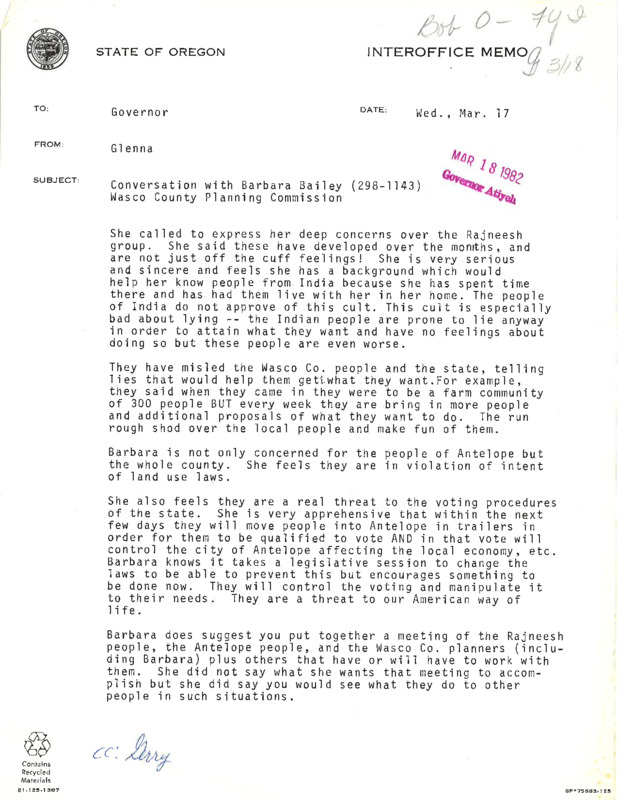
A memo from Governor Atiyeh's secretary Glenna Hayden describes a conversation with Barbara Bailey from the Wasco County Planning Commission. Bailey expressed her concerns over the Rajneesh and their growing control over the county. She expresses to the governor that a meeting should be held between the Rajneesh, the Antelope people, and Wasco County planners. This item was a part of the papers of Bob Oliver, Governor Atiyeh's legal counsel.
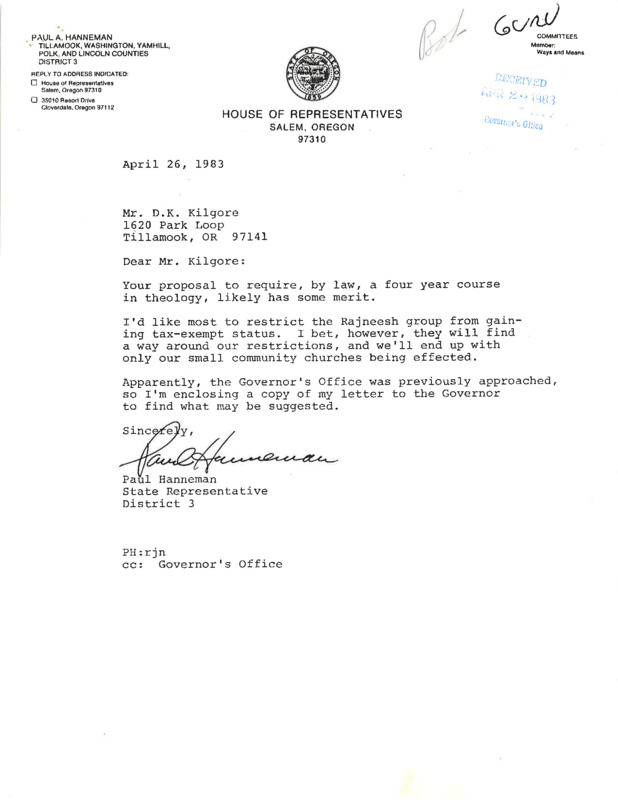
A letter by Oregon Congressman Paul Hanneman to an Oregon citizen from Tillamook, D.K. Kilgore. Hanneman responds to Kilgore's letter, which is included as an attachment, in which he suggested legislation requiring all clergy to complete a minimum amount of schooling in order to receive tax exempt status. Kilgore argues that this would counteract the activities of the Rajneesh followers near Antelope. Hanneman responds to the proposal and suggests other actions. This item was a part of the papers of Bob Oliver, Governor Atiyeh's legal counsel.
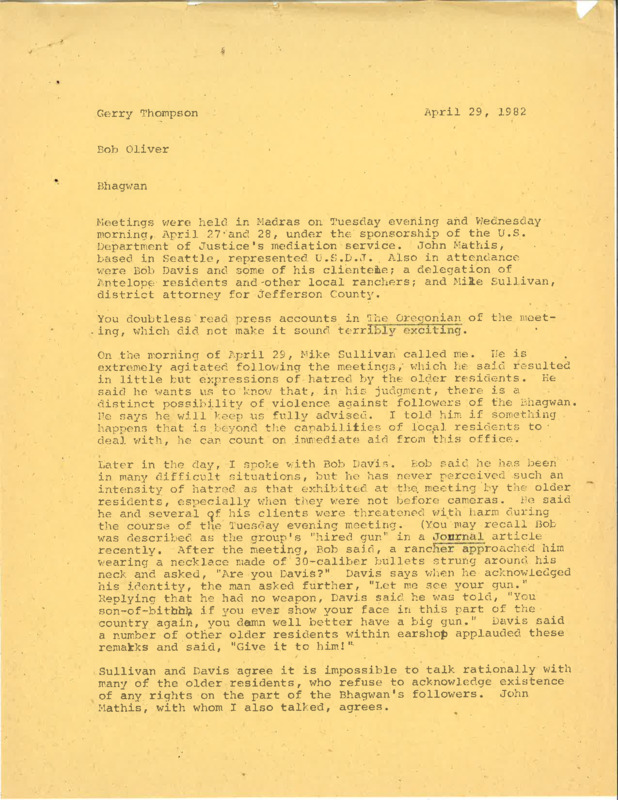
A memo to Governor Atiyeh's Chief of Staff, Gerry Thompson, from Bob Oliver, his legal counsel. Oliver recounts the events of a meeting regarding the Rajneeshees with residents of Antelope, as told to him by Jefferson County district attorney Mike Sullivan and Bob Davis. Both individuals witnessed heightened aggression and were threatened. Bob Oliver closes the letter by stating that there will be another meeting in The Dalles with the district attorney for both The Dalles and Antelope. He also expresses that Governor Atiyeh should consider potentially making a statement promoting safety and an amicable solution. This item was a part of the papers of Bob Oliver, Governor Atiyeh's legal counsel.
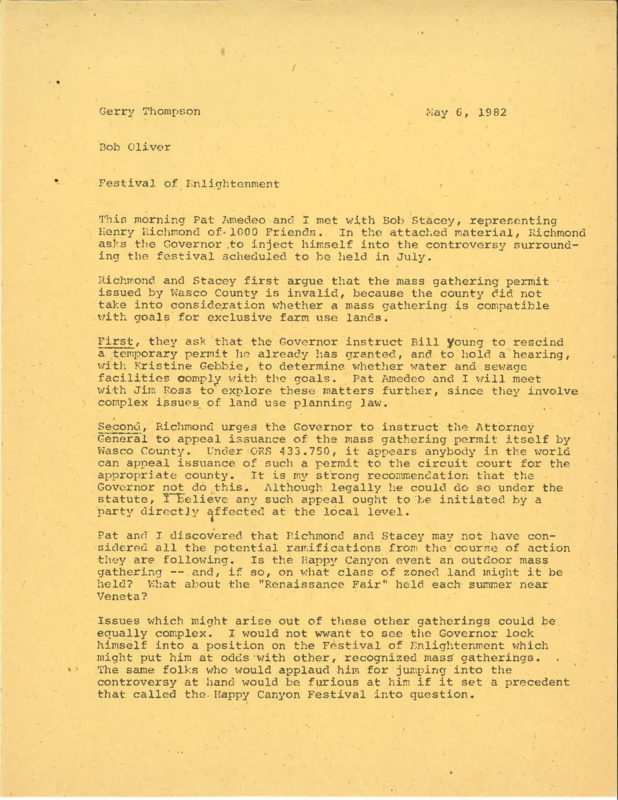
A memo from Governor Atiyeh's legal counsel, Bob Oliver, to Atiyeh's Chief of Staff Gerry Thompson. It covers the demands of Henry Richmond and Bob Stacey on behalf of the anti-Rajneesh group, 1000 Friends of Oregon. The 1000 Friends of Oregon believed that Governor Atiyeh ought to instruct Bill Young to rescind the permit given to the Rajneesh Foundation for a festival they were planning to hold on July 3-7, 1982. The 1000 Friends of Oregon further requested that the Governor involve the Attorney General in attempt to revoke the Foundation's permit. Bob Oliver advises against this and explains why it would not prove beneficial. This item was a part of the papers of Bob Oliver.
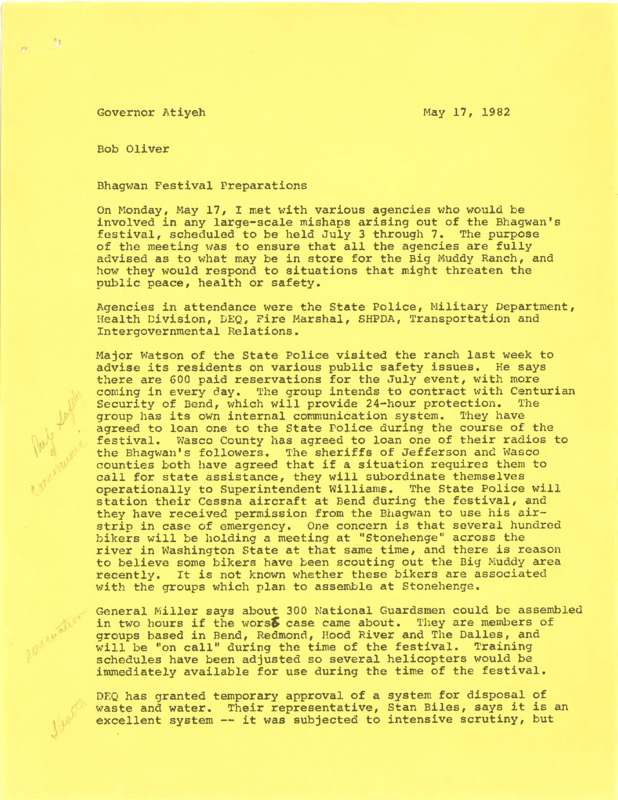
A memo to Governor Atiyeh from his legal counsel, Bob Oliver, addressing the events that occurred at a meeting regarding the Rajneesh festival to be held on July 3-7, 1982. Local agencies that attended the meeting included the Oregon State Police, Military department, Health Division, Oregon Department of Environmental Quality, Fire Marshall, State Health Planning and Development Agency, and the department of Transportation and Intergovernmental Relations. Oliver's letter reports each department and organization's expressed concerns and advice for the group accordingly. This item was a part of the papers of Bob Oliver, Governor Atiyeh's legal counsel.
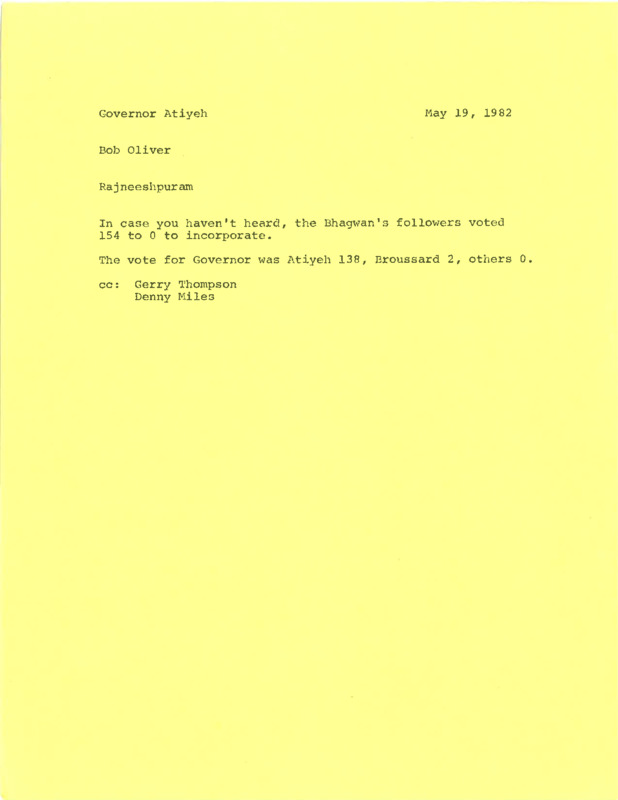
A brief memo to Governor Atiyeh from his legal counsel, Bob Oliver, updating him on the latest in the situation with the Rajneesh. In the letter Oliver communicates the winning verdict in the vote to incorporate Rajneeshpuram. This item was a part of the papers of Bob Oliver, Governor Atiyeh's legal counsel.
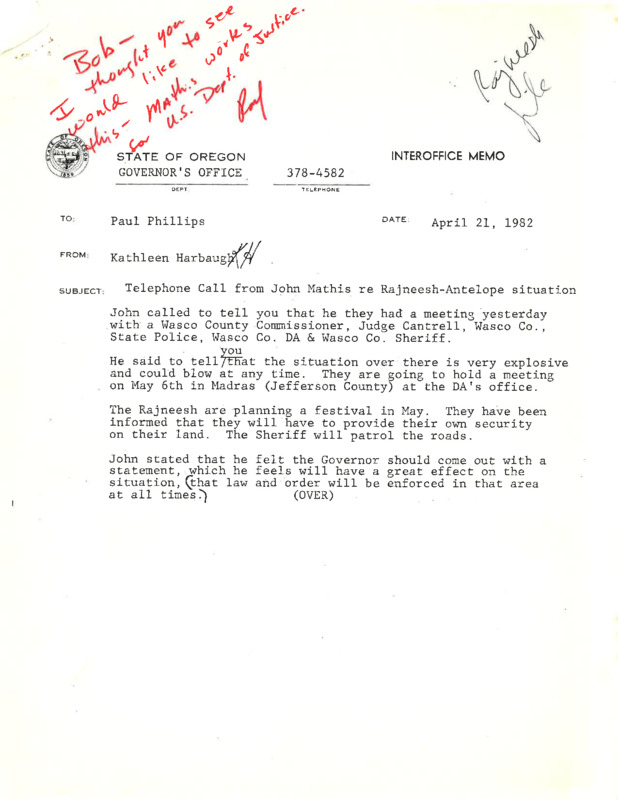
An inter-office memo from administrative assistant Kathleen Harbaugh to Paul Phillips, an advisor to Governor Atiyeh. A note from Phillips is included, passing the memo to Atiyeh's legal counsel, Bob Oliver. The memo covers a telephone call from John Mathis regarding the situation at the Rajneeshpuram and Antelope. The memo states the county will be holding a meeting on May 6 before the festival in Rajneeshpuram. The contents of the message further recommend that Governor Atiyeh make a statement regarding the rising tensions in Wasco County to ease the minds of the citizens of Oregon. This item was a part of the papers of Bob Oliver, Governor Atiyeh's legal counsel.
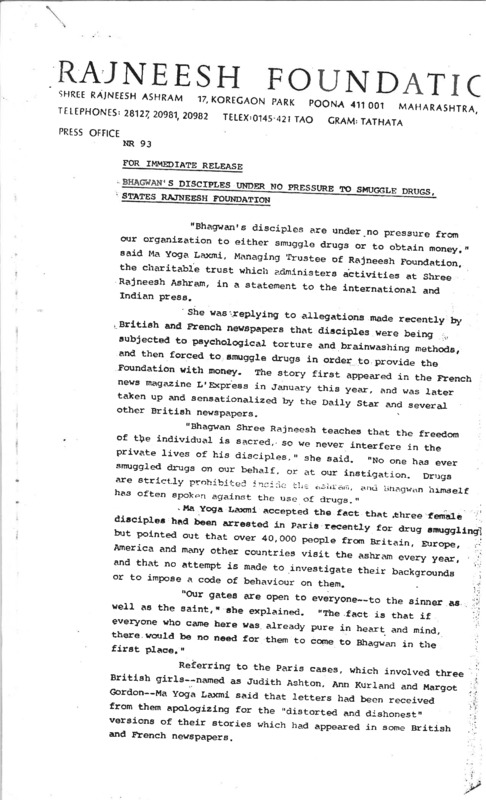
A press release from the Rajneesh Foundation, which responded to allegations made by French and British newspapers. Newspapers accused the Ashram of committing acts of psychological torture, brainwashing and forced drug smuggling. Bhagwan Shree Rajneesh's secretary Ma Yoga Laxmi defends the Foundation against these claims as well as a court case in which three women from the Ashram were discovered smuggling drugs and appeared to have been subjected to methods of brainwashing. This item was a part of the papers of Bob Oliver, Governor Atiyeh's legal counsel.
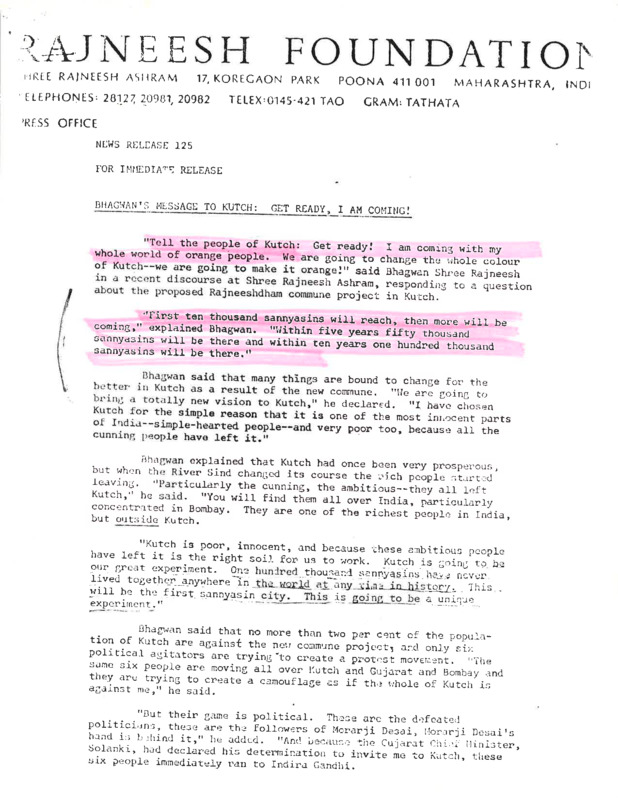
A press release from the Rajneesh Foundation, providing a statement from Bhagwan Shree Rajneesh to the people of Kutch in western India. Bhagwan announced that there would be a new commune established. The section regarding the amount of Sannyasins (spiritual leaders) that could be expected within a certain number of years is highlighted due to the growing concern over the increase in size of Rajneeshpuram in Antelope, Oregon. This item was a part of the papers of Bob Oliver, Governor Atiyeh's legal counsel.
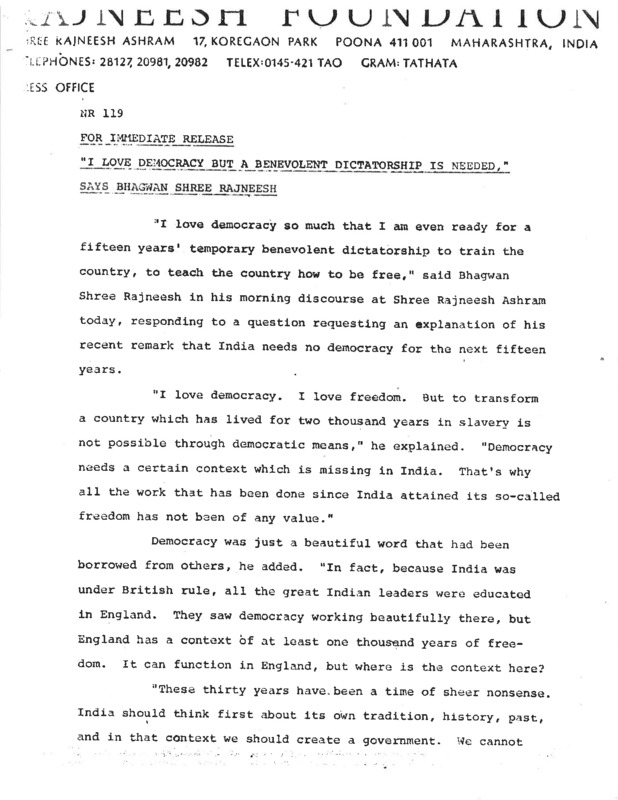
A press release from the Rajneesh Foundation compiled by Swami Krishna Prem featuring quotations by Bhagwan Shree Rajneesh. The statements released by the Foundation discuss Bhagwan's views on the idea of democracy. He asserts his belief that democracy ought to be substituted with a benevolent dictator for at least 15 years until the country is ready for democracy. This item was a part of the papers of Bob Oliver, Governor Atiyeh's legal counsel.
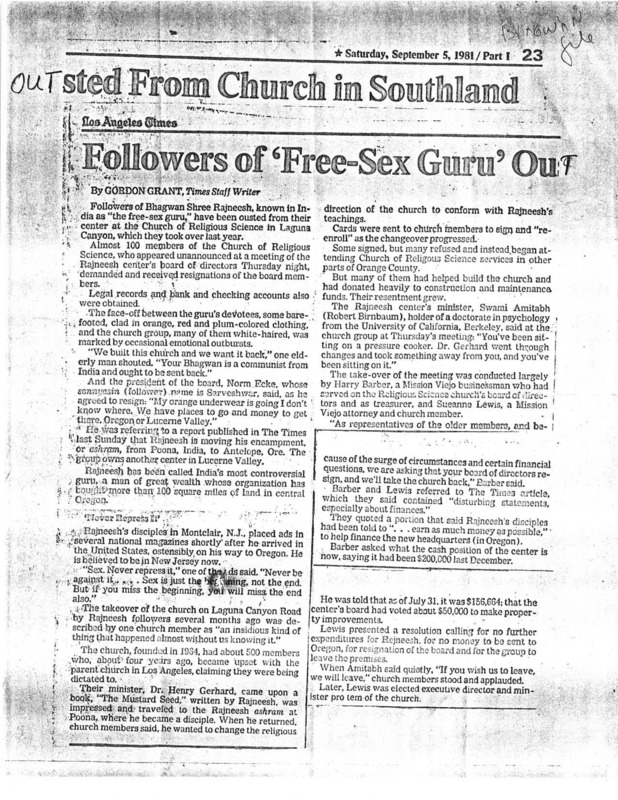
An article on the development and evolution of the Rajneesh presence in the United States from the Los Angeles Times. Gordon Grant reported that the Rajneesh were asked to leave the Church of Religious Sciences in Laguna Canyon. It is further explained that the Rajneesh would be moving to Antelope, Oregon where they had previously purchased about 100 square miles of land. This photocopied excerpt was once included in Bob Oliver's 'Guru File,' which was a collection of material collected in Governor Atiyeh's office related to the Rajneesh's background.
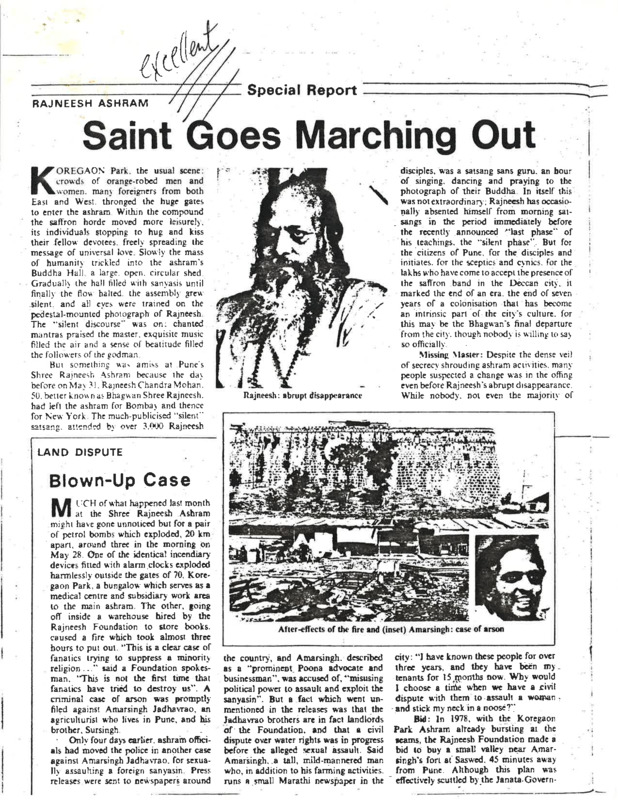
A special news report on Bhagwan Shree Rajneesh's leaving the Poona Ashram in India and the bombing that occurred before his relocation on May 31, 1981. The incident on May 28 when two gasoline bombs exploded inside the Ashram resulted in the landlords being blamed and branded as fanatics. The nature of the accident was called into question, as prior to the bombing there had been a civil dispute between the landlords and the Rajneesh Foundation over water rights and an alleged sexual assault. This photocopied excerpt was once included in Bob Oliver's 'Guru File,' which was a collection of material collected in Governor Atiyeh's office related to the Rajneesh's background.
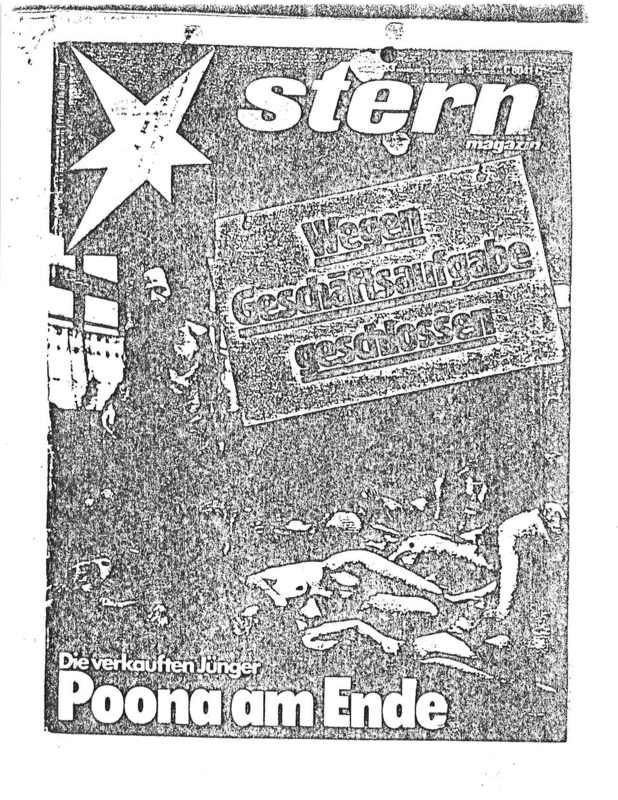
An article written by German reporter Rainer Fabian for Stern Magazine covers the impact of Bhagwan Shree Rajneesh's secret decision to move from India to America. Several testimonies as to the impact of this upheaval were obtained and recorded in the report. Testimonies revealed that devotees had no money or homes and may have suffered some substantial psychological harm. Further notations cover the economic effect on the town of Poona, India.This photocopied excerpt was once included in Bob Oliver's 'Guru File,' which was a collection of material collected in Governor Atiyeh's office related to the Rajneesh's background.
Citation for the original article: Fabian, Rainer. "Poona am Ende: Die verkauften Jünger," Stern Magazin (Aug. 6, 1981).
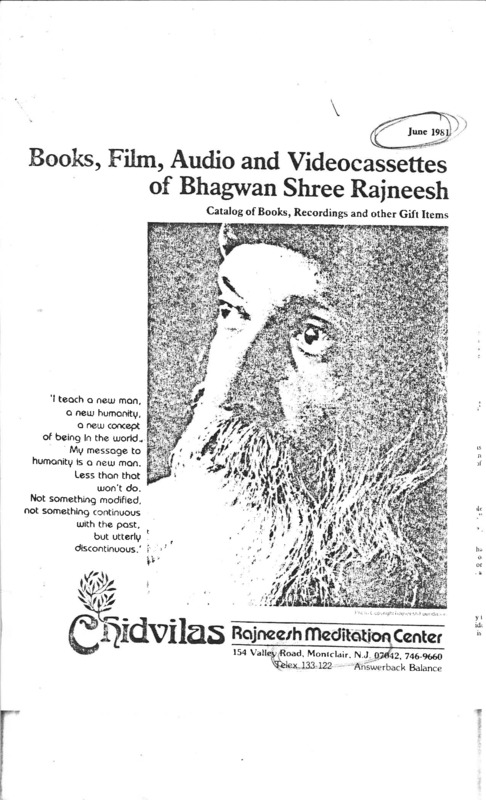
Catalog of books, videotapes, and other recordings by Bhagwan Shree Rajneesh compiled by the Rajneesh Meditation Center. The title, date of publishing, and a brief excerpt or description are provided for the various records. Circled as a point of reference is the text regarding the first Sannyasin city, as this was compared to the city of Rajneeshpuram.
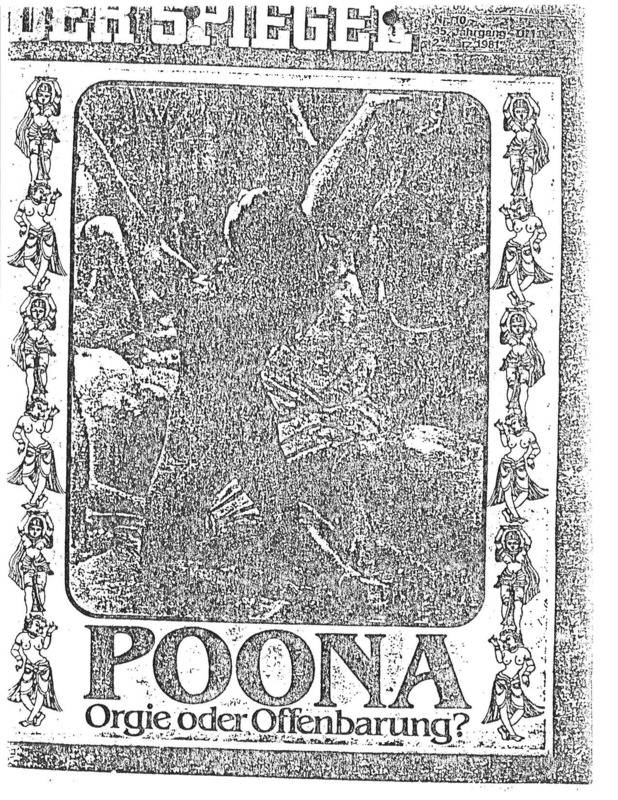
A long news article written by German reporter Willhelm Bittorf for Der Spiegel, which provides an unsympathetic view of the inner workings of the Rajneesh Ashram in Poona (or Puna), India. He describes living conditions and the daily life of followers of the guru Bhagwan Shree Rajneesh. He contrasts the 'Club Med' environment of the ashram for its part-time visitors versus the exploitative conditions under which full-time residents live, laboring in various roles for no pay. He also notes some of the spiritual practices of the Rajneesh's followers. The article has been translated from German into English, possibly by staff of the United States government as part of their investigation of Bhagwan Shree Rajneesh in the 1980s. This photocopied version was once included in Bob Oliver's 'Guru File,' which was a collection of material collected in Governor Atiyeh's office related to the Rajneesh's background.
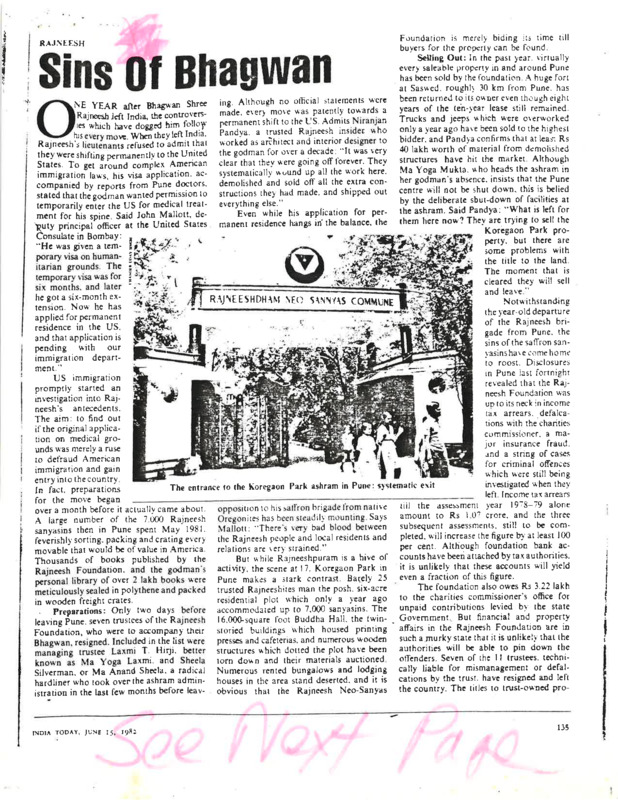
A news article from India Today, titled 'Sins of Bhagwan', covers the transition of the Rajneesh foundation from Pune (or Poona), India to Antelope, Oregon and its impact on the community. The report shows that during the move the Ashram was revealed to have outstanding income tax arrears. Chandar Uday Singh later goes on to discuss a series of incidents that occurred shortly before Rajneesh left Pune, as well as criminal accusations made by the Rajneesh Foundation that later were revealed as entrapment. This photocopied excerpt was once included in Bob Oliver's 'Guru File,' which was a collection of material collected in Governor Atiyeh's office related to the Rajneesh's background.
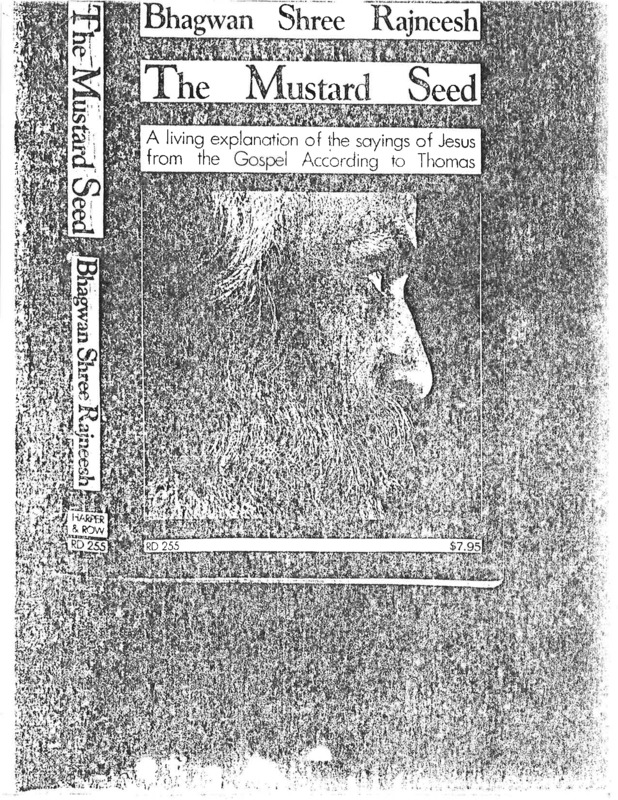
Brief text on the role of 'sannyasins', or spiritual leaders, excerpted from a book by Bhagwan Shree Rajneesh, 'The Mustard Seed: Discourses on the Sayings of Jesus Taken from the Gospel According to Thomas.' This photocopied excerpt was once included in Bob Oliver's 'Guru File,' which was a collection of material collected in Governor Atiyeh's office related to the Rajneesh's background. The text discusses the Rajneesh belief about spiritual leaders in comparison to other religious teachings, such as that of Buddha and Jesus. Circled and highlighted text on page 47 reads that a sannyasin must be an effective actor.
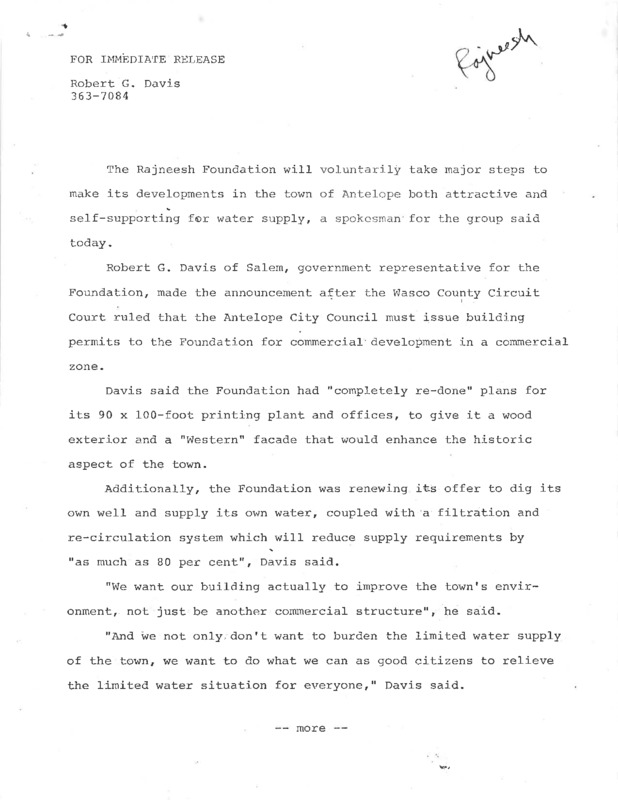
A statement by the Rajneesh Foundation regarding new developments on the Rajneesh property. Robert G. Davis, government representative acting as spokesperson for the Rajneesh Foundation, explains their desires to help the community. The Foundation proposed digging its own well to supply water and help with water shortages. They are further stated to have been taking steps to make its developments attractive and beneficial to the town of Antelope. This item was a part of the papers of Bob Oliver, Governor Atiyeh's legal counsel.
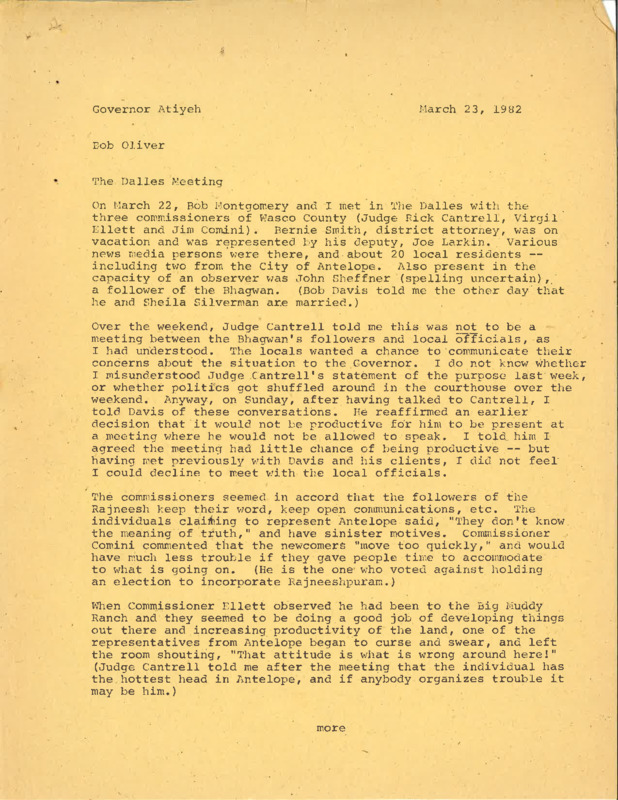
Memo to Governor Atiyeh from his legal counsel, Bob Oliver, regarding a meeting at The Dalles relating to the Rajneesh. Oliver attended the meeting with Bob Montgomery, Community Relations Representative. The letter describes the meeting between County Commissioners: Judge Richard Cantrell, Virgil Ellett and Jim Comini. Also present were Jim Larkin, Deputy to the District Attorney, about 20 local residents, including two representatives from the city of Antelope, and John Sheffner, a follower of Rajneesh. The purpose of the meeting was to discuss local concerns regarding the Rajneeshpuram situation. Also stated in the letter is a scheduled public hearing for a permit for the Rajneesh July festival. This item was a part of the papers of Bob Oliver, Governor Atiyeh's legal counsel.
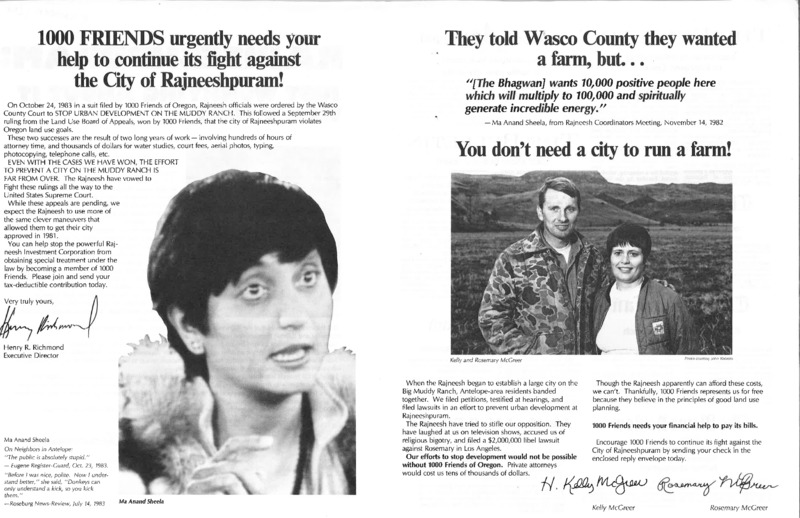
This pamphlet describes the court cases filed by a watchdog group, 1000 Friends of Oregon, that opposed the Rajneesh Foundation. It asks for support from other Oregon taxpayers. The brochure features statements from Henry R. Richmond, Executive Director of 1000 Friends of Oregon, and Bill Bowerman, co-founder of Nike, promoting involvement in the case against the Rajneesh. Also included are statements by H. Kelly Greer and Rosemary Greer, ranchers effected by the establishment of the Ashram. This item was a part of the papers of Bob Oliver, Governor Atiyeh's legal counsel.
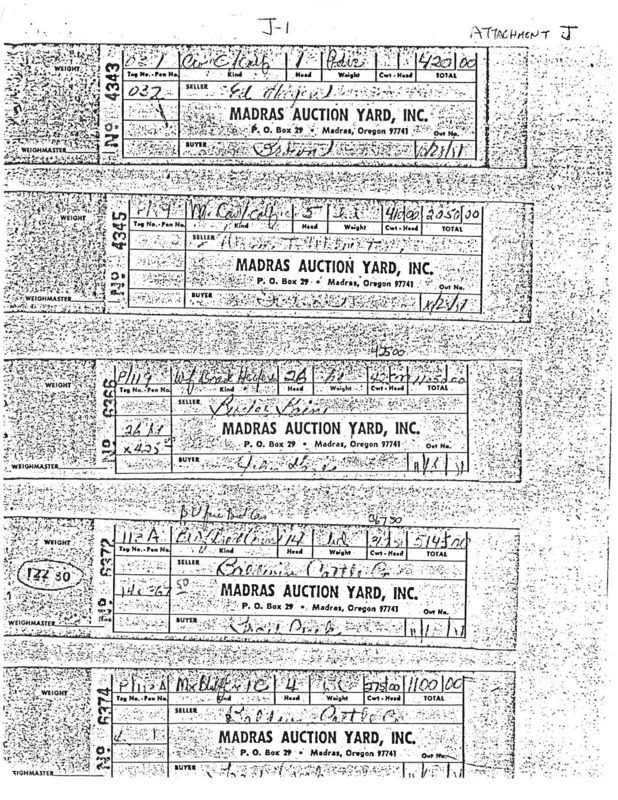
Madras Auction Yard reports containing information about the details of a sale of cattle from Judge Richard Cantrell to the Rajneesh Foundation. These documents were produced as evidence in an investigation because a watchdog group, the 1000 Friends of Oregon, suspected that the prices of the cattle had been inflated, which could constitute a bribe of the judge. The reports contain facts about the sale, the weight of the cattle, kind, buyer and seller. Also enclosed is a more detailed report with usual market value for cattle meeting particular requirements. This item was a part of the papers of Bob Oliver, Governor Atiyeh's legal counsel.