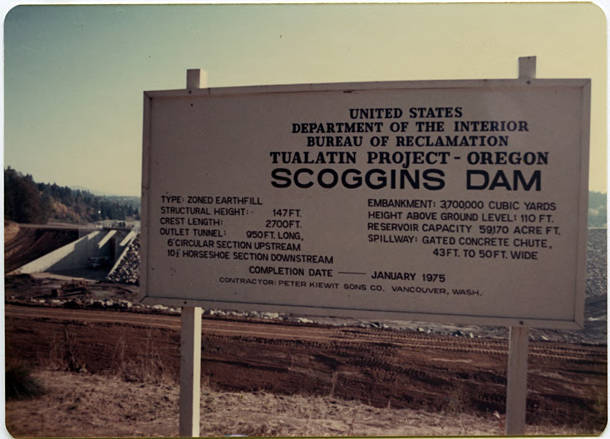
Color image of a sign giving details about the Scoggins Dam project. Scoggins Dam and Henry Hagg Lake were constructed as a part of the Tualatin Project, intended to provide drinking water and irrigation for farms and communities in the Tualatin River watershed. Construction on the dam began in June of 1972, and the lake was opened for public recreation in the summer of 1975. Washington County maintains the recreation area and the dam with the help of the local Elks lodges, while the facilities and the lake are owned by the Bureau of Reclamation. Scoggins Dam is named for Gustavus Scoggins, whose family settled in what would become Washington County in 1848. Henry Hagg was a long time resident of the Scoggins Valley and had been one of the original initiators of the Scoggins Dam project in 1934.
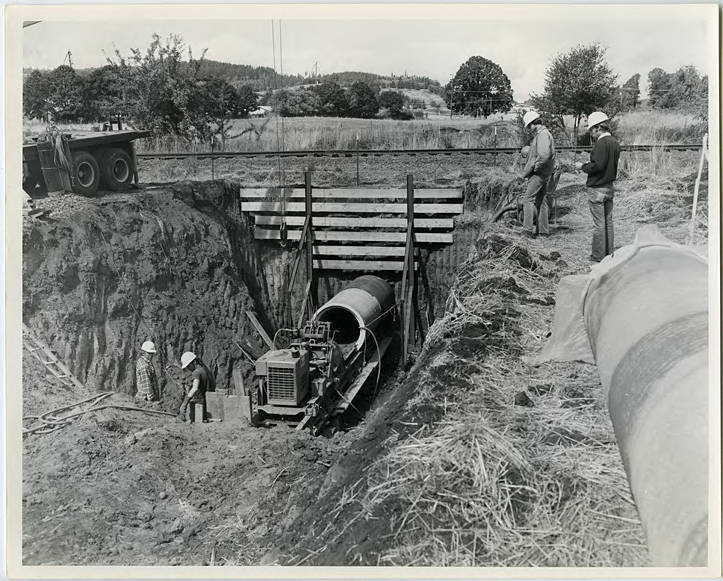
Black and white image of the construction of a culvert underneath a railroad track, part of a pipeline associated with providing water to the Tualatin Valley area from Scoggins Dam. This pipeline was a part of the larger Tualatin Project, a Bureau of Reclamation project intended to provide irrigation water to the farms in the valley and drinking water to several cities, including Hillsboro and Forest Grove.
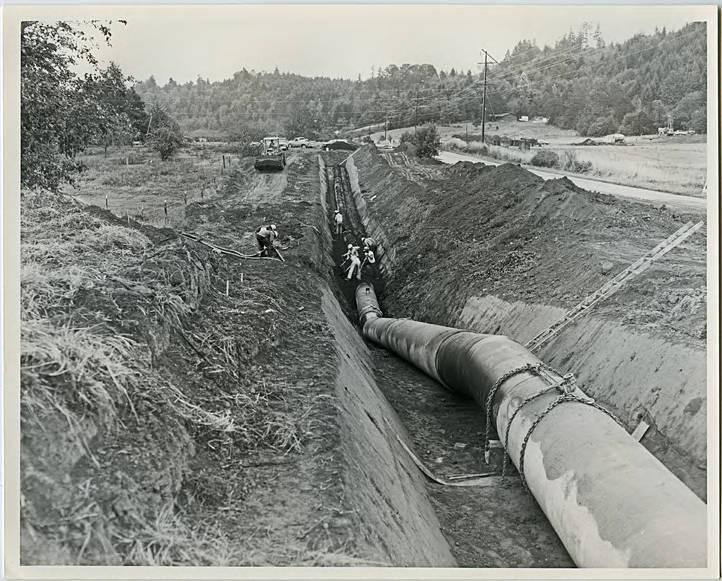
Black and white image of the construction of part of a pipeline associated with providing water to the area from Scoggins Dam. This pipeline was a part of the larger Tualatin Project, a Bureau of Reclamation project intended to provide irrigation water to the farms in the valley and drinking water to several cities, including Hillsboro and Forest Grove.
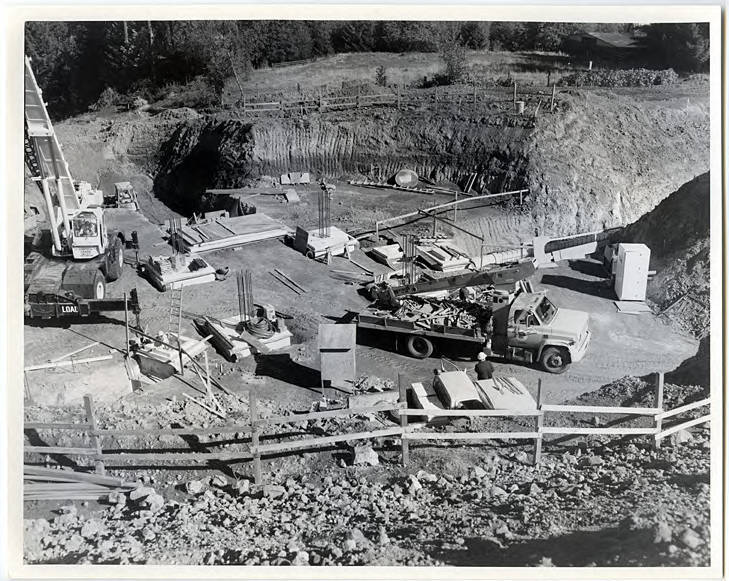
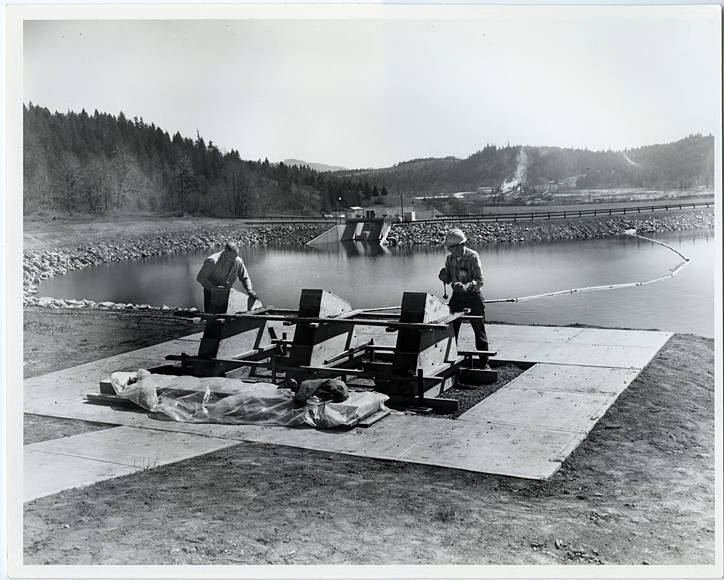
Black and white image of the construction of part of the Patton Valley Pipeline, possibly one of the pumping stations. The Patton Valley Pumping Plant and Pipeline was a part of the larger Tualatin Project, a Bureau of Reclamation project intended to provide irrigation water to the farms in the valley and drinking water to several cities, including Hillsboro and Forest Grove.
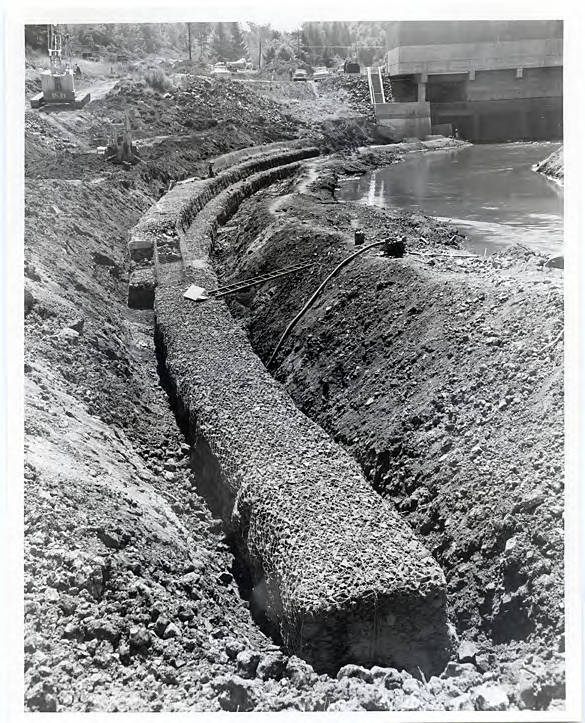
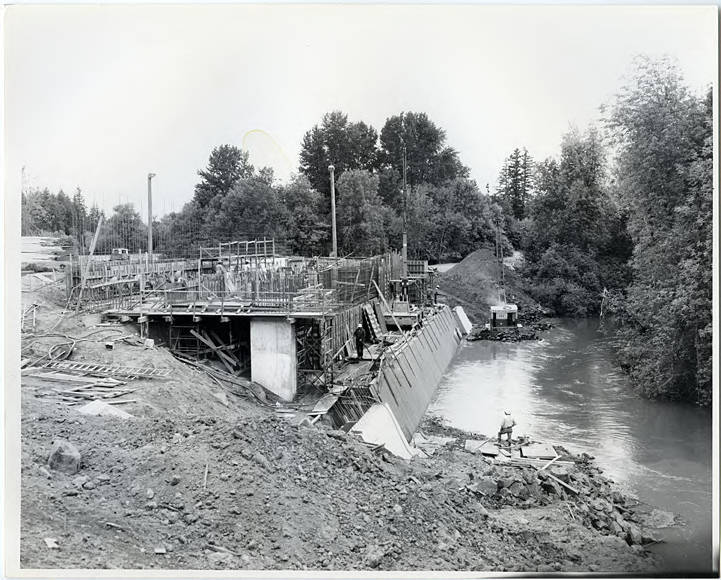
Black and white image of what appears to be part of the foundation for the dam. Scoggins Creek has been diverted along the right side of the image. Named for a local resident who settled the area in the early 1850s, Scoggins Dam was built in the 1970s and is a zoned, earth-fill dam.
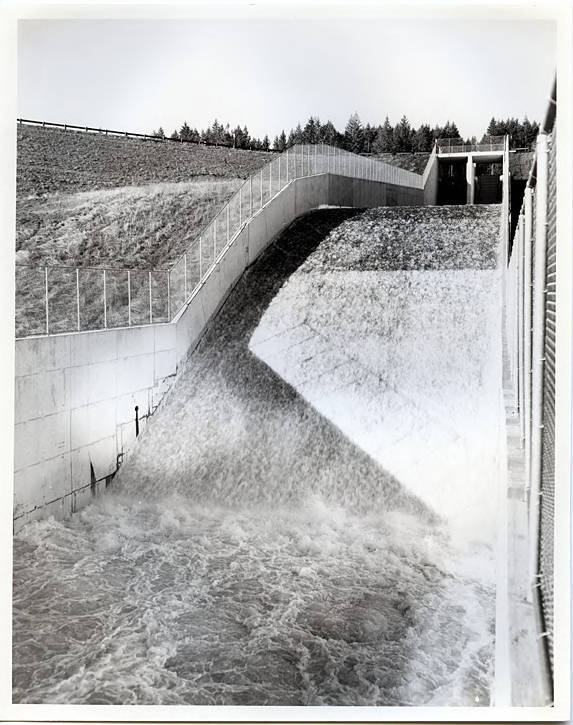
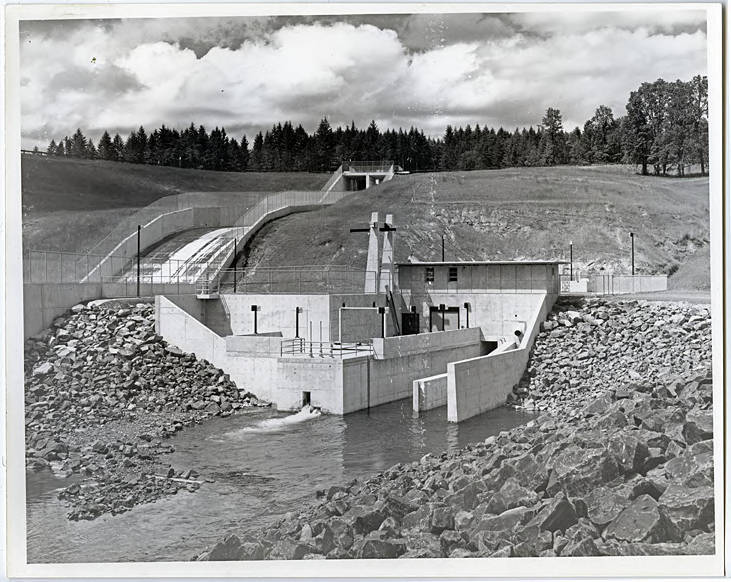
Black and white image showing water flowing down the newly opened Scoggins Dam spillway. Named for a local resident who settled the area in the early 1850s, Scoggins Dam was built in the 1970s and is a zoned, earth-fill dam.
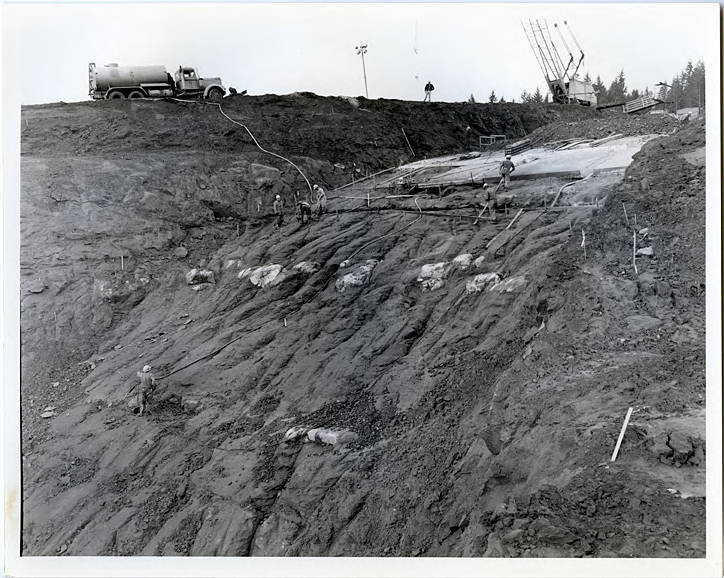
Black and white image of the construction of Scoggins Dam, possibly showing the clearing of some of the portions of the hills that were to be inundated when the reservoir filled. Named for a local resident who settled the area in the early 1850s, Scoggins Dam was built in the 1970s and is a zoned, earth-fill dam.
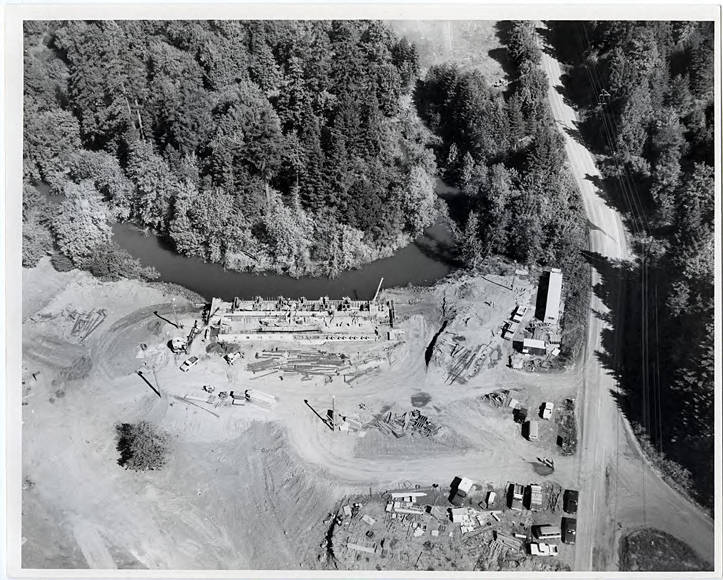
Black and white image of the construction site for Scoggins Dam at the beginning of construction. Named for a local resident who settled the area in the early 1850s, Scoggins Dam was built in the 1970s and is a zoned, earth-fill dam.
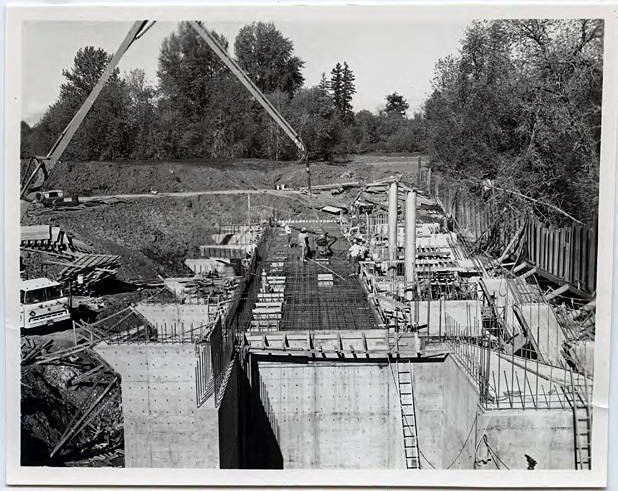
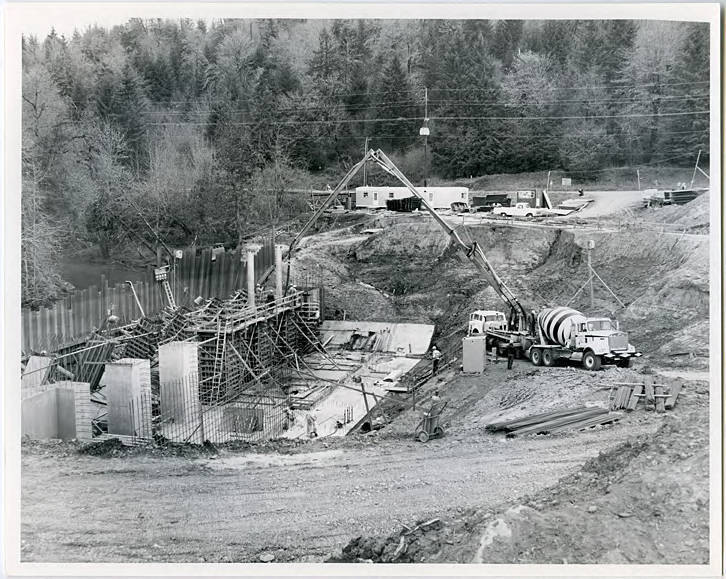
Black and white image of the construction of Scoggins Dam, showing concrete being poured into the forms that will hold in shape to form the dam's structure. Named for a local resident who settled the area in the early 1850s, Scoggins Dam was built in the 1970s and is a zoned, earth-fill dam.
Black and white image of the construction of the face of Scoggins Dam, where the flow of the creek is being diverted. Scoggins Dam was built in the 1970s and is a zoned, earth-fill dam.
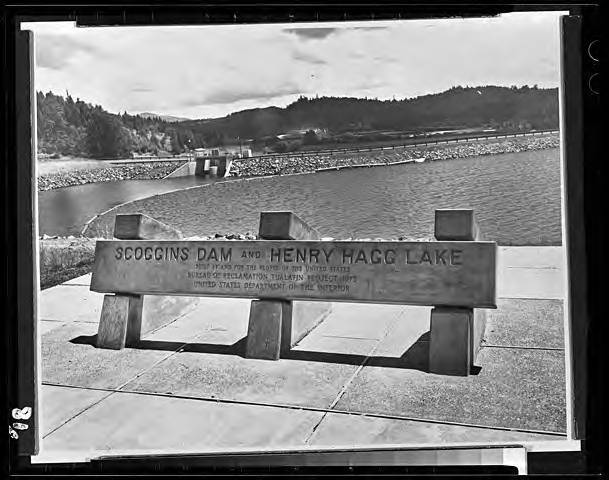
Black and white image of a concrete sign for Scoggins Dam and Henry Hagg Lake. The dam and the spillway opening can be seen in the background. Scoggins Dam and Henry Hagg Lake were constructed as a part of the a larger project to provide drinking water and irrigation for farms and communities in the Tualatin River watershed. Construction on the dam began in June of 1972, and the lake was opened for public recreation in the summer of 1975. Washington County maintains the recreation area and the dam with the help of the local Elks lodges, while the facilities and the lake are owned by the Bureau of Reclamation. Scoggins Dam is named for Gustavus Scoggin, whose family settled in what would become Washington County in 1848. Henry Hagg was a long time resident of the Scoggin Valley and had been one of the original initiators of the Scoggins Dam project in 1934.
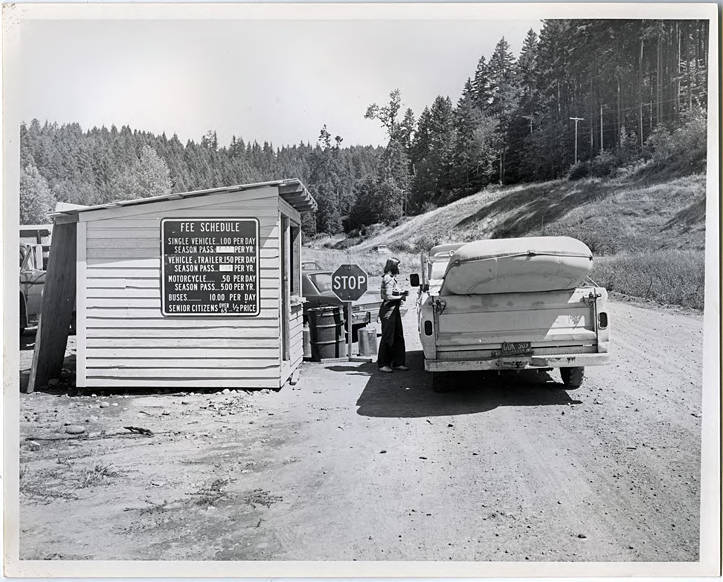
Black and white image of a county worker collecting fees for day use at Hagg Lake Park. She stands next to a pickup with an inflatable raft in the back, and behind her is a small booth with the prices listed for the various passes, from $1 per day for a single vehicle pass to $5 for a season pass for both vehicles and motorcycles. A dirt road presumably leads to the lake, which is not visible in this image.
Black and white image of concrete being poured into forms at what will be Scoggins Dam. Scoggins creek can be seen in the background. Scoggins Dam was built in the 1970s and is a zoned, earth-fill dam.
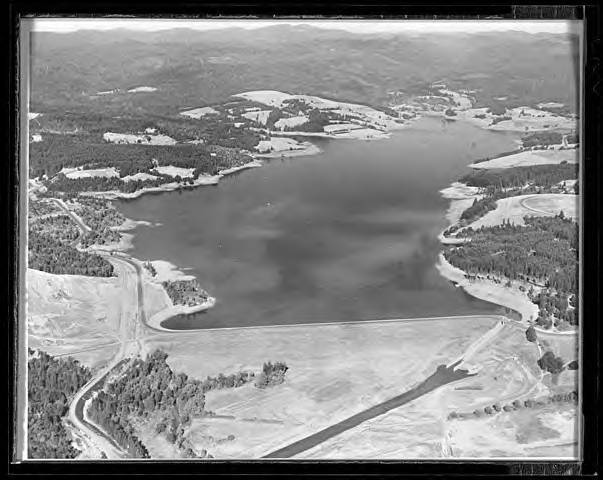
Black and white aerial view looking up Scoggins Dam and Hagg Lake. See WCMpic_013116 for a 'before' shot of the valley before it was flooded by the reservoir.
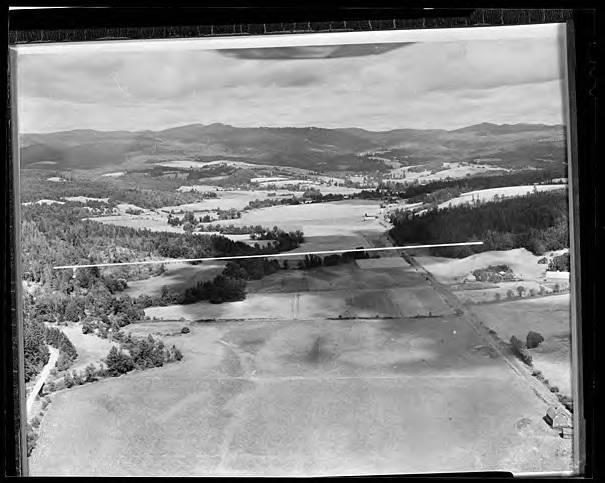
Black and white aerial view looking up Scoggins Creek valley. The white line across the middle of the image shows where Scoggins Dam will be built. Visible in the background are several farms and other buildings which would be inundated as the reservoir filled. See WCMpic_013117 for an 'after' shot of the valley that shows the reservoir after it was filled.
Black and white image of a concrete sign for Scoggins Dam and Henry Hagg Lake. The dam and the spillway opening can be seen in the background. Scoggins Dam and Henry Hagg Lake were constructed as a part of the a larger project to provide drinking water and irrigation for farms and communities in the Tualatin River watershed. Construction on the dam began in June of 1972, and the lake was opened for public recreation in the summer of 1975. Washington County maintains the recreation area and the dam with the help of the local Elks lodges, while the facilities and the lake are owned by the Bureau of Reclamation. Scoggins Dam is named for Gustavus Scoggin, whose family settled in what would become Washington County in 1848. Henry Hagg was a long time resident of the Scoggin Valley and had been one of the original initiators of the Scoggins Dam project in 1934.
Sepia-toned image of school children standing in front of and on the porch of their school building with their instructor, Mr. Vanhoon. Scoggins Valley is mostly underwater today as a result of the Scoggins Dam and Hagg Lake. Any buildings which were left at the time the valley was flooded were either removed prior to the dam's construction.