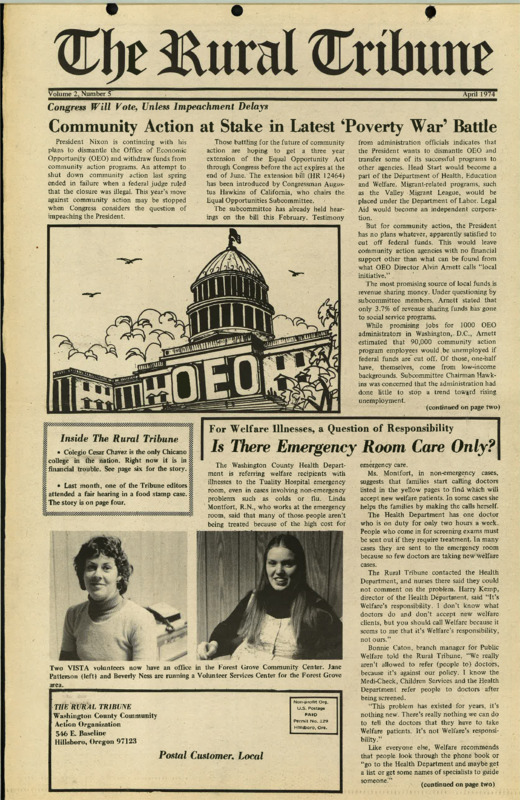
Volume 2, issue 5 of The Rural Tribune, which was a local newspaper published by Community Action in the 1970s. This issue includes stories on federal assistance programs, specifically the Office of Economic Opportunity, public welfare, food stamps, drop-outs, and the Colegio Cesar Chavez.
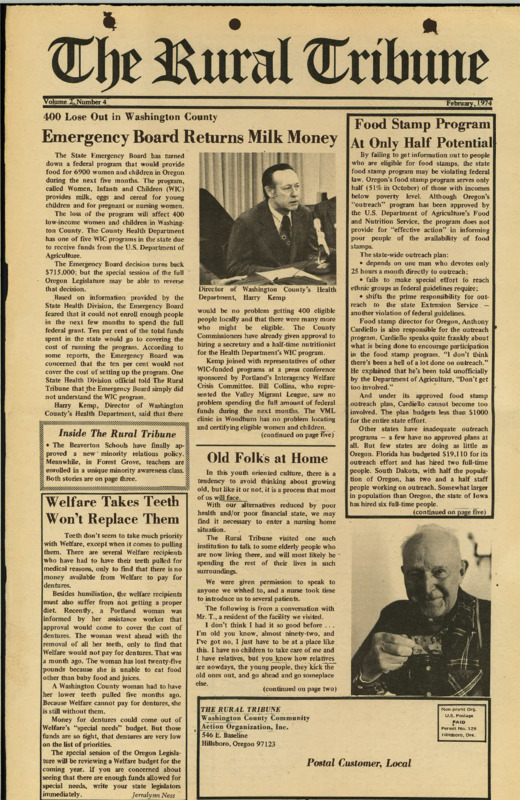
Volume 2, issue 4 of The Rural Tribune, which was a local newspaper published by Community Action in the 1970s. This issue includes stories on WIC (Women, Infants, Children), senior citizens, federal assistance programs, schools, and the county jail law suit.
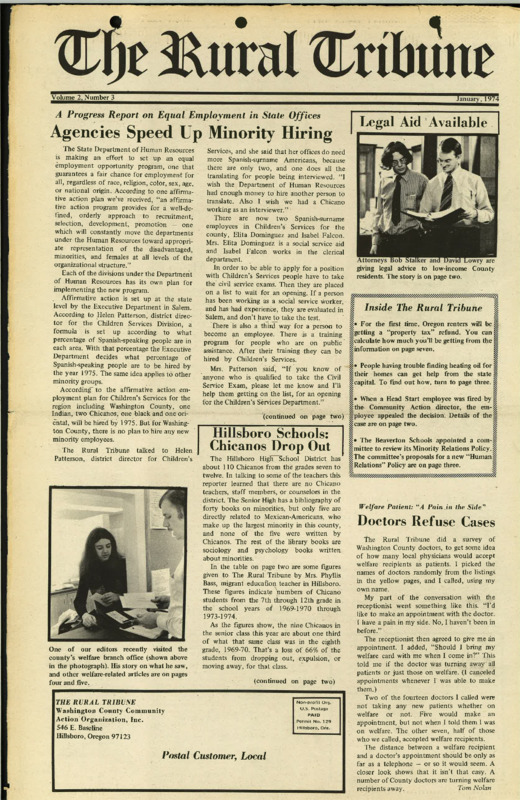
Volume 2, issue 3 of The Rural Tribune, which was a local newspaper published by Community Action in the 1970s. This issue includes stories on minority hiring, Chicano students, schools, public welfare, legal aid, taxes, and the Pacific University library.
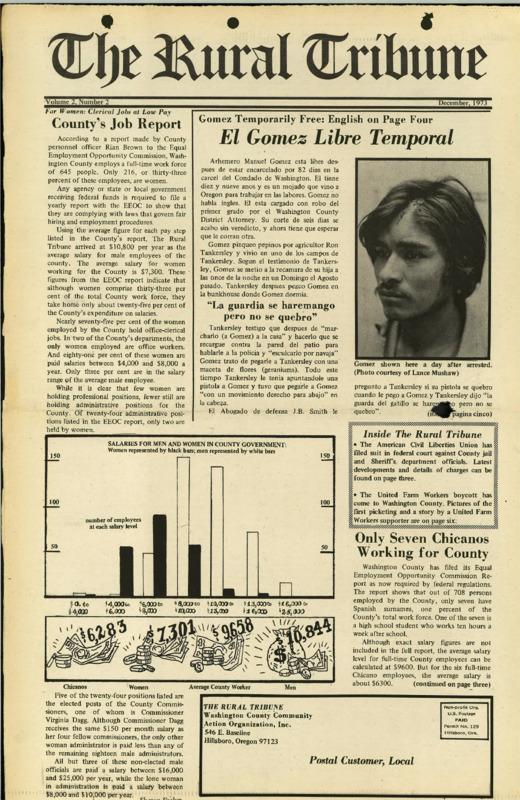
Volume 2, issue 2 of The Rural Tribune, which was a local newspaper published by Community Action in the 1970s. This issue includes stories on Arhmeno Manuel Gomez, county jobs, a class action law suit against the county jail, food stamps and welfare, and boycotts.
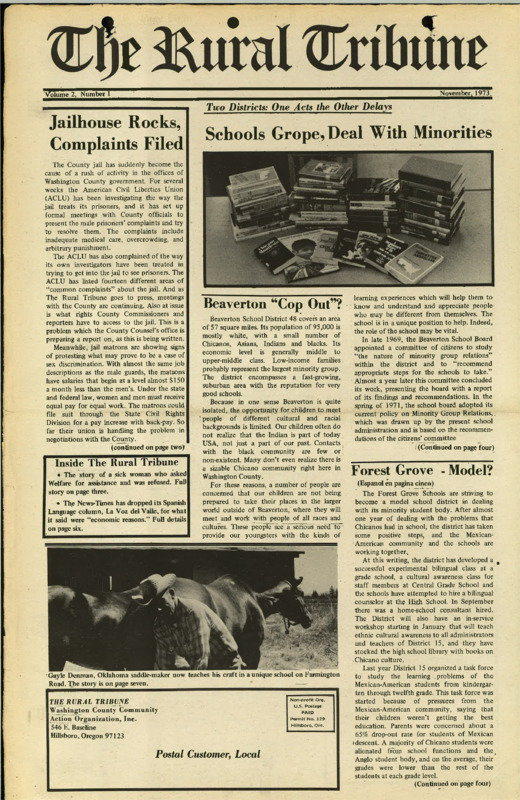
Volume 2, issue 1 of The Rural Tribune, which was a local newspaper published by Community Action in the 1970s. This issue includes stories on Chicano students, schools, complaints against the county jail, public welfare, and federal assistance programs.
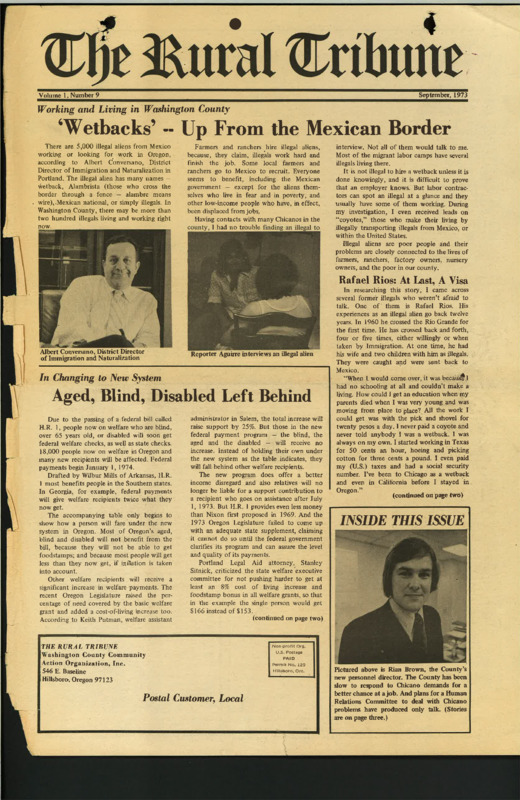
Volume 1, issue 9 of The Rural Tribune, which was a local newspaper published by Community Action in the 1970s. This issue includes stories on illegal immigrants, hiring minorities, federal assistance programs and public welfare, a fire at Centro Cultural, and pets.
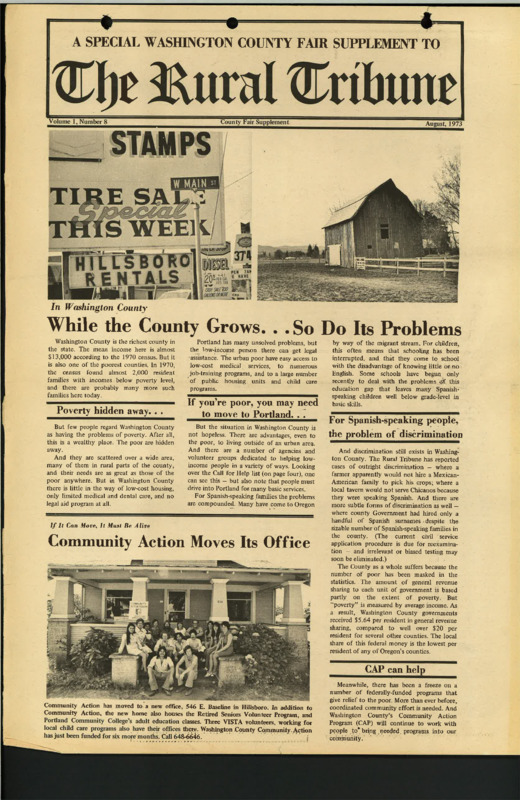
Volume 1, issue 8 of The Rural Tribune, which was a local newspaper published by Community Action in the 1970s. This issue is a special Washington County Fair supplement and covers minority discrimination and poverty and federal assistance programs in Washington County.
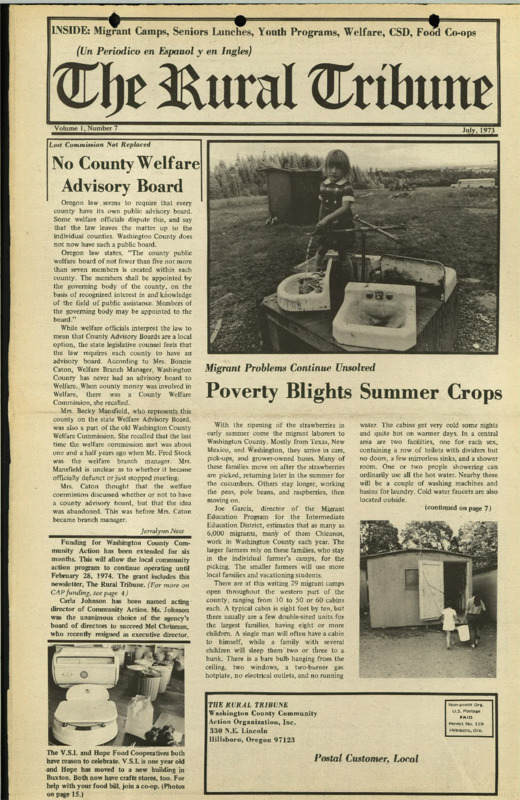
Volume 1, issue 7 of The Rural Tribune, which was a local newspaper published by Community Action in the 1970s. This issue includes stories on poverty in migrant camps, youth programs, public welfare, senior meals, and food co-ops.
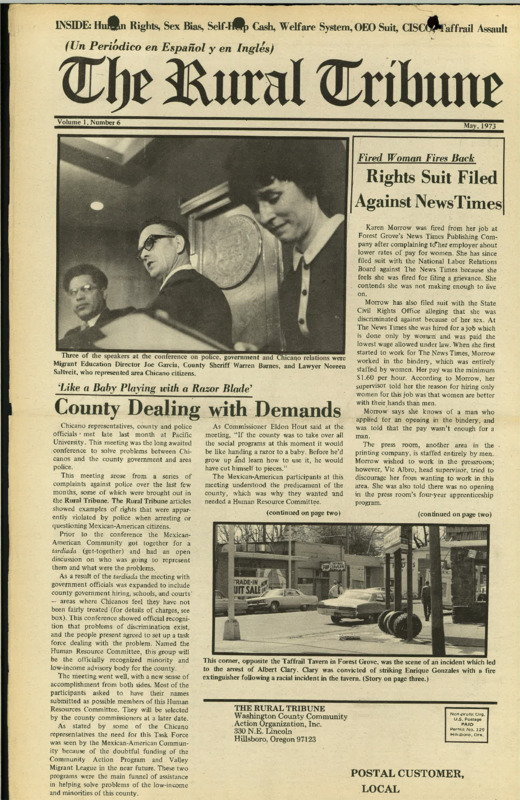
Volume 1, issue 5 of The Rural Tribune, which was a local newspaper published by Community Action in the 1970s. This issue includes stories on complaints against police, gender bias in the workplace, Community Action Programs, state bills, and public welfare.
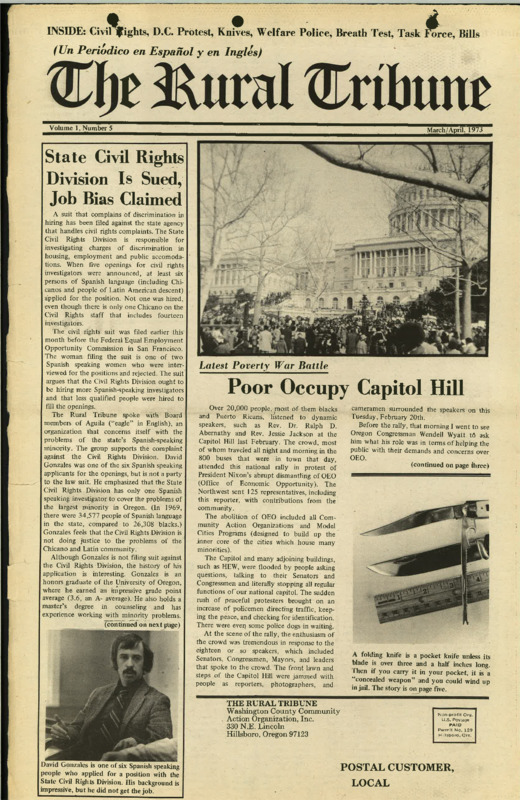
Volume 1, issue 5 of The Rural Tribune, which was a local newspaper published by Community Action in the 1970s. This issue includes stories on civil rights, federal program cuts, welfare fraud, pocket knives, and state bills.
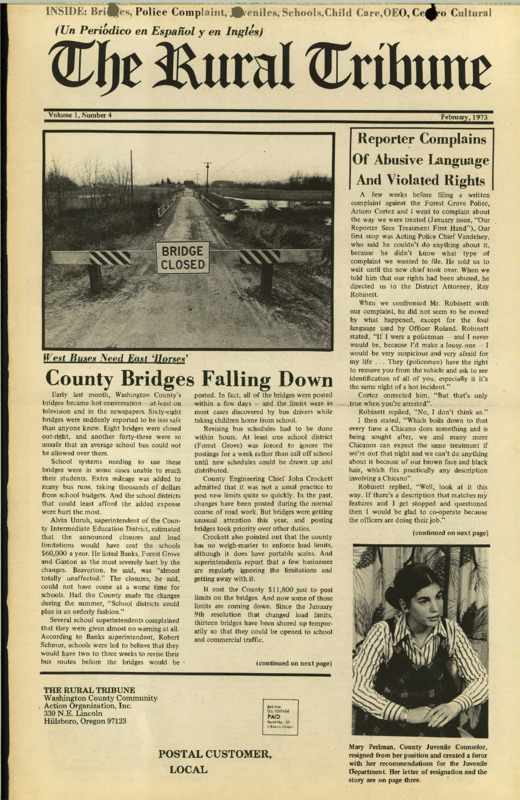
Volume 1, issue 4 of The Rural Tribune, which was a local newspaper published by Community Action in the 1970s. This issue includes stories on Washington County bridges, complaints against police, hiring minorities, Centro Cultural, and federal funds and program cuts.
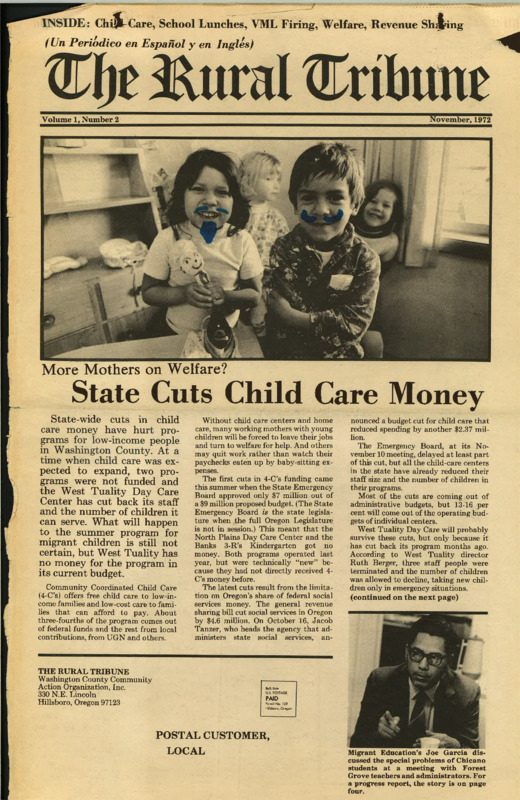
Volume 1, issue 2 of The Rural Tribune, which was a local newspaper published by Community Action in the 1970s. This issue includes stories on child care, school lunches, a firing from the Valley Migrant League, welfare, and revenue sharing.
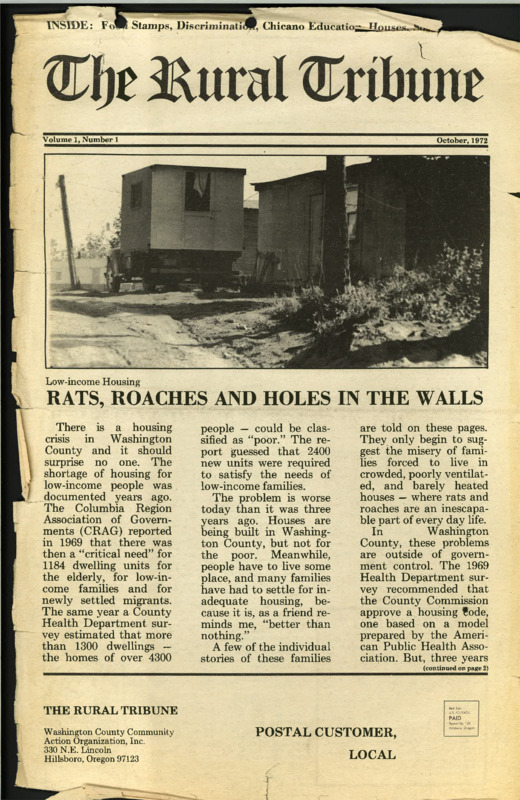
Volume 1, issue 1 of The Rural Tribune, which was a local newspaper published by Community Action in the 1970s. This issue includes stories on the low-income housing crisis, Chicano students, and food stamps.
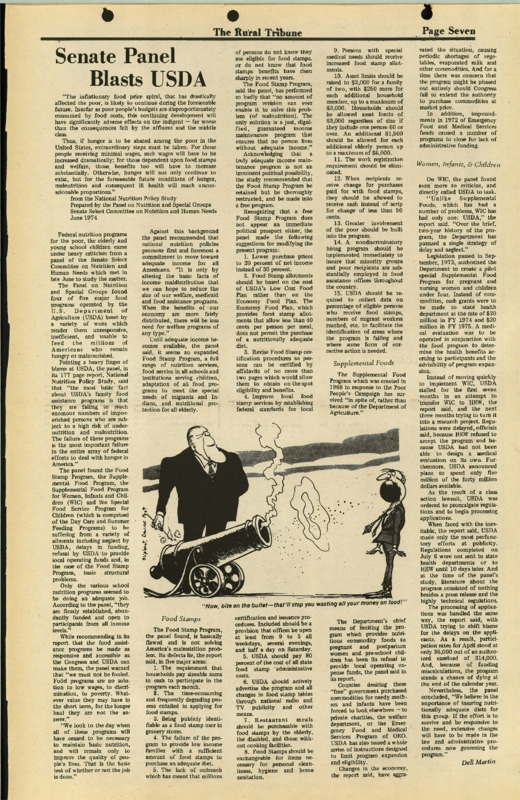
Pages 7 and 8 from an unidentified issue of The Rural Tribune, which was a local newspaper published by Community Action in the 1970s. Page 7 features a story on the Senate Select Committee on Nutrition and Human Needs and the criticism they gave the food relief programs of the U. S. Department of Agriculture (USDA) in 1974. Page 8 features a stories on the Community Action Organization celebration of Mexican Christmas traditions (Las Posadas) and children's health.
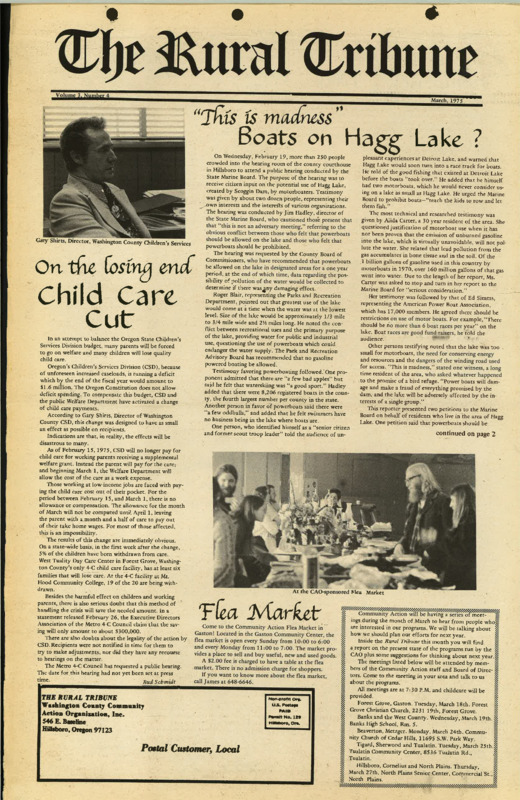
Volume 3, issue 4 of The Rural Tribune, which was a local newspaper published by Community Action in the 1970s. This issue includes stories on child care, boating on Hagg Lake, food preservation, youth manpower program, the county library, and assistance programs. Only four pages could be found for this issue. The issues are, on average, eight pages.
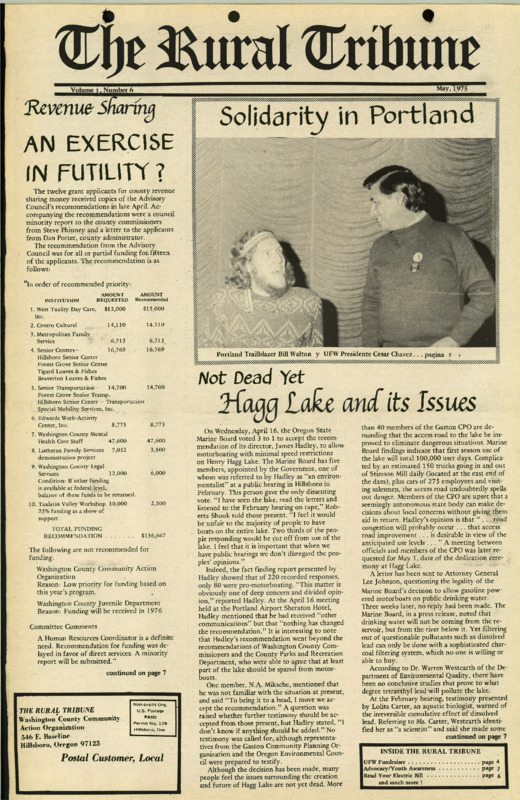
Volume 3, issue 6 of The Rural Tribune, which was a local newspaper published by Community Action in the 1970s. This issue includes stories on revenue sharing, Hagg Lake, food, assistance programs for senior citizens, children's education, Cesar Chavez and the United Farm Workers union, and several assistance programs.
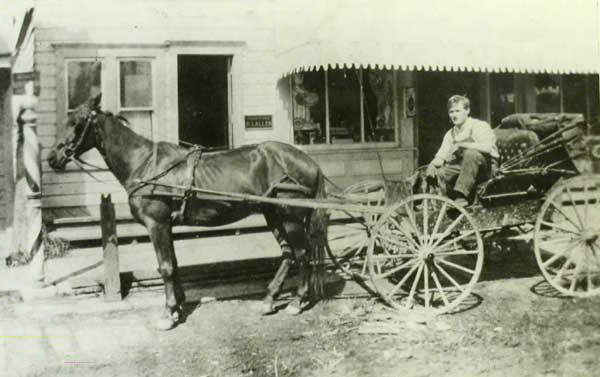
A young man sits in a buggy drawn by an emaciated horse. A wooden building with fabric canopy is at the right. The photo was taken at Broadway and West Streets. A sign identifies the building's occupant as Dr. R. I. Allen.
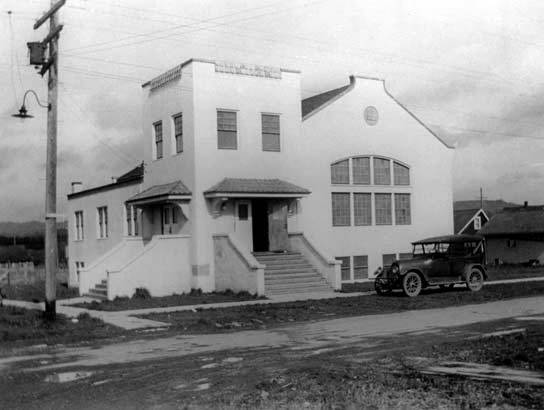
The church stood was the corner of Main Avenue and Second Street. It was dedicated in June 1926. The building was razed and the name later changed to Beaverton Christian Church. A 1920s car is parked on a muddy, unpaved street in front of the church.
Albert Muessig owned the business, located at SW Farmington Road and Cedar Hills Boulevard. The view looks northwest. The Muessig home is on the right. Part of the flour mill building was used as a cannery in the 1960's.
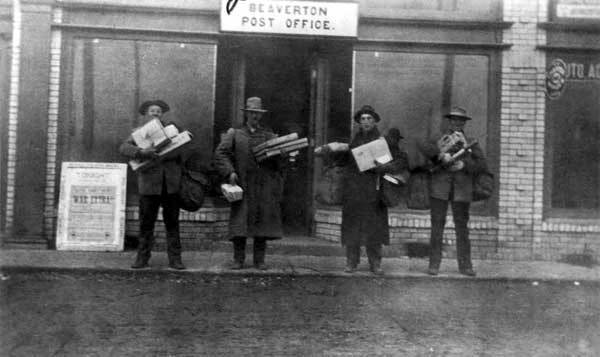
Left to right: A.M. Kennedy, W.B. Emmons, Victor Emmons, and Billy Boyd. The post office was located in the Cady Building on SW Farmington Road at the time the photo was taken. Notice the World War I -era newspaper.
A one-story wooden building has the store's name and Monopole painted on the facade. Men are standing on the wooden sidewalk and a horse-drawn wagon is at the left. Monopole was a well-known brand of canned goods. Mason Cady is at the right.
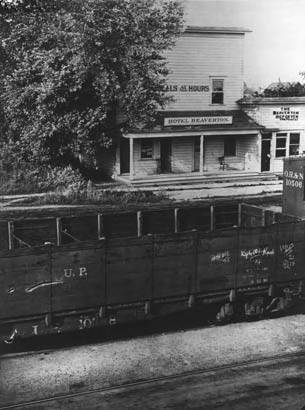
The two-story Hotel Beaverton and Beaverton Reporter were located on Farmington Road and Washington Street, east of Watson Avenue and across (south) from the train depot. Construction date has been tentatively identified as the 1880s. George Thyng owned the hotel about 1907 and sold it by 1910. This building was later known as the Commercial Hotel that was owned and operated by the Merlo family. An early address was 103 SW Farmington Road. The building was extensively renovated and later converted into apartments. It was torn down circa 1969.