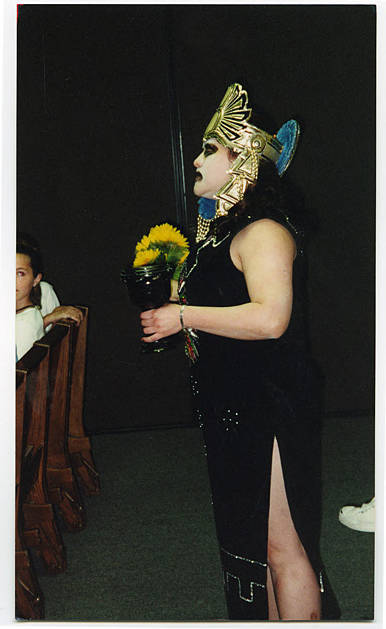
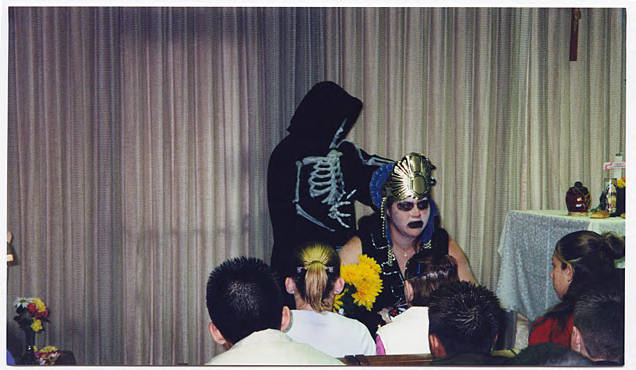
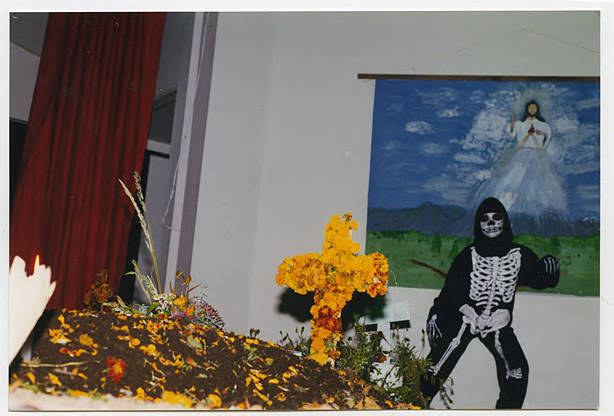
Diá de Muertos, or Day of the Dead, is a Latin American celebration honoring family members and ancestors who have passed away. The holiday grew out of an Aztec festival dedicated to a goddess called Mictecacihuatl, or Lady of the Dead. Here, a community member is dressed as Mictecacihuatl for a community celebration.
Community members dressed as a skeleton and the Aztec goddess Mictecacihuatl, or Lady of the Dead for Diá de Muertos. Diá de Muertos is a Latin American celebration recognizing family members and ancestors that have passed away. It is observed on November 1st and 2nd, closely tied to Catholic observances of All Souls Day and All Saints Day. Marigold flowers are often used to decorate for the holiday. For more information about Mictecacihuatl, see photo CCpic_315.
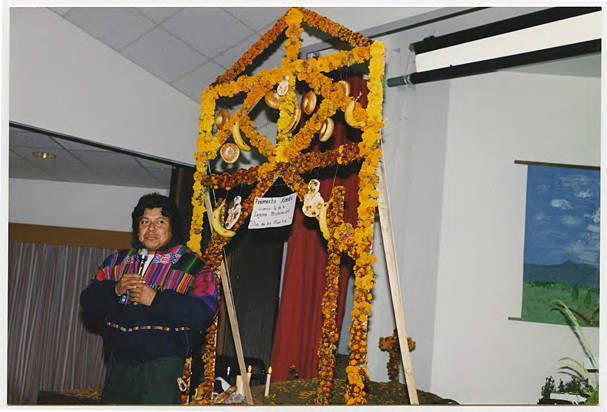
A community member speaking in front of a Diá de Muertos shrine. Diá de Muertos is a Latin American celebration recognizing family members and ancestors that have passed away. It is observed on November 1st and 2nd, closely tied to Catholic observances of All Souls Day and All Saints Day. Marigold flowers are often used to decorate for the holiday.
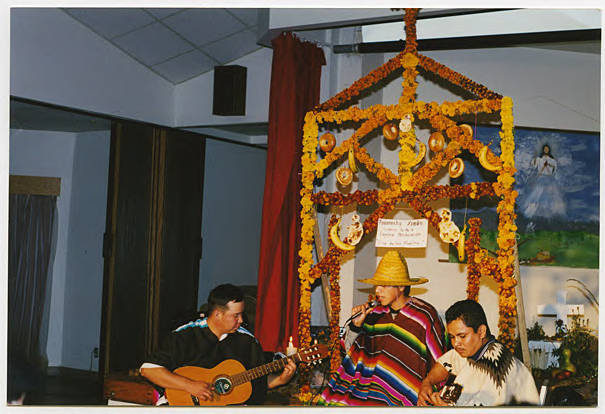
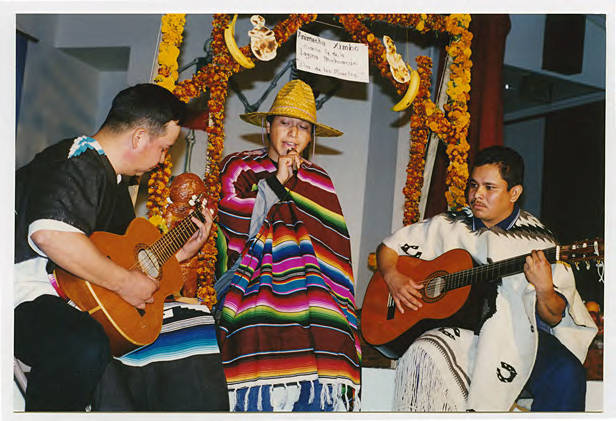
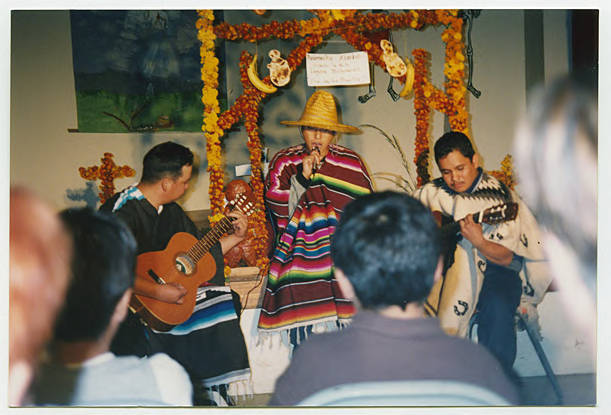
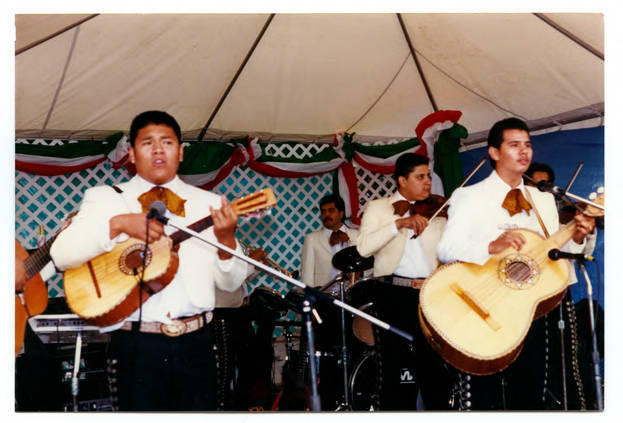
Musicians wearing traditional Mexican clothing perform in front of a Diá de Muertos shrine. Diá de Muertos is a Latin American celebration recognizing family members and ancestors that have passed away. It is observed on November 1st and 2nd, closely tied to Catholic observances of All Souls Day and All Saints Day. Marigold flowers are often used to decorate for the holiday.
Community members singing and playing music in front of a Diá de Muertos, or Day of the Dead, shrine. Diá de Muertos is a Latin American celebration recognizing family members and ancestors that have passed away. It is observed on November 1st and 2nd, closely tied to Catholic observances of All Souls Day and All Saints Day. Marigold flowers are often used to decorate for the holiday.
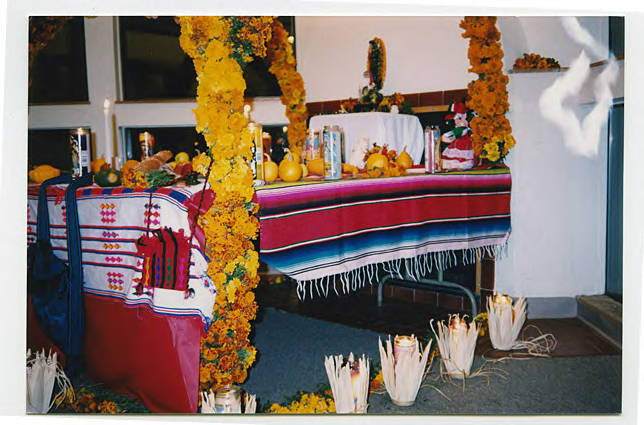
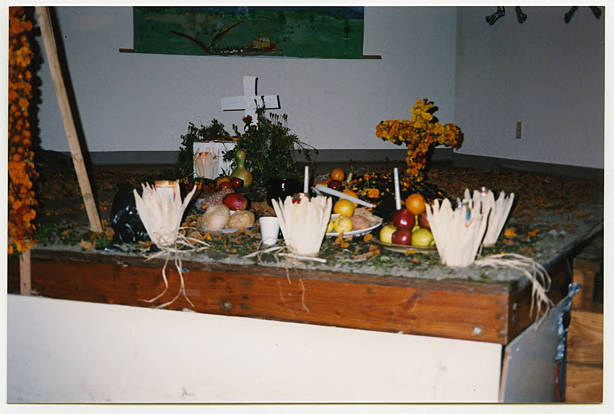
A shrine built at Centro Cultural in celebration of Diá de Muertos, or Day of the Dead. Food and gifts are placed out for family members and ancestors that have passed away. Diá de Muertos is observed on November 1st and 2nd, closely tied to Catholic observances of All Souls Day and All Saints Day. Marigold flowers are often used to decorate for the holiday.
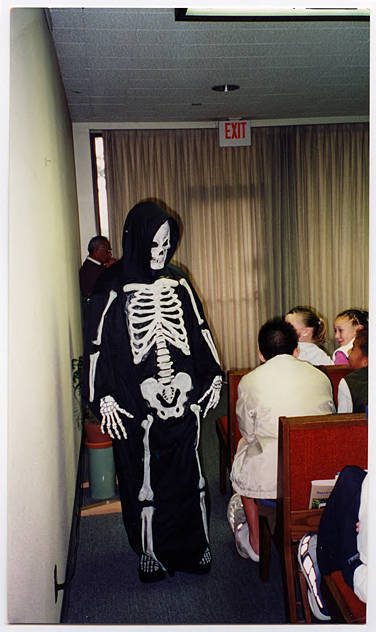
A community member dressed as a skeleton for a Diá de Muertos, or Day of the Dead, celebration. Diái de Muertos is a Latin American celebration recognizing family members and ancestors that have passed away. It is observed on November 1st and 2nd, closely
Diá de Muertos, or Day of the Dead, shrine. Food and gifts are placed out for family members and ancestors that have passed away. Diá de Muertos is observed on November 1st and 2nd, closely tied to Catholic observances of All Souls Day and All Saints Day. Marigold flowers are often used to decorate for the holiday.
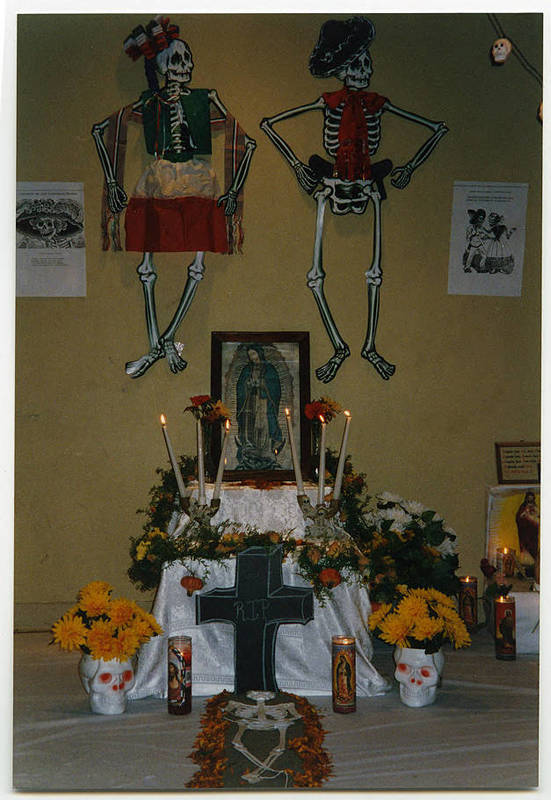
Diá de Muertos, or Day of the Dead, shrine. Food and gifts are placed out for family members and ancestors that have passed away. Diá de Muertos is observed on November 1st and 2nd, closely tied to Catholic observances of All Souls Day and All Saints Day. This shrine also includes a picture of Our Lady of Guadalupe.
Diá de Muertos, or Day of the Dead, shrine. Food and gifts are placed out for family members and ancestors that have passed away. Diá de Muertos is observed on November 1st and 2nd, closely tied to Catholic observances of All Souls Day and All Saints Day. Marigold flowers are often used to decorate for the holiday.
Community members singing and playing music in front of a Diá de Muertos, or Day of the Dead, shrine. Diá de Muertos is a Latin American celebration recognizing family members and ancestors that have passed away. It is observed on November 1st and 2nd, closely tied to Catholic observances of All Souls Day and All Saints Day. Marigold flowers are often used to decorate for the holiday.
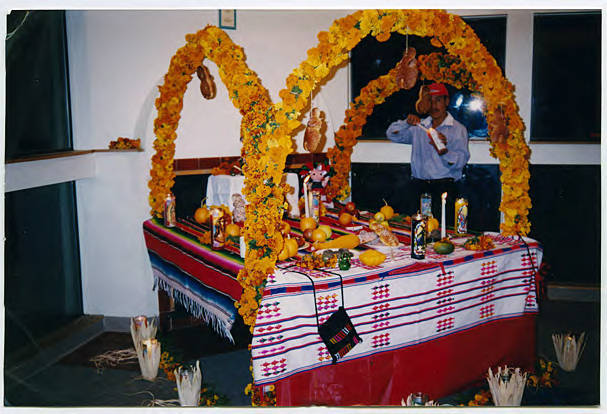
A community member lighting candles for a Diá de Muertos, or Day of the Dead, shrine. Diá de Muertos is a Latin American celebration recognizing family members and ancestors that have passed away. It is observed on November 1st and 2nd, closely tied to Catholic observances of All Souls Day and All Saints Day. Marigold flowers are often used to decorate for the holiday.
A community member dressed as a skeleton for a Diá de Muertos, or Day of the Dead, celebration. Diá de Muertos is a Latin American celebration recognizing family members and ancestors that have passed away. It is observed on November 1st and 2nd, closely tied to Catholic observances of All Souls Day and All Saints Day. Marigold flowers are often used to decorate for the holiday.
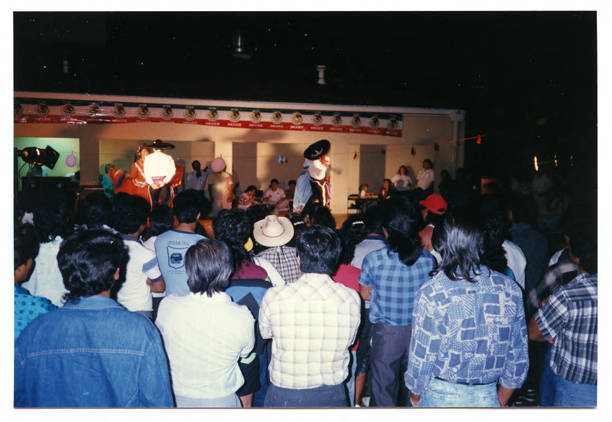
Photograph of community members performing a traditional Mexican folk dance on an outdoor stage. The banner hanging above the stage indicated that this is a Mexican Independence Day celebration, which is observed on the 15th and 16th of September.
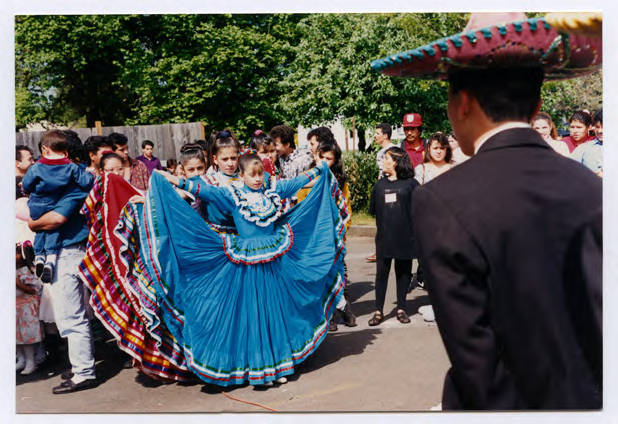
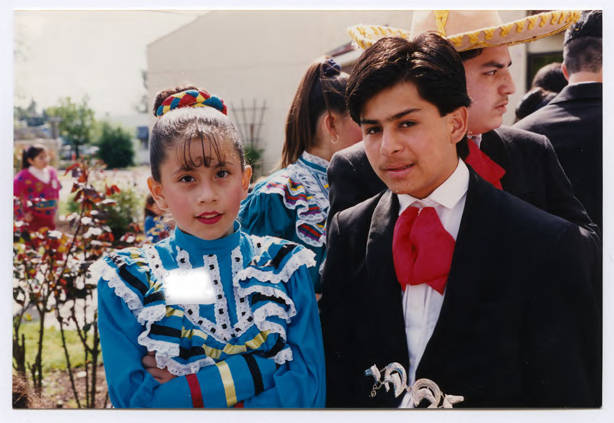
Photograph of girls wearing dresses from the Mexican state of Jalisco. These dresses are known for being styled after Spanish dresses, appearing in Mexico after it was colonized. The dresses are traditionally made out of cotton and are brightly colored and adorned with ribbons.
Children outside of Central Cultural, wearing traditional Mexican costumes. The girls are wearing dresses from the Mexican state of Jalisco. These dresses are known for being styled after Spanish dresses, appearing in Mexico after it was colonized. The dresses are traditionally made out of cotton and are brightly colored and adorned with ribbons. The boys are wearing mariachi costumes.
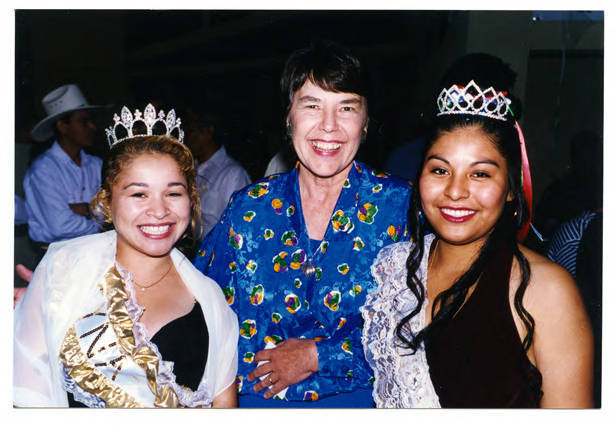
Portrait of two beauty pageant participants posing for a photograph with another woman. Mexican Independence Day, celebrated on the 15th and 16th of September, often includes pageants as part of the celebration.
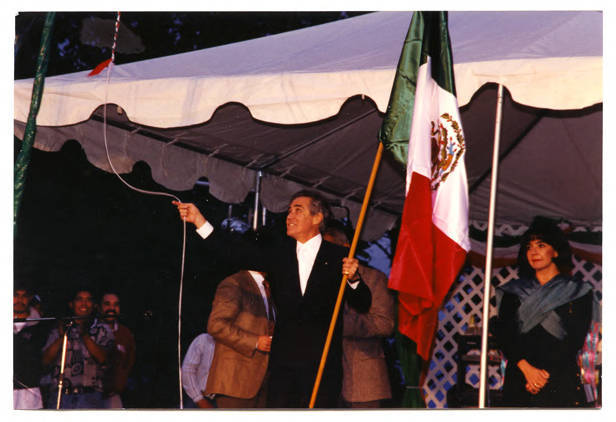
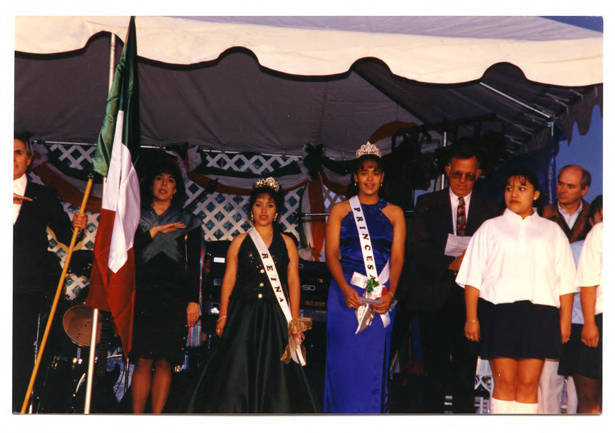
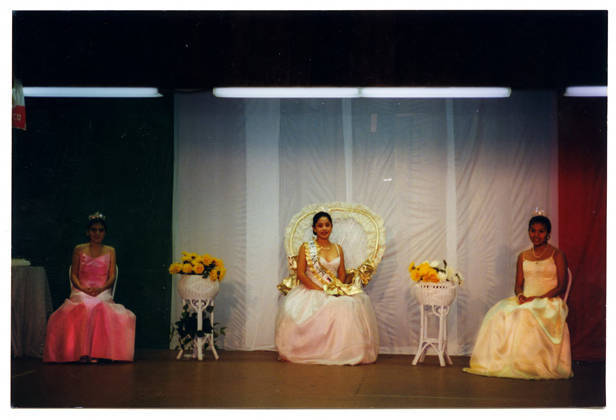
Photograph of a beauty pageant. Mexican Independence Day, celebrated on the 15th and 16th of September, often includes pageants as part of the celebration.
Photograph of three beauty pageant participants, sitting in front of a very large Mexican flag. Mexican Independence Day, celebrated on the 15th and 16th of September, often includes pageants as part of the celebration.
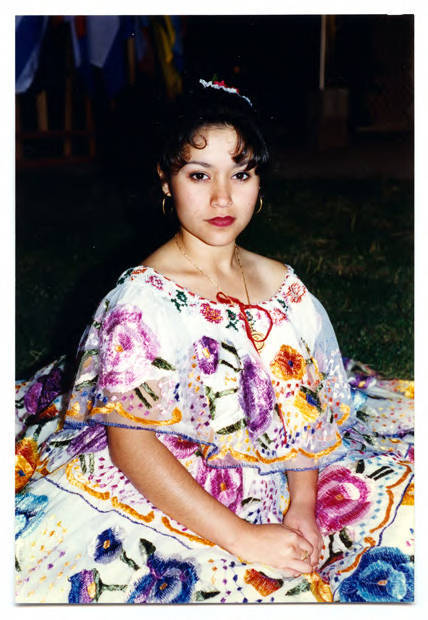
Close in portrait of a woman seated and modeling an embroidered dress that is traditional to the Yucatán Peninsula. Each village would have its own style of embroidery, with this traditional carried over from the Mayan culture. See also CCpic_286 and CCpic_287.