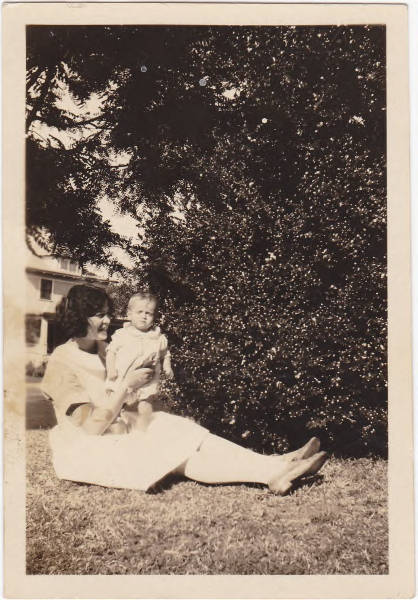
Mildred A. Crowther Burk sitting on the lawn holding Lloyd Franklin Burk who is standing on her lap. Mlidred is wearing a short sleeved knee length dress with a large round collar.
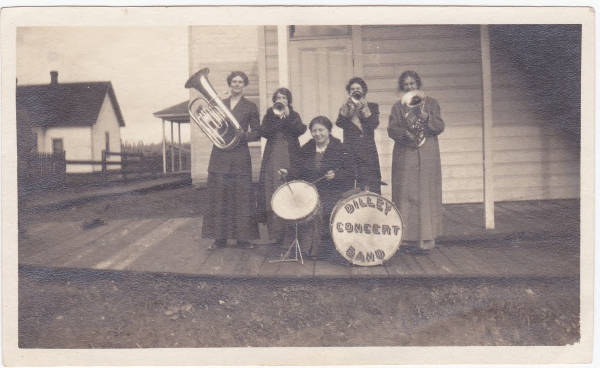
Five women pose on a porch with their musical instruments. The bass drum has Dilley Concert Band printed on the front. The women are wearing long dresses and long overcoats.
Seventeen young men in band uniforms pose on front porch steps with their musical instruments. The bass drum has Dilley Concert Band printed on the front.
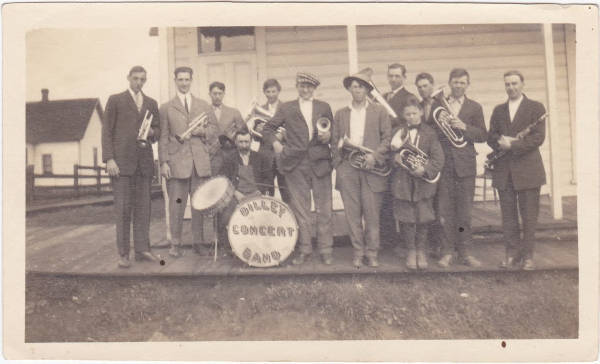
Twelve young men pose on a front porch with their musical instruments. The bass drum has Dilley Concert Band printed on the front. The band members are dressed in their own suit clothes, some with ties.
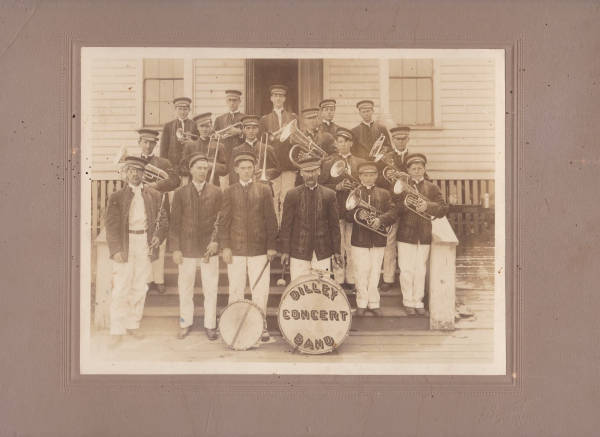
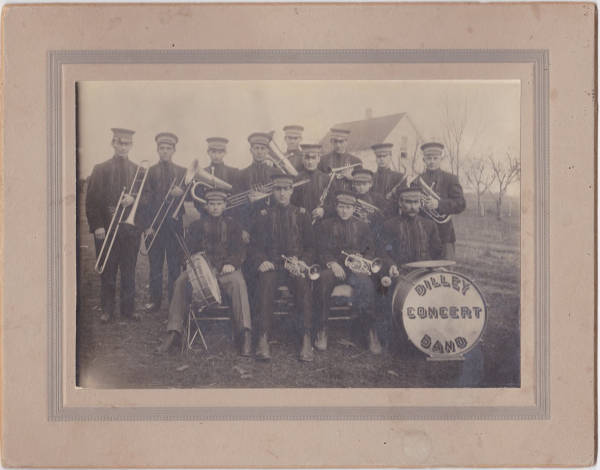
Fourteen young men in band uniforms pose outside with their musical instruments. The bass drum has Dilley Concert Band printed on the front. Members of the Dilley Concert Band gather for this group picture when the community was a thriving small town known as Dilley Station. Seated from left are Cecil Hughes, Walter Wolfe, Earnest Wolfe, Thomas Hundley. Back row, ??, Elmer Scheese, Ray Scheese, Frank Crowthers (father of Mildred Crowthers Burk), John Anderson, Peter Borgen, Roy Vail, Frank McBride, Ray Wolfe and Carl Peterson
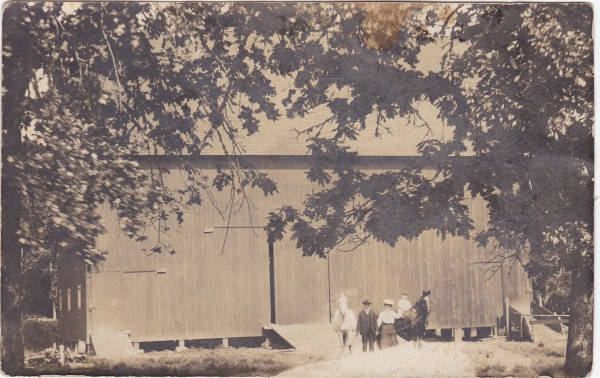
A man and woman are standing between two horses. A child is sitting on the horse on the right. All are dressed in fine clothing. Behind the family is one wall of a barn.
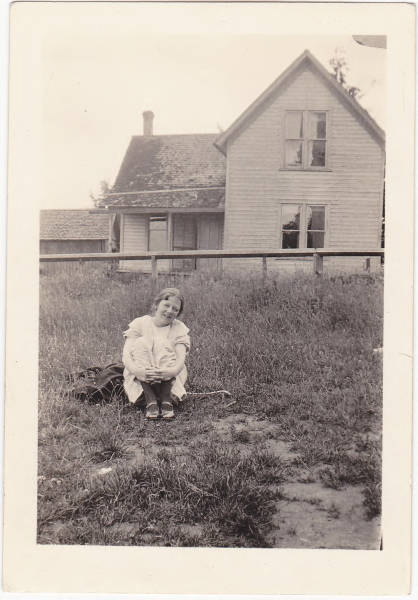
Mildred A. Crowther (later Burk) about 12 years old is sitting in the grass in front of a house. The girls is wearing a short sleeved light colored long dress, dark socks and dark “Mary Jane” shoes. Mildred was born Oct. 4, 1908 in Dilley, Or. Where she was raised and died Jun. 9, 1998. In 1929 she married Robert R. Burk. Behind her is a top rail fence that probably has wire fencing strung between the posts. Behind the fence is a two story house with a gable on the right half of the house facing the photographer. The front porch covers the front from the gable to the left corner of the house. There is an open screen door on the front door.
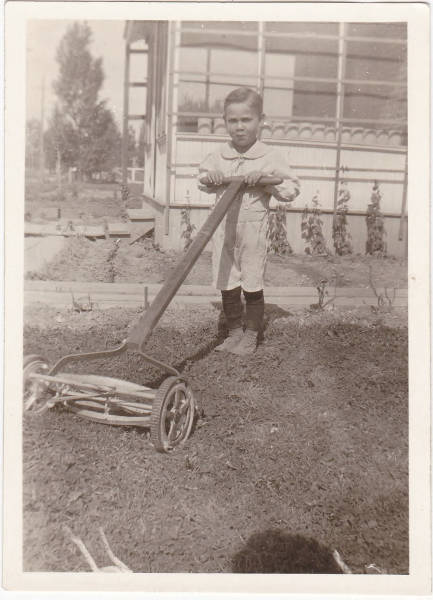
A boy about 4 years old standing behind a push type reel lawn mower in a well maintained yard. Behind his is what looks like an enclosed porch or entry. The boy is wearing a long sleeved shirt with a broad rounded collar and tied together at the neck. He is also wearing knickers, leggings and button shoes The mower has metal “tires”.
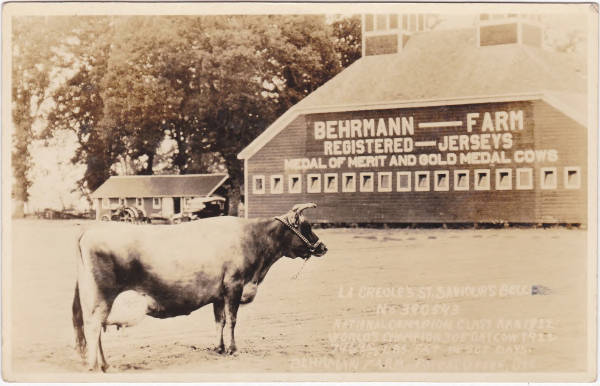
A cow is positioned, facing to the right, in front of the broad side of a barn. On the side of the barn has in large letters is written BEHRMANN – FARM, Registered – Jerseys, Medal of Merit and Gold Medal Cows. The barn is quite fancy for a barn. There is a smaller outbuilding on the left, trimmed the same as the barn. There looks to be a metal-wheeled gasoline powered tractor and an early to mid 1920’s phaeton car in front if this building.
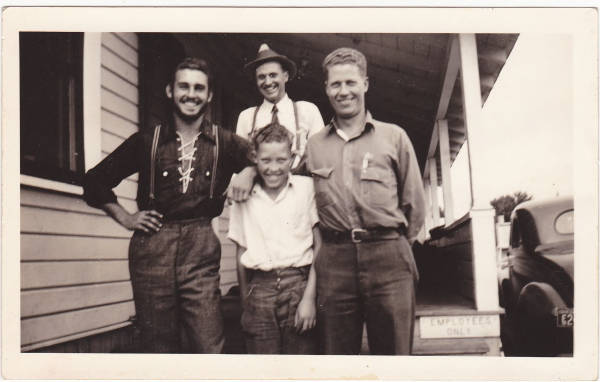
Three men and a boy about 14 years old are on a porch posing for the photographer. Two men are wearing work clothes, one with a lace-up shirt. The other man is wearing a white shirt, suspenders, tie and a hat. The boy is wearing a short sleeved shirt. The picture was taken a the current Department of Forestry, Forest Grove District just west of Forest Grove on Gales Creek Road.
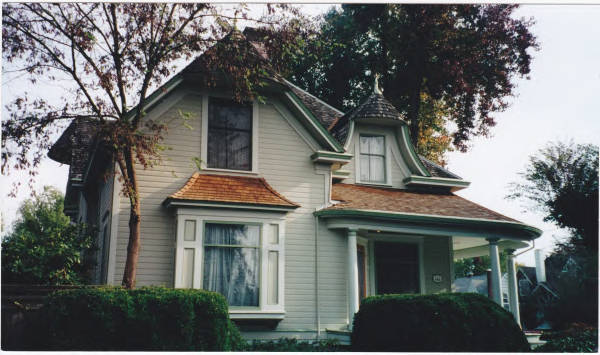
This two story house, built in 1905, is located on the corner of 17th Avenue and Main Street and is known as the A. G. Hoffman House and Green Gables. Queen Ann, Classic Revival and arts and crafts elements are represented on this house.
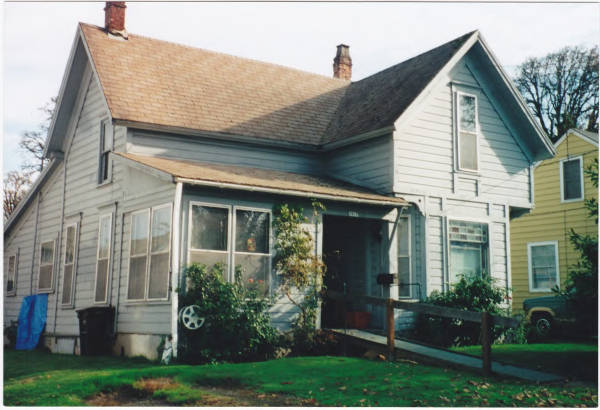
This two story house is located at 1817 Ash Street and is known as the Lawrence Pratt House. The house has a gable on the right side of the front with a roof sloping down to the front porch. It looks like the porch has been enclosed except for the entry way. An interesting feature is the wall treatment under the front gable on the ground floor. The front corner walls are angled at what looks like a 45 degree angle to form a bay window of sorts. This creates a rectangular overhang of the second story above the angled walls. There is a gable on the left side of the house.
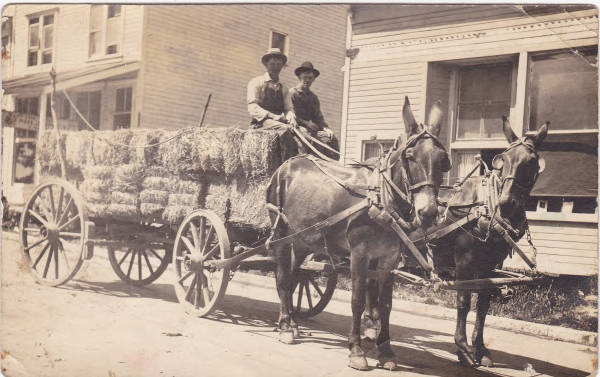
A wagon loaded with bales of hay and hitched to a two-horse team is standing in the street in town with storefronts behind the horses and wagon. Two men are sitting on the hay bales with one man holding the reins. All are looking at the photographer. The store behind the wagon looks to be a millinery store. The street could be packed dirt or pavement. There is a concrete curb but no sidewalk.
Two girls posing for their picture. The girl on the left is shirtless, has short curly hair and looks to be 1+ year old. The girl on the right is wearing a top that drapes over her shoulders. She has longer curly hair and looks to be 3+ years old. This looks to be a studio photograph.
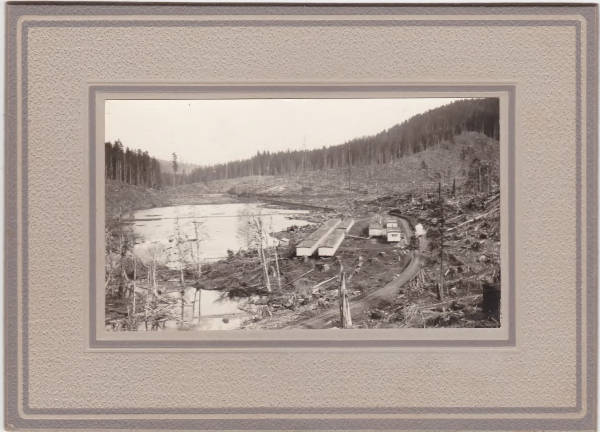
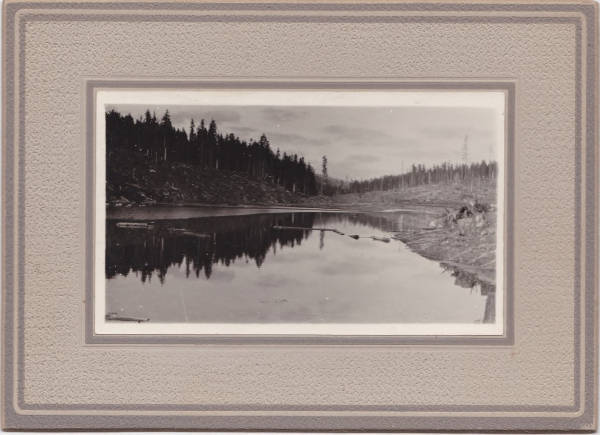
Picture looks to be at the end of a lake or a small body of standing water. The area around the lake to the shoreline has been cut of standing trees. On the right hand side of the body of water is a logging camp. There are two rows of buildings that look to be the kind that are transported by rail. To the left of these buildings are a few smaller buildings. A steam engine is beside these buildings and is operational. In the background are standing trees of a heavily wooded area.
Picture looks to be at the end of a lake or a small body of standing water. The area around the lake to the shoreline has been cut of standing trees. In the foreground is a logging camp. There are two rows of buildings that look to be the kind that are transported by rail. To the left of these buildings are a few smaller buildings. In the background are standing trees of a heavily wooded area.
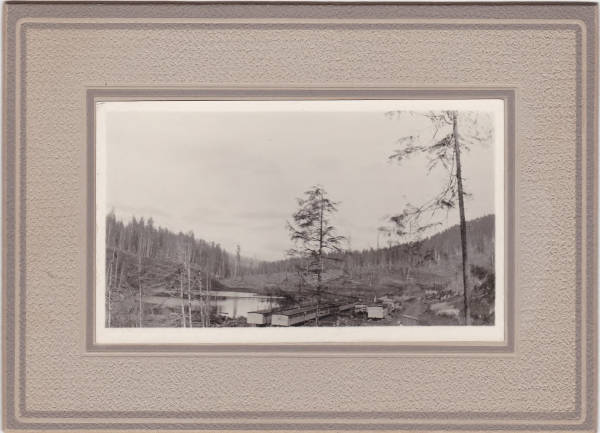
Picture looks to be at the end of a lake or a small body of standing water. The area around the lake to the shoreline has been cut of standing trees. In the background are standing trees of a heavily wooded area.
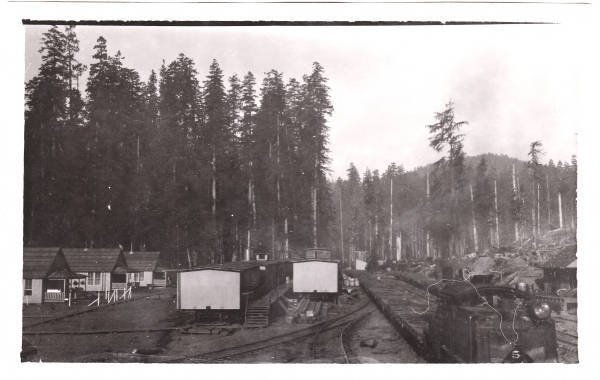
A logging camp in the woods. In the middle of the picture there is a group of portable buildings sitting on tracks that can be transported by rail. To the left is a row of three houses that look to be more permanently established. On the right is a Shay steam engine with a number “5” on the back of the tender. This camp is in a heavily wooded area.
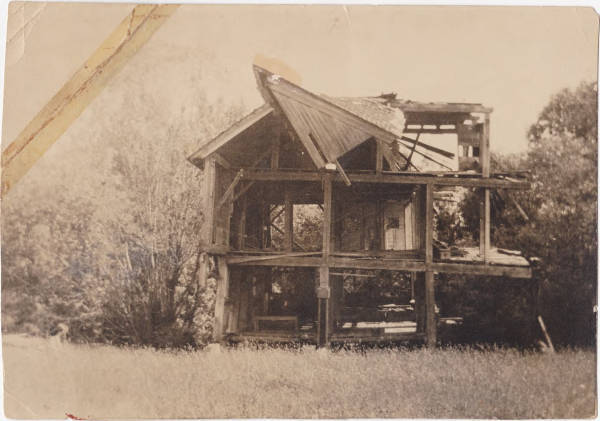
This gristmill was located on the Tualatin River in the Dilley area, just off Anderson Road south of Forest Grove. Horace Parsons with the help of A.T. Smith chose the location of the mill at a crossing of the Tualatin River later called the Jason Lee Ford. The mill started producing flour in the spring of 1850. The mill used an undershot water wheel to power the mill to make flour. The river water ran under the wheel rather than over the top. In this photograph, the mill was already in poor condition. The side facing the camera has no walls and part of the roof is collapsed onto the third story floor. Brush and trees are growing up around the three sides with tall grass in front.
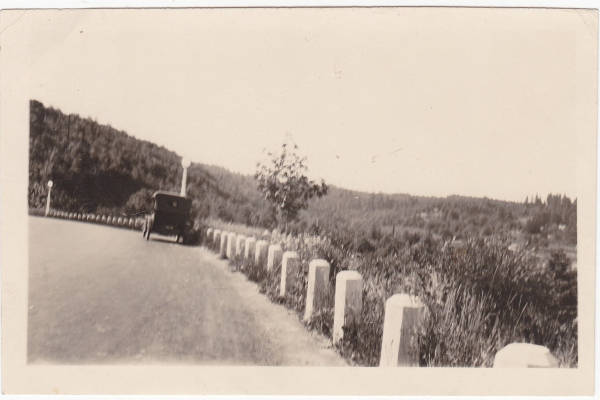
A car parked on the side of a road. The car looks to be an early to mid 1920s soft top, open car (phaeton). The road appears to be packed dirt and the picture is of a sweeping curve on an incline with guard posts lining the edge of the road on the right. Two single globe street lights are visible in the picture. A treed hillside is in the background.