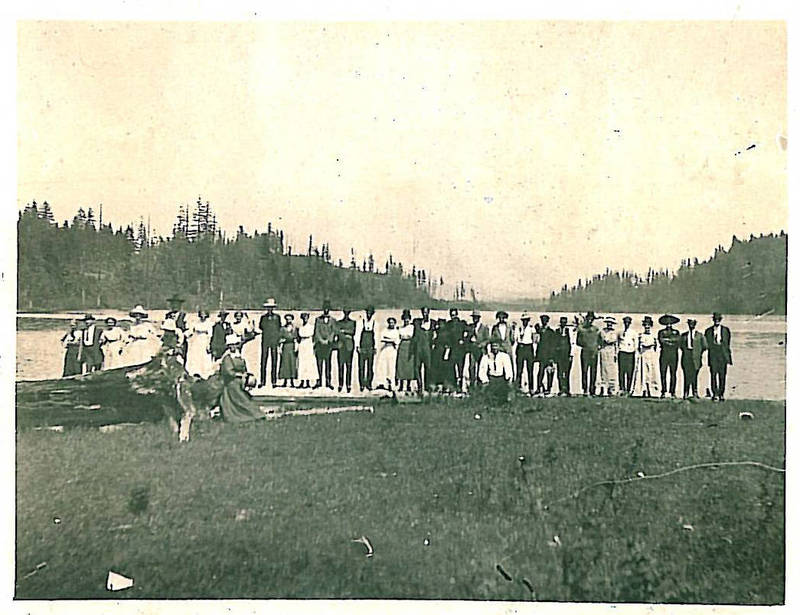
A black and white photograph of the Cloverleaf bible class of Tigardville at Sucker Lake (Oswego Lake), Oregon. Men and women stand shoulder to shoulder along the edge of the lake. A woman sits on a large tree stump lying in a grassy area in the foreground. The lake extends to each side and behind the group. Wooded hillsides can be seen at the far end of the lake in the background.
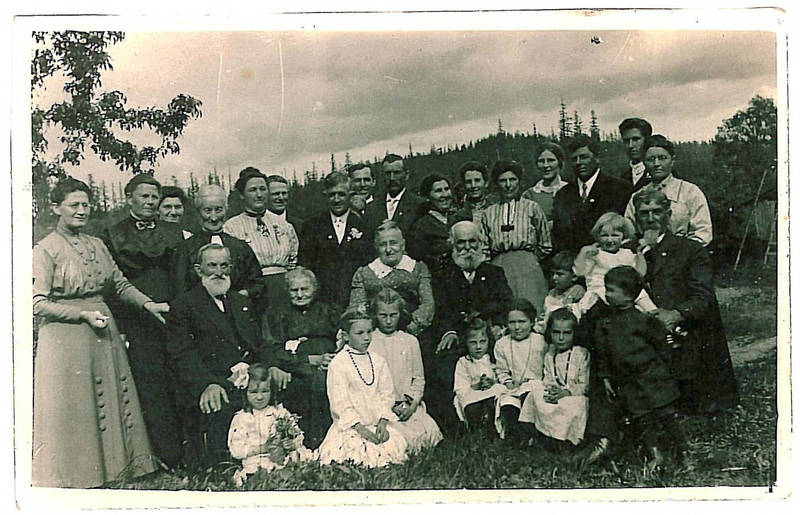
A black and white photograph shows members of the Emanuel Evangelical Church of Tigardville as they pose for a group picture outside on an cloudy day. The group is arranged in three rows--some sitting, some standing--on the grass. A wooded hillside is behind them in the distance. A leaf covered branch enters the picture frame in the upper left corner. To the right of the group can be seen a small wood structure with a wooden ladder leaning it. The gentleman sitting on the first chair on the left side of the front row is Friedrick Johann Brandt who helped organize the building of a church in 1885-1886 and taught the Senior Men's Bible Class. The Emanuel Evangelical Church was originally located at the east end of Bull Mountain Road, along the northbound lanes of present day SW Pacific Highway. The German Language was used for morning services and Sunday School. The Evangelical Church exists today as the Trinity Evangelical Church, located on 121st Avenue in Tigard.
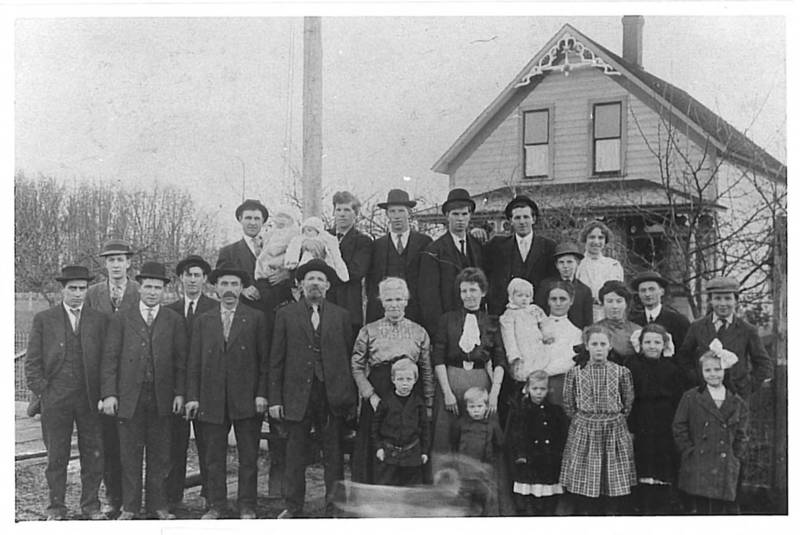
Black and white photograph of three generations of the Scheckla family posing in front of their home in Durham on New Year's Day, 1912. Family patriarch Bartholomew Scheckla (sixth man from left) and his wife Tekla (to his left) are standing in the front row. The men all wear suits, ties, and hats. Two men are holding two infants in the back row. Bare trees and a wooden pole rises from behind the men. The home is a two-story residence with a gabled roof. Behind the family, the house's facade shows a roofed porch, two double-pane windows on the second floor and a decorative bargeboard above the windows. The Scheckla family were responsible for clearing the land for farming and roads in the Durham area around the turn of the last century.
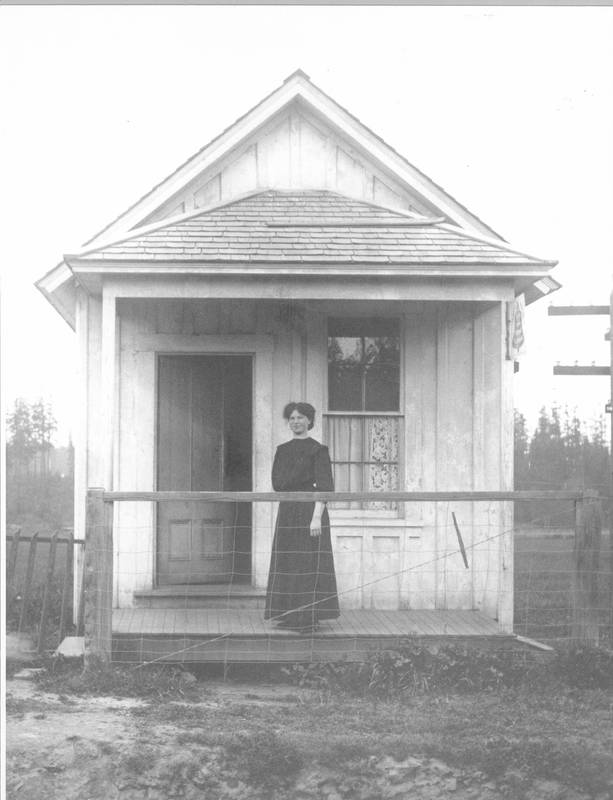
A black and white photograph of Rose Scheckla in a black dress standing on the porch of the first Tigardville Telephone Office. The telephone office is a one story, white rectangular building with a gabled roof and covered porch. At the front of the office is a doorway on the left side and a double pane window with a curtain in the lower half of the window on the right side. A wood and wire railing runs along the front of the porch. A small sign featuring the outline of bell is partially visible in the upper right-hand corner of the porch space. Rose Scheckla was a telephone operator from 1908-1909. Telephone service first came to Tigardville in 1902 when telephone line was laid from Beaverton to Charles F. Tigard's Tigardville General Store. From 1902 until 1905, the telephone switchboard was located in the Tigardville General Store and operated by the Tigard family.
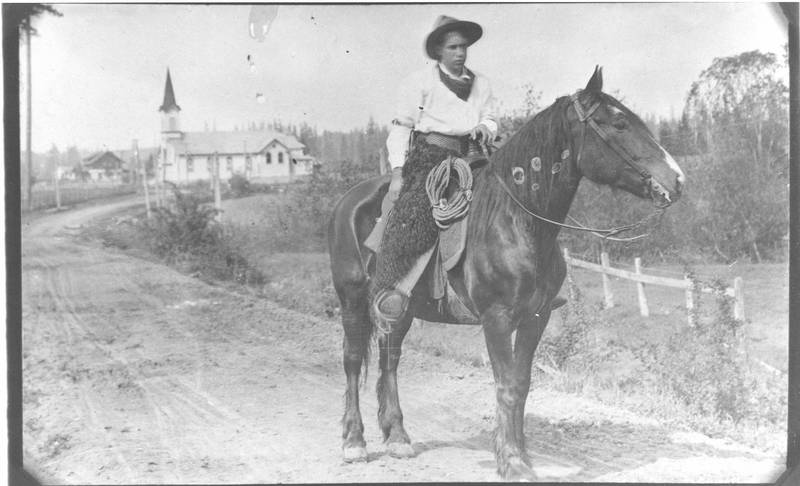
A black and white photograph of Tigard resident Harry Kuehne on horseback along Main Street in Tigard. The rider and the horse are both facing facing north. The rider is wearing a hat, a white shirt with a dark bandana around his neck, and a pair of chaps known as woolies. His left hand is resting on the saddle horn and is holding the reins. A loop of rope hangs from the right side of the saddle. St. Anthony's catholic church can be seen in the background. Harry Kuehne operated H.R. Kuehne Livery Stable and Farm Equipment on Main Street in Tigard.
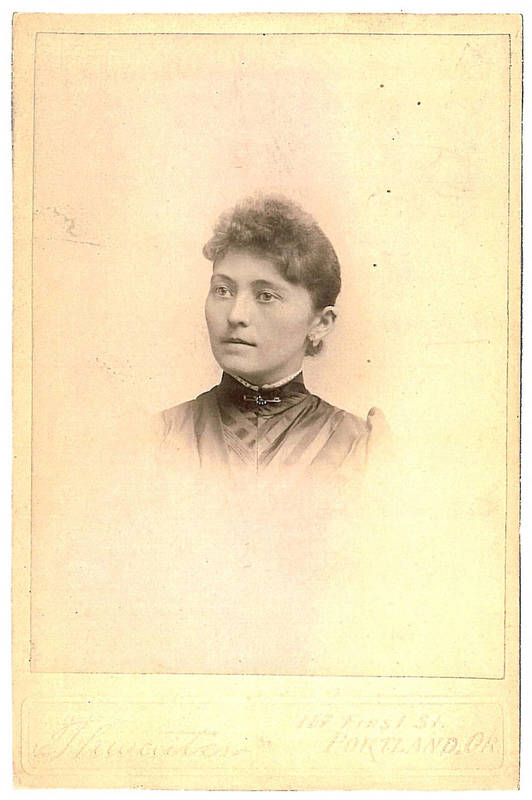
Elizabeth Holman Vincent was the wife of Dr. Sylvester Vincent, the first doctor in Tigardville. Elizabeth Holman was a local childless widow and sister of Rosa Tigard (Mrs. Charles F. Tigard).
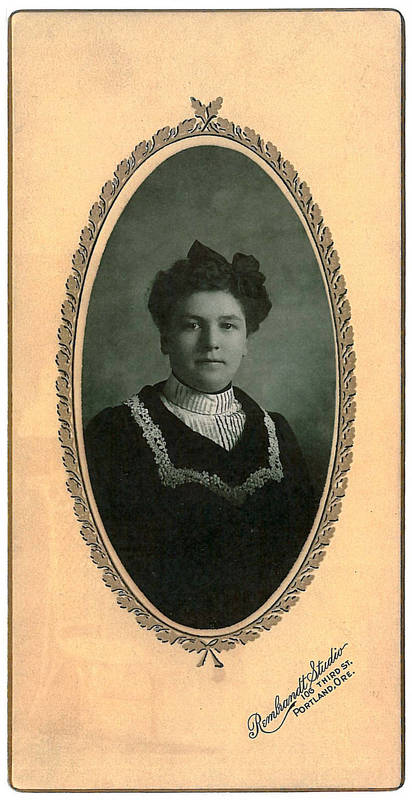
A studio portrait of Anna (Annie) Pollard McDonald, wife of Herbert McDonald. Anna is wearing a black dress with a high-collared white blouse underneath the dress. A white embroidered boarder surrounds the neckline of the dress. A black ribbon adorns her hair. Anna and Herb McDonald operated the McDonald Store (formerly the Tigardville General Store) from 1909 until the mid 1950s.
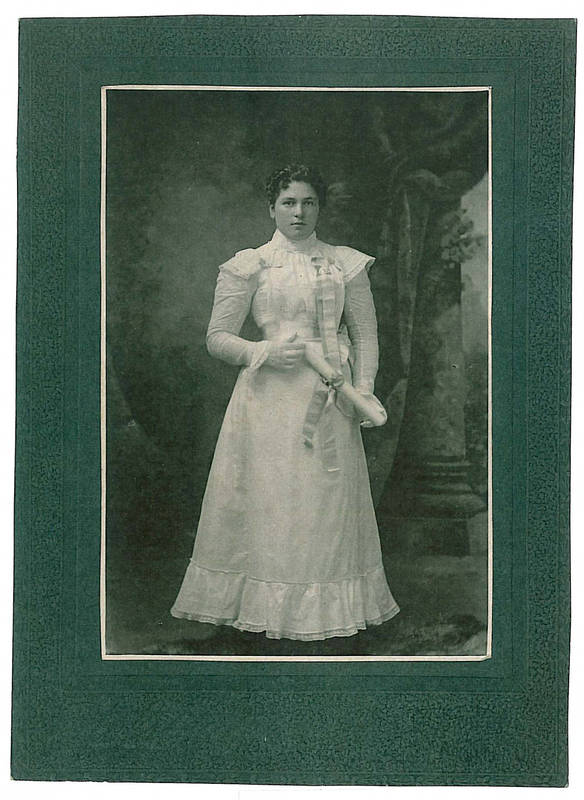
A sepia-toned image of Anna (Annie) Pollard posing in a photography studio holding a scrolled diploma in her left hand. Anna wears a high-collered, long-sleeved, full-length white dress. A white ribbon is affixed to her left breast. A column and curtain are partially visible behind her. Anna was a school teacher at Cipole, Bend, New Era, and Durham schools before she and her husband (Herb McDonald) bought the Tigardville General Store from Charles Tigard about 1909 and renamed it the McDonald Store.
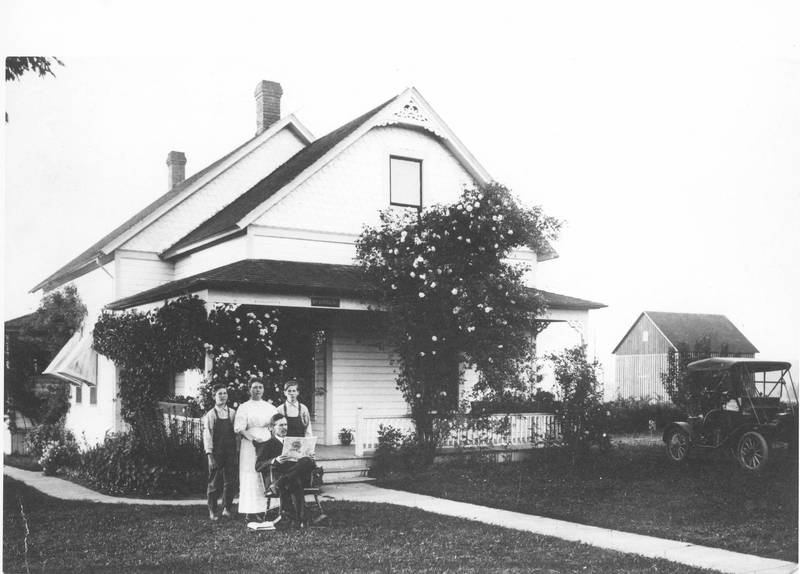
A black and white photograph of the Sylvester Vincent family posing on the front lawn of their home in Tigard. Pictured from left are Arthur Herbert Vincent, Mrs. Elizabeth Vincent, Dr. Sylvester Vincent (seated in a rocking chair with a newspaper) and George Sylvester Vincent. Dr. Vincent is dressed in a dark suit and white shirt, Mrs. Vincent is wearing a full-length white dess and the boys are wearing overalls. The residence is a white, one and one-half story home with a gabled roof. A concrete walkway leads to a roofed porch and goes around the left-side of the house. The porch is partially covered by a large rose bush and vines. A nameplate affixed to a crossbeam of the porch reads 'Dr. Vincent.' A 1911 Maxwell automobile is parked in the yard to the right of the house. A gabled-roof barn is located behind the automobile. Dr. Vincent was Tigardville's first doctor and had an office in Tualatin; his 1911 Maxwell was the first automobile in Tigard.
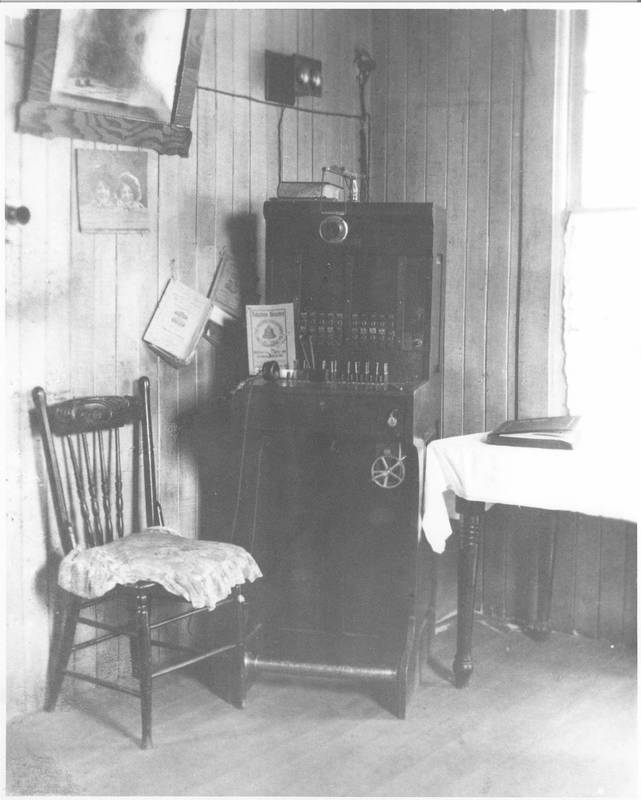
A black and white photograph of the telephone switchboard inside the Tigard Telephone Office. The room's interior is paneled with wood. A chair with padded seat is located to the left of the switchboard. Behind the chair and hanging on the wall is a photograph of two women. A framed mirror or picture is located above the photograph. To the right of the switchboard is a table covered by a white tablecloth; a book lies on the table. On the top of the switchboard is a large book. A telephone directory sits on the switchboard near the telephone line ports and other directories hang nearby on the wall.
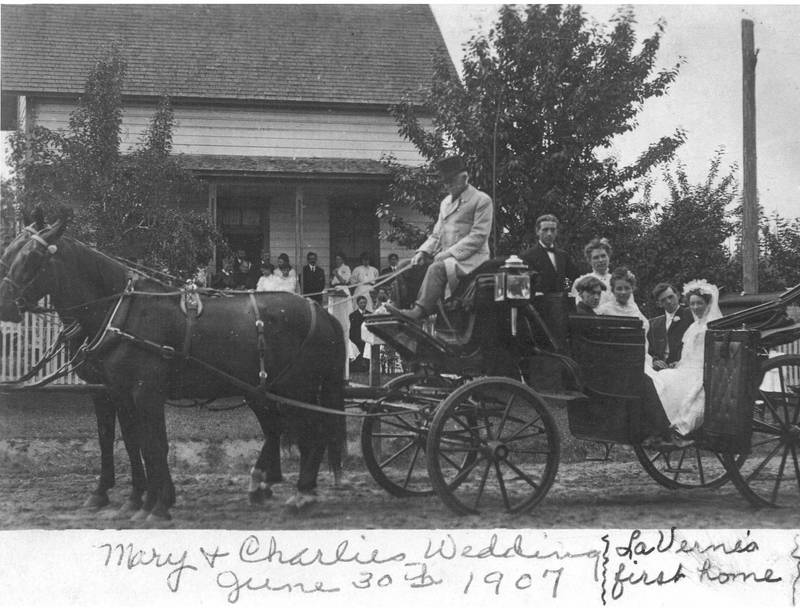
A black and white photograph of the Mary Brandt and Charles Beyer wedding party in a horse-drawn carriage parked outside of a house in the background. The carriage driver wears a top hat and is holding the reigns of the horses. Wedding guests are assembled on the porch of the house under a shed roof. Mr. and Mrs. Beyer's were residents of Tigard for over 50 years. The carriage in this picture was said to be rented from the Portland Hotel in downtown Portland, OR.
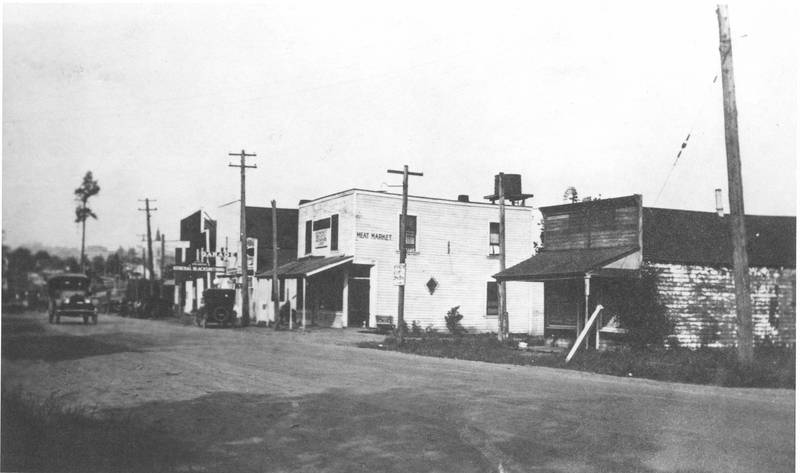
A black and white photograph of Main Street in Tigard, looking south. A black sedan drives north along Main Street. Telephone poles and four commercial buildings line the right side of the street. The building on the extreme right with a porch and shed roof appears to be vacant. The two-story white building with a shed roof to its left has the words 'meat market' painted along the side wall. To the left of the meat market is the William Ariss blacksmith shop.
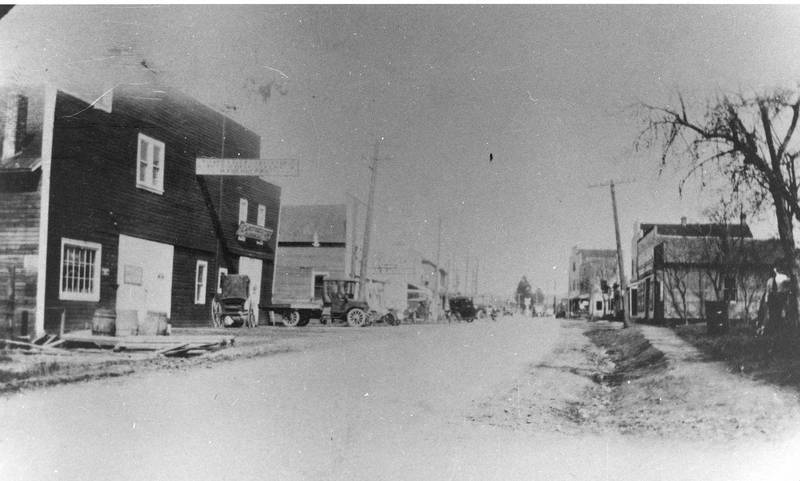
A black and white photograph on a sunny day of Main Street in Tigard, looking north. A carriage, a flat-bed truck and several passenger vehicles are parked along the left side of the street. A gully lines the right side of the dirt street. False front commercial buildings and telephone poles appear up and down the street. The second building on the left side of the street is the William Ariss blacksmith shop. Across the street from the blacksmith and north about a block is the Germania Hotel.
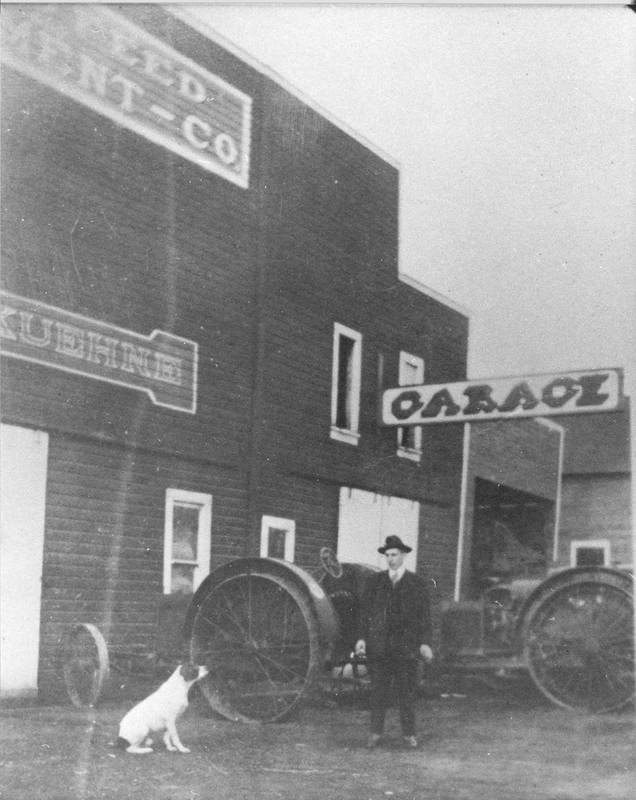
A black and white photograph of Harry Kuehne and a dog standing in front of the H.R. Kuehne livery stable and farm equipment store on Main Street in Tigard. Harry Kuehne is dressed is a three-piece suit and hat. Two steel wheel tractors are parked behind him. The dark-colored, false front building has two large white garage bay doors on the ground floor and two narrow windows between them. On the second level to the left are two partially obscured signs: the top sign reads 'feed ment-co.' and the lower sign reads 'Kuehne' On the second level to the right are two narrow windows with a 'garage' sign extending from between them.
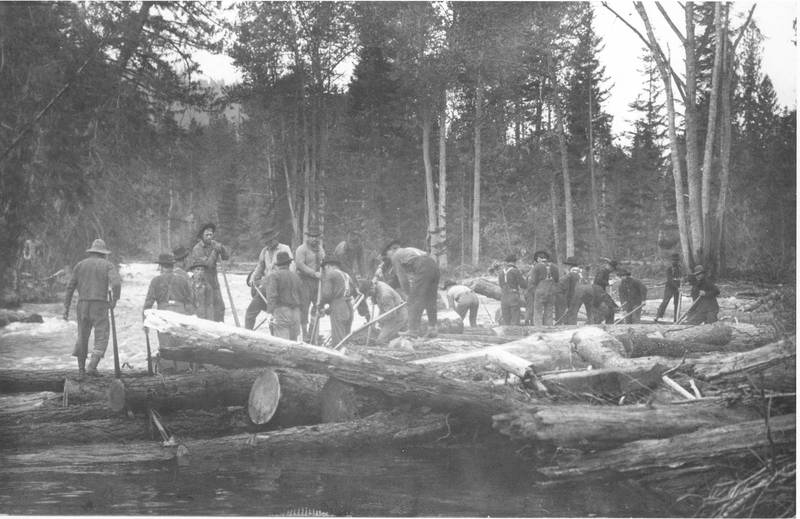
Black and white photograph of several men standing on a log jam at the edge of a body of water in the Tigardville area. The Tualatin River was considered at one time in the late 19th century a major log highway for moving lumber to saw mills.
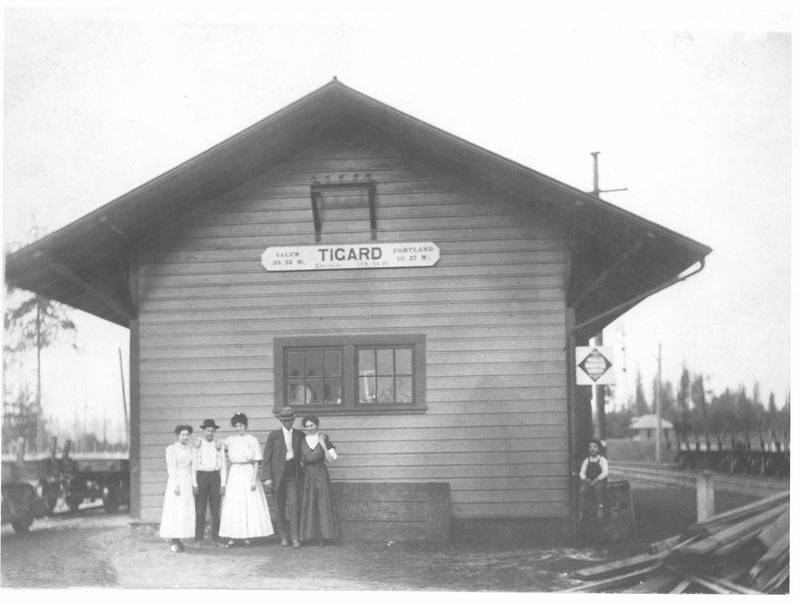
A black and white photograph of men, women, and one child posing at one end of the Tigard Depot, Oregon Electric Railway. At the left side of the depot, two women in white dresses stand on either side of a man wearing a dark hat, white shirt and suspenders, and dark pants. To the right of that grouping, a man stands with his left arm around a woman. They are holding their left hands together. The man wears a hat and jacket, a white shirt, and dark pants. The woman is wearing a full-length dress. To their right at the corner of the depot building, a boy wearing overalls is sitting down facing the photographer. The Tigard depot was located on Main Street in Tigard along the south side of rail line. A November 20, 1907 article in the Oregonian reported that the Oregon Electric Railway's last spike connecting Portland and Salem was driven "near Tigardville."
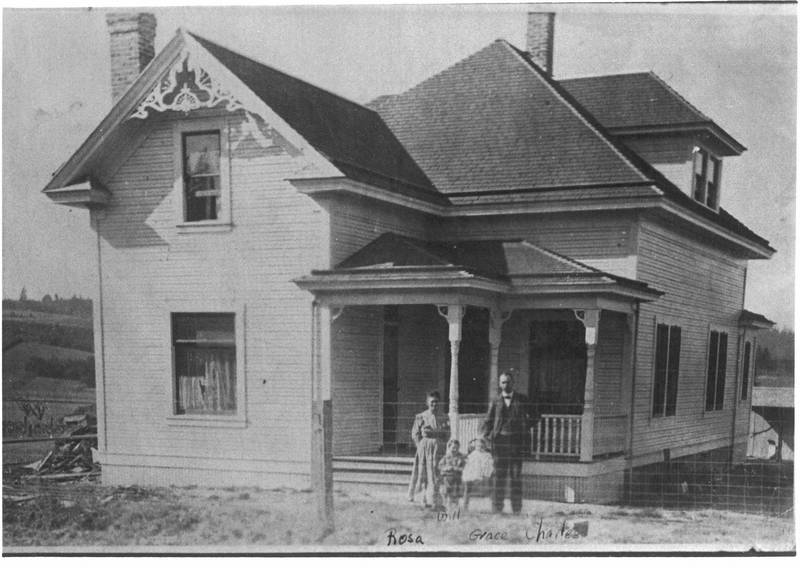
A black and white photograph of the Charles F. Tigard family standing in front of their second home. A man and woman stand in front of a porch and are at either side of two young children sitting on chairs. A wire fence separates the photographer and family. The woman wears a full-length dress and the man wears a three-piece suit with a bow tie. The two-story house features a gabled roof, a decorative bargeboard on the facing edge of the roof and a dormer window on the right side. Two chimneys extend from the roof. This was the second home occupied by the Charles Tigard family and is currently located at 11180 SW Fonner Street in Tigard.
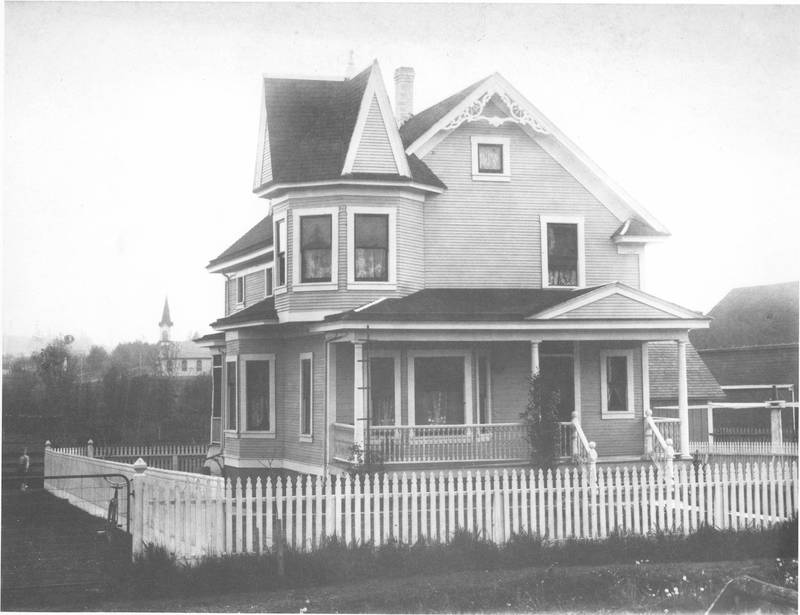
A black and white photograph of a two story, Queen Anne style home with a gabled roof and surrounded by a yard and a white picket fence. The first floor exterior of the home features a set of steps at the front-right corner that leads up to a hipped-roof porch surrounded by a low railing. A large bay window is seen along the left side of the house. The second floor of the house features a turret containing three visible double-pane windows and three intersecting, steep-pitched gabled roofs. To the right of the turret a chimney rises from the roof. A decorative bargeboard adorns the end of the gabled roof. The bell tower of St. Anthony's Catholic Church can be seen protruding above the horizon to the left of the house. The Nash home was located on Tigard Avenue and was built by Charles Shamburg in the 1890s. The Nash family resided here until the late 1920s.
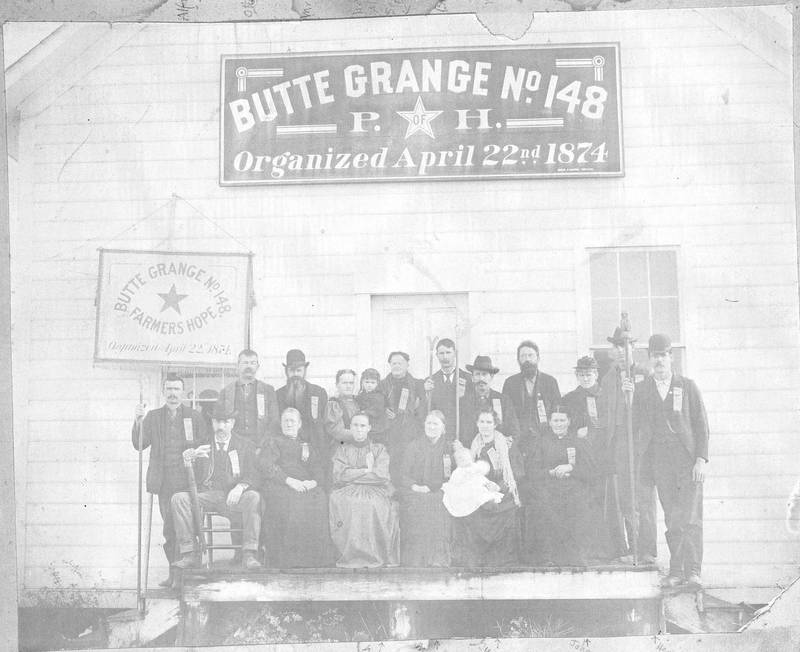
A faded black and white photograph shows various members of the Butte Grange No. 148. The members pose on the porch landing in front of the Butte Grange Hall, a white clapboard-sided building with a gabled roof. Behind the members is a doorway into the grange hall. Double-sash windows are visible to the left and right of the doorway. Above the doorway and the left window are two signs with the same inscription: 'Butte Grange No. 148 / P. of H. / Organized April 22, 1874' Three men standing in the back row each hold a staff, and another man standing to the far right holds a staff with an owl carving on top. Several men and one woman are wearing hats. A woman in the front row holds an infant, and a woman in the back row holds a young girl. All members have a ribbon pinned to their left breast. In 1874 when the Butte Grange was established, the area around present day Tigard was known as Butte and East Butte.
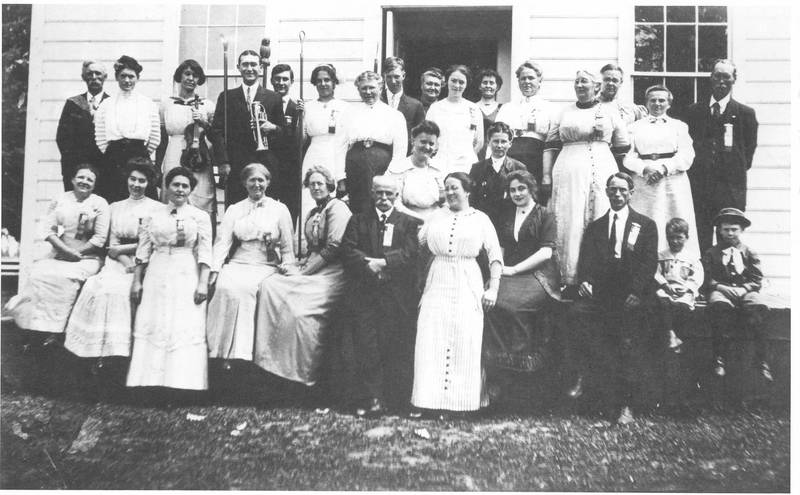
A black and white photograph of male and female members of the Tigard Grange. The members are arranged in two rows: the front row members sit on the edge of an uncovered porch landing and the back row members stand behind them on the porch. In the back row, the third person from the left, a woman holds a violin in her left hand. To the right of her, a man holds a staff in his right hand and a trumpet in his left hand. Behind him, another man holds a staff that features a owl carving at the top end. To his right, a woman holds a staff in her left hand. Two children are seated on the far right of the front row. Many members of the group display award ribbons on the left side of their chest.
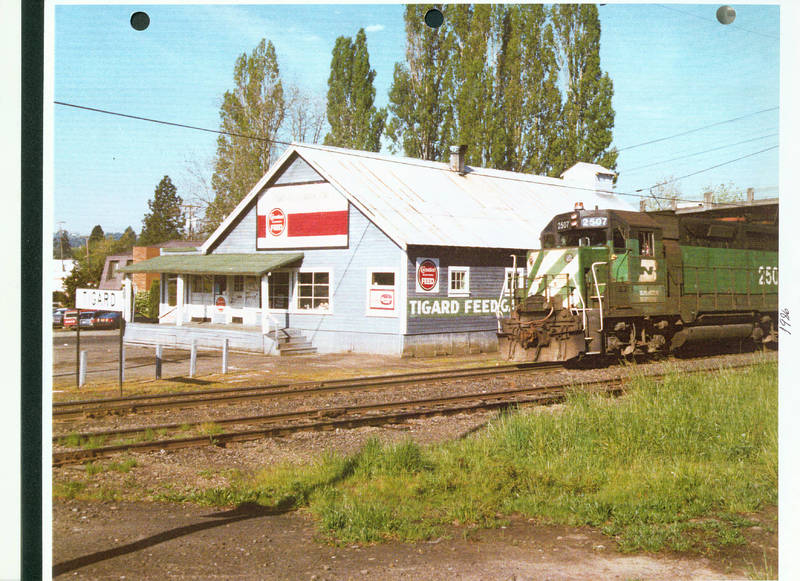
A color photograph of a rectangular building, one and one half stories high, with a gabled roof covered with corrugated tin. The building is clad with light-blue colored tongue and groove siding. A shed roof porch, supported by three square posts, stretched across three-quarters of front facade. Side stairs lead to the porch. Above the porch is a large red and white sign labeled 'Carnation Feed'. Two smaller 'Carnation Feed' sign are located near the building's right-front corner facade and the side facade. 'Tigard Feed & Garden' is written along the side facade, partially obscured by a passing train. Train tracks and a green Burlington Northern locomotive run along the side of the building. A sign by the tracks on the left edge of the photograph reads 'Tigard.' The Tigard Feed and Garden Store was built in 1924 by August Schubring and operated by his partner Wilbur Biederman as an adjunct to their existing grocery store on Main Street.
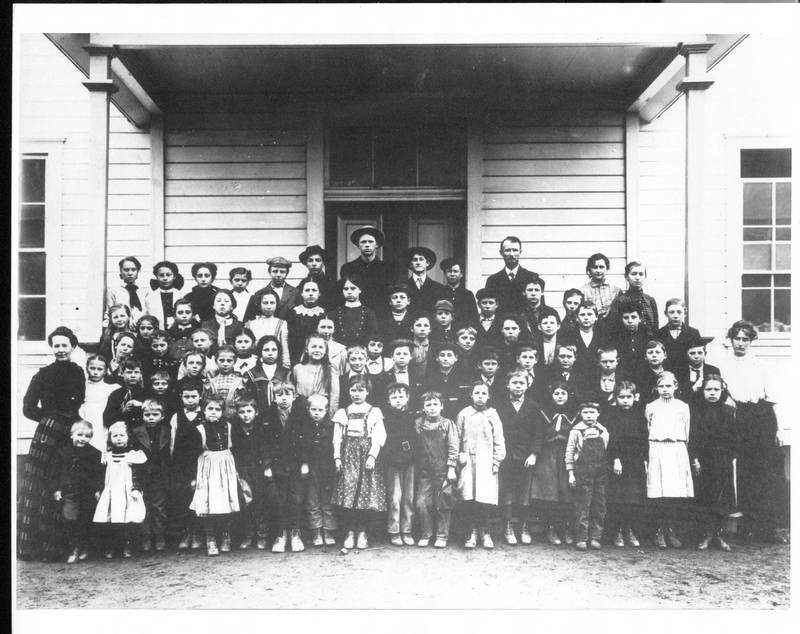
Black and white photograph of the students and faculty of the East Butte School. The students and faculty are arranged in front of the school's portico and main entrance. Above the main entrance's double doors is a rectangular, glass transom. To the left and right of the portico appear the edges of double hung windows. The window to the right is opened slightly at the top.
Photograph of Mr. and Mrs. John W. Tigard in front of their home on Pacific Highway. A wood picket fence behind the couple boarders the home's front yard. The house, built in 1880, is a one and one half story, white clapboard Queen Ann with a gabled roof. The left-front facade is dominated by a bay window containing two double-hung sash windows. The right-front facade contains a small porch and the front door. The porch and door entrance are covered by a small portico. A short stairway leads up to the porch from the front walk. the front facing gable contains a varied shingle facade, a circular window, and near the apex of the gable, a decorative bargeboard. John Tigard was the eldest son of Wilson Tigard and operated a coach route between Tigardville and Portland.