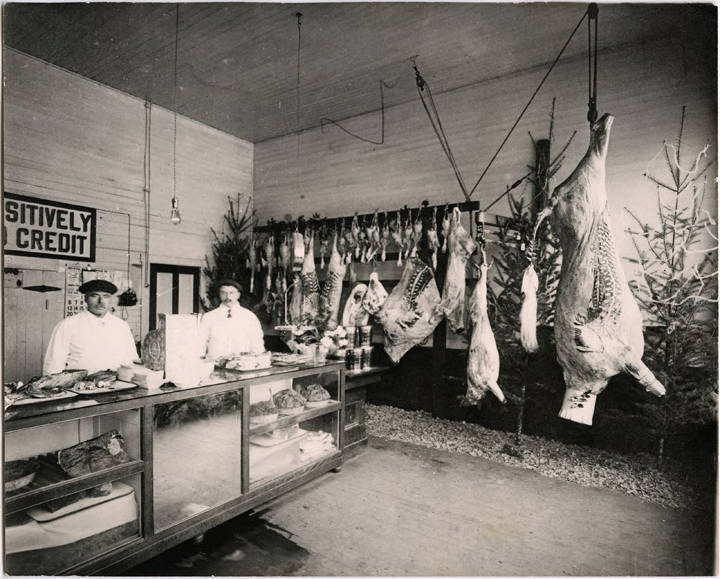
Black and white image of a butcher shop decorated for Christmas. Two men in white shirts, aprons and with newsboy caps stand behind a glass-fronted counter containing meat. A sign on the wall behind them appears to read 'positively no credit.' Along the wall beside the men, dressed portions of various animals have been stamped with images of bones and musculature and hang suspended from the ceiling with ropes and pulleys from the ceiling. A number have holly sprigs attached to their legs. Fowl hang from a rack against the wall, and Christmas trees stand beside the largest cut of beef.
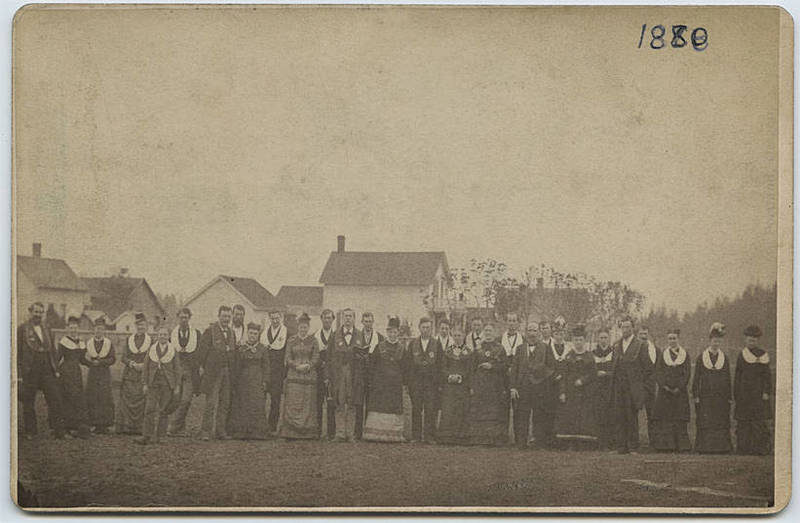
Sepia-toned image of a row of men and women standing in a field with houses behind them. The men wear suits and the women have long dresses with fitted jackets and skirts pleated at the bottom and bustled at the back. Most wear robes, some with white collars and others with dark dollars sporting a number of medals. The men have removed their hats for the picture, but the women have not. the trees behind them have a few leaves, and pine trees are visible in the right image background.
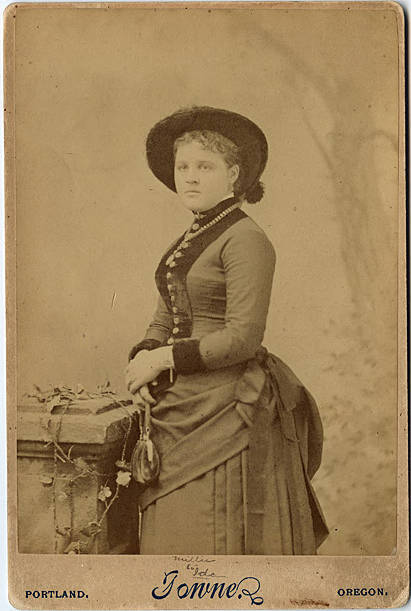
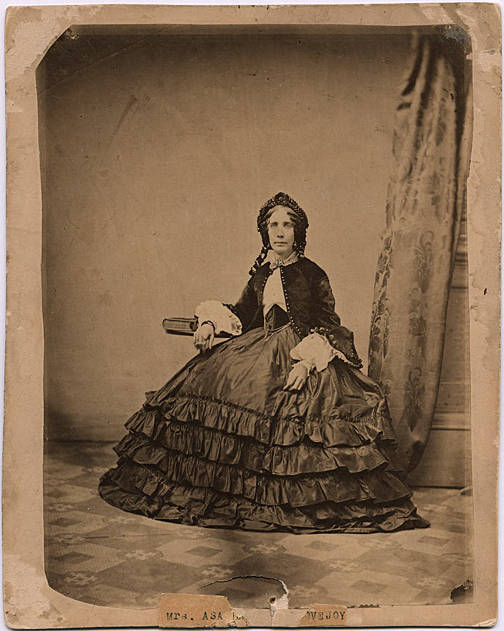
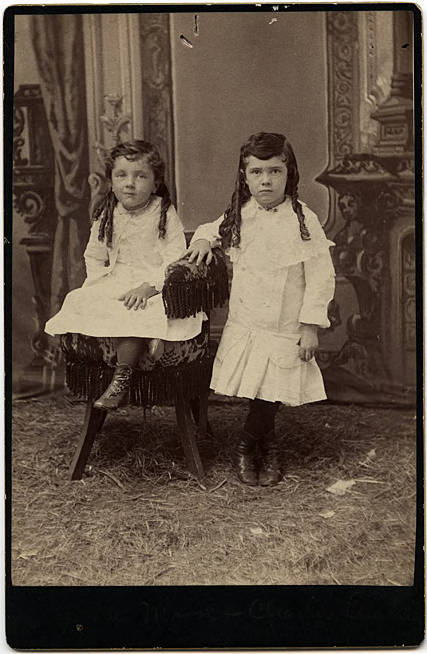
A studio portrait of Elizabeth Martha McGary Lovejoy (1829-1904). Elizabeth was the wife of Asa Lawrence Lovejoy, who is remembered as the founder of the city of Portland, Oregon. According to a handwritten note on the back of the photograph, this portrait was taken in Hillsboro in 1872. The photograph formerly belonged to Charles T. Tozier, who collected images of "Oregon Whites," according to the notes.
The back of the photograph has additional notes written in a later hand which misidentify the subject as as the widow of Asa Munger and Henry Buxton, whose maiden name was Elizabeth Sarah Hoisington. However, this appears to be incorrect.
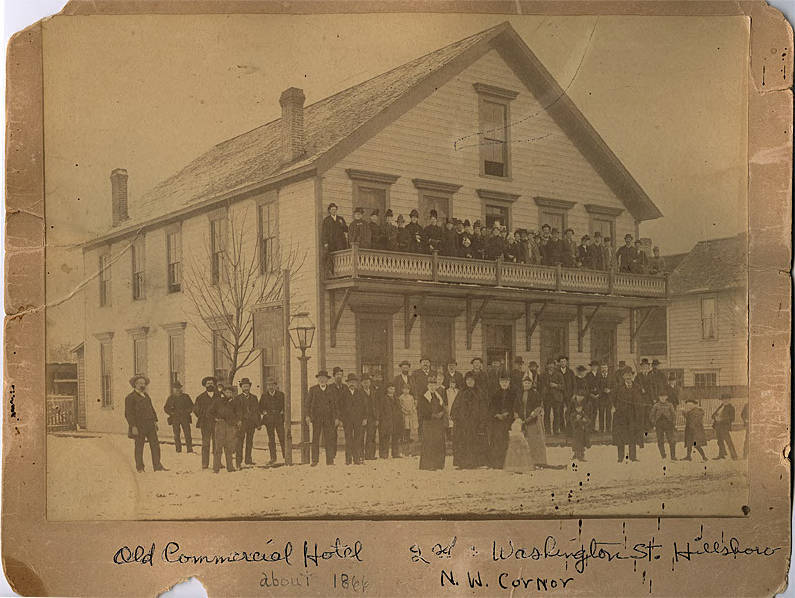
Sepia-toned image of a two-story, gabled building with a number of people standing in front of it and on the second-floor balcony. The ground is covered in snow, and all the people are dressed for winter. A number of boys stand in the snowy street in the right front corner of the image, one holding a snowball with his arm cocked and ready to throw. The girls stand with the adults on the porch. There is a gas streetlight at the corner just before the hotel, next to the sign for the hotel.
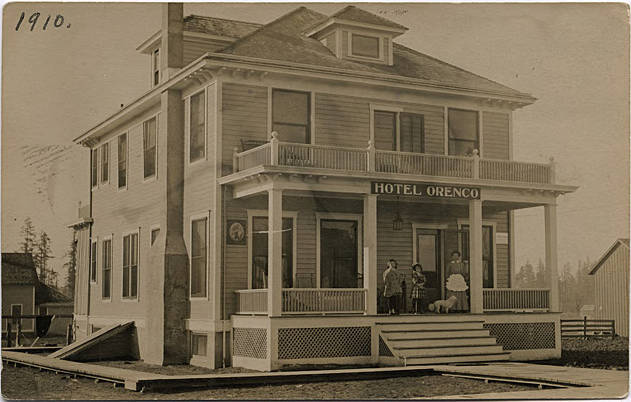
Black and white image of the Hotel Orenco, a two-story, Queen Ann style building with a covered front porch and a balcony. Three unidentified people stand on the front porch, a woman in a dress with a ruffled white apron, and two girls. The girls wear matching plaid knee-length dresses, one underneath a coat. A small dog with curly white hair stands on the porch with them.
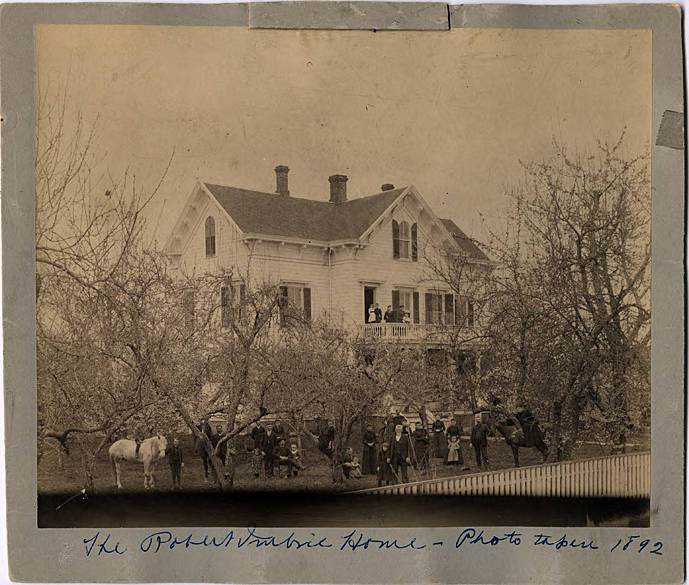
Photo of a large group of people in front of a three-story, cross-gabled Colonial Revival Home. The house is obscured behind a number of bare-branched trees. People are visible standing on the second-story balcony above the main porch, and men, women, and children stand among the trees behind the white picket fence enclosing the large yard. One boy hold the bridle of a white pony, and another horse is visible on the right of the image.
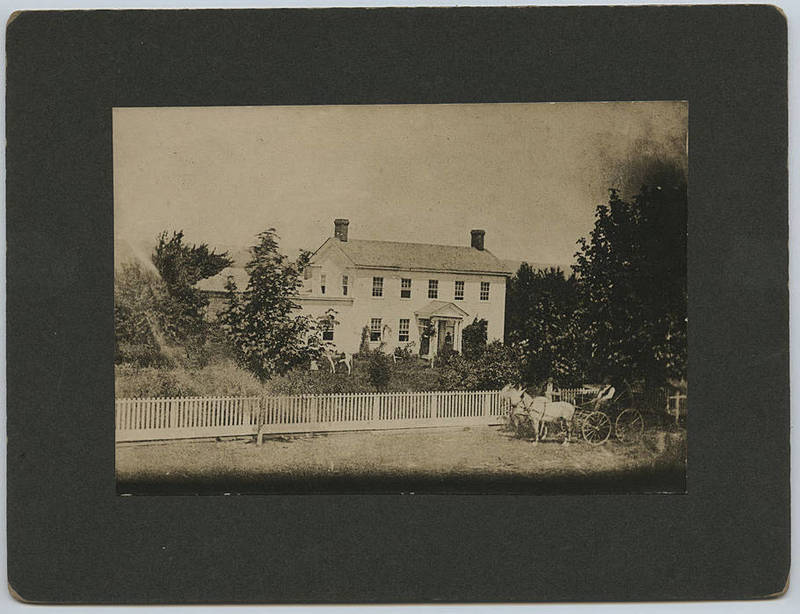
Black and white image of a large, two-story Colonial style house with a copious yard. A second, flat-roofed section is attached to the house's right. Two women stand on the covered porch, and a two-horse buggy sits in front of the white picket fence that surrounds the large yard. A man sits in the buggy and holds the reins, while another man leans against the fence in the open gate. A small white horse with a saddle is just visible in the yard, and the trees and other vegetation are lush and full.
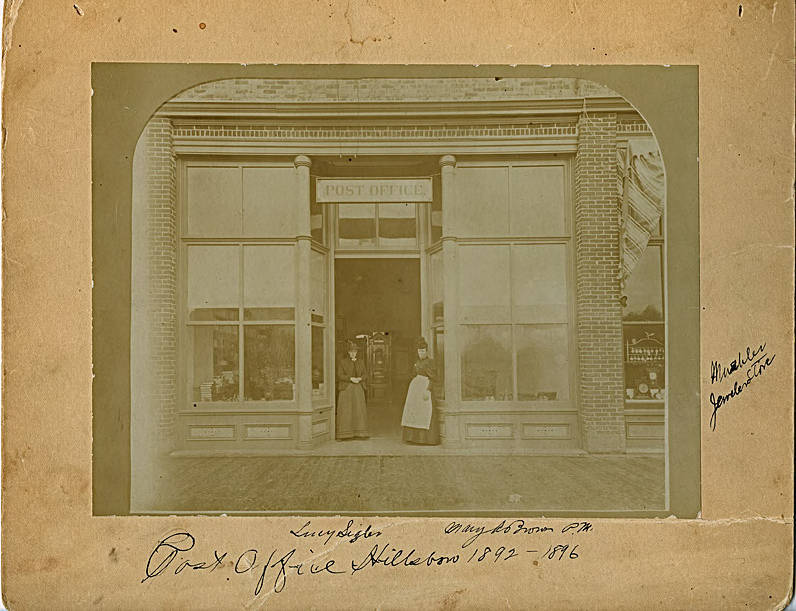
Sepia-toned image of two women standing in an open door of a building. One woman wears a large apron over her dress and a small hat with an arched feather. The other woman wears a long skirt, a jacket, and a hat. Stacks of books can be seen inside one of the windows, and a sign reading 'Post Office' hangs above the door.
Sepia-toned image of people and two horse-drawn carriages standing in front of a brick building. Another matched team of horses appears to be hitched up to a large bundle of firewood. Four people stand on the boardwalk in front of the building, two men and two women. The women wear white shirtwaists with leg-o'-mutton sleeves and long black skirts. One man is in a suit, as are the two men with the carriages. The fourth man stands behind the team of horses and is wearing work clothes. Small United States flags are displayed on the window edges of the main building. 'Post' is written across one window, and 'Office' on the second. A power pole is just visible in the far left of the image.
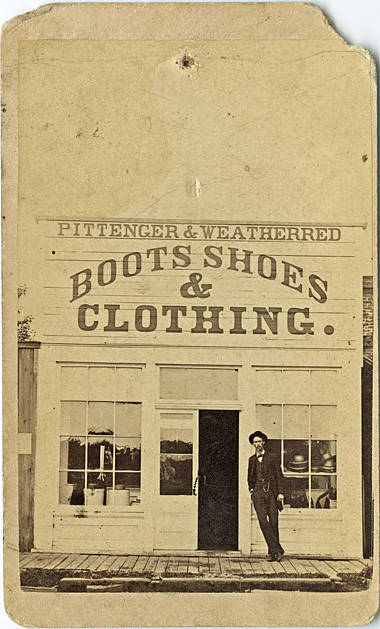
Sepia-toned image of a man standing on the boardwalk in front of a single-storied store front. He leans against the door jamb outside the open door. Paned glass windows bracket the door, and the sign on the upper portion of the building reads 'Pittenger & Weatherred Boots Shoes & Clothing.' [sic] He wears a suit, a watch fob, and a hat. Hats and hanging clothes are visible in the window behind him.
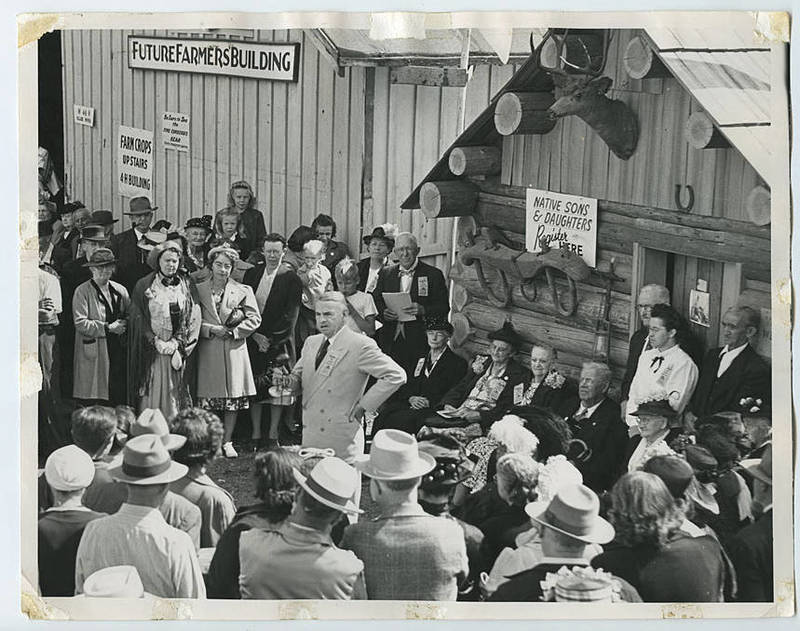
A group of people listen to man making a speech. He wears a light-colored, double-breasted suit and holds a large microphone in his hand. Behind him is a small log cabin, and a row of elderly women and a few men sit and stand along the front of it. These women wear corsages and all including the men have ribbons pinned to their chests. The women in the remainder of the crowd wear knee-length dresses, coats and hats, while the men have fedoras and wear suits or work clothes. Next to the cabin is a large exhibit barn. A boy in a white t-shirt watches from behind the man, next to a toddler. Several girls stand on something and peer over the backs of the crowd.
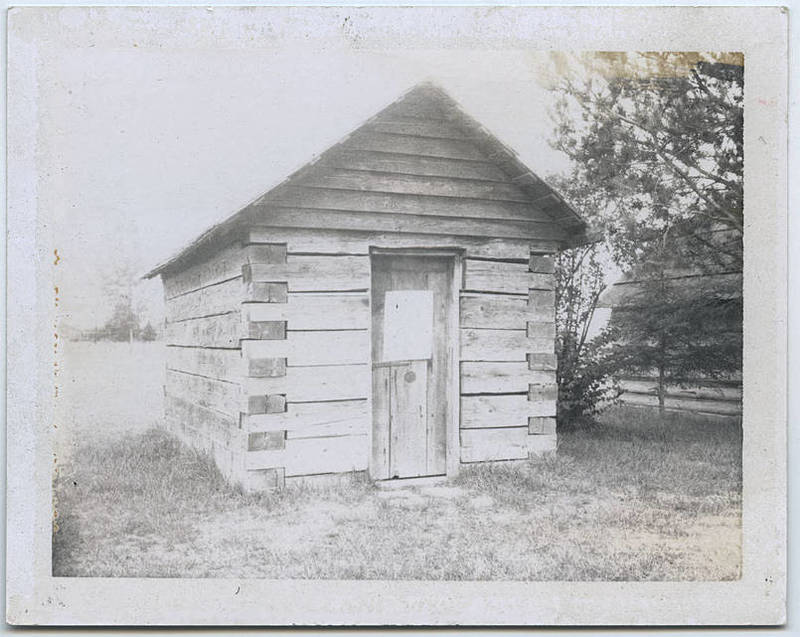
A photograph of a small, gabled weathered wood jail sitting in a grassy yard. The logs are not chinked, and gaps appear between them. There are no windows in the wall, and the door has a window covered by a piece of white material.
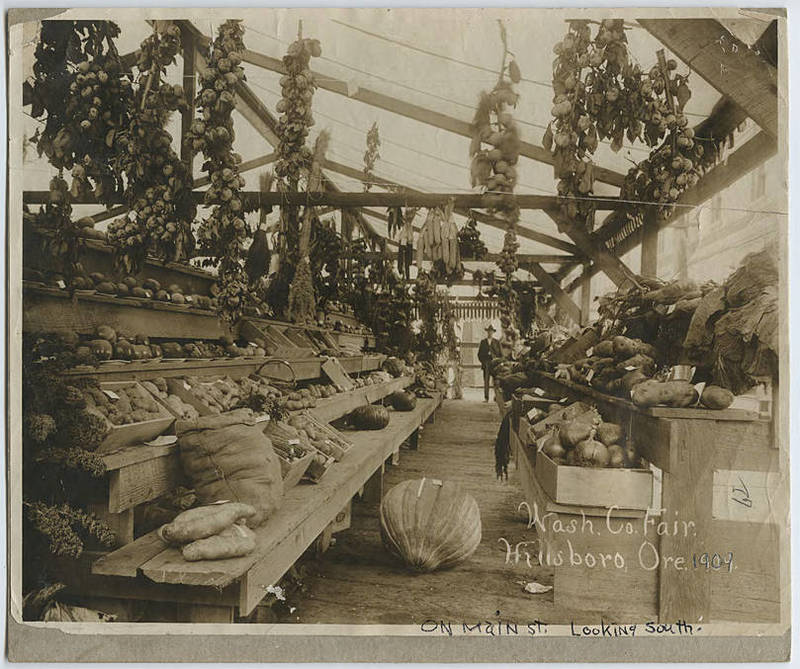
Produce arranged on shelves in a covered exhibit space. Pumpkins, potatoes, yams, turnips, onions and other vegetables are arrayed on shelves along an aisle. A large pumpkin is on the floor, and hops, corn, wheat, and other products hang from the rafters. The floor is wooden, and at the very end of the aisle to the rear of the image stands a man in a suit wearing a cowboy hat.
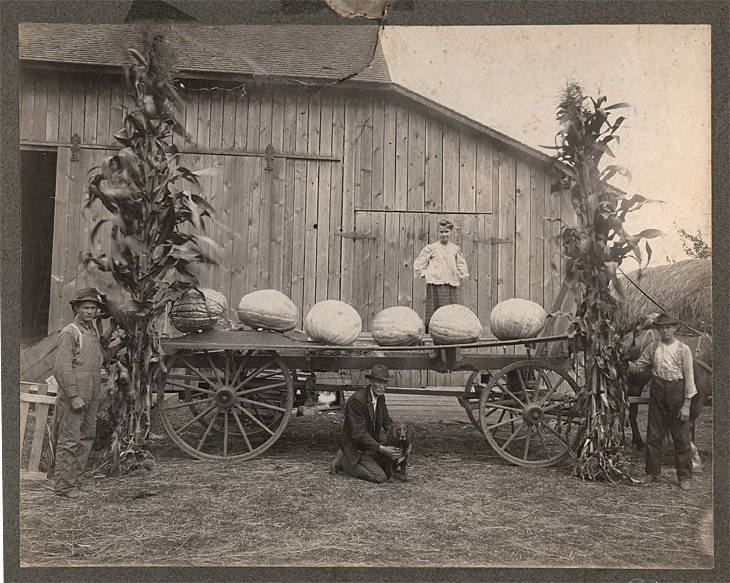
A family stands around their prize-winning produce exhibit. A wagon with six huge pumpkins lined up along the edge and with ten-foot-plus cornstalks held up at either end stands in the middle of the image. A girl in a white blouse and plaid skirt stands in the wagon behind the pumpkins, and a man in a suit kneels and holds a dog. Two young men in work clothes stand next to each bundle of cornstalks. In the background is a barn, and the grown beneath the wagon is covered with straw. A large round bale of hay is just visible to the right edge of the image.
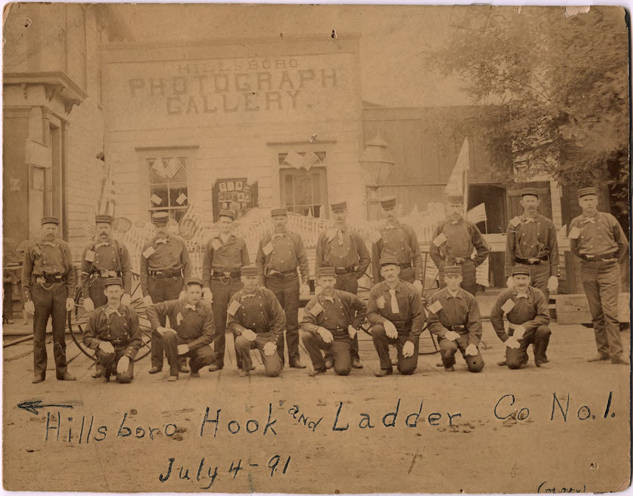
Sepia-tone image of a fire department crew, taken on the street in Hillsboro. Seventeen men in the image wear uniforms consisting of dark pants and shirts with shield button fronts, patrol hats, and light-colored neckties. The street is plank and wood, and a boardwalk is visible behind the men. Buildings behind the men display United States flags and bunting, and a large streetlight stands on the edge of the boardwalk. One building, identified as a photograph gallery, displays photos on a board between the window and the door.
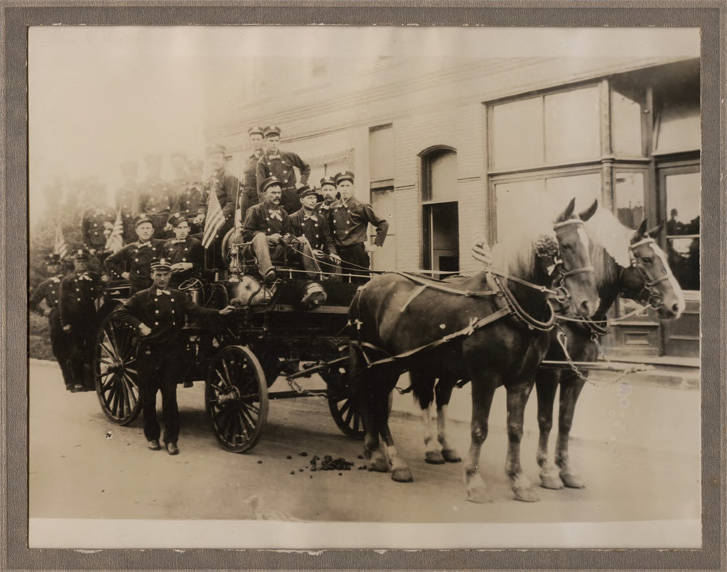
Black and white image of a group of firefighters in uniform, riding on a horse-drawn fire truck. The men wear pants, dark shirts with two rows of buttons, bow ties, and pilot style hats with insignia. The road is smooth, and a two-story brick building with windows is visible behind them. United States flags fly from behind the driver, the middle of the wagon bed, and the end, and a lantern and other equipment are just visible along the side of the wagon.
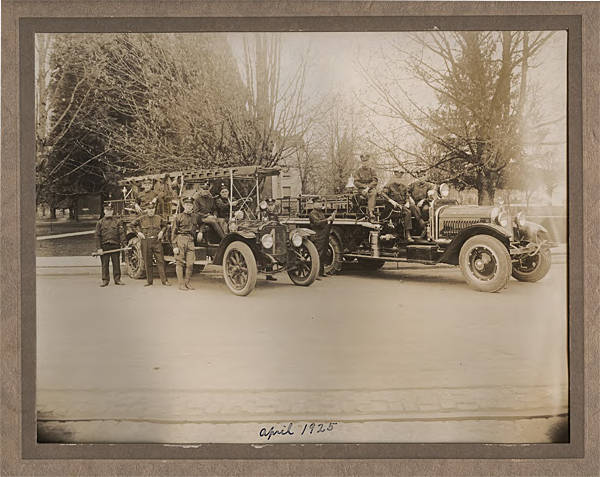
Sepia-toned image on matting of two fire trucks on a street with firefighters sitting in and standing around them. Both trucks are open cabs and appear to be from the Brass Era. The truck in the front has open-spoked wheels and ladders mounted above an open cab, and other ladders and equipment fill the rear of the vehicle. Two men sit in the cab, one mans stands on the rear running board. A man in the front holds a large axe. The Stutz Pumper (500 Triple Combined K-3) to the rear has solid wheels and pipes attached to the sides. A brass bell is mounted behind the cab. The rear wheels have chains on. Two men sit in the open cab, one man sits on the bed behind them. All the men wear uniforms: pants, shirts tucked in and buttoned up to the neck, and pilot's hats with insignia. In the background is the Washington County Courthouse, behind a number of pine and bare leafed deciduous trees.
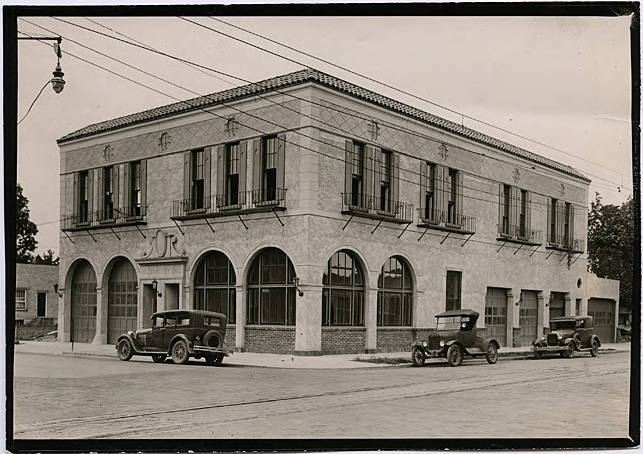
Black and white image of a stucco, two-story building in the Mission Revival style. The building sits on a street corner; the front faade features four arches on either side of the main entrance, which has two recessed doors topped by an elaborate, carved lintel bearing the words 'Hillsboro City Hall' beneath a round shield. The arches to the image left of the door show garage doors; the arches to the right are bricked in at the bottom then filled with banks of windows. The second floor has two sets of three double-hung windows with shutters, each set with a small, wrought iron balcony beneath. The first story of the second side of the building features two matching arched windows, and three single garage doors, and a double garage attachment at the rear. The second floor has the same windows as the left facade, in sets of two. The building features a short roof of tile. Three cars are parked along the street curb, two are enclosed cabs with four doors; one is a 'jalopy' style. Power lines run across from the upper left of the image, and trees in full leaf are visible on either edge beyond the main building.