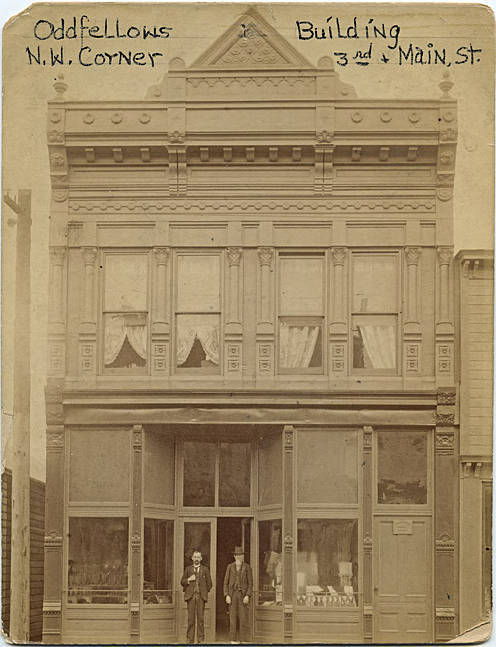
Sepia-toned image of a two story building with a fancy pediment and elaborate detailing of spindles and eaves. Two men stand in the recessed doorway; one wears a hat and they both wear dark suits. Large, single-paned windows dominate the first floor, and the building's square facade faces the street front.
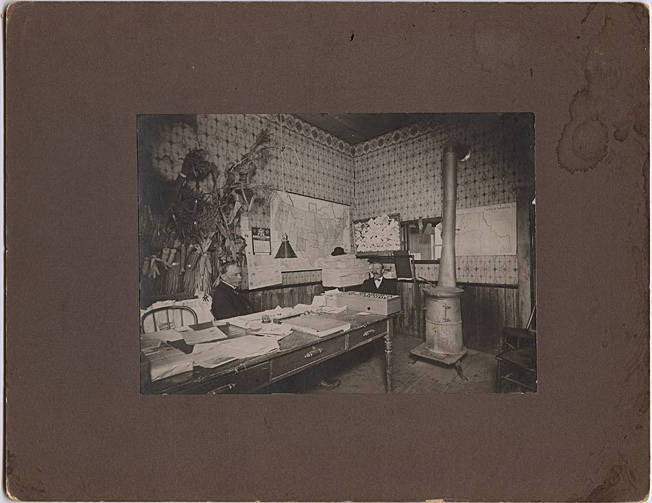
Black and white image of two men sitting at a table desk in an office. The desk is covered with papers and files, and two maps hang on the walls, along with a number of note cards. Sheaves of grain protrude from a box at the left rear of the image, and a woodstove sits in the right of the image. The wallpaper is a geometric pattern of concentric circles and diamonds. The floor is wooden.
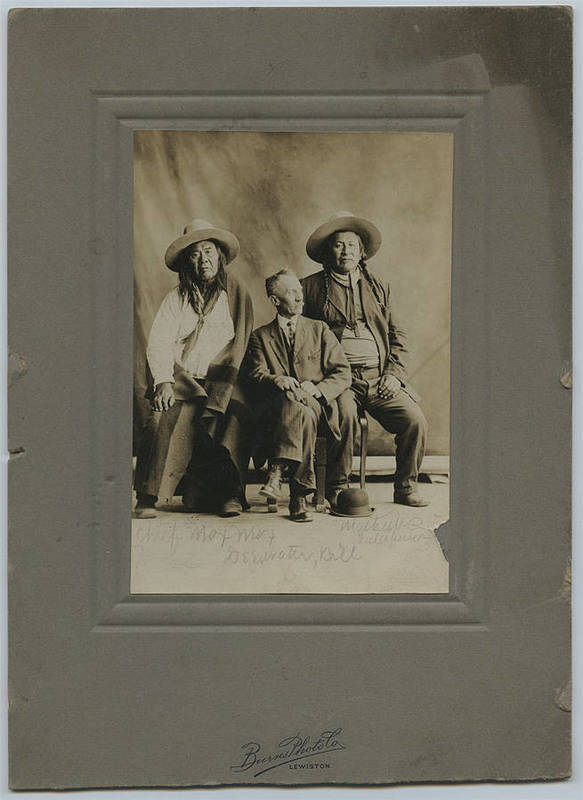
Image of three men, identified on the photograph from left-to-right as Chief Mox Mox, Bill [Deewater?], and "Matthew's Interpreter." The photograph was taken in Lewiston, Idaho, near the Nez Perce reservation. Regarding "Chief Mox Mox": There were several prominent Native leaders from the Walla Walla and Nez Perce tribes whose names included the words "moxmox," which means "yellow." The identity of this man is unclear, but he may have been from the Nez Perce tribe or from another tribe on the Columbia Plateau. Regarding "Bill", the white man in the center of the image: This was probably a government employee, possibly an Indian Agent or other staff member. The photograph likely dates from circa 1900-1915.
Photographs like these were sometimes sold as souvenirs. This particular copy appears to have been acquired some time after it was originally created, by a resident of Hillsboro, Oregon, named Tennessee (“Tenny”) Weatherred, who donated it to the Washington County Museum.
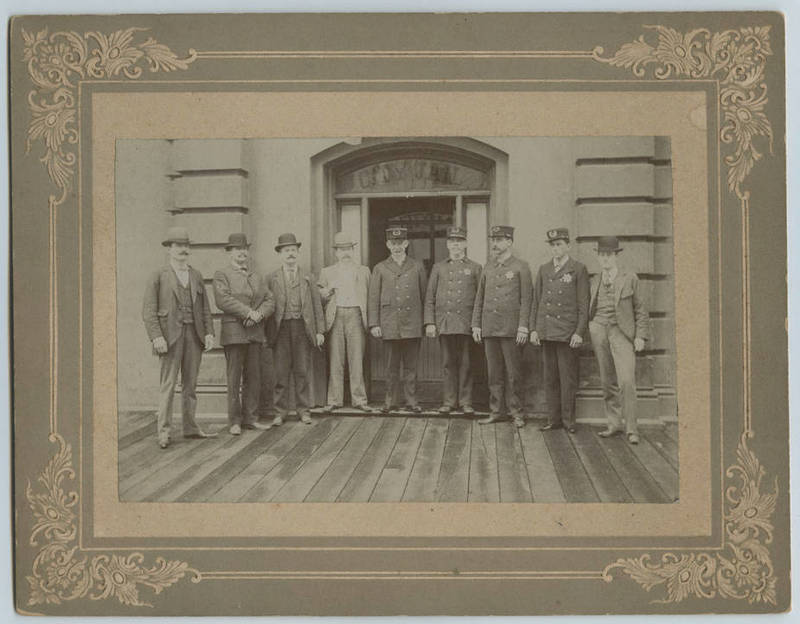
Image mounted on matting of nine men standing on the boardwalk in front of the City Jail. Five of the men wear suits and bowler hats; four wear double-breasted uniforms with kepi-style hats. The building behind them is brick, and the recessed door sits beneath a transom window that bears the legend 'City Jail.'
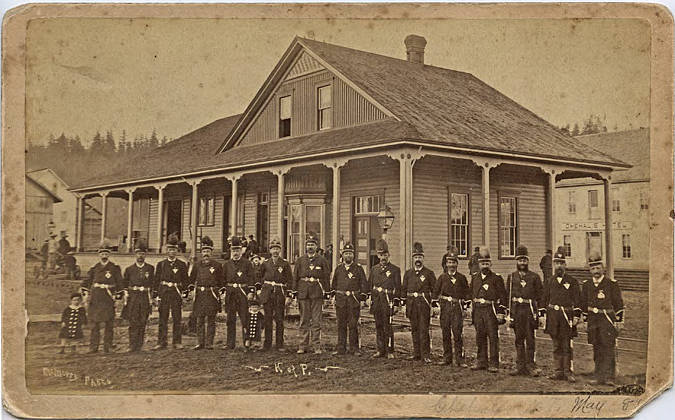
Sepia-toned image of a group of men in uniform, standing in front of a two-story, cross-gabled Victorian-style building. The uniforms consists of long jackets, belted at the waist, and rounded, shako-style hats with plumes on the front. Two small children stand with the men, wearing long jackets with double rows of buttons, lace collars, and caps. A pushcart railcar is visible at the far end of the building, and tracks run behind the men. A building the background bears the legend 'Chehalis Hotel.
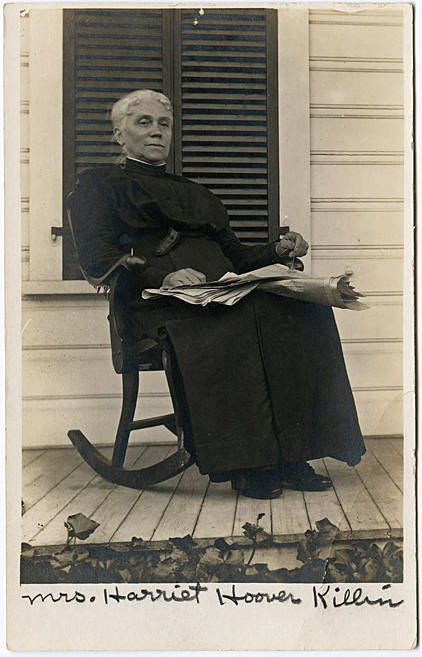
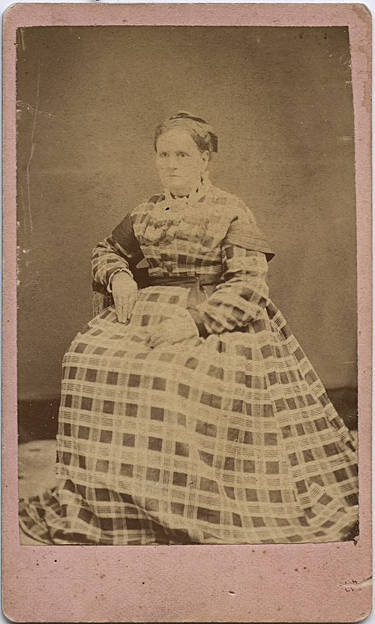
Portrait of Harriet Burnett Hoover Killin, the first female graduate of Pacific University (Class of 1869). She was married to Benton Killin. She was born on the Hoover Donation Land Claim in Washington County in 1848, and died at her home in Portland in 1937.
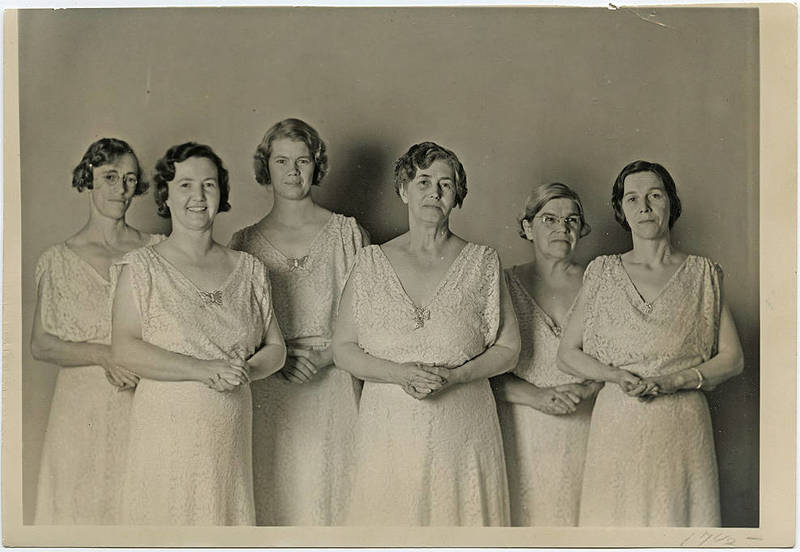
Black and white image of the Legion Auxiliary Chorus. All stand with their hands clasped in front of them and wear sleeveless white lace dresses with deep v-necks and brooches at the deepest point. Their hair is short, close to their heads, and curls softly.
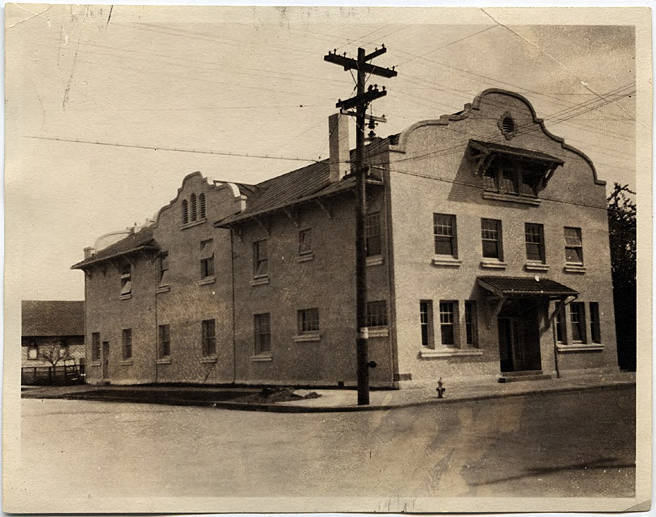
Black and white image of a Mission Revival style building on a street corner. The three-story building sits behind a concrete sidewalk, with a power pole and a fire hydrant on the corner. The sidewalk verge is dirt and the main door is on the shorter facade of the building.
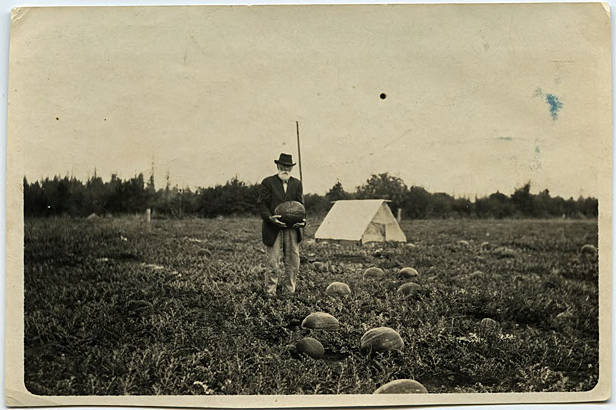
Black and white image of a man holding a large watermelon in a field of watermelons. He wears a dark suit coat over light-colored pants and a hat, and he has a full bear. Behind him, a small white tent stands next to a pole. Watermelons are visible throughout the foreground, and a line of trees cuts across the background.
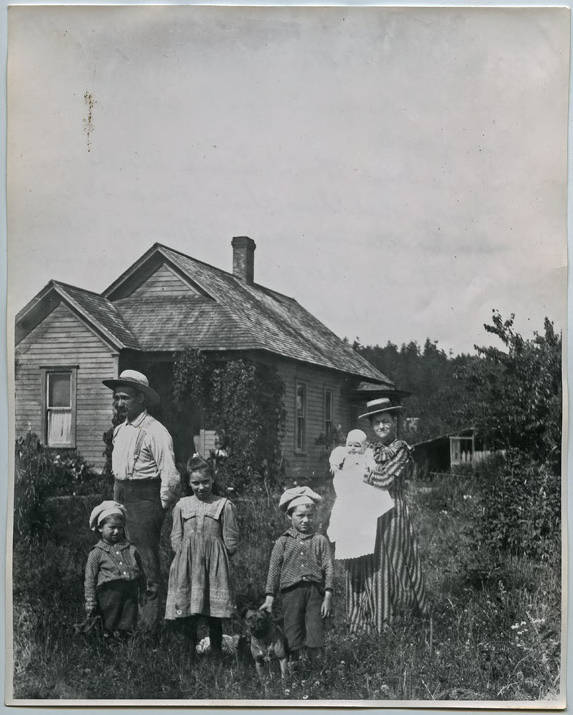
Black and white image of the Mann family standing in a yard in front of a house. A man and a woman and four children. The woman wears a striped dress with a yoke and a flat, boater-style hat. She holds a small baby in a long white dress and a bonnet. Two boys wear loose shirts, buttoned to the neck, short pants, and Tam o'shanter style hats. One boy holds a dog at his side by the collar. the girl wears a knee-length dress with a yoke and full sleeves. the man wears dark pants, white shirt, suspenders and a brimmed hat. The house behind them is a single-story gabled building, with an extended gable on the front and a covered porch. Vines cover most of the porch, and bushes are visible at the front and sides of the house. A shed is just visible in the background.
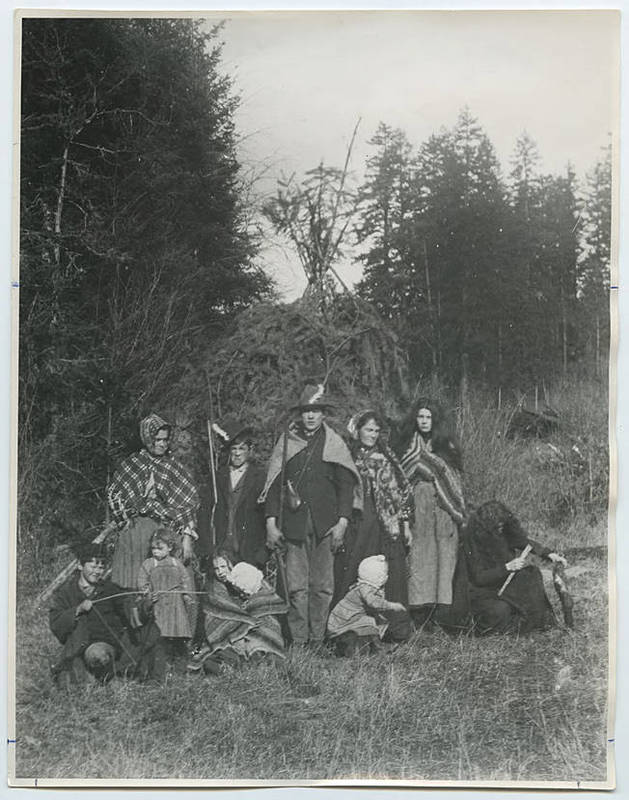
Women and children from the Ennis, Landess and Ingram families of Oregon, "playing Indians," according to a note on the back of the photograph. They are posed in clothing that they apparently believed looked Native American. The older children have blankets around their shoulders, and the boys have feathers in their hats and hold guns. Three girls wear skirts and have their heads covered; two or three small children play in the foreground. One girl kneels with a hatchet, looking at a tree. A triangular heap of tree branches, which may have been intended to look like a tipi, appears in the background.
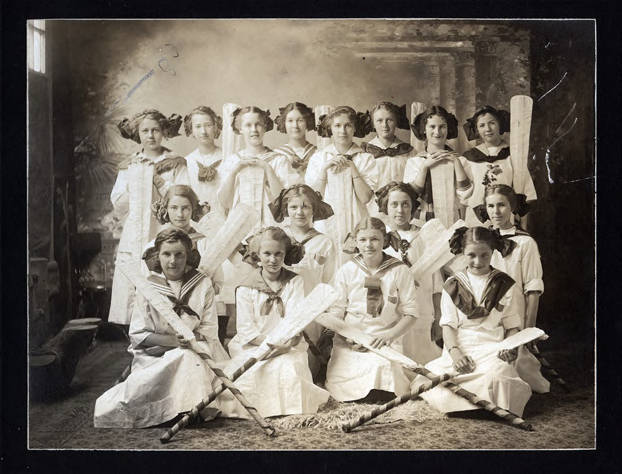
Black and white portrait of a group of girls with sailor shirts, skirts, and oars. Their hair is pulled back and tied with large bows, and ribbon has been wound around the oars.
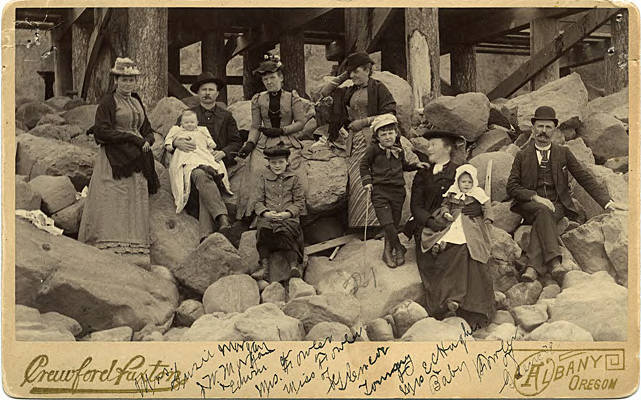
Sepia-toned portrait of a group of adults and children sitting outside on rocks, with a large trestle behind them. The women wear long skirts with a small bustle, shawls, and hats. The men wear suits and hats, and have groomed mustaches. One man and one woman hold babies wearing long gowns in their laps. The baby held by the man is bareheaded and has boots; the child held by the woman wears a coat and bonnet. Two young children are with the group; both wear newsboy caps. The girl sits with her knees together and hands in her lap; the boy wears a sweater and short pants with dark stockings. He stands with one foot crossed over the other, leaning on a cane, with his hand on the shoulder of the woman holding the baby. Her head is turned as if to speak to him. One woman in the background wearing a striped skirt is watching the man with the baby.
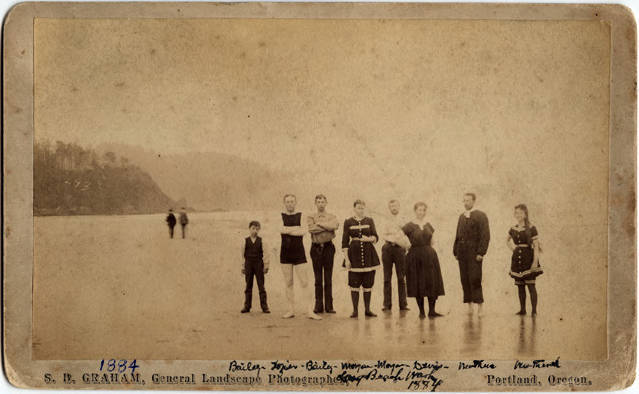
Sepia-toned image of a group of people on a beach. Rock cliffs topped with pine trees rise in the background, and the ocean stretches out to the image right. Eight people stand in a row; four men, three women, and one boy. One of the men is in a swim tank and trunks; the other men are in regular clothing, though one is barefoot with his pants rolled up. Two of the women wear swimsuits with hip-length skirts, bloomers and stockings. One wears her hair long and loose. Another woman stands in a below-the-knee swimsuit and dark stockings. A young boy in a long-sleeved shirt, vest and long pants stands at the very left of the row, and two people (probably male) walk down the beach in the far background.
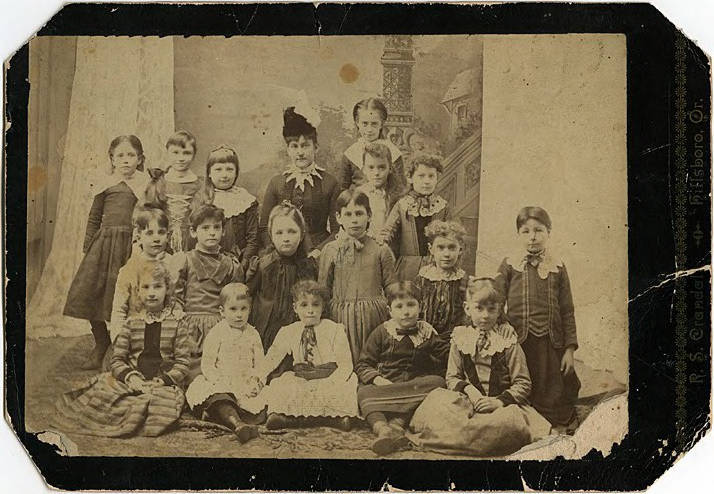
A studio portrait of a group of children and a woman, probably their teacher, taken in Hillsboro, Oregon probably around 1890-1895. They are all wearing clothes that would be appropriate for a school play set in the Medieval era, so this may have been taken on the occasion of a theatre production. The children are partially identified on the back of the photograph and include members of the Weatherred, Tongue, Green and Imbrie families, many of whom were prominent in Hillsboro, Oregon in the late 1800s.
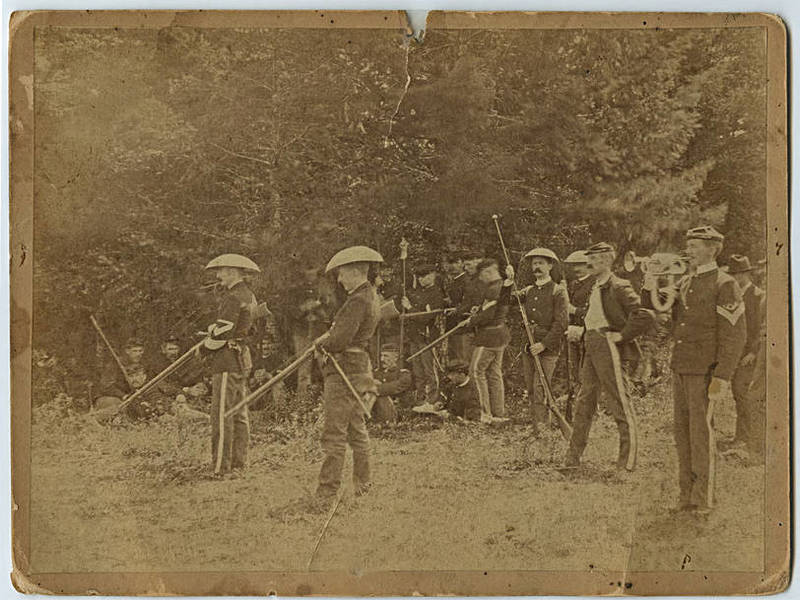
Sepia toned image of a group of men in uniform with rifles. Some appear to be waiting to shoot, and wear white, round, shallow helmets. One man holds a trumpet to his lips. Men in the background are reloading, pushing ramrods down their rifle barrel, while another group of men, seated on the ground beneath trees, observe.
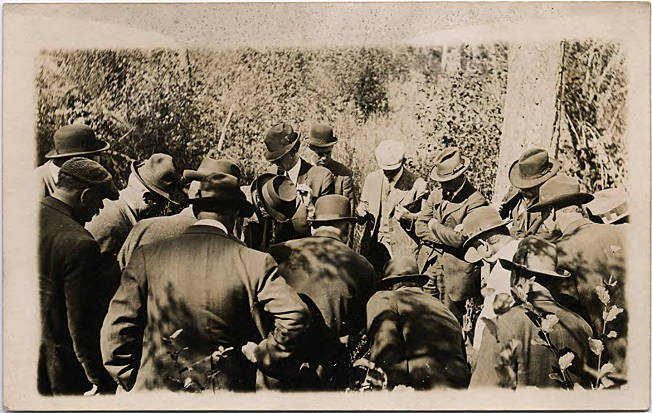
Black and white image of a group of men in suits and hats looking at something on the ground. Most wear stiff-brimmed hats, though two wear newsboy caps. Several are bent over to examine the scene more closely. Thick vegetation fills the background of the scene.
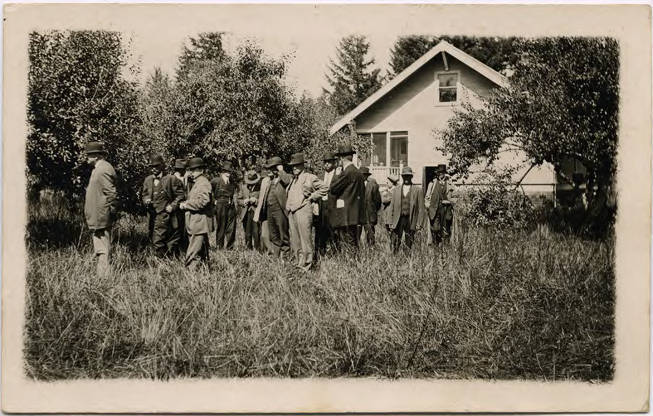
Black and white image of a group of men in suits and hats standing around a grassy yard in front of a two-story, gabled house. The men wear suits and derbies, and one man has a notepad sticking out of his pocket.
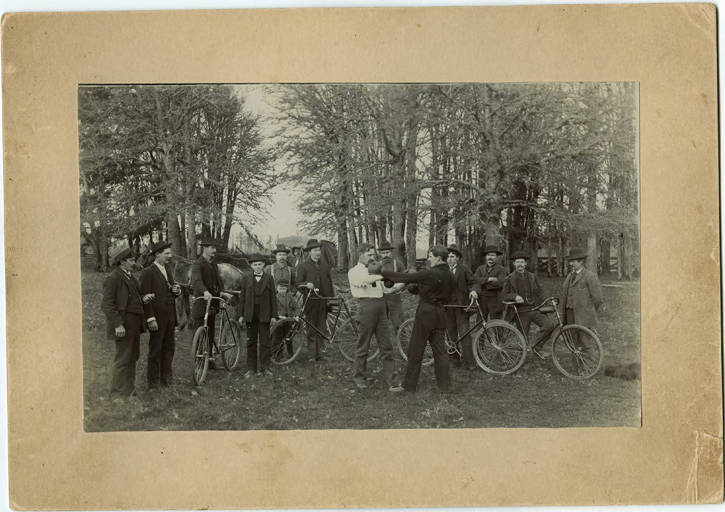
Black and white image of two men, boxing, while a crowd of other men look on. The men boxing wear gloves but their stance and arms represent old-fashioned boxing style. The men watching wear dark suits and hats, and several hold bicycles. The field is grassy, and a number of oak trees fill the background of the image. One small boy in a jacket and watch cap also observes the fighting.