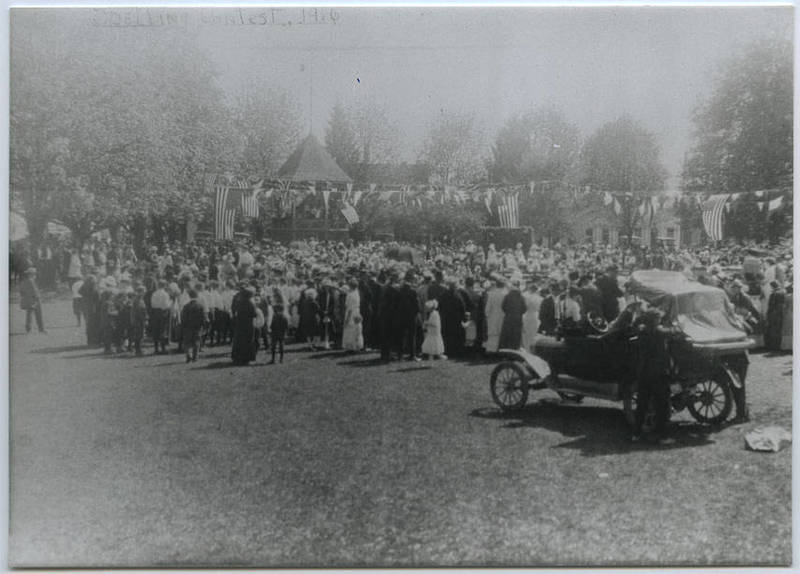
Black and white image of a crowd of people in a park, all facing a gazebo. Bunting and United States flags hang above the crowd, and many of the women wear long white dresses and large hats with feathers. One girl wears a knee-length white dress and a bonnet. A group of schoolboys at the back of the crowd wear white shirts and knickerbockers. A car is parked in the foreground of the image, and a man is putting down the top. Houses are just visible behind the trees on the edge of the park.
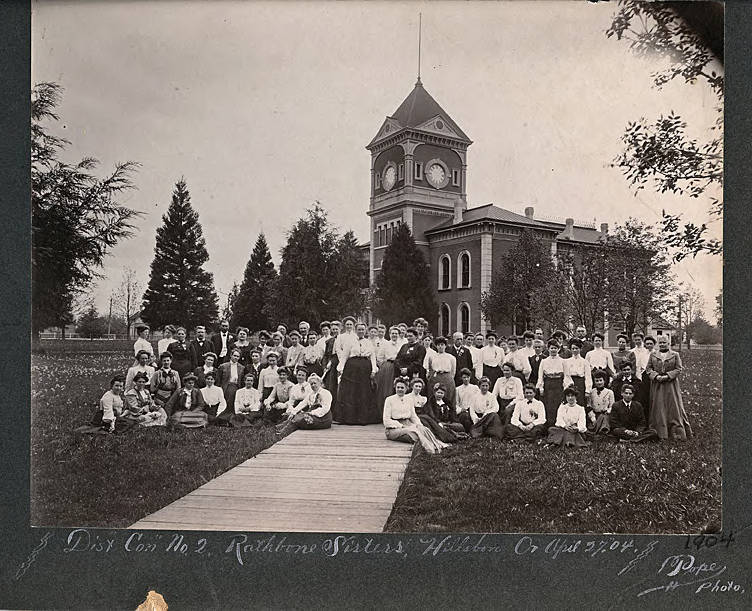
Black and white image of a group of mostly women gathered on a boardwalk and on the lawn in front of the Washington County Courthouse. The lawn is grassy and the trees in leaf. The women mostly wear their hair up in pompadour hairstyles, some augmented with fashionable frames. Most wear dark skirts and light or white shirts; a few are in dark dresses or wear jackets. The two or three men in the crowd all wear suits.
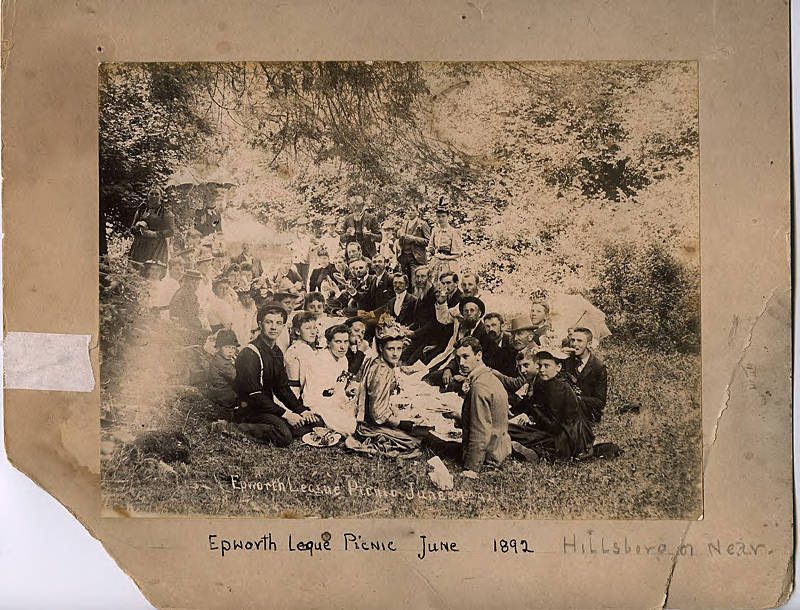
Sepia-toned image on cardstock of a group of a two dozen people picnicking in a field. Most are seated around a long white table cloth on the ground. Two women hold parasols, and some wear flat boater hats. Their dresses have cap sleeves and small bustles on the skirts. The men wear suits, and one young man wears suspenders and arm garters. Several children are in the group, and they wear suits and hats.
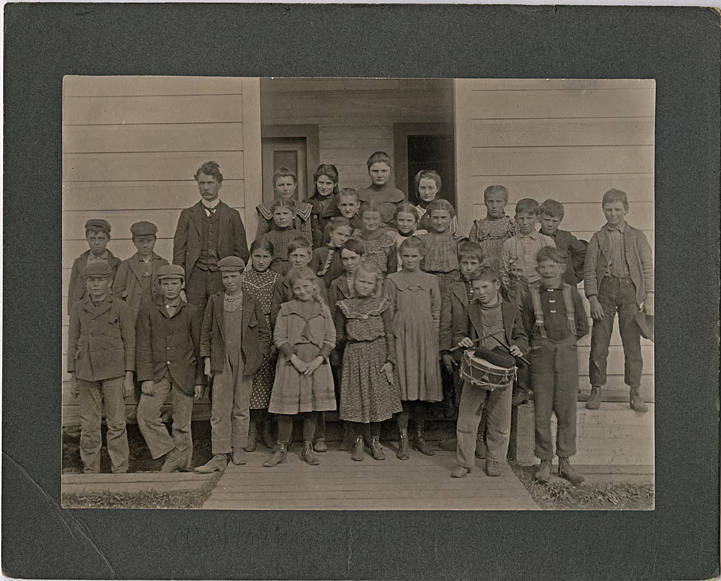
Black and white image of a group of children in front of a building. Most are younger, though a few older girls stand at the back of the group. Most of the girls wear dresses with a yoke or collar. Some of the boys wear longer pants, jackets, and newsboy caps, while others have suspenders on. One boy in the front of the group holds a snare drum and two drumsticks. the children stand on a boardwalk in front of a building with two doors visible behind them in an opening.
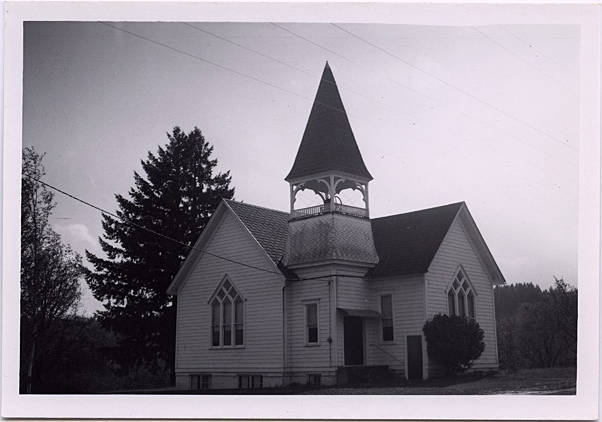
Black and white photograph of a cross gable church in a modified Carpenter Gothic style. The church is white and sits on a foundation with a bell tower nestled in the corner created by the two sections. The faade of each visible gable features a row of triangular arched windows topped by three diamond-shaped windows which frame the entire window feature into a triangular arch. The main entrance is set in the bell tower's front facade, reached by a series of concrete steps, and the tower features a shingled second story beneath an open belfry with railings and decorative roof supports. A bell can just be seen inside, and the belfry has a tall, square pyramidal roof with nothing on the top. Basement windows are visible in the image left side of the church, and a bush in full leaf partially obscures the front facade. Pine and deciduous trees fill the hill slope in the background, and the church sits in a partially visible grassy field. Power lines run along the very top of the image foreground, with one connecting visibly to the church, running down the front corner of the bell tower and into the wall just above the basement.
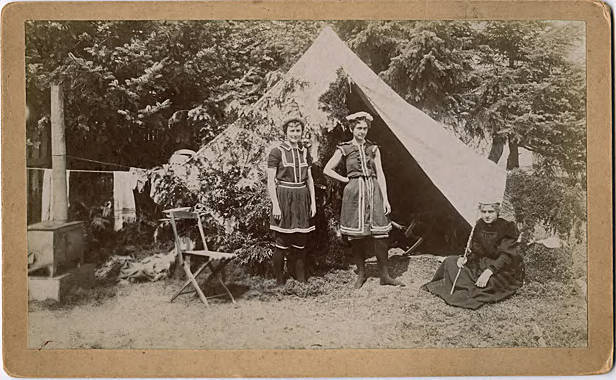
Sepia-toned image of three women in front of a canvas tent in the forest. The two women who are standing wear swimsuits consisting of short-sleeved tops and short skirts over bloomers and dark stockings. They each wear a flat beret style hat and their hair is short. One woman is seated; she wears a dark dress with velvet trim and puffs on her upper sleeves. She, too, wears a beret style hat. Two camp chairs are visible, one inside the tent, and two clotheslines stretch out from the tent with towels hanging from them. A small wood stove sits on a block at the far left of the image. Pine trees fill the background of the image.
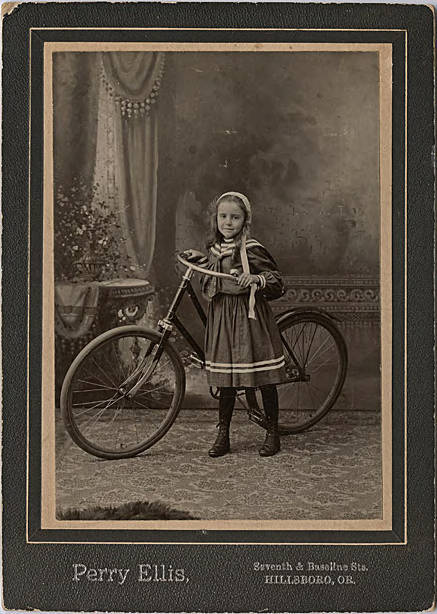
Sepia-toned studio portrait of a young girl with her bicycle. She wears a short dress with a sailor's collar, all trimmed in white, black stockings and laced-up boots. On her head she wears a white bonnet. Her hair is curled and long and hangs over her shoulders. The bicycle is a ladies' model with a rear fender only.
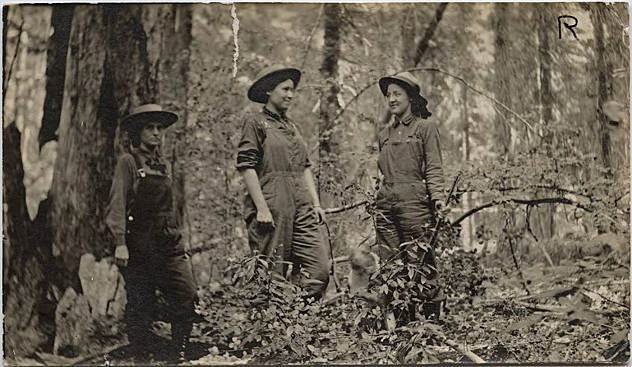
Black and white image of three women standing in the forest. All three are wearing overalls and long-sleeved shirts. Two wear wide-brimmed hats, and one wears what looks like a fedora but with a large bow at the back. They stand on a small hillside near a tree, with a great deal of underbrush surrounding them and trees filling the background of the image.
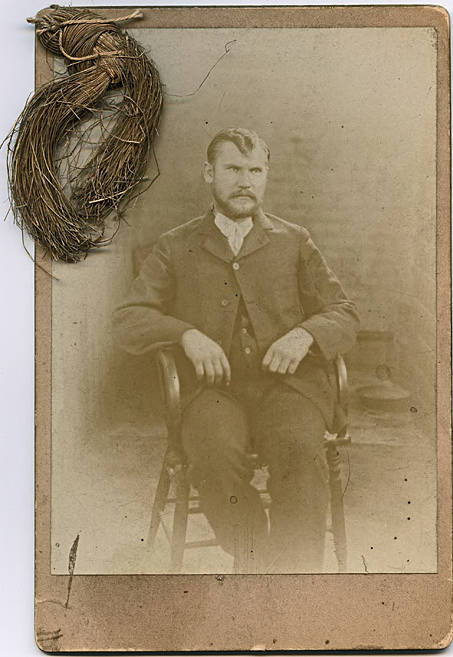
Portrait of convicted murderer Gus Wachline. Wachline was arrested November 20, 1897 and hung on February 4, 1898. A portion of the hanging rope is attached to the photograph.
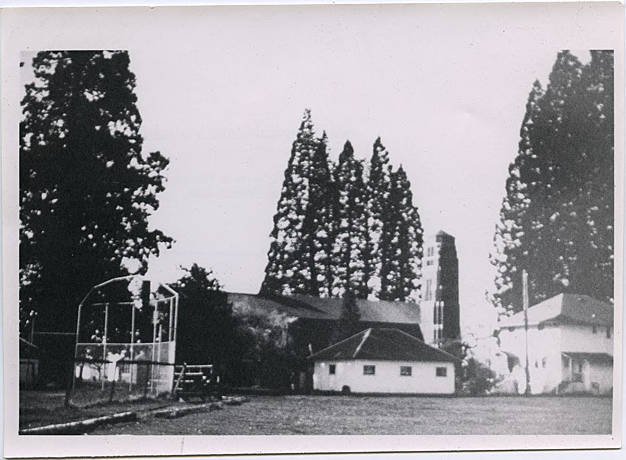
Black and white photograph of Visitation Church. A baseball diamond takes up the left side of the photograph, and two other buildings are in the foreground. Several large Sequoia trees dominate the background of the image. Between the houses and the trees the church roof and tower are just visible.
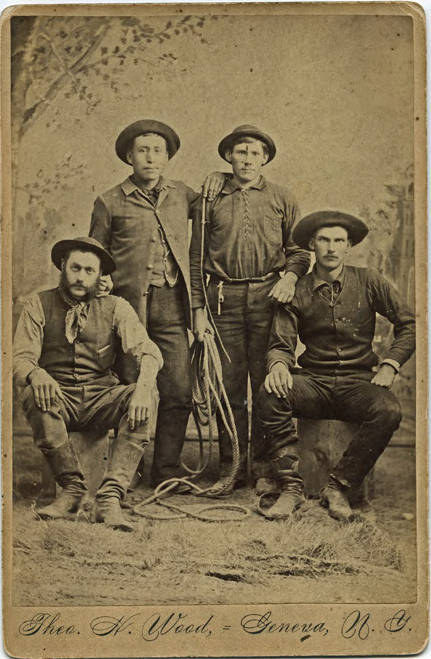
Four men dressed as cowboys, identified on the back of the photograph from left-to-right as: Albert Tozier, Henry Sicade, Ben Martin, and James Hopkins. Sicade was a notable member of the Puyallup Tribe. He entered the Forest Grove Indian School in 1880 before enrolling in regular high school classes at Tualatin Academy nearby around 1883. Later in life, he went on to found an integrated public school system in Fife, WA, near the Puyallup Reservation. Albert Tozier was also notable: He later became the editor of several newspapers in Washington County, Oregon. At the time that this photograph was created, the four young men had taken on work as cowboys and traveled together across the country. This studio portrait was made in Geneva, New York, in 1886.
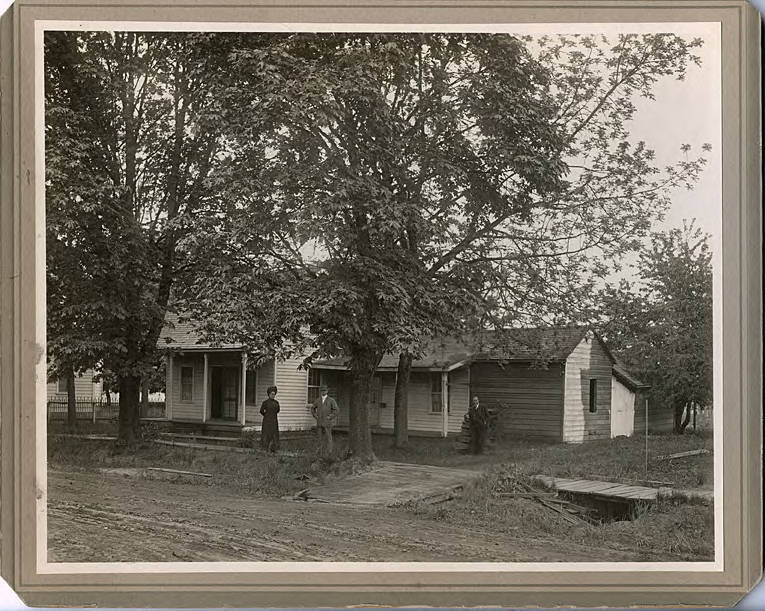
Black and white image mounted on heavy mat. A gabled house build in two sections sits just behind two large maple trees. The first portion appears to be two story, and has a covered porch with an open screen door. The second section is single-storied and appears to have been added onto later. The roof of this covered porch sags, and windows appear to be missing in the very end of the building. A dirt road runs in front of the house, and a boardwalk is visible just beyond the driveway that leads from the road into the lot on which the house sits. Three people stand in front of the house, two men and a woman. The woman wears a dark, ankle-length suit and an elaborate hat with an upturned brim. The man next to her has his hands in the front pockets of his suit jacket; he has a white shirt and wears a hat. Another man in a dark suit leans against a pile of wood further back in the yard.
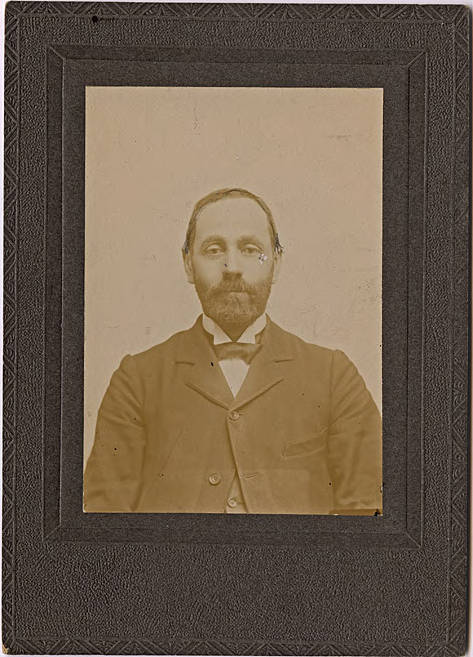
Portrait of Albert Tozier, early settler in Hillsboro and long-time publisher and editor. He was also an avid local historian, and his collection formed the foundation of the current Washington County Museum.
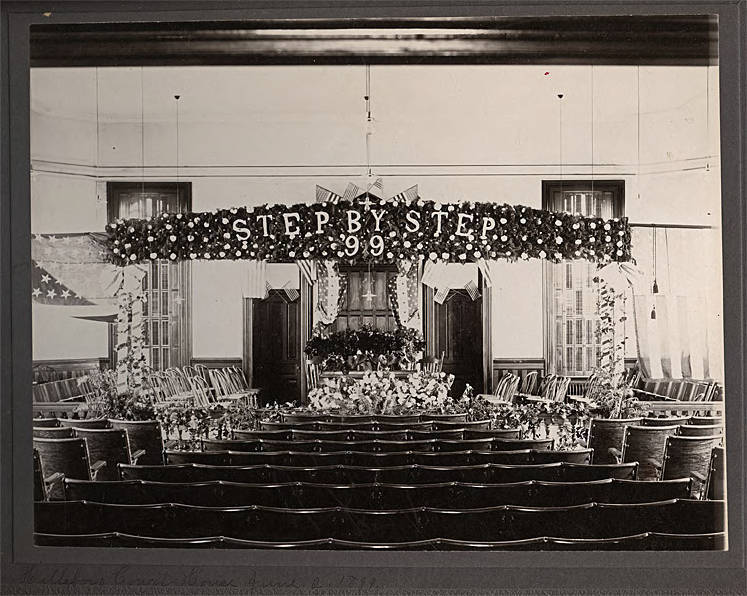
Black and white image mounted on a heavy mat. An empty auditorium decorated with flowers and greenery at the front. United States flags hang to either side of the main state, and smaller flags and star-spangled, striped bunting decorate the back of the podium. A large sign decorated with flowers and greenery hangs in the middle of the image, bearing the legend 'Step by Step, 99'.
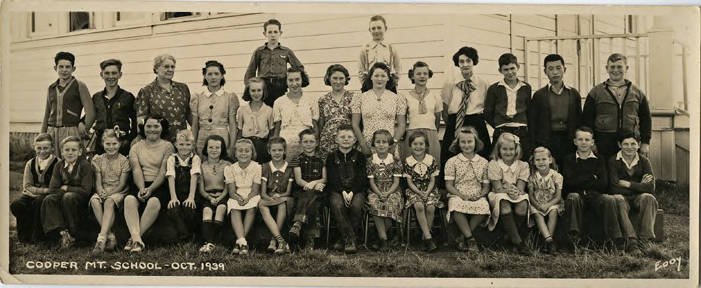
Black and white school photo of a number of children in front of a school. The smaller children sit in the front row on benches; the girls wear shorter dresses and the boys wear overalls or slacks and sweaters. In the back row a number of young women stand, wearing dresses typical of the 1930s. Two women stand with them, and five boys who appear to be in their early to mid-teens. One of the boys is Asian-American. Two boys stand behind the group, apparently on a platform or table.
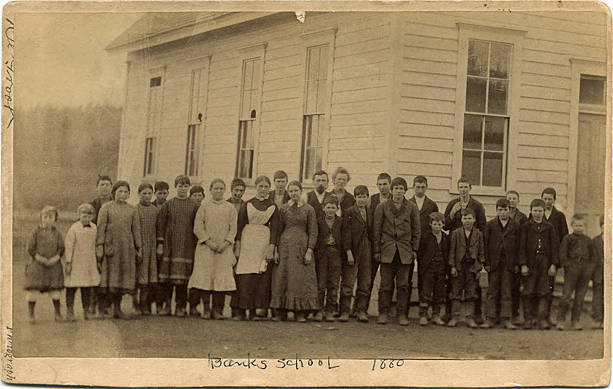
Sepia-toned image of a group of students standing outside of a white, wooden building. There are eight girls and at least twice that many boys in the group, and most appear to be late grammar or secondary school aged. Two of the taller girls wear long dresses with tight-waisted bodices, one with a white apron pinned to the front. All of the other girls wear short, loose dresses with long sleeves and made of material with patterns from plaid to stripes. The boys wear long pants and most have coats on. In the middle of the back row is a man with a full goatee and wearing a white shirt with a vest. The building has large, paned windows, and two of the panes on windows along the side have holes in them. The ground is bare, and an open meadow area behind the school leads into a forested area.
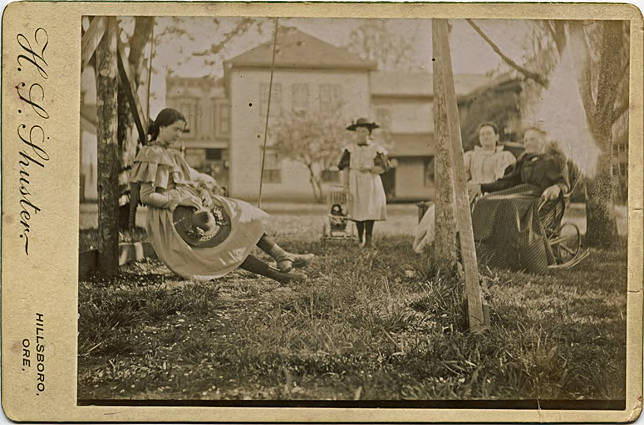
Sepia-toned image of two women and three girls sitting in a yard behind a building. One women wears a dark dress and sits in a rocking chair; the woman sitting next to her wears a light-colored dress. Both have their hair up in buns, and their sleeves have large puffs on the upper arm. The girl in the middle of the image wears a dark, knee-length dress with a white pinafore skirt and a flat-brimmed hat. She has a doll carriage with a doll sitting in it. The other young woman also wears a knee-length dress and has a flat-brimmed hat. She leans on a board attached to a tree, and her dress has large puffed sleeves and a shoulder ruffle. The building behind them is two-stories with three sections, built in a cross-gabled style.
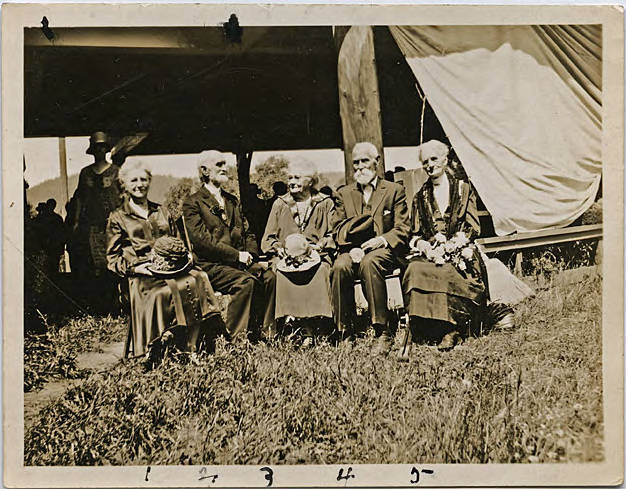
Black and white photograph of five elderly people, three women and two men. The women wear mid-calf length skirts made of what appears to silk, with open collars. Two hold decorated cloche hats in their laps; one has a floral shawl draped over her shoulders. The two men wear suits and have full beards. They are sitting on chairs on the grass in front of a large covered pavilion, with other people visible in the background of the image.
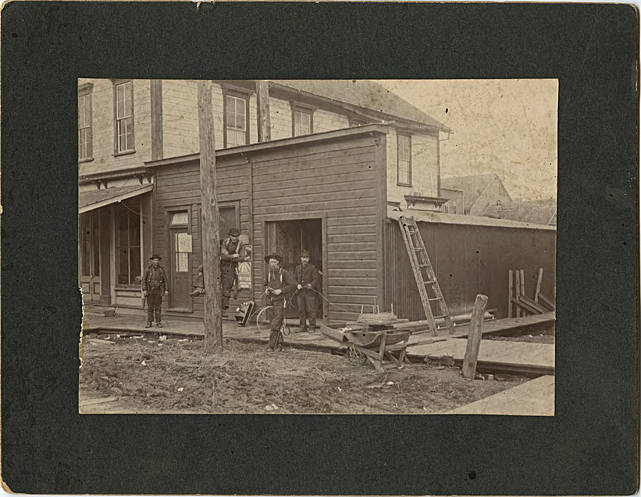
Sepia-toned image mounted on heavy mat of four men outside a single-story, square-fronted building. The building has a closed door with a transom window to the image left and to the image right a larger, barn-style door which is open. A wooden wall telephone sits on the boardwalk, leaning against the outer wall. One man has begun to climb up the pole standing in front of the boardwalk, trailing a thick wire behind him, while another holds the wire ready to direct it as it comes off of a large roll resting on a nearby wheelbarrow. Another man in the background holds more wire that appears to lead to the telephone. A fourth man stands to the image left, watching the process. The ground around the pole is straw covered, and a ladder leads up to the roof of the building. A two-story building sits next to the first building, and the roof lines of additional buildings are visible in the background of the image.
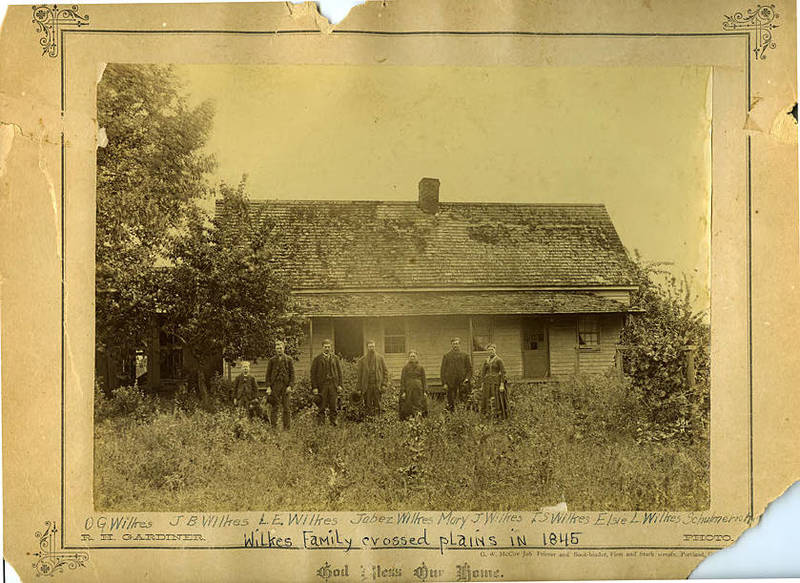
Sepia-toned image of a family standing in front of an older, gabled home. The house appears to be run down; a single chimney protrudes from the center of it. Two doors open out onto a covered porch, one is open and the other has paned glass in the upper half, most of the panes are broken out. Off to one side is another, smaller section. There is a lot of brush in the yard, and a number of bushes that are in full leaf. The family consists of four older males, one young boy, and two women. The men and the boy all wear suits, and hold their hats in hand; the oldest male has a long, full beard. the women wear long, fitted bodices over skirts that are fuller in the back than the front. Their sleeves are narrow, and the younger woman has a lacy decoration around the neck of her dress. Both wear their hair up tightly.
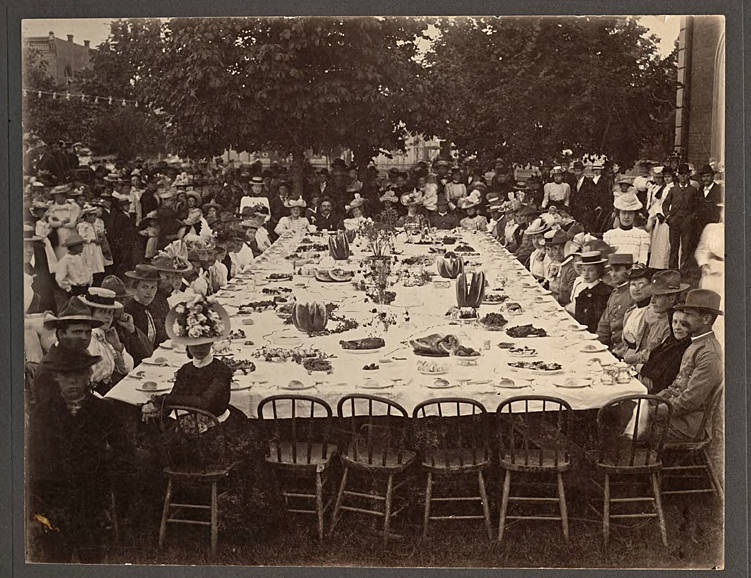
A table set for a banquet in honor of veterans returning to Oregon from the American war in the Philippines, probably between 1899-1902. It was taken at Courthouse Square in downtown Hillsboro, Oregon, near the intersection of Main Street and 2nd Avenue. Central in the picture is a large table set for dinner and with a good deal of food, and with people seated all along each side. Decoratively cut watermelons and vases of flowers stand on the table. A crowd of people, men, women, and children including babies, are gathered in the background of the photograph and to the sides of the table. The seating pattern at the table alternates men and women, no children, and most of the seated men wear uniforms with various cavalry and kepi styled hats. The women's hats vary widely, from straw sailor hats to small bonnets to wide-brimmed hats with large numbers of flowers on them. The trees in the background are lush and full.
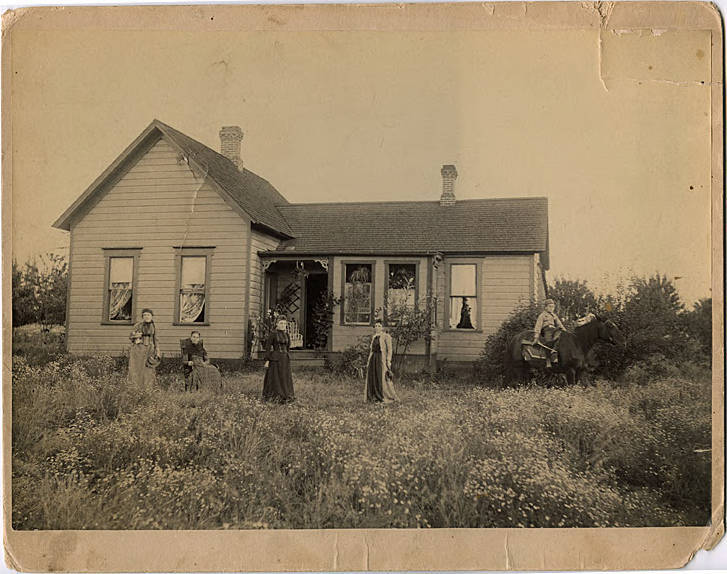
Sepia-toned image of five people standing in front of a cross-gabled house in a yard with many flowers and vegetation. Three women stand in a row in the front of the house, with another sitting in a rocking chair. The woman on one end holds either a cat or a puppy in her arm, and on the other end the woman holds a fan at her side. Three of the women's dresses have fitted bodices; the fourth has a loose dress gathered at the waist. A young boy sits on a horse at the right of the image, holding a rifle. He wears short pants and a hat. The house has curtains, and a number of plants are visible in the windows.