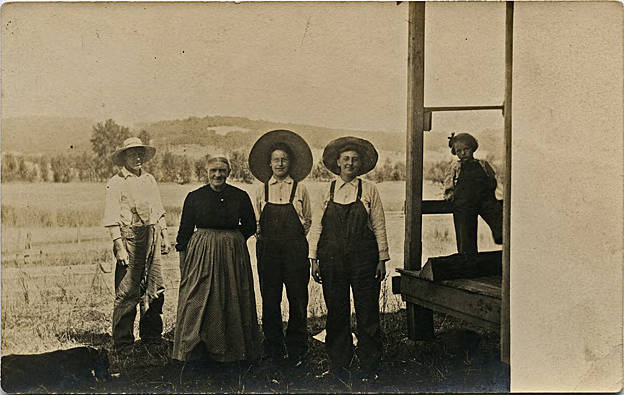
Sepia-toned image of three women and a man, all dressed to work on the farm. Two of the women wear overalls, as does the young girl on the porch. Note the rolled bangs of the women in overalls, and the shorter hair of the young girl on the porch, also wearing overalls.
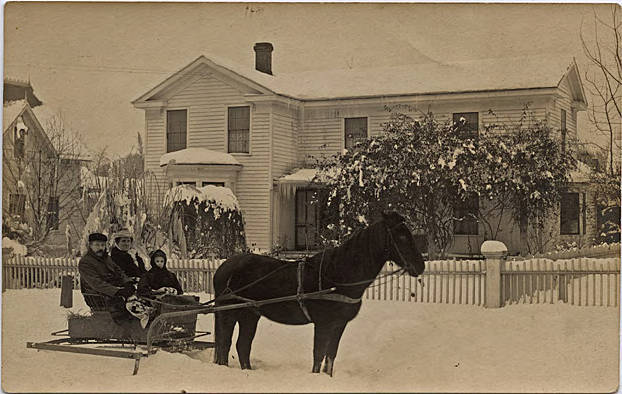
Black and white image of a man, woman, and a child in a sleigh being pulled by one horse. Note the power lines extending to the house in the background, and the several inches of snow piled on top of the fence posts. The horse appears to walk in a cleared area, while the sleigh's runners sit on the snow to either side of that.
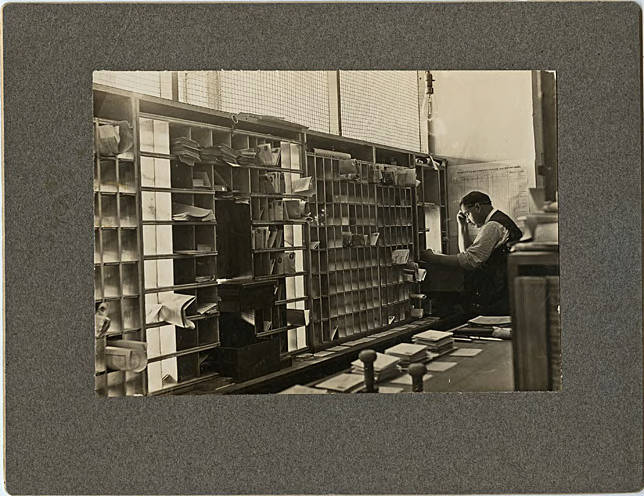
Black and white image of a clerk in behind the counter in a post office, reading. Boxes filled with letters and newspapers line the wall, and other stacks of letters are arranged on the worktable.
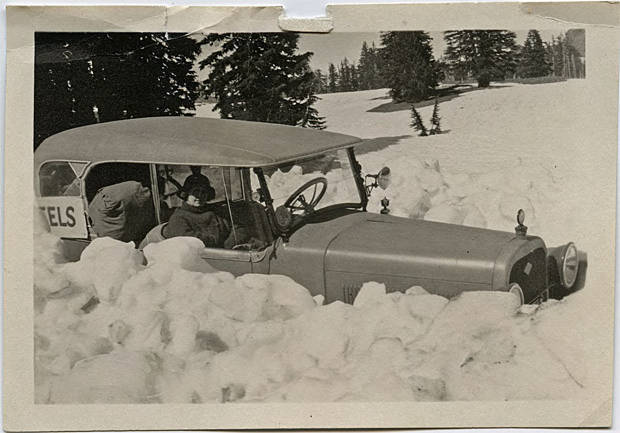
Black and white image of a car stuck in deep snow. the car looks to have been snowed in, and a woman in a coat and hat sits in the front seat. Note the lack of exterior windows on the car, though it does have a glass pane separating the driver's seat from the passenger seat in the back.
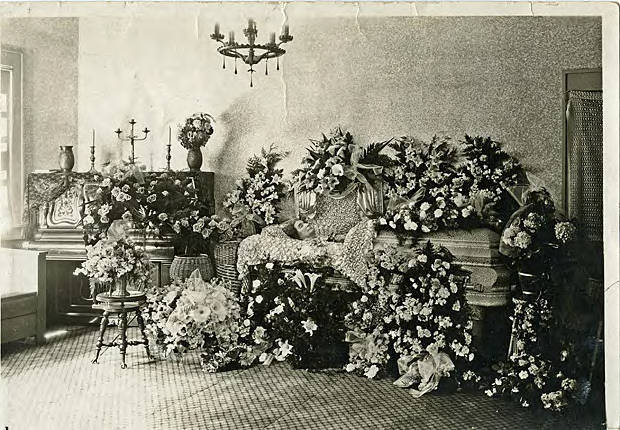
Photograph of a deceased woman in her coffin, with flowers arranged around her. In the corner is a piano; the photo was very likely taken at the funeral home. Post mortem photography, or 'memento mori' became popular in the 19th century with the invention of daguerreotype and other forms of 'instant' portraiture.
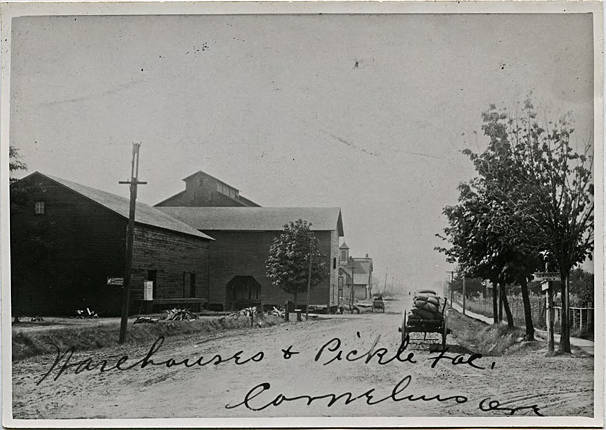
Black and white image of a large building, with a factory in the background. Near one building a horse has been unharnessed from its wagon and set to graze just off the road. A boardwalk runs along the other side of the road, and a haze of dust obscures the horizon.
Sepia-toned image of an elderly man in a suit, standing in a garden. Frank Clark appeared in almost 200 films in 27 years in the industry. He is approximately 70 years old in this image. Beaverton, Oregon, was home to at least one movie company in the 1920s, Premium Picture Productions also known as J. J. Fleming Productions.
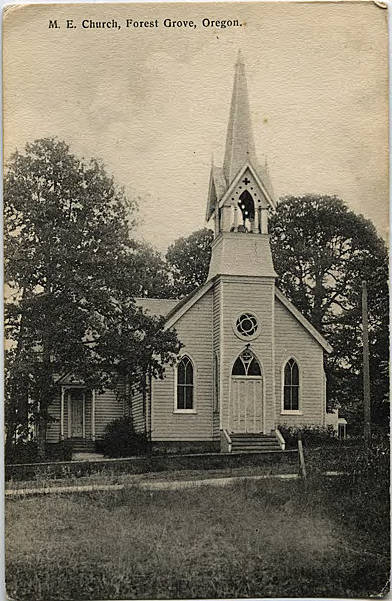
Black and white image of the front of an American Gothic style church. The picture appears to have been taken from a vacant area across a dirt road from the church.
One of the Bernards family's homes in Verboort, Oregon. The Bernards were a large Dutch-American Catholic family who settled in the small village of Verboort, a few miles north of Forest Grove. The community had many other Dutch-American families. Three Bernards brothers -- Hubert, Theodore and John Bernards -- came to Verboort in 1875, where they were later joined by more family members. It is unclear which of the Bernards homes this photograph depicts, but it was probably taken between 1900-1920.
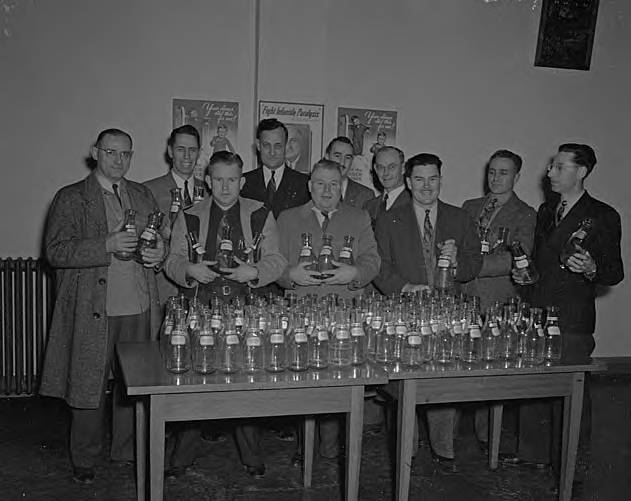
Black and white image of a dozen men with bottles, all bearing the label Drop a Dime, the original March of Dimes slogan. On the wall behind them are three polio posters, one of which features President Franklin Delano Roosevelt.
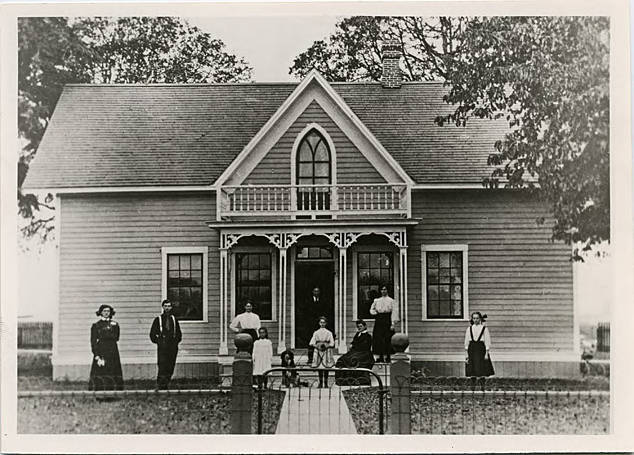
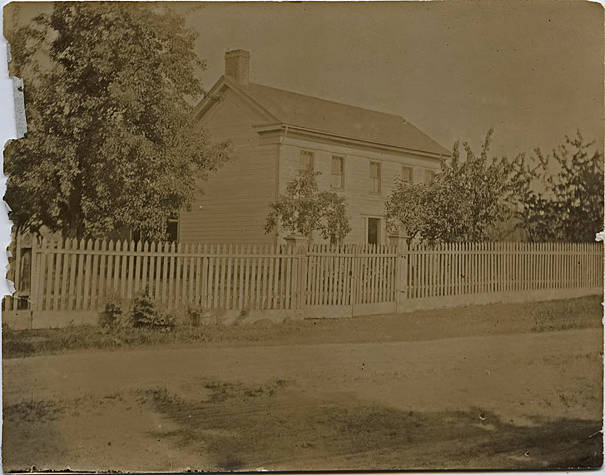
Sepia-toned image of a two-story gabled home sitting behind a picket fence. The road is packed dirt, and there are no power lines visible in the image.
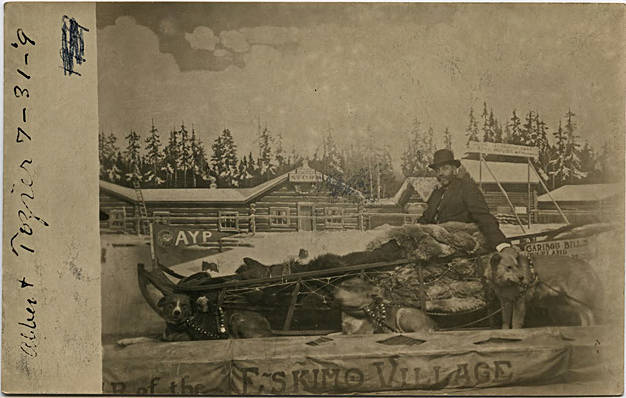
Sepia-toned image of a bearded man sitting in a sled parked in front of a painted background. Three sled dogs stand beside the sled, none of which are huskies, and part of a sign can be seen which reads Eskimo Village.
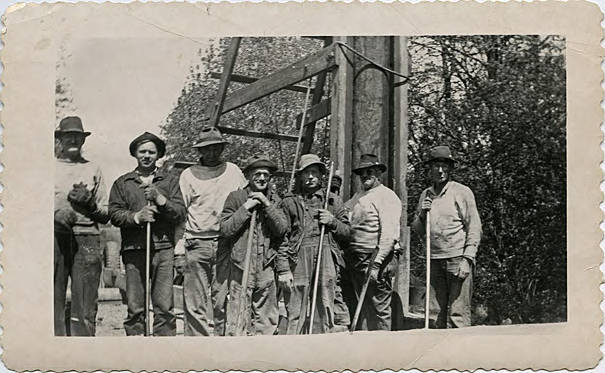
Black and white image of a group of men, most with tools in hand, and a pile driver behind them. Museum records indicate they were all members of Union Local #1153.
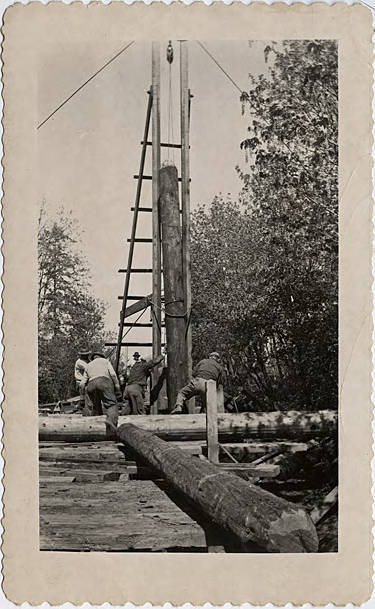
Black and white image of a group of men building a bridge. Two men appear to be guiding the driving of a piling for the bridge surface, while another holds a cable or rope that supports the structure placing the piling. A tractor or engine can just be seen in the background. Museum records indicate they were all members of Union Local #1153.
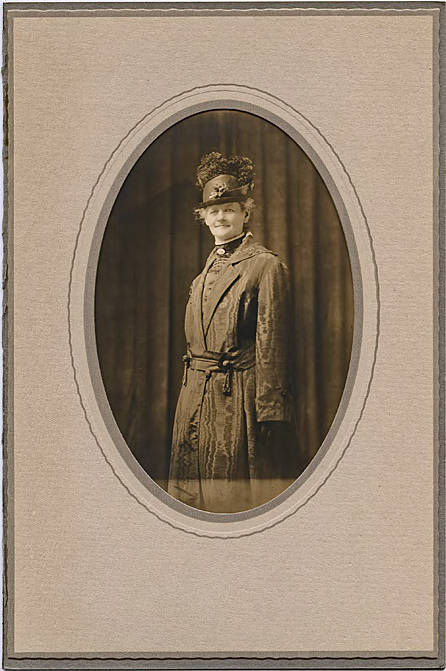
Sepia-toned image of a woman in a hat and jacket. Her coat and hat are very stylish for the latter 1910s, presaging the shift to the more boyish silhouette of the 1920s.
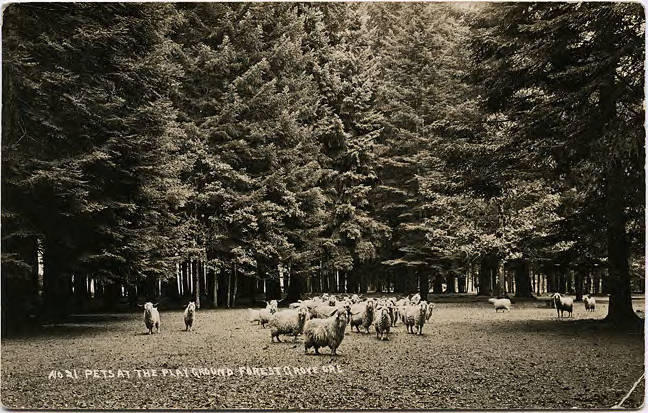
Sepia-toned image of a small herd of angora goats in a cleared area beneath thick pine trees. The book mentioned in the letter on the back, 'Freckles', was a popular novel by Gene Stratton Porter, published in 1904. The addressee, Mrs. L. [Daisy] Markee, was a local woman who had relocated to California with her husband and family. She died in the 1918 influenza epidemic and was buried in Oregon by her husband.
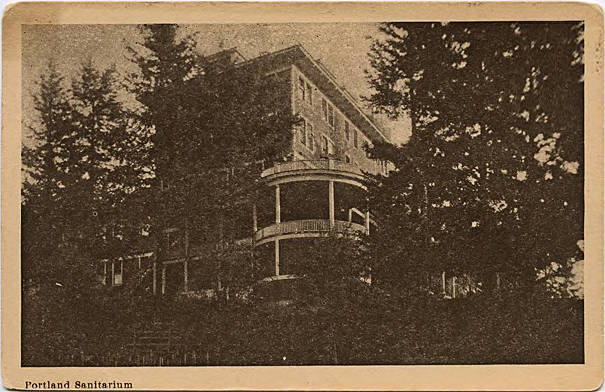
Sepia-toned image of a building from the side. there is a large, round, two-story verandah on the end, and a number of trees. On the back is a 1 cent U.S. postage stamp. The addressee, Mrs. L.A. [Daisy] Markee, was a local woman who had relocated to California with her husband and family. She died in the 1918 influenza epidemic and was buried in Oregon by her husband.