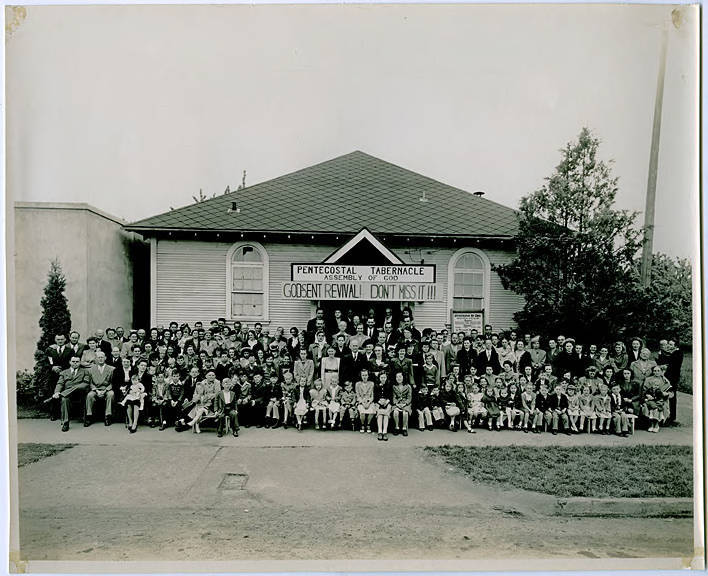
Black and white image of an Assemblies of God congregation in front of their church building. The church is evidently having a revival, as the sign on the front of the building proclaims 'God-sent Revival! Don't Miss It!!!
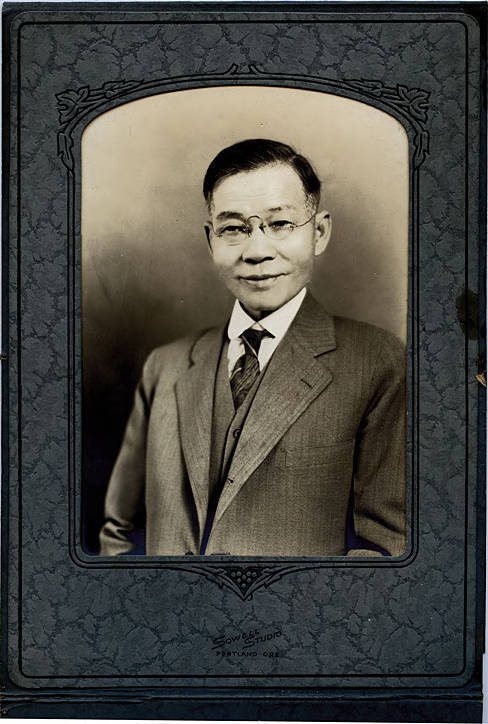
Sepia-toned portrait of an Asian man wearing glasses. The portrait was found with a series of photographs of what appear to be the same man, only many years older. The other image was one of a series of photographs evidently used to prepare for a sculpted bust by Alice Sewell. (See also WCMpic_012176 and WCMpic_012182.)
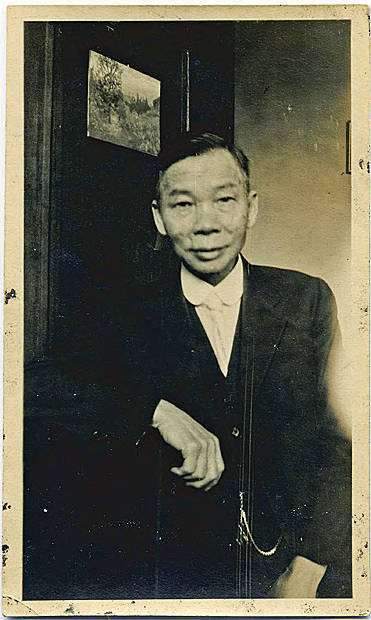
Black and white photograph of an elderly Asian man, dressed in a three-piece suit. The image was one of a series of photographs evidently used to prepare for a sculpted bust by Alice Sewell. (See also WCMpic_012154, WCMpic_012180, and WCMpic_012182.)
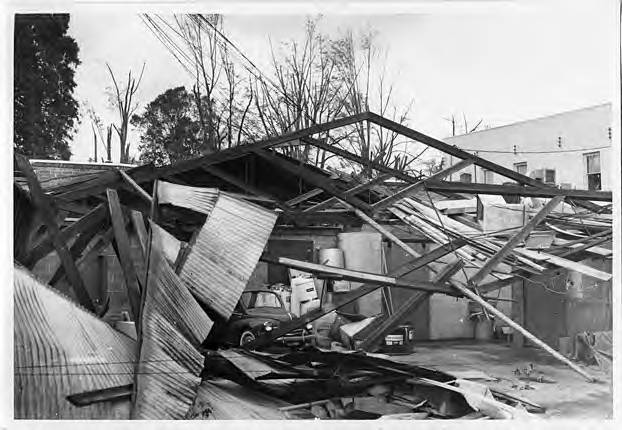
Black and white image of a collapsed wooden frame building. Sheets of corrugated tin and wooden beams are collapsed over a concrete floor and a Volkswagen Beetle. with downed power lines visible behind the building's remains. The remains of Typhoon Freda, the Columbus Day Storm cut a swath of destruction through the Pacific Northwest, with the bulk of the damage occurring in Oregon's Willamette Valley and along the Oregon coast. Thousands of homes were 'severely damaged' in Oregon, according to a Red Cross survey after the storm, and almost 500,000 families were without power or telephone service, many of them for weeks as local utilities struggled to rebuild a power grid that had been virtually destroyed.
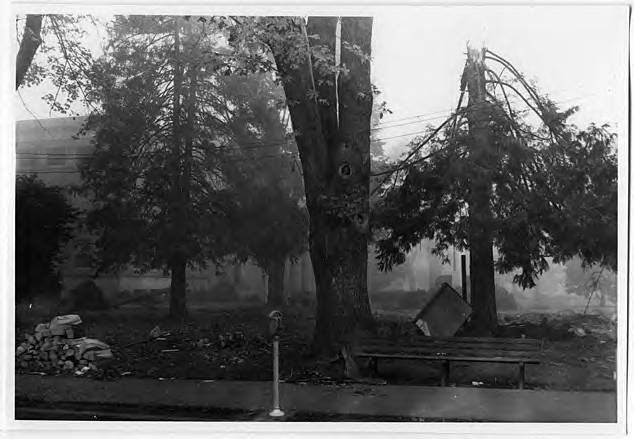
Black and white image of broken trees and debris scattered across the lawn of the Washington County Courthouse. Fresh cut wood stacked to the bottom left of the picture indicates that cleanup is in progress. The Columbus Day Windstorm was an extra-tropical cyclone, essentially a rainless hurricane. The storm cut a swath of destruction through northern California, Oregon, Washington, and British Columbia on October 12, 1963, with the bulk of the damage occurring along the Oregon coast and in the Willamette Valley. The highest winds recorded in the Portland area reached 116 mph, but many local anemometers (wind gauges) were destroyed by the storm after reaching their measurement capacity. Damage estimates in current (2012) dollars were between $3 and $5 billion dollars, including 11 to 15 billion board feet of timber in the Coast Range.
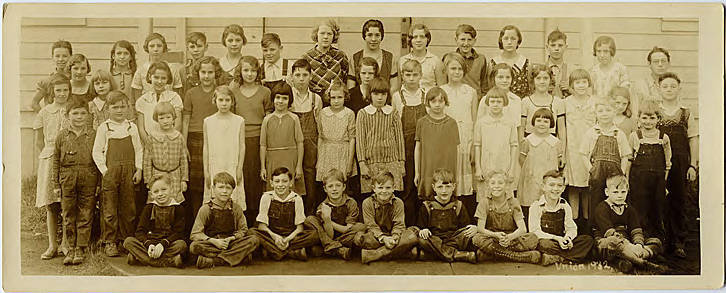
Sepia-toned photograph of a group of school students ranging in age from elementary to teenagers. Notice that most of the boys wear overalls, and the girls mostly have short hair, and wear short dresses. At this time, 1933, the area was still largely rural, with farms and a sawmill. West Union was the first school district in Washington County, formed in 1851. The building behind the students in this image was the second building to house the school, and was in use from 1892 until 1949. Today, the school is part of the nearby Hillsboro School District.
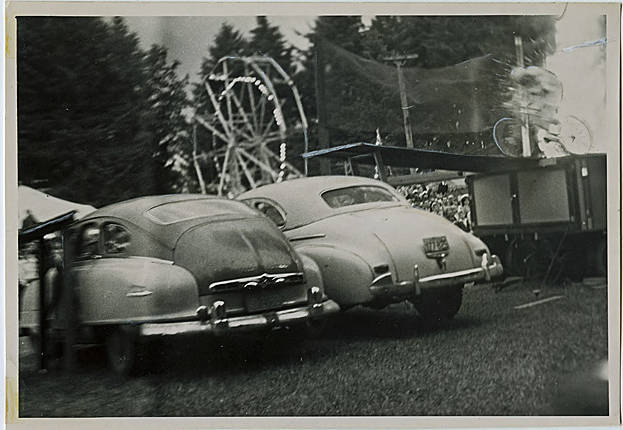
Black and white image of a motorcyclist just about to jump over two cars. The motorcyclist, identified as Mike Kelly, has just come through a 'ring of fire.' In the background is a Ferris Wheel lit up; at this time the County Fair was still held at Shute Park in Hillsboro. Unfortunately, Mr. Kelly lost control of his bike after he complete the jump and died of the injuries he received in the subsequent crash. Mr. Kelly's legal name was Dean Henry Leroy Pletcher, and he was from Goshen, Indiana. (See WCMpic_012658 and WCMpic_012661 for other images of this event.)
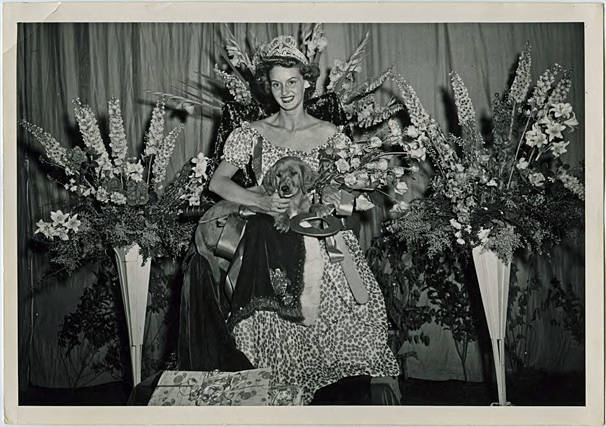
Black and white image of a young woman, Gloria Bates, in a formal gown seated in the midst of floral decorations and holding a dozen roses and a puppy in her lap. She wears a crown on her head and appears to be holding a large key as well.
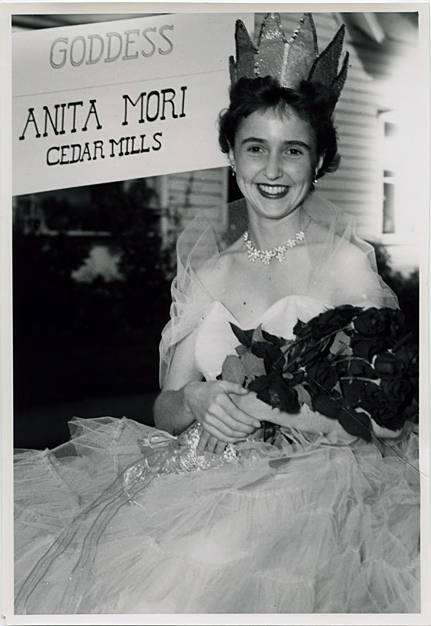
Black and white photograph of a young woman in a formal dress. Ms. Mori wears a crown and carries a dozen roses in her arms. The sign in the background merely reads 'Goddess', but museum records list the photograph as 'Goddess of Liberty, Anita Mori.' The selection of a Goddess of Liberty was often part of the Hillsboro Happy Days events, held over the Fourth of July, dating back to the early 1900s. However, the competition-based selection of local young women as 'Goddess of Liberty' to reign over various local July 4th celebrations dates back to the late 1800s in this area. The dress worn by Ms. Mori indicates that this particular pageant was likely in the late 1940s or 1950s.
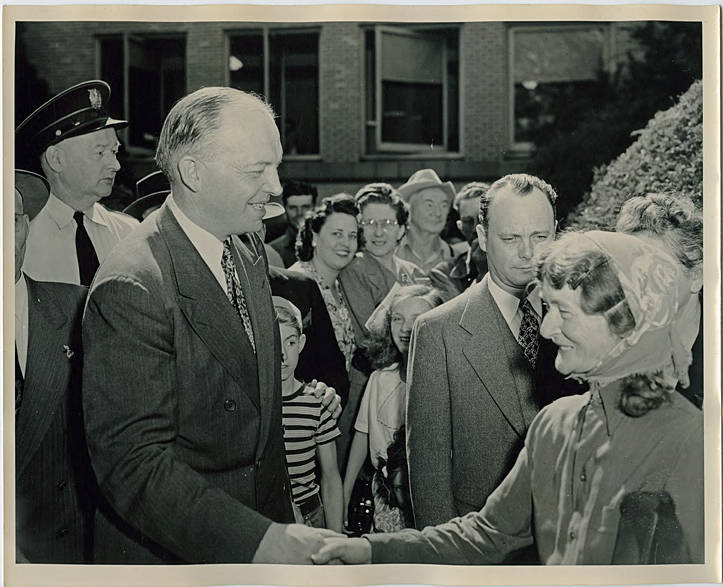
Black and white photo of Harold Stassens shaking hands with a woman on the edges of a crowd. In the background can be seen the Washington County Courthouse. Harold Stassens had a long political career, serving as governor of Minnesota and Pennsylvania and mayor of Philadelphia. Stassens was also a perennial candidate for the Republican Party Presidential nomination, unsuccessfully running in every presidential election cycle from 1944 to 2000, except for the 1956 and 1960 elections.
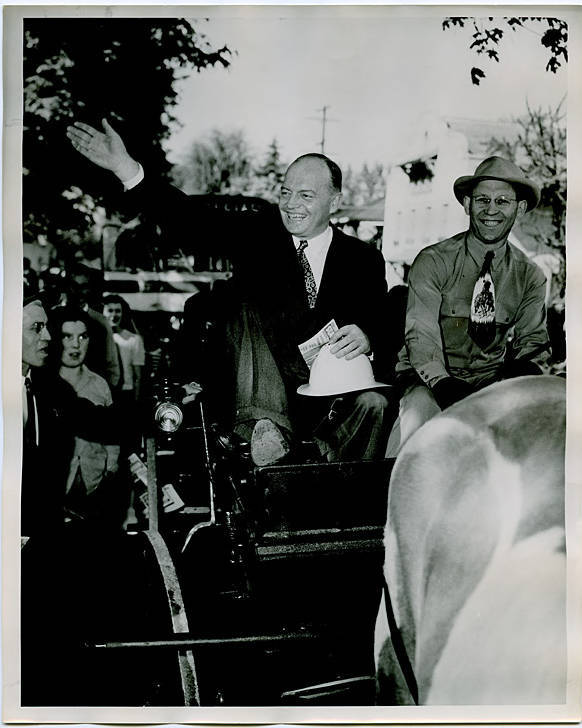
Black and white image of a man waving to a crowd as he rides in a carriage. The bus behind Mr. Stassens bears the label Special, and is very likely his campaign bus. Harold Stassens had a long political career, serving as governor of Minnesota and Pennsylvania and mayor of Philadelphia. Stassens was also a perennial candidate for the Republican Party Presidential nomination, unsuccessfully running in every presidential election cycle from 1944 to 2000, except for the 1956 and 1960 elections.
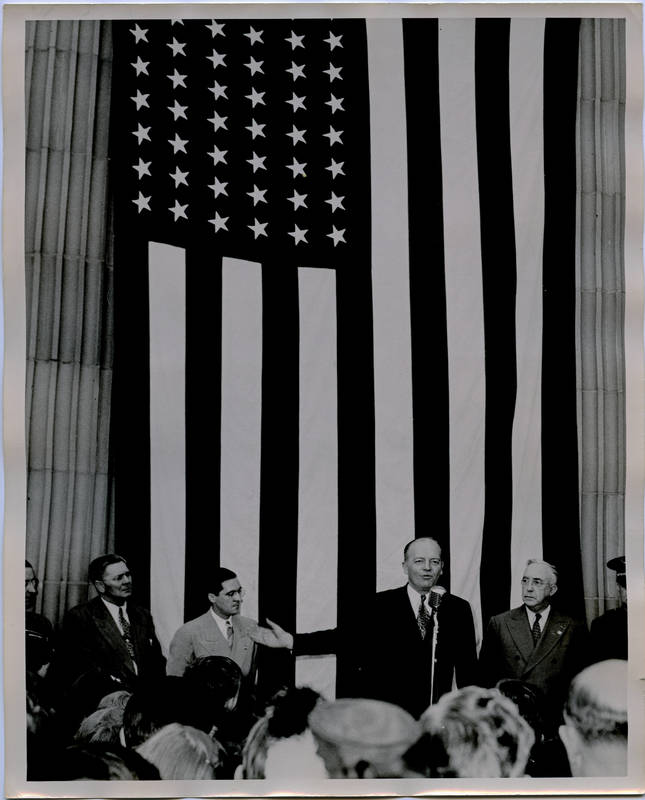
Black and white image of a man giving a speech on the front porch of the Washington County Courthouse in Hillsboro, Oregon. The speechmaker, Harold Stassens, stands in front of a large United States flag. Mr. Stassens had a long political career, serving as governor of Minnesota and Pennsylvania and mayor of Philadelphia. Stassens was also a perennial candidate for the Republican Party Presidential nomination, unsuccessfully running in every presidential election cycle from 1944 to 2000, except for the 1956 and 1960 elections.
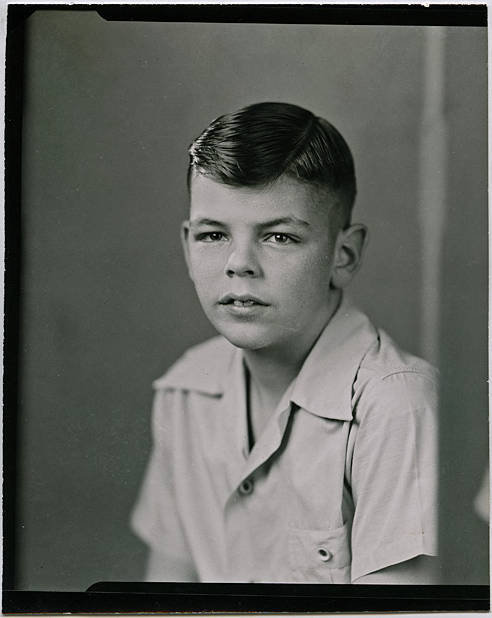
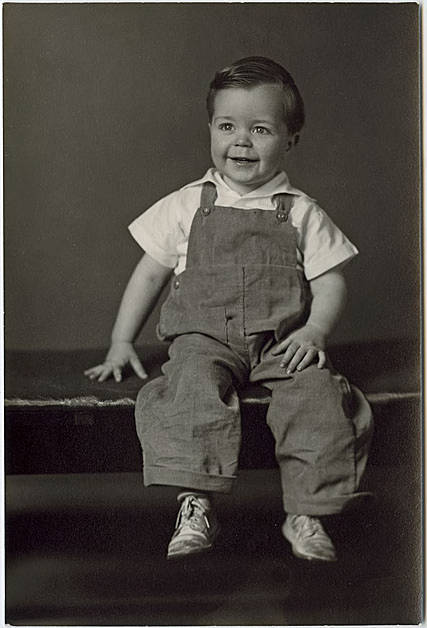
Black and white photograph of a toddler, wearing overalls and a white shirt. His hair is cut short and combed to the side. Richard McKinney was the son of Verne McKinney, who was editor of the Hillsboro Argus for fifty years. Museum records date this photo as being taken on November 10, 1939.
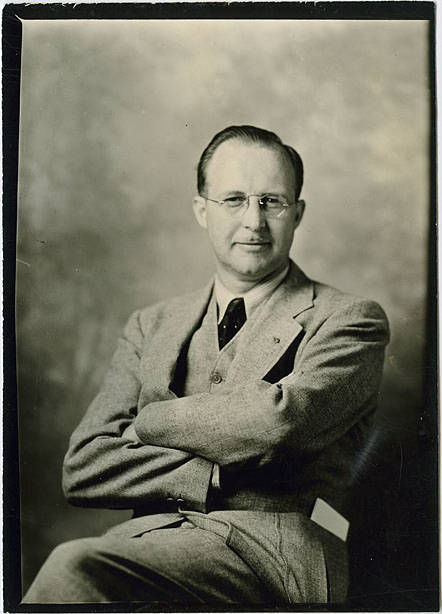
Black and white image of a man in a suit, Verne McKinney. McKinney enlisted in the army in World War I. Because of his experience working on the Hillsboro Argus, the newspaper owned by his mother, he served mostly at the Central Printing Plant as a printer. When he graduated from college in 1923, Verne's mother, Emma, sold him a half-interest in the Argus, and made him an editor, a position which he held for another fifty years.
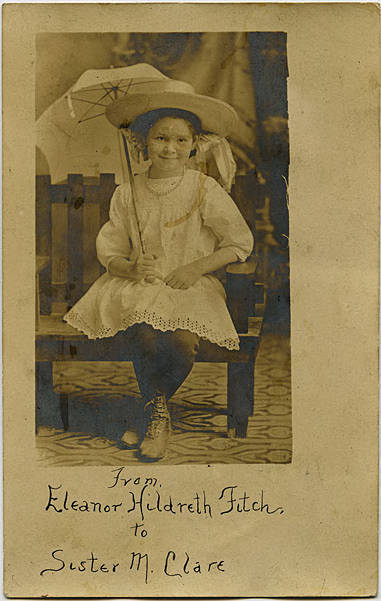
Sepia-toned portrait of a young girl sitting on a bench with a parasol. She wears a broad-brimmed hat and a light-colored dress with lace trim. Eleanor Fitch was about five years old in this picture. Carrie Fitch is Eleanor's older sister; she was approximately 21 years of age and still living on the family farm in Dilley when she sent this postcard. Sister Mary Clare grew up in Cornelius, Oregon and entered the convent in 1904, at the age of sixteen. Her name prior to taking her vows was Agnes Morressey.
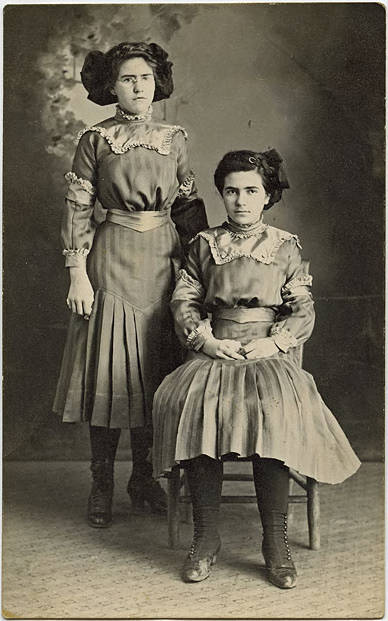
Black and white image of two young women wearing fancy tone-on-tone striped dresses with pleated skirts and satin yokes and sleeves. One girl is seated, and one is standing,. Both wear their hair up with a bow, though the standing girl's bow is much larger than her companion's. Girls' clothing in the 1910s especially became more child-friendly. One of the girls in this image is identified as Theresa Hendricks, the other is most likely her sister Edna, two years older than Theresa. Both the girls lived in Cornelius with their family. In the 1910 census, Theresa's father, Alphonse, is listed as the proprietor of a general merchandise store.
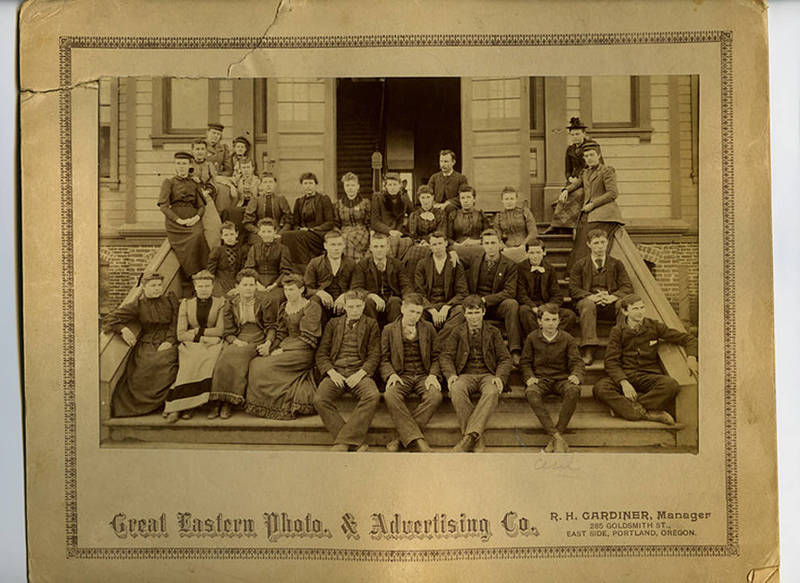
Group photograph of the students at Hillsboro High School in the 1890s, along with their teacher and principal, J. B. Stanley. The back of the photo names most of the students.
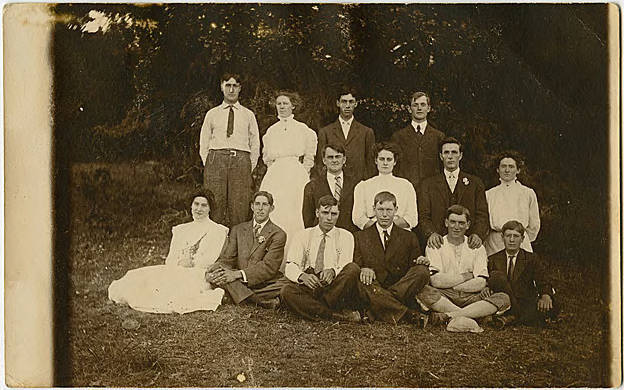
Sepia-toned image of a group of young people grouped beneath a tree. The four women wear high-necked white blouses tucked into skirts, while all but one of the men wear variations on a suit and tie. One man wears a baseball uniform. Carrie Fitch sent the postcard to Mary Morressey, the older sibling of Sister Mary Clare at St. Mary's Institute. (Sister Mary Clare's name prior to taking her vows was Agnes Morressey.)
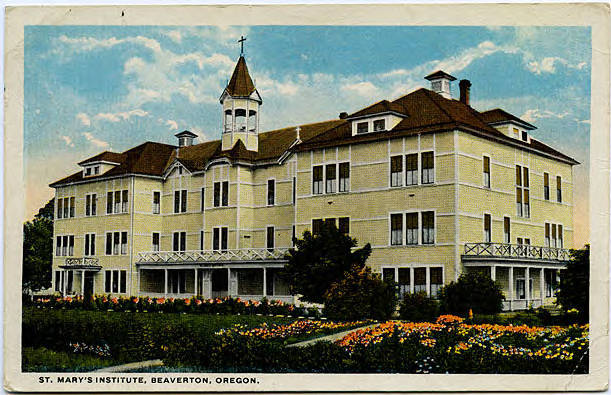
Colorized image of a large institutional building in the American Stick style architecture. Dormer windows indicate a fourth floor underneath the gabled roof, and an octagonal bell tower sits prominently in the middle front of the building. The middle portion of the building was the original motherhouse constructed for the Sisters, completed in 1894. The wings were constructed in the early 1900s, adding a chapel and room for a boarding school. St. Mary's was begun as an orphanage for wayward children in the Beaverton area in 1889, the Sisters arriving in 1891 to take over care of the children and provide religious instruction. In 1902 English was mandated as the convent's primary language, though many of the Sisters' first language was German. Agnes Morressey grew up in Cornelius, Oregon and entered the convent in 1904, at the age of sixteen, eventually taking the name Sister Mary Clare. As a postulant, she was infamous in the community for her inability to keep her postulant's sailor hat in place over her long, thick hair, mostly because she frequently misplaced her hatpin. An accomplished musician, Sister Mary Clare taught music and other subjects in area parochial schools. She died in 1922 of leukemia.
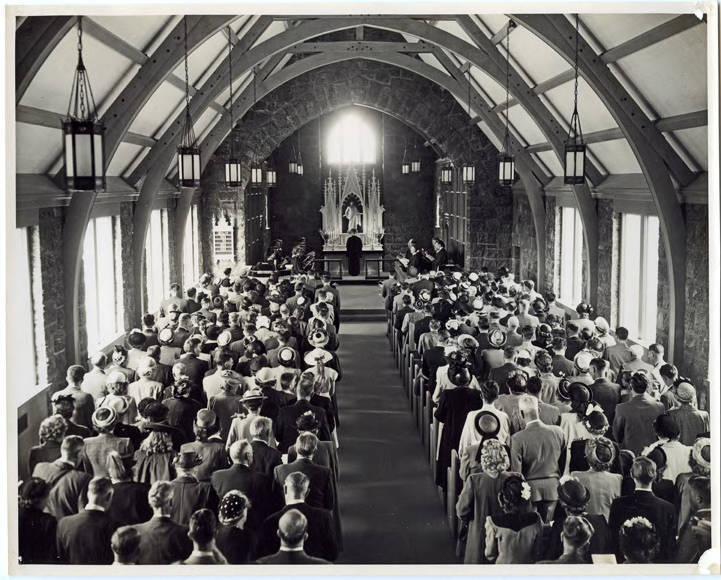
Black and white photo of the congregation in the newly built Trinity Lutheran Church. The church was built largely by the congregation with donated labor, including dynamiting and then hauling the rocks used for the exterior from the quarry in Camas, Washington. The church was in use by the congregation from 1949 until 1996, when they relocated to a bigger facility elsewhere in Hillsboro. The city of Hillsboro purchased the building in 2000, and in 2004, opened the Glen and Viola Cultural Arts center in the building, named for the donors who provided the funds for the purchase and renovation. (See also WCMpic_012431, WCMpic_012430, and WCMpic_012424 for other pictures of this building in the same time period.)
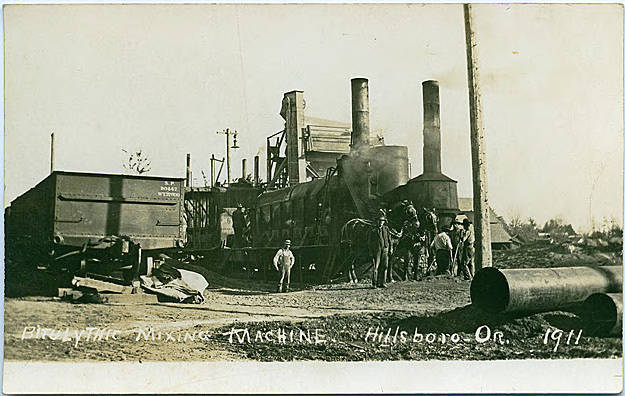
Black and white image of an early street paving project. Asphalt is a form of bitumen, and this is an example of an early mechanized hot-mix asphalt paving machine. Rather than being the material which covers the road, the bitumen or asphalt is the cement which holds the road materials together. In this case, it was probably gravel and small stones, the 'lythic' (lithic) in the 'bitulythic' mixture.