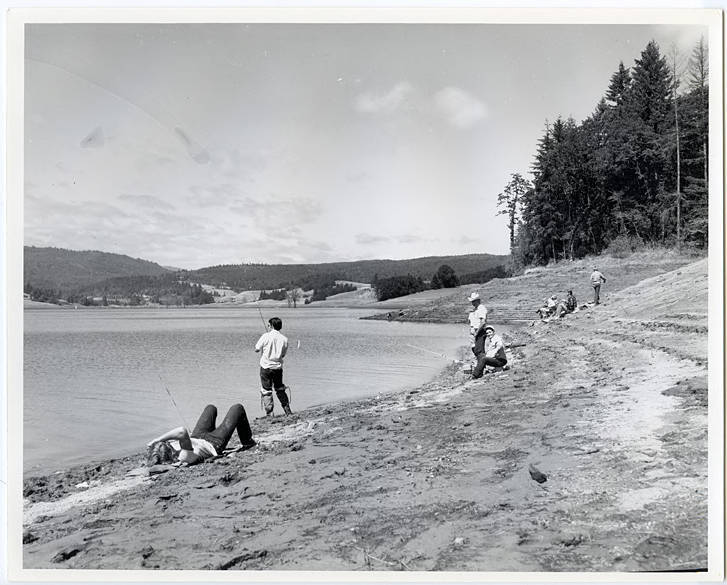
Black and white image of fishers at the newly created Henry Hagg Lake reservoir. Construction of the Scoggins Dam destroyed natural spawning grounds in Scoggins Creek, but to mitigate that effect on local fishery populations and recreational fishermen, the lake was stocked with trout, crappie, bass, and perch each year. It was also hoped that drawing recreational users such as fishers and boaters to the reservoir would be a boost to the county's economy.
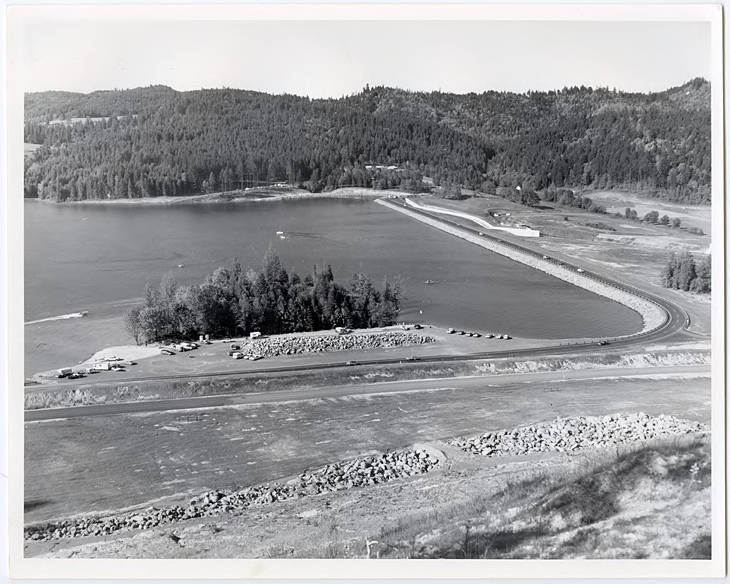
Black and white image of the dam and the lake it created once it was constructed, showing the county road that crosses the dam and provides access to the reservoir. Hagg Lake Park was the first county park in Washington County, created when the Bureau of Reclamation built the Scoggins Dam and Hagg Lake was formed in the mid-1970s. Henry Hagg was a long time resident of the Scoggins Valley and had been one of the original initiators of the Scoggins Dam project in 1934.
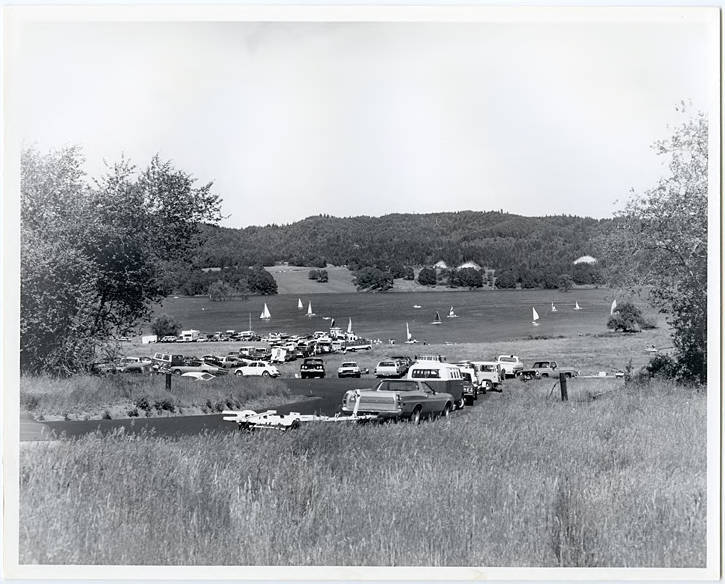
Black and white image of cars and boat trailers parked along the access road to one of the Hagg Lake Boat ramps. Many sailboats can be seen on the lake in the background. Because there was no other place for motorized boating in the county, Hagg Lake allowed motor boats to operate on about half of its surface, with the upper half of the lake reserved as a no-wake zone for non-motorized craft. Hagg Lake Park was the first county park in Washington County, created when the Bureau of Reclamation built the Scoggins Dam and Hagg Lake was formed in the mid-1970s. Henry Hagg was a long time resident of the Scoggins Valley and had been one of the original initiators of the Scoggins Dam project in 1934.
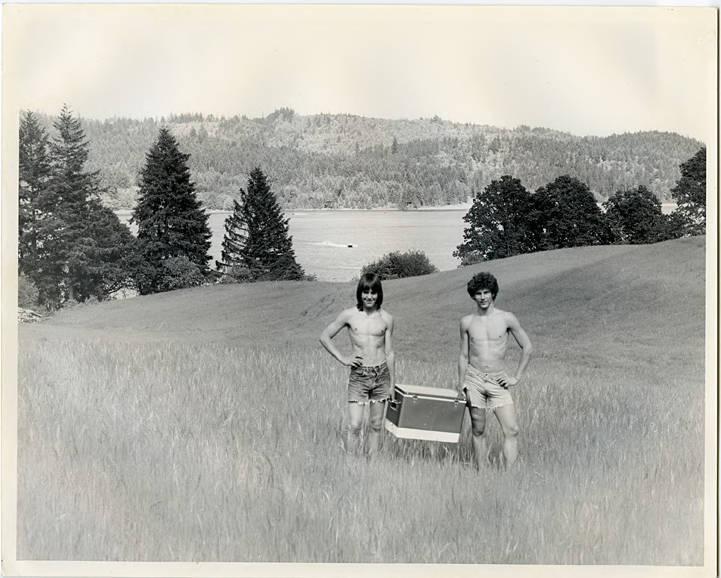
Black and white image of two young men holding a camping cooler. Wearing cut-off shorts, they stand in a field on a hill, with Hagg Lake in the background. Hagg Lake Park was the first county park in Washington County, created when the Bureau of Reclamation built the Scoggins Dam and Hagg Lake was formed in the mid-1970s. Henry Hagg was a long time resident of the Scoggins Valley and had been one of the original initiators of the Scoggins Dam project in 1934.
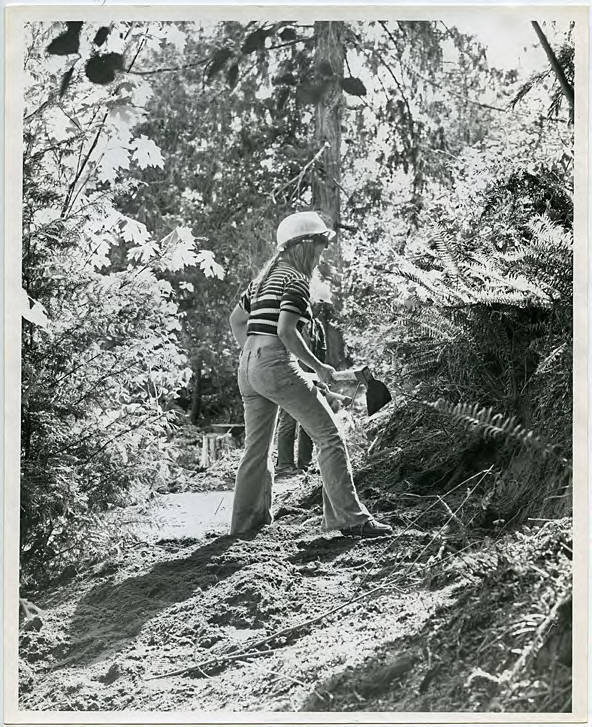
Black and white image of a Youth Conservation Corps (YCC) worker with a grub hoe, clearing brush and ground cover for a hiking trail at Hagg Lake Park. Fifteen miles of hiking and bicycling trails were eventually constructed at Hagg Lake. YCC programs provided summer employment for local youth and introduced them to conservation work in public lands, mostly campgrounds and national parks. During the late 1970s grants were often provided to state and local governments to fund YCC crews for local projects such as Hagg Lake Park. This was the first county park in Washington County, created when the Bureau of Reclamation built the Scoggins Dam and Hagg Lake was formed in the mid-1970s. Henry Hagg was a long time resident of the Scoggins Valley and had been one of the original initiators of the Scoggins Dam project in 1934.
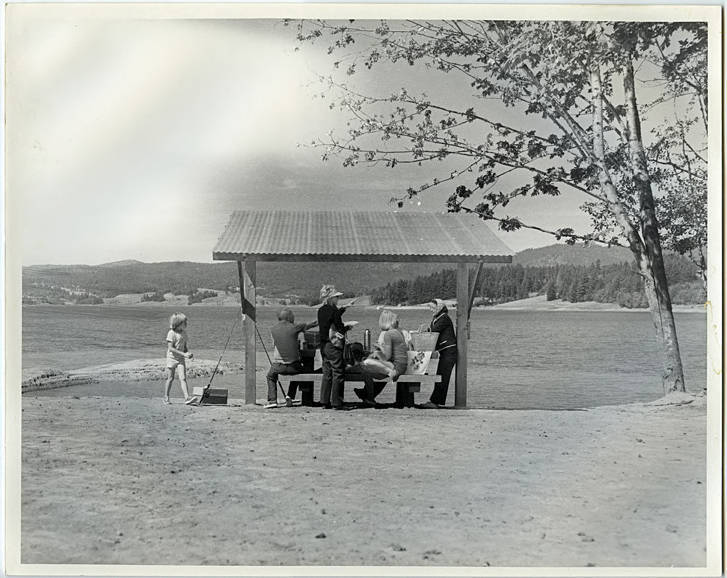
Black and white image of some of the first families to take advantage of the new picnic facilities installed at Hagg Lake Park. Hagg Lake Park was the first county park in Washington County, created when the Bureau of Reclamation built the Scoggins Dam and Hagg Lake was formed in the mid-1970s. Henry Hagg was a long time resident of the Scoggins Valley and had been one of the original initiators of the Scoggins Dam project in 1934.
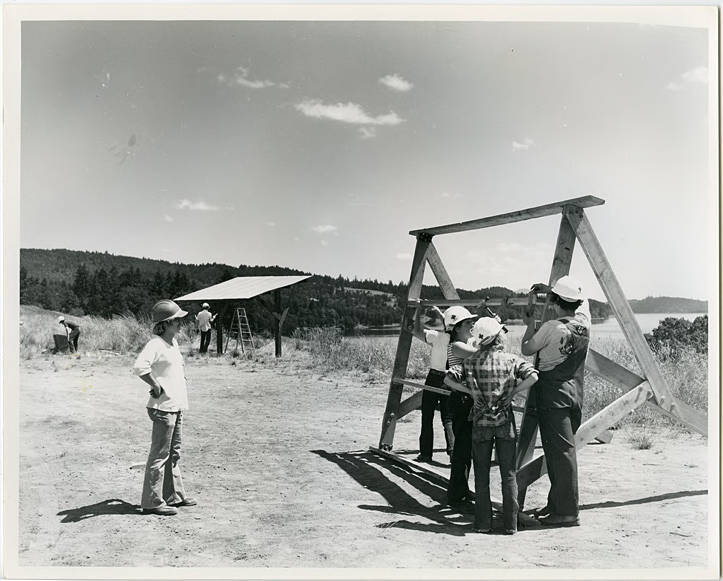
Black and white image of a group of Youth Conservation Corps (YCC) workers assembling the cover for a picnic structure at the newly created Hagg Lake Park. Hagg Lake can be seen in the background behind the workers. YCC programs provided summer employment for local youth and introduced them to conservation work in public lands, mostly campgrounds and national parks. During the late 1970s grants were often provided to state and local governments to fund YCC crews for local projects such as Hagg Lake. Hagg Lake Park was the first county park in Washington County, created when the Bureau of Reclamation built the Scoggins Dam and Hagg Lake was formed in the mid-1970s. Henry Hagg was a long time resident of the Scoggins Valley and had been one of the original initiators of the Scoggins Dam project in 1934.
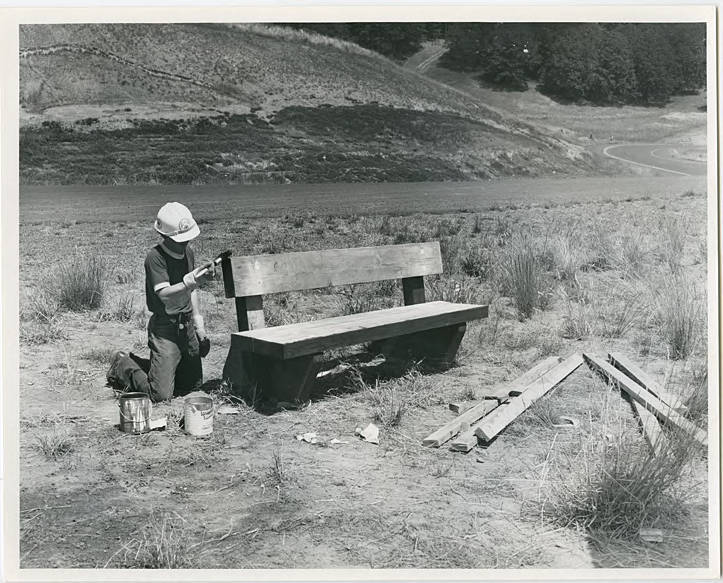
Black and white image of a Youth Conservation Corps (YCC) worker painting a bench at a viewpoint near Hagg Lake. YCC programs provided summer employment for local youth and introduced them to conservation work in public lands, mostly campgrounds and national parks. During the late 1970s grants were often provided to state and local governments to fund YCC crews for local projects such as Hagg Lake Park. The reservoir park was the first county park in Washington County, created when the Bureau of Reclamation built the Scoggins Dam and Hagg Lake was formed in the mid-1970s. Henry Hagg was a long time resident of the Scoggins Valley and had been one of the original initiators of the Scoggins Dam project in 1934.
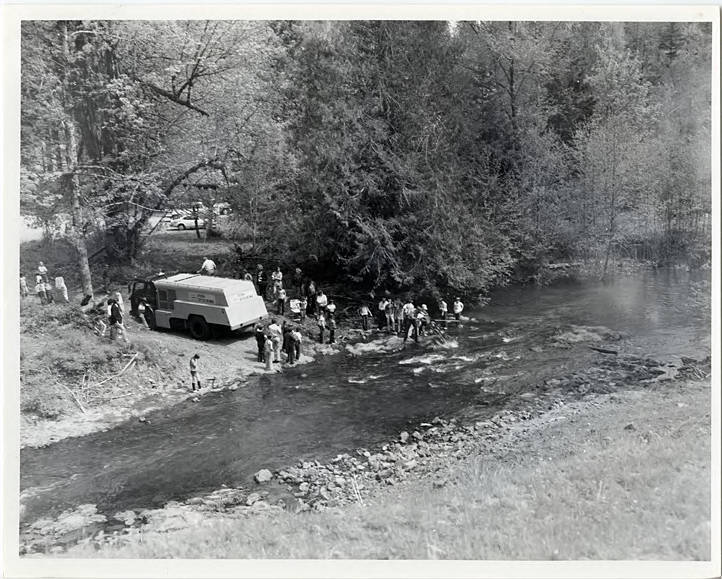
Black and white image of an Oregon State Wildlife Commission truck stocking the newly created Hagg Lake with fish. Construction of the Scoggins Dam destroyed natural spawning grounds in Scoggins Creek, but to mitigate the effect on local fishery populations, the lake was stocked with trout, crappie, bass, and perch each year.
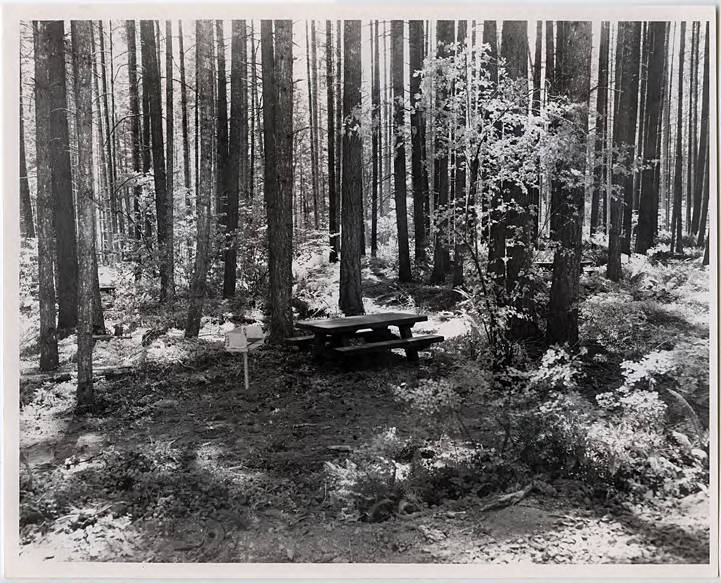
Black and white image of a picnic table with a raised grill at Hagg Lake. Hagg Lake Park was the first county park in Washington County (as opposed to local civic governments), providing a much needed non-urban park in the area. The park's construction was funded as part of the Bureau of Reclamation's larger Tualatin Project, but the county took over maintenance once the park was completed. Henry Hagg was a long time resident of the Scoggins Valley and had been one of the original initiators of the Scoggins Dam project in 1934.
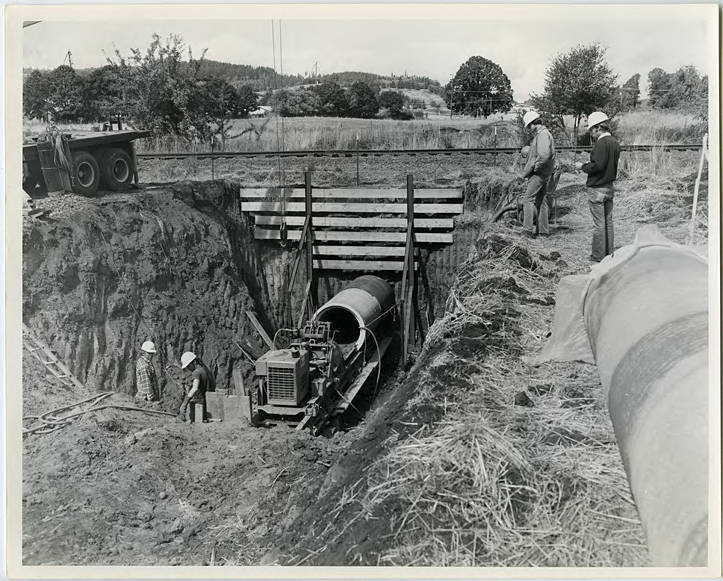
Black and white image of the construction of a culvert underneath a railroad track, part of a pipeline associated with providing water to the Tualatin Valley area from Scoggins Dam. This pipeline was a part of the larger Tualatin Project, a Bureau of Reclamation project intended to provide irrigation water to the farms in the valley and drinking water to several cities, including Hillsboro and Forest Grove.
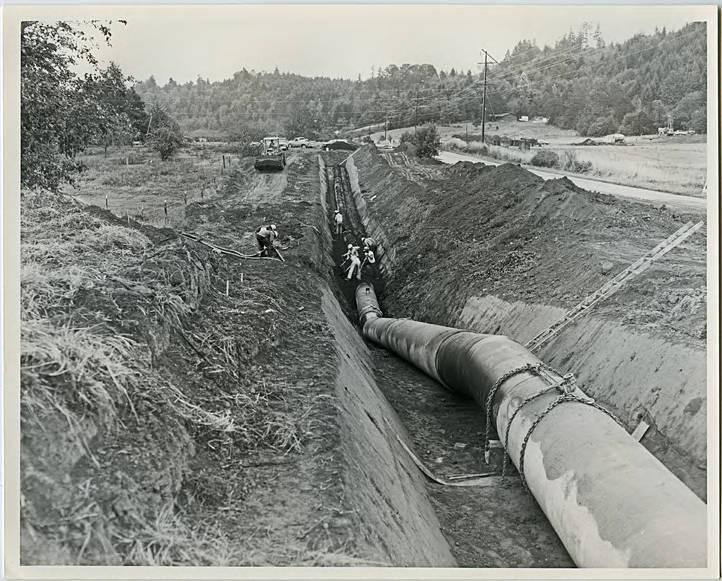
Black and white image of the construction of part of a pipeline associated with providing water to the area from Scoggins Dam. This pipeline was a part of the larger Tualatin Project, a Bureau of Reclamation project intended to provide irrigation water to the farms in the valley and drinking water to several cities, including Hillsboro and Forest Grove.
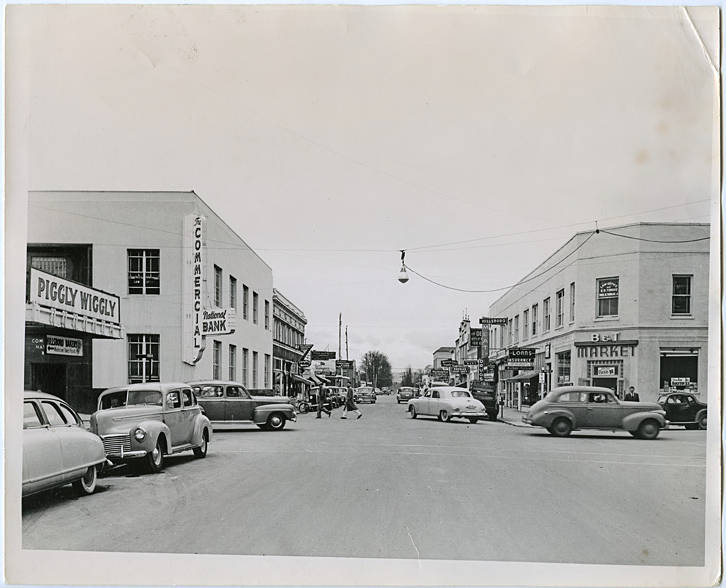
Black and white image of the intersection of two streets in downtown Hillsboro, identified in museum records as 2nd and Main Streets, looking south. Two men are crossing the street, while cars wait to turn until they pass. A blinking light is suspended over the middle of the intersection. Many businesses are visible, ranging from 'Canton Cafe' serving noodles and chop suey, an auto parts store, a plumber, a Savings and loan, the law office of E. B. and Thomas Tongue, Jr. (on the second floor of the B and T Market corner building), and a furniture store. A 'Piggly Wiggly' Grocery store is just visible in the far left of the image.
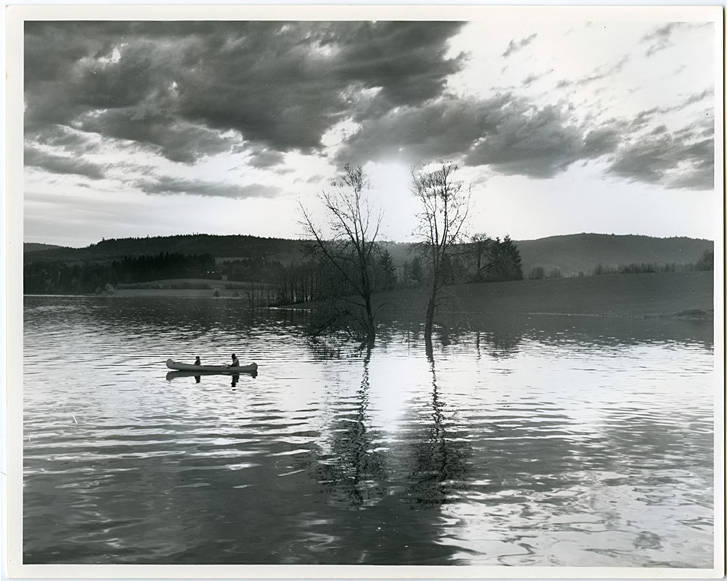
Black and white image of two canoeists on Hagg Lake. In the center of the image two denuded trees rise out of the water, a reminder that the damming of Scoggins Creek inundated thousands of acres of local farmland and wildlife habitat. Most of the buildings were removed prior to the reservoir's filling. Hagg Lake Park was the first county park in Washington County, created when the Bureau of Reclamation built the Scoggins Dam and Hagg Lake was formed in the mid-1970s. Henry Hagg was a long time resident of the Scoggins Valley and had been one of the original initiators of the Scoggins Dam project in 1934.
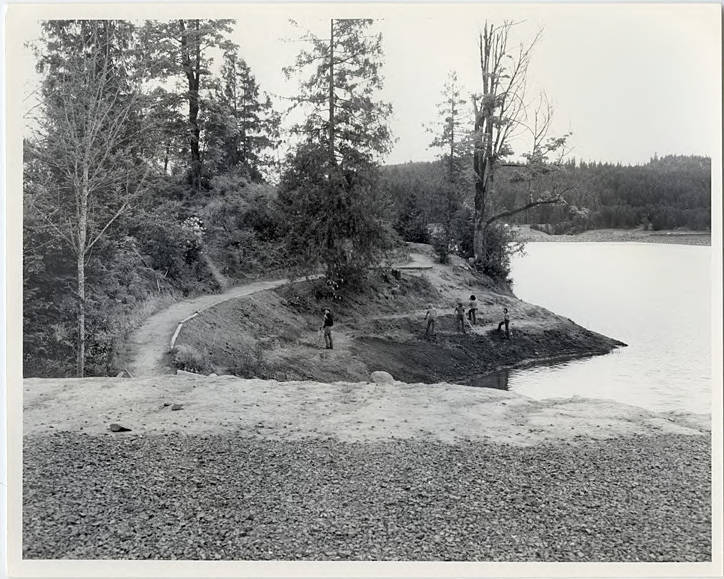
Black and white image of a youth crew working to clear ground at Hagg Lake Park. Some areas were cleared because the water level was expected to rise and cover the ground; others were cleared to provide access to the lake for fishers and other recreational users. Hagg Lake Park was the first county park in Washington County and was named for Henry Hagg, a long time resident of the Scoggins Valley and one of the original initiators of the Scoggins Dam project in 1934.
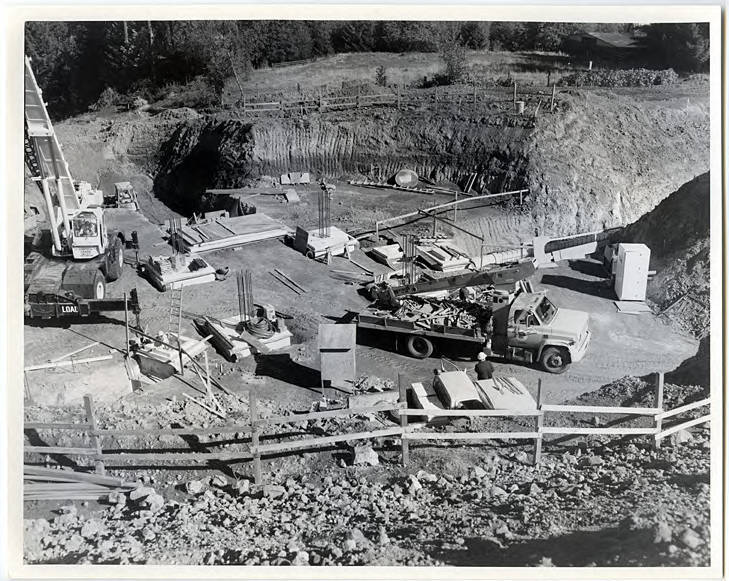
Black and white image of the construction of part of the Patton Valley Pipeline, possibly one of the pumping stations. The Patton Valley Pumping Plant and Pipeline was a part of the larger Tualatin Project, a Bureau of Reclamation project intended to provide irrigation water to the farms in the valley and drinking water to several cities, including Hillsboro and Forest Grove.
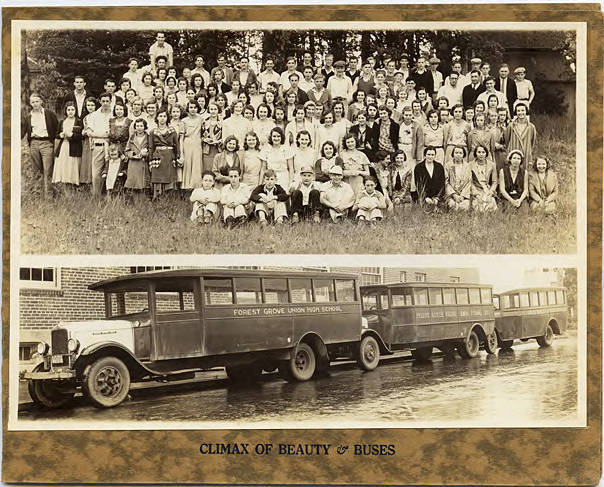
Tri-fold card containing photo of students who rode the school buses run by the Hendricks Company. The front of the card states that these are 'Student Passengers on Hendricks Bus Routes, 1931...1932.' Inside the card are two pictures printed one on top of the other. The upper image shows a group of students gathered on a grassy lawn; most appear to be in their early to late teens. A second image beneath that one shows three General Motors buses in a row, all bearing lettering on their side reading 'Forest Grove Union High School.' The opposite page lists all the students in the image. George Hendricks is listed as a 'truck driver' in the 1930 census of Washington County.
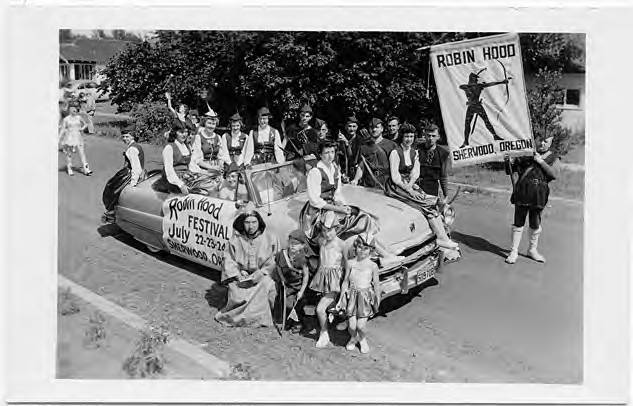
Some women and young boys model their float advertising the Sherwood Robin Hood Festival. A sign on their car reads 'Robin Hood Festival; July 26-27-28; Sherwood - Ore.'
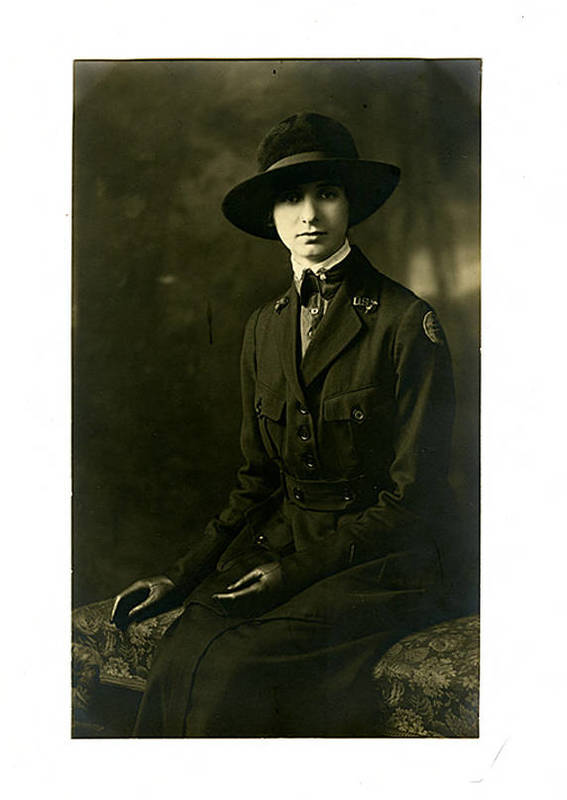
Portrait of a nurse from the Army Nurse Corps, taken during the First World War period. Donated by Isabel Van Lom, who was a WASP pilot during the Second World War. This may be one of her or her husband's relatives.
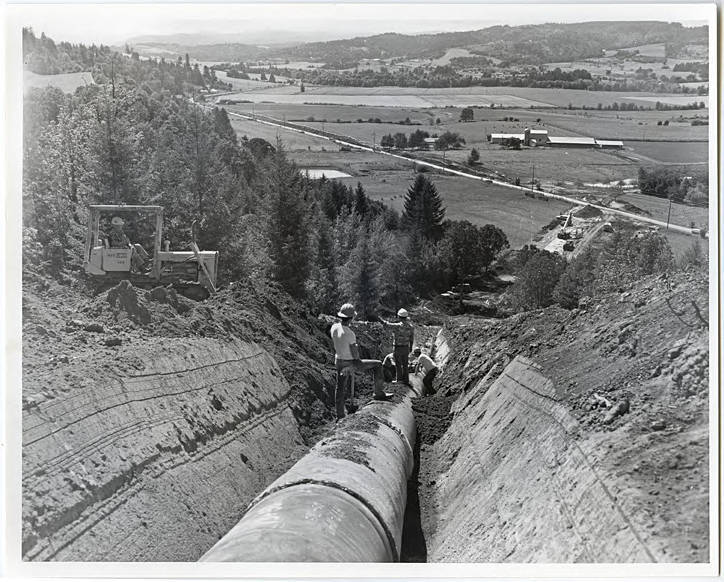
Black and white image showing the construction of the Patton Valley pipeline, part of the Tualatin Project to dam Scoggins Creek and provide water for homes and irrigation in the Tualatin Valley.
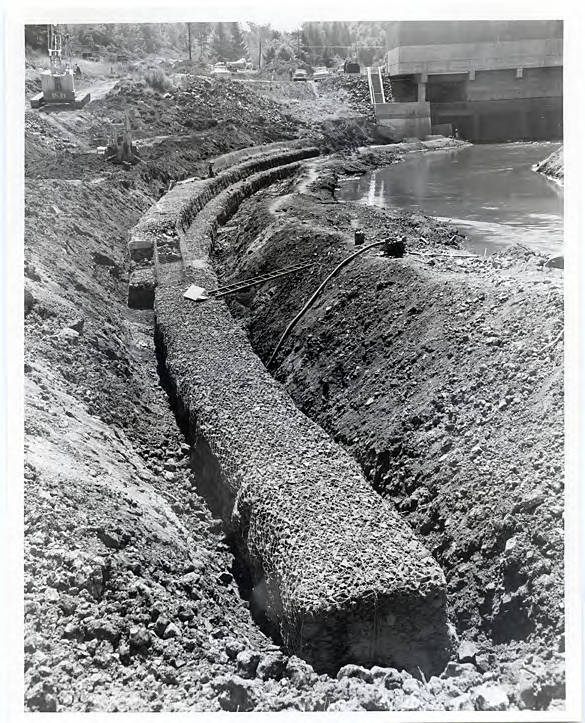
Black and white image of what appears to be part of the foundation for the dam. Scoggins Creek has been diverted along the right side of the image. Named for a local resident who settled the area in the early 1850s, Scoggins Dam was built in the 1970s and is a zoned, earth-fill dam.
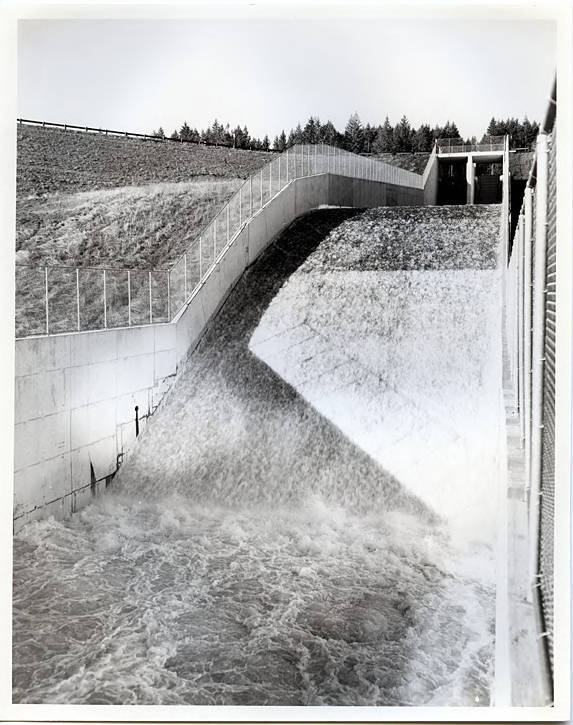
Black and white image showing water flowing down the newly opened Scoggins Dam spillway. Named for a local resident who settled the area in the early 1850s, Scoggins Dam was built in the 1970s and is a zoned, earth-fill dam.
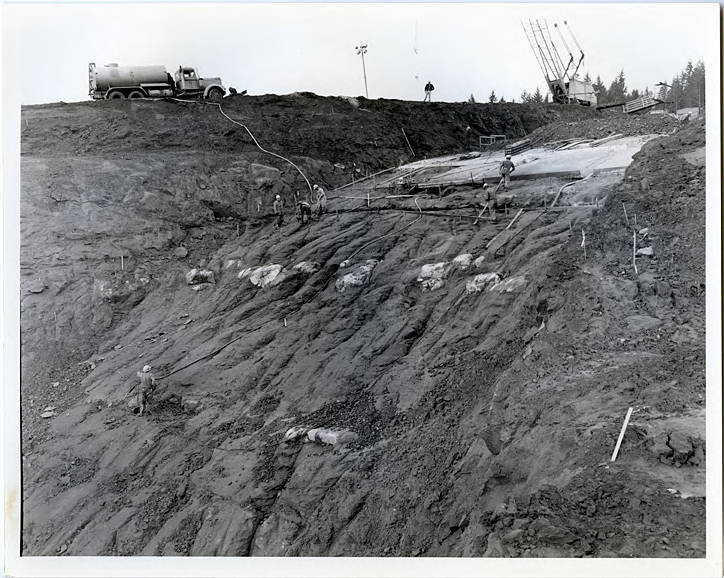
Black and white image of the construction of Scoggins Dam, possibly showing the clearing of some of the portions of the hills that were to be inundated when the reservoir filled. Named for a local resident who settled the area in the early 1850s, Scoggins Dam was built in the 1970s and is a zoned, earth-fill dam.
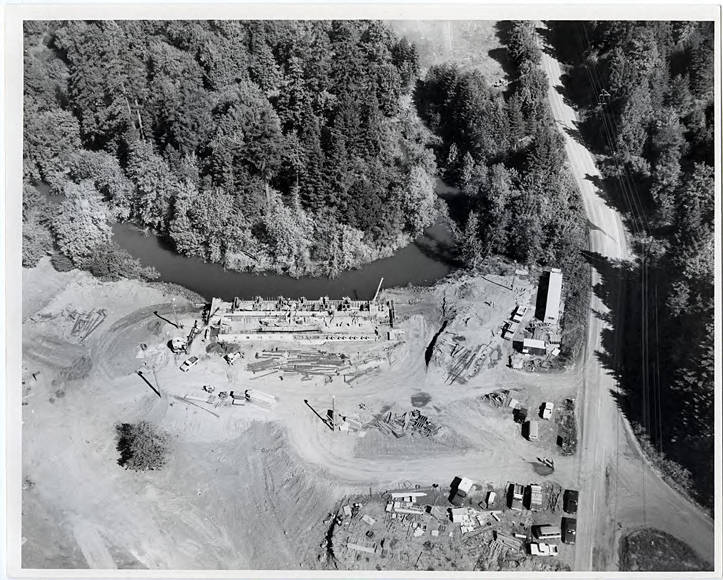
Black and white image of the construction site for Scoggins Dam at the beginning of construction. Named for a local resident who settled the area in the early 1850s, Scoggins Dam was built in the 1970s and is a zoned, earth-fill dam.