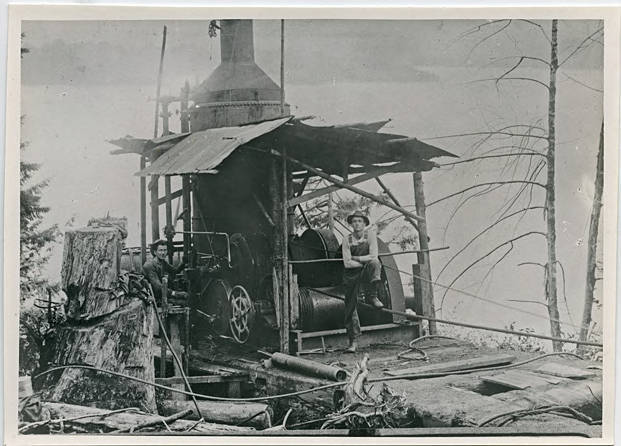
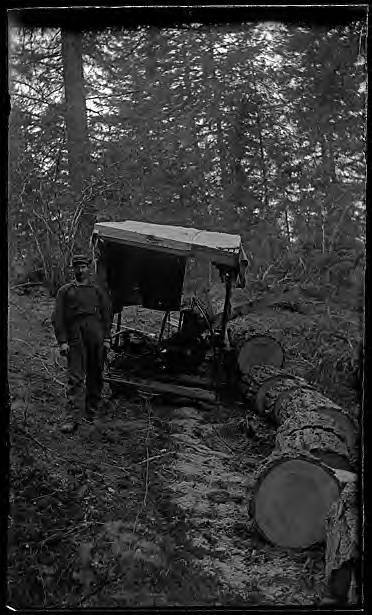
Black and white image of two men standing near a large steam donkey. One man stands to the left of the machine, ready to work the mechanism. The other man stands with one foot up on the heavy cable used to pull or skid logs from the forest down to where they could be loaded for transport. A large body of water fills the background, with hills rising on the far shore. Though the specific location of these men is unknown, this would have been a familiar sight in the forests of Washington County and the Coast Range during the early 1900s. The image is from the Herbert McMullen bequest. McMullen was a local photographer who also collected photographs and images from around the area.
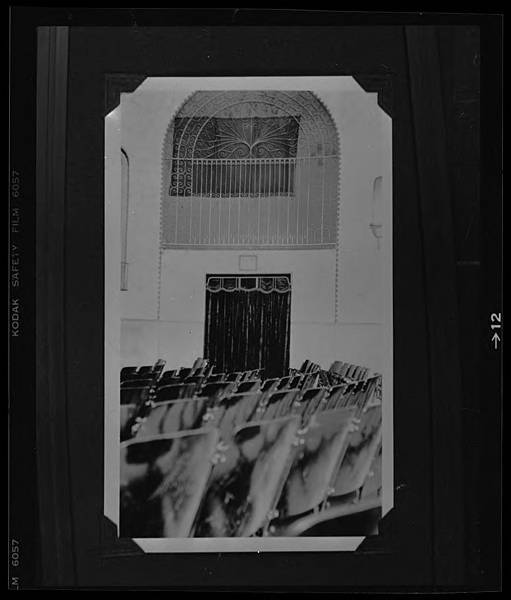
Black and white image highlighting decorative framework in one of the balcony openings of the newly rebuilt Venetian Theater. The Venetian was the rebuilt Liberty Theater, which closed in 1925 after a fire. See WCMpic_013426, WCMpic_013431, WCMpic_013432, WCMpic_013434, WCMpic_013435, WCMpic_013436, WCMpic_013439, WCMpic_013440, WCMpic_013443, and WCMpic_013446 for more images of the construction.
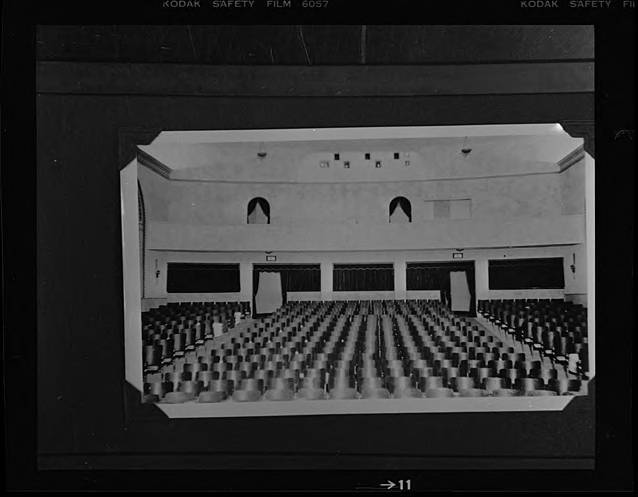
Black and white image showing the newly reconstructed interior of the Venetian Theater. Seats line the room, and high up in the back wall above the balcony the holes for the projection equipment can be seen. Exit signs mark exits at the ends of the aisles on either side of the main seating in the middle of the room. The Venetian was the reconstructed Liberty Theater, which closed after a fire in 1925. See WCMpic_013426, WCMpic_013431, WCMpic_013432, WCMpic_013434, WCMpic_013435, WCMpic_013436, WCMpic_013439, WCMpic_013440, WCMpic_013443, and WCMpic_013447 for more images of the construction.
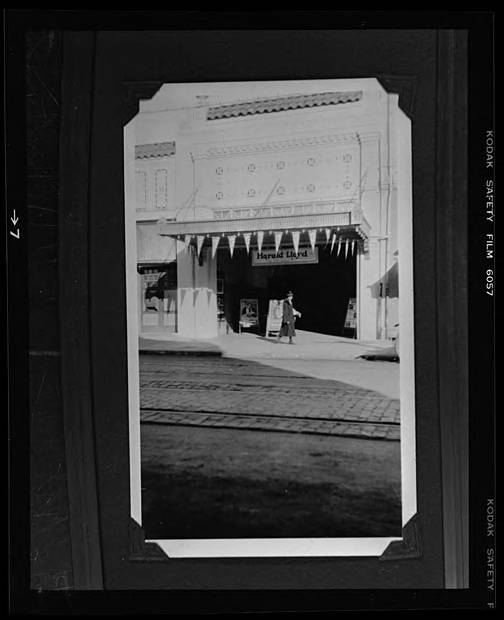
Black and white image of the front of a theater, with flags hanging from the overhanging awning. A sign declares Harold Lloyd to be starring in the current film. A woman walks by the theater, and a number of other sandwich board advertisements can be seen in the entryway to the theater. The Venetian was the rebuilt Liberty Theater, which closed in 1925 after a fire. See WCMpic_013426, WCMpic_013431, WCMpic_013432, WCMpic_013434, WCMpic_013435, WCMpic_013436, WCMpic_013439, WCMpic_013440, WCMpic_013447, and WCMpic_013446 for more images of the construction.
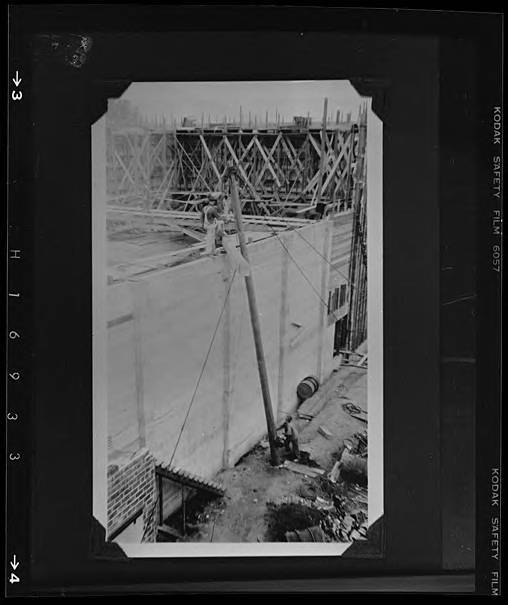
Black and white image of a power pole being installed during the construction of the Venetian Theater. A power pole leans against the side of the building. Two men stand on the roof near one end of the pole, apparently making certain the wires are connected, while another waits at the bottom of the power pole. The Venetian was the rebuilt Liberty Theater, which closed in 1925 after a fire. See WCMpic_013426, WCMpic_013431, WCMpic_013432, WCMpic_013434, WCMpic_013435, WCMpic_013436, WCMpic_013439, WCMpic_013447, WCMpic_013443, and WCMpic_013446 for more images of the construction.
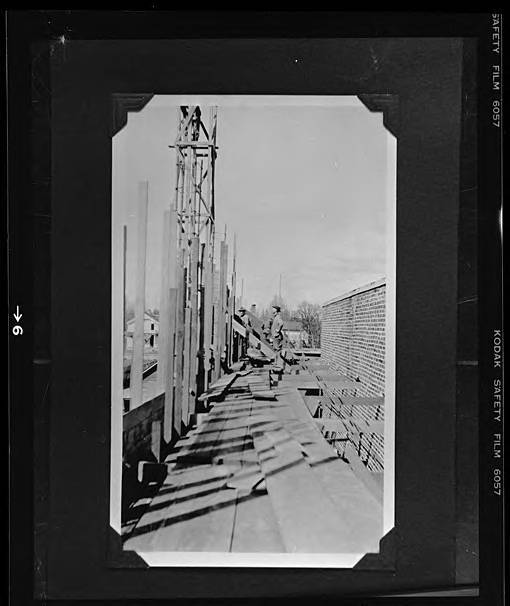
Black and white image of construction work around the roof of the Venetian Theater. Several men are visible in the scaffolding supporting the false front and along the sides of the roof. The Venetian was the reconstructed Liberty Theater, which was closed after a fire in 1925. See WCMpic_013426, WCMpic_013431, WCMpic_013432, WCMpic_013434, WCMpic_013435, WCMpic_013436, WCMpic_013447, WCMpic_013440, WCMpic_013443, and WCMpic_013446 for more images of the construction.
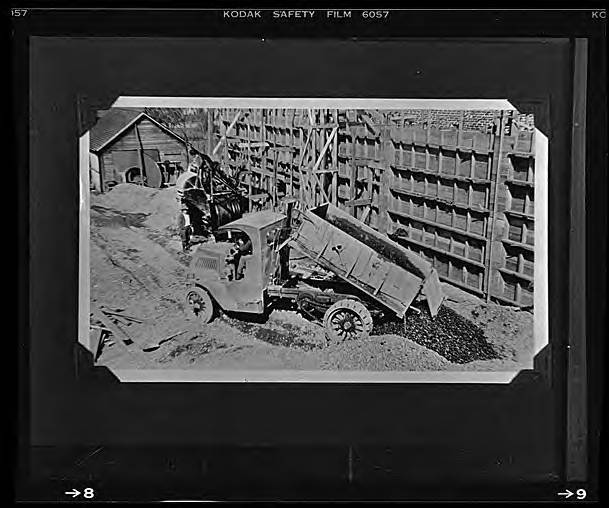
Black and white image of a dump truck leaving its load during construction work on the Venetian Theater. One man stands on the roof near a large vent, while two others can be seen in the wooden framework for the false front of the building. The Venetian was the rebuilt Liberty Theater, which closed in 1925 because of a fire. See WCMpic_013426, WCMpic_013431, WCMpic_013432, WCMpic_013434, WCMpic_013435, WCMpic_013447, WCMpic_013439, WCMpic_013440, WCMpic_013443, and WCMpic_013446 for more images of the construction.
Black and white image of construction work on the Venetian Theater. One man stands on the roof near a large vent, while two others can be seen in the wooden framework for the false front of the building. The Venetian was the rebuilt Liberty Theater, which closed in 1925 because of a fire. See WCMpic_013426, WCMpic_013431, WCMpic_013432, WCMpic_013434, WCMpic_013447, WCMpic_013436, WCMpic_013439, WCMpic_013440, WCMpic_013443, and WCMpic_013446 for more images of the construction.
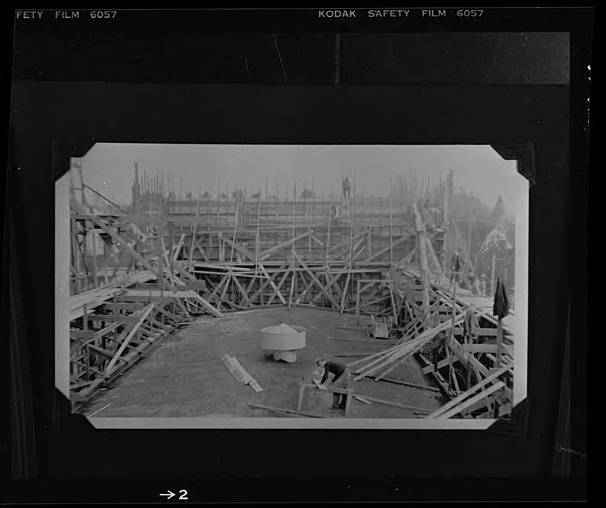
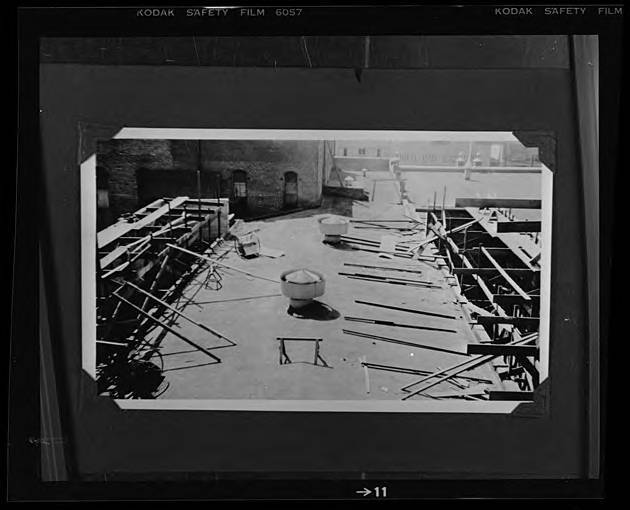
Black and white image of construction work on the roof of the Venetian Theater. Large vents have been installed in the center of the roof. The Venetian was the reconstructed Liberty Theater, which was closed after a fire in 1925. See WCMpic_013426, WCMpic_013431, WCMpic_013432, WCMpic_013447, WCMpic_013435, WCMpic_013436, WCMpic_013439, WCMpic_013440, WCMpic_013443, and WCMpic_013446 for more images of the construction.
Black and white image of construction workers standing on the scaffolding near the roof of what will be the Venetian Theater. The Venetian was the reconstructed Liberty Theater, which was closed after a fire in 1925. See WCMpic_013426, WCMpic_013431, WCMpic_013447, WCMpic_013434, WCMpic_013435, WCMpic_013436, WCMpic_013439, WCMpic_013440, WCMpic_013443, and WCMpic_013446 for more images of the construction.
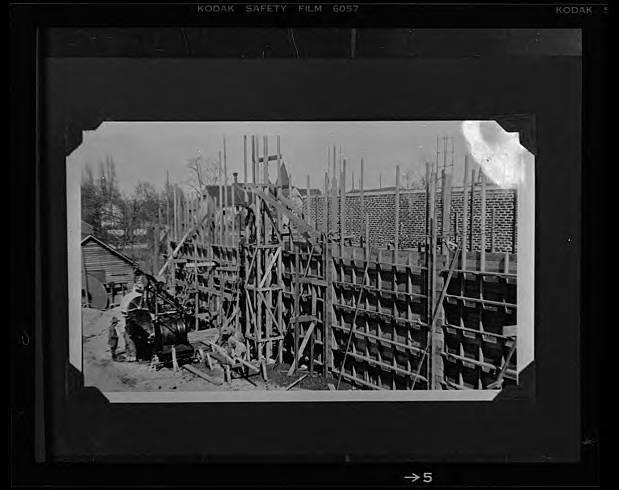
Black and white image of the frame construction for a building with a tall tower. Several men stand around a large machine at the bottom of the image. The Venetian was the reconstructed Liberty Theater, which was closed after a fire in 1925. See WCMpic_013426, WCMpic_013447, WCMpic_013432, WCMpic_013434, WCMpic_013435, WCMpic_013436, WCMpic_013439, WCMpic_013440, WCMpic_013443, and WCMpic_013446 for more images of the construction.
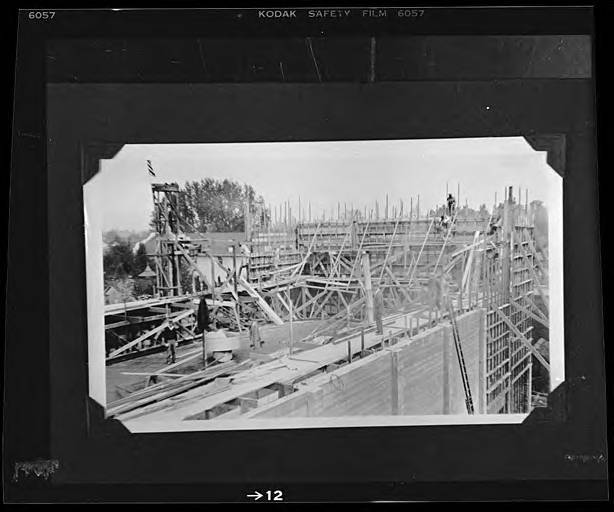
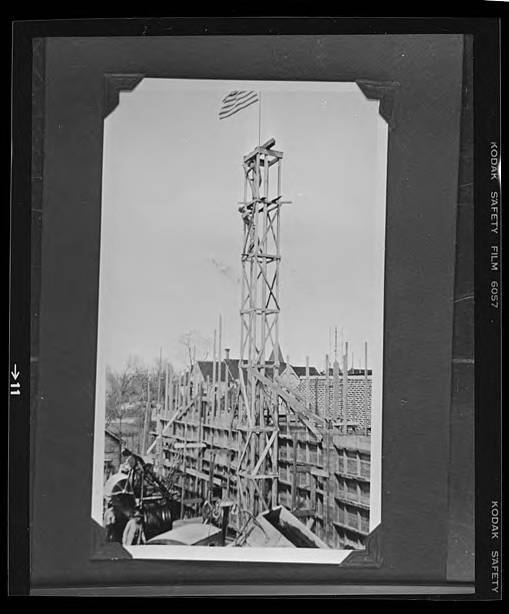
Black and white image of the frame construction for a building with a tall tower. A United States flag flies from the top of the tower's framework. Machinery and part of a dump truck can be seen at the very bottom of the image. The Venetian was the reconstructed Liberty Theater, which was closed after a fire in 1925. See WCMpic_013447, WCMpic_013447, WCMpic_013432, WCMpic_013434, WCMpic_013435, WCMpic_013436, WCMpic_013439, WCMpic_013440, WCMpic_013443, and WCMpic_013446 for more images of the construction.
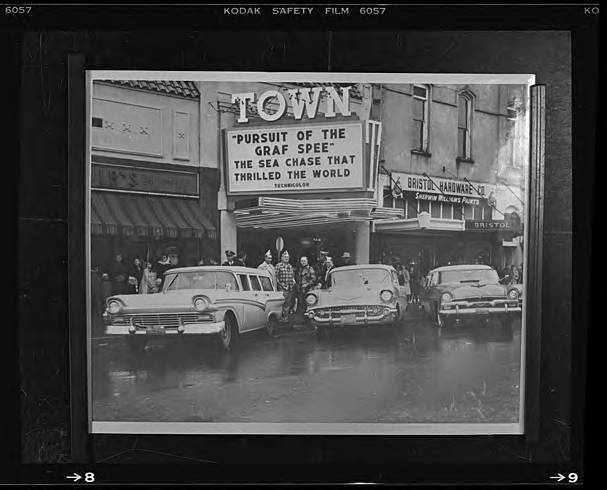
Black and white image of a theater on a city street with cars parked in front of it and people standing in line to either side of the entrance. The Town Theater was the refurbished Venetian, which burned in 1956.
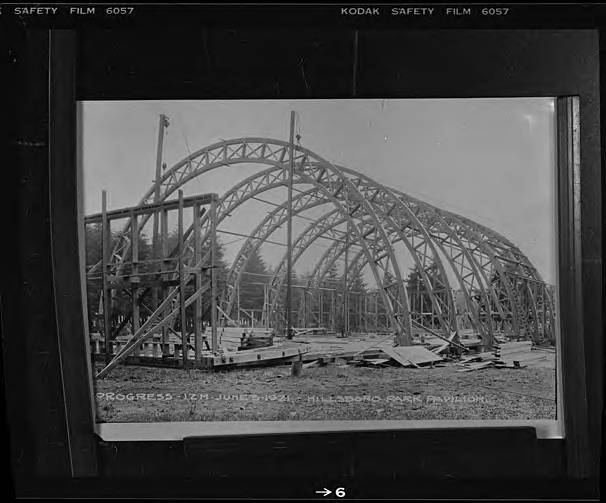
Black and white image of a Quonset-hut style building being constructed. At this point, only the joists and framing are up. White lettering on the bottom of the image reads, 'Progress - 12M - June 3, 1921 - Hillsboro Park Pavilion.'
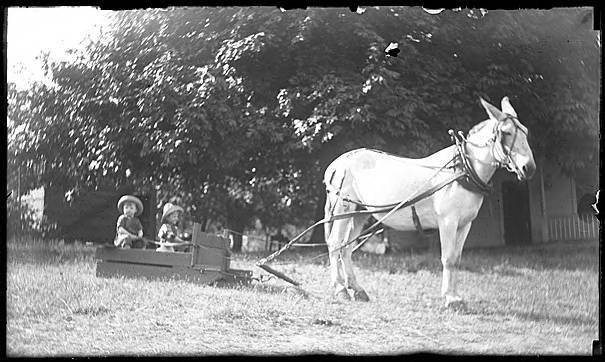
Black and white image of a white mule harnessed to a ground sled where two children sit. One child appears to be holding each rein of the mule's harness. Thick bushes fill the background of the image, and a house with a covered porch and a railing is just visible beneath them. Museum records do not identify the children, but this image is one of a number of glass negatives donated by Thomas Clapshaw.
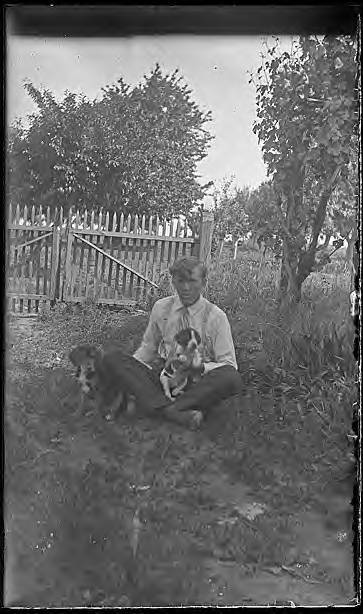
Black and white image of a young man seated cross-legged on the ground in front of a picket fence and what appears to be an orchard. He holds one puppy in his lap and another on the ground beside his knee. Museum records identify the young man as Carl Clapshaw.
Black and white image of a man standing next to what appears to be a large, mechanized, one-man cross-cut saw. The log lays along the right of the image, and has been cut into neat cross-sections. Museum records identify the man as Harrison Beaman.
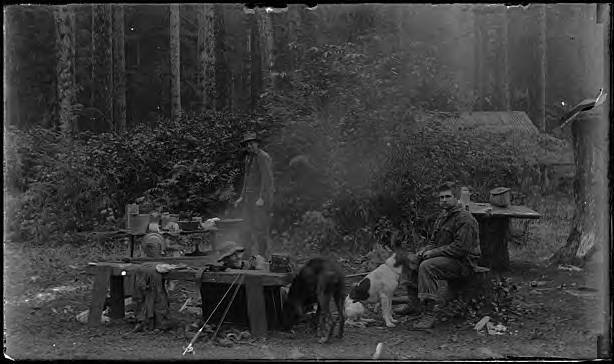
Black and white image of three men gathered around a campfire. One man stands at the far side of the fire, near a table with pots and pans. Another sits on a stump at the right of the image, and appears to be feeding the dog at his feet. A third man leans against a bench looking over his shoulder at the camera. A dog noses about beside him, and two fishing poles lean against the front of the bench. A weathered wooden building can be seen in the right background of the image, and debris and clothing are scattered about the ground and on the bench and tables. A fishing creel sits on a makeshift table at the right of the image. Museum records do not identify the men specifically, but this image is one of a number of glass negative plates donated by Thomas Clapshaw.
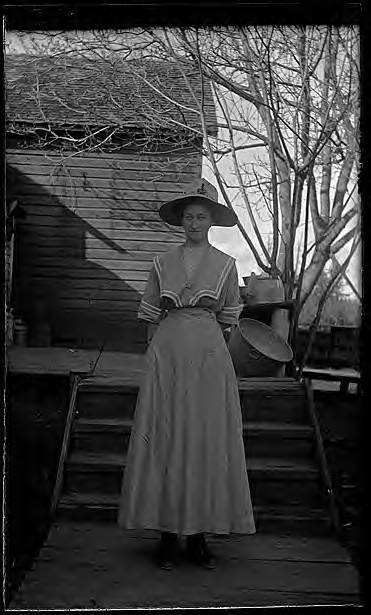
Black and white image of a young woman standing on a walkway in front of a porch. She wears an ankle-length, gored skirt and a blouse with elbow-length sleeves and a sailor collar. Bands of matching white trim decorate her sleeves and the collar. Her hair is pulled away from her face, and she wears a 'campaign' hat, broad-rimmed with the crown pinched at the four corners. Museum records identify the young woman as Bertha Steptoe.
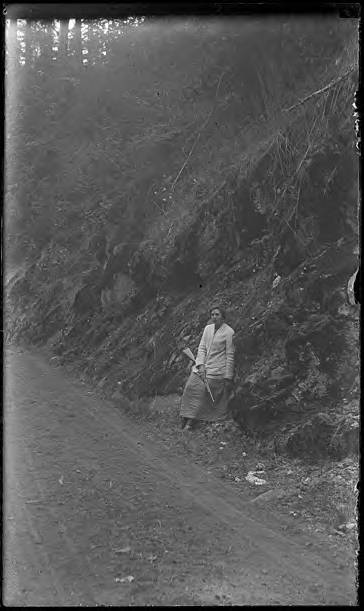
Black and white image of a young woman leaning against a rocky embankment beside a dirt road. She holds a rifle in one hand and wears a light-colored skirt and a buttoned cardigan. Her hair is pulled loosely back and up away from her face. Museum records identify the woman as Grace Clapshaw Beaman.
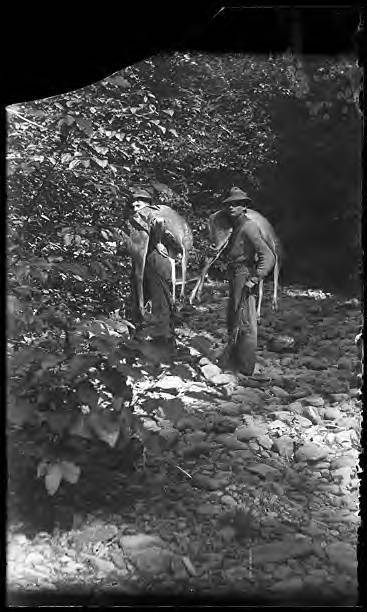
Black and white image of two men standing in a dry creek bed. Each man has an undressed carcass (probably deer) draped over a shoulder and holds a rifle. The foliage is lush and full, and the creek bed rocky. Museum records identify the men as Carl Clapshaw and Gene Luton.
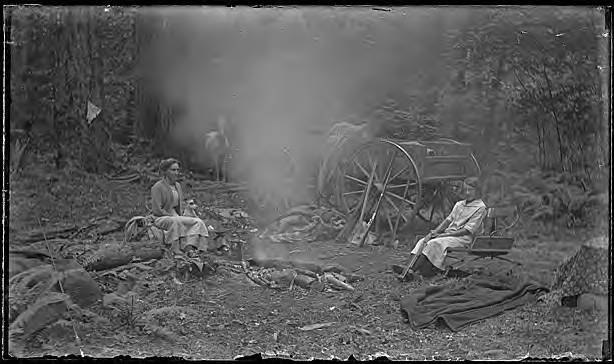
Black and white image of two women seated on either side of a smoldering fire in the forest. The woman on the left sits on a small bench and has a small dog at her side and a coffee pot sits off to the right of her feet. Across the fire, the young woman is seated on a wagon seat that has been set on the ground. She holds a rifle in her lap. Both of the women wear simple dresses. In the background is a wagon with blankets piled beneath it and several other rifles and an ax leaning against the larger rear wheel. Two horses, unharnessed, are tethered behind the wagon. Museum records do not identify the women specifically, but this image is one of a number of glass negative plates donated by Thomas Clapshaw.
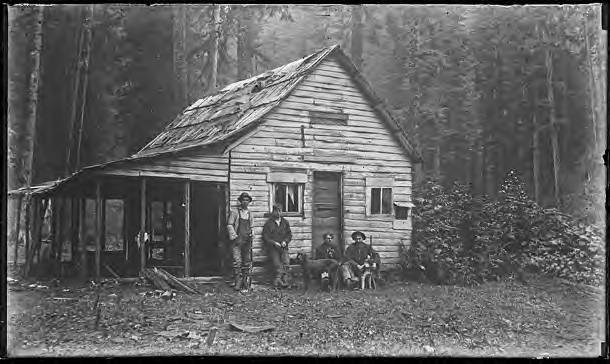
Black and white image of four men in front of a weatherworn cabin. Two men lean against the cabin, one with a rifle and with a hunting dog on a thin leash. Two other men are seated nearby, also with dogs and at least one rifle. The cabin appears to be at least partially deconstructed, and thick forest lies behind it. The cabin at one time was a stop on the stage road to Tillamook, Oregon on what is now Oregon Highway 6. Museum records do not identify the men specifically, but the man second from the right of the image appears to be Carl Clapshaw. This image is one of a number of glass negative plates donated by Thomas Clapshaw.
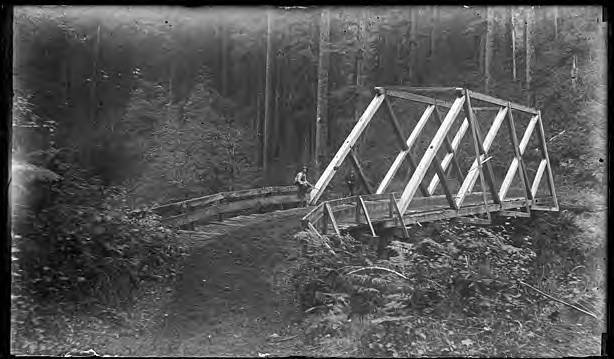
Black and white image of a truss bridge over the Wilson River. A dirt road leads to the bridge and proceeds out of the frame behind it. Heavy brush and trees fill the background of the image. One man stands on the bridge while another sits on the railing of the approach. Both men hold what appear to be rifles. Museum records do not identify the men on the bridge, but this image is one of a number of glass negative plates donated by Thomas Clapshaw.