Atkinson sees female education at Pacific University as much needed. He desires to see the education of females and males happen in the same level, or the co-education of both groups as near equal to one another. It is not addressed to which extent that Dr. Atkinson desired the education of women, just that it was important to educate them, so that they could become more important to the society as a whole. This document is written for someone on the west coast, where females and males were more on equal grounds. Another document in this archive is written for the east coast of the United States, where Dr. Atkinson does not address the presence of women at the early Pacific University. That is not the case in this document.
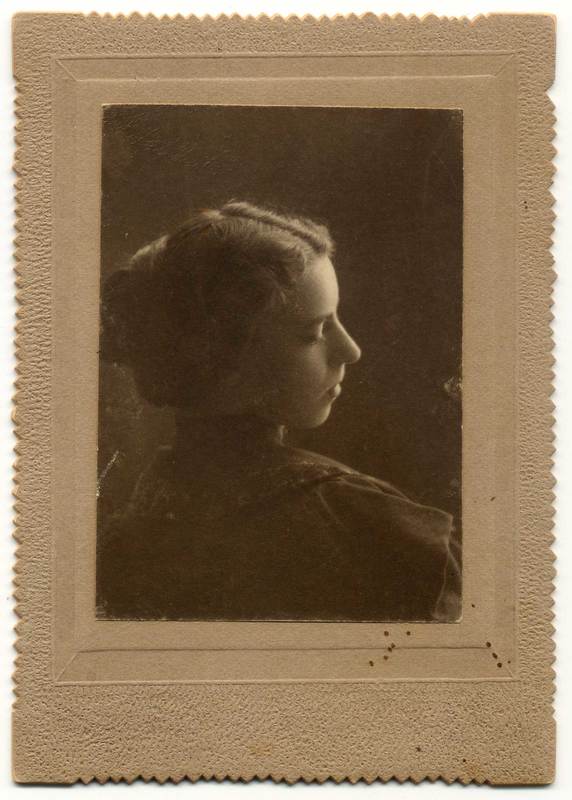
This is a portrait of Liberta Brown, later Liberta Schoch, from the year 1899. Liberta graduated from Tualatin Academy, Pacific University's preparatory school, in 1899. She then went on to graduate from Columbia University in 1903 and then graduate school at the University of California. Liberta was the firs descendant of Tabitha Moffet Brown to receive a college degree. Liberta played a significant role in preserving the early history of Forest Grove, as she wrote many letters asking the elderly questions about what things were like when they were young and how it had changed.
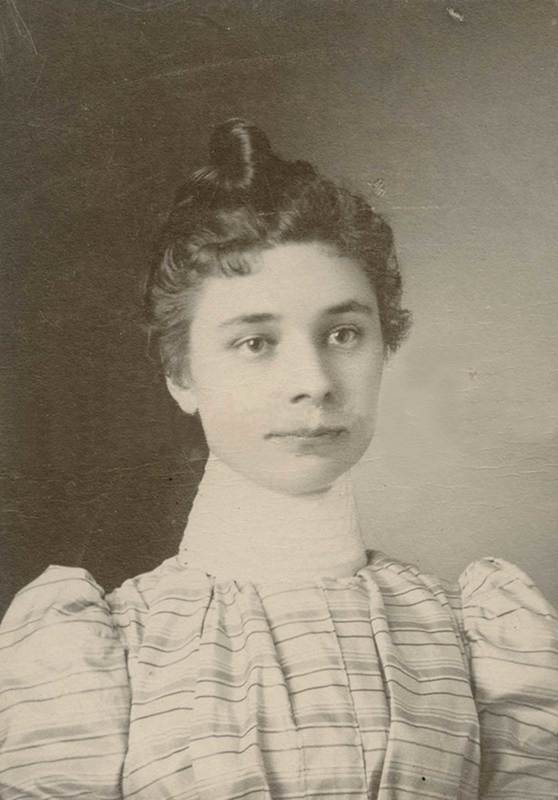
This is a portrait of Margaret 'Dolly' Hinman taken around the year 1900. Granddaughter of pioneer Alanson Hinman, Margaret graduated Pacific University in 1891, and had a pioneering spirit like her grandfather. Her college experience taught her about education and business, both of which she used during her missions trips. She was commissioned for life service in Smyrna, Turkey, during a time of crisis in the country. Over a twelve year period, 1919-1932, Turkeys government changed four times, demonstrating Hinmans courage and commitment to what she was doing. Margaret often thought about Pacific while teaching English in Smyrna and had a cartoon map of Oregon hanging over her desk.
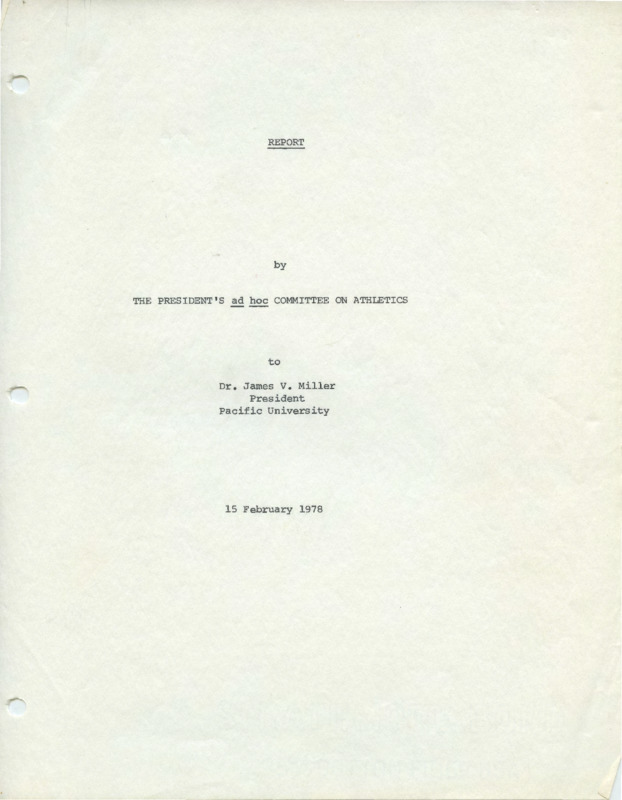
A report that was created by the President's Committee on Athletics on February 15, 1978 about Pacific University's athletic program. This report was sent to the Pacific University President, Dr. James V. Miller. The committee was composed of both faculty and students which included: Dr. Marshall Lee, Dr. Frank Buckiewicz, Dr. Miles Shishido, Dr. H. Joe Story, Kris Chatari, Cindy Dix, David Wolf, and Robert Slauson. The student members within the committee were involved in the athletic program at Pacific University and student life during 1977-1978 such as: Kris Chatari was a volleyball player, Cindy Dix was a soccer player, David Wolf was a part of the Game Sigma Frat, and Robert Slauson was a football player. Faculty member Dr. Frank Buckiewicz was also heavily involved in the athletic program as he was one of the football coaches for Pacific University. This diverse group of members allowed for different perspectives on the issues at hand within the athletic program. There were twenty sessions of these meetings from September to February. Students were able to provide insight on the athletic program because they were personally involved and participated. The faculty members provided their own opinions on how the athletic program was doing.
The report was initiated when Whitman College in 1977 dropped their football program, so the Pacific Northwest Intercollegiate Athletic Conference required all schools to conduct their own study on their intercollegiate athletic programs. Pacific University conducted their report and based off this document there were quite a few issues despite the role of Title IX. Students and faculty voiced their concerns and that was the role of this document. Within the document there were a few discrepancies based on the information that was presented. During 1976-1977 the statistics presented within the report had some issues with equality in sports. There were budget issues between men and women sports. Based on the report it stated that for women it was 19.18% of costs in athletics whereas in male sports budget it was 80.82%. That is a wide gap between how much money is being put into the programs based on gender, so that was a major issue even after the passing of Title IX.
Money was not the only issues within women's athletics, but also the qualifications of coaches that were being hired in women's athletics were questioned. Many female athletes voiced their opinions about their coaches being unqualified. There were other remarks throughout the report such as wanting more female coaches. Not only were coaches an issue, but women were not given the luxury to travel and experience competition as much as the men were in the athletic department. That was a major point mentioned despite the changes within the United States to provide better opportunities for women in athletics. Women, men, and faculty within the committee described the need for change in the athletic department for Pacific University to be successful. Some of the other main points were more equipment, more coaches, equal opportunity in athletics, more travel arrangements, and achieving growth and development.
This report allowed for Pacific University to reflect on the athletic department and the role it has played with equality. Even after Title IX was passed it shows that there were still issues with equality with women in athletics despite the political changes throughout the country. This report was a major significance because it is confronting the issues within their own department. This report acknowledges what needs to be fixed within the athletic department especially for women's sports and provides ideas on how to improve the athletic program.
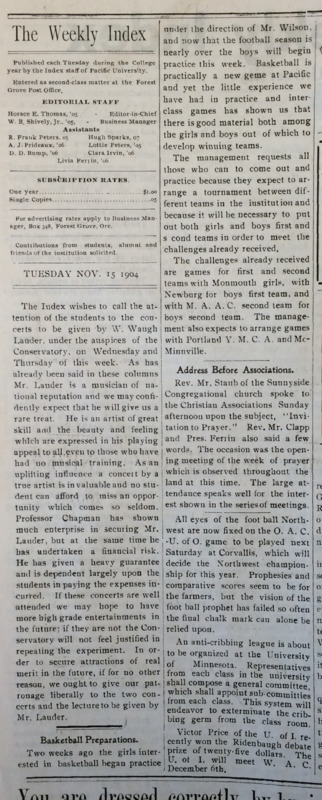
The Pacific University Index newspaper during 1904-1905 was compiled of 3 different articles involving women's basketball. The newspaper was mentioning how women's basketball was doing, the new rules that were applied, and about a game on how the women did. The article during November 15, 1904 discussed the preparation that women were doing such as basketball practices. It was an overview about women's basketball. The next article on January 24, 1905 was about a ruling at Pacific that was going to be applied in women's basketball. Men were excluded from attending the basketball games. There seemed to be an issue with women being proper while playing basketball publicly in front of men. Finally the last article on February 28, 1905 was about the first inter-class games between the girls. The details of the game was that the game was between the 4th year class versus the 3rd year class. The 3rd year team was compiled of: Ellen Brobst, Maverne Templeton, Jessie Hoge, Martha Holmes, and Everlyn Wing. The 4th year team included: Helen Chandler, Reba Hoffman, Laura Brock, Caroline Brown, and Mary Abenethy. The final score was 11-2 with the 4th year team winning the game. The only males that were allowed to go to the game were the male officials.
The information was very significant because despite giving women an opportunity to play basketball it was still a set back because they could not play in front of their male peers. This issue is very unique because it was a rule that Pacific implemented for just women's basketball for their games. There were no rules prohibiting women to watch men's basketball, so it shows the inequality women still dealt with. This rule did not last too long, but for such a rule to be considered shows how difficult it was for women's athletics to be recognized equally. There was a major difference between male and female athletics and this rule shows a major distinction between the two. Women athletics during the 1900's had many negative qualities, but this era was the early years of women's sports and gave women the opportunity to play collegiate sports.
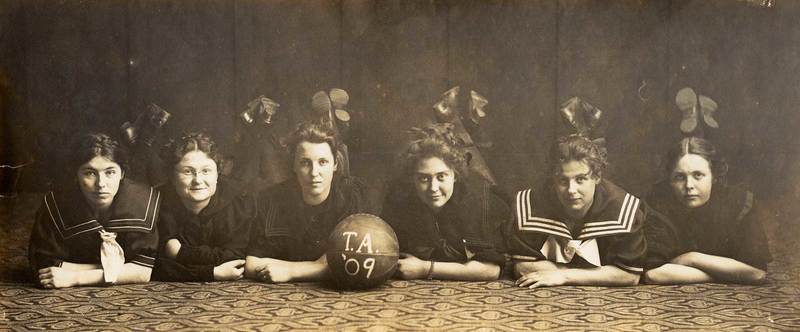
The photograph includes the Tualatin Academy women's basketball team of 1909. The girls pictured from left to right include: Lila McDonald, Ada Wiest, Beulah Ireland, Grace Thomas, Helen Allworth, and Florence Avery. These girls were a combination of students from the Tualatin Academy and Pacific University. The team combined both high school and college women because of the lack of enrollment of women in the school during that time.
The women's basketball team only could compete inter-class games instead of teams from other schools. Women would compete against one another based on their year they were in school such as 2nd year team versus a 3rd year team. There were at least 2 women's basketball teams during 1909, but that was because they did not travel to compete against other team. There was not much support of women's athletics yet to compete competitively against other schools and teams unlike the men. Men had much more opportunities even in 1909 to compete not just their own class, but other teams from other cities such as McMinnville.
The photograph is significant because women's basketball became popular in the United States around 1892, and was offered here at Pacific University as early as the 1900's. Even though women did not have the same opportunities as men in basketball, they were still able to participate. Women were at least given an opportunity to play sports at Pacific University. There are many inequalities about how women were treated unfairly in athletics, but it shows the progress of women being recognized in documents of their participation in sports.
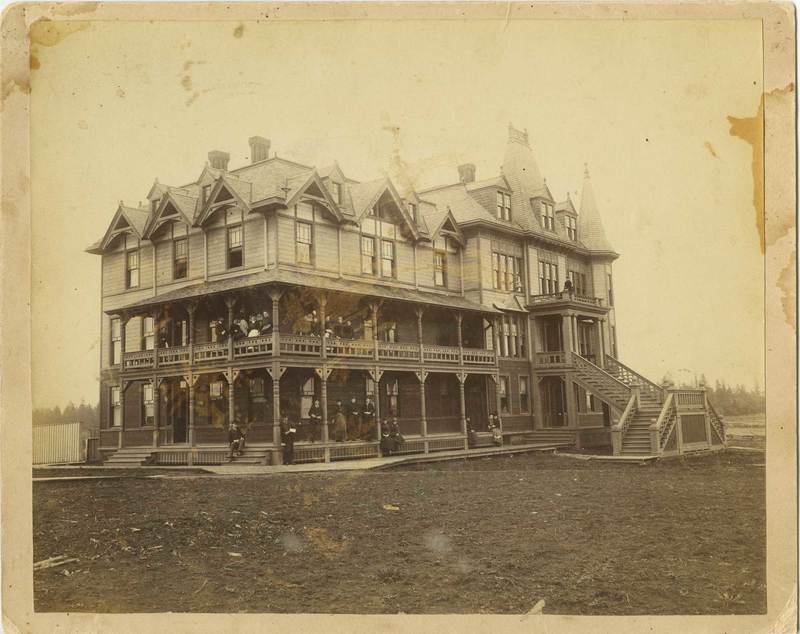
This is a picture of the first Herrick Hall with students gathered along the balconies. Herrick Hall was the all-female residence hall on campus that all women were required to live in unless they had special accommodations to live in a house in the surrounding area in Forest Grove. It was first built in 1883 and was called Ladies Hall. During the second university president Reverend John Russell Herrick's tenure, he spent much of his four years as president away from the university, but in that time, he was able to accomplish many things including raising $16,000 to build Ladies Hall. The first year the building was put to use was in 1884. It was renamed after President Herrick in 1887. The first Herrick Hall completely burned down on Sunday, March 11, 1906, from chimney sparks on the roof. A combination of women's fundraising and the Carnegie Foundation donation of $10,000 allowed the second Herrick Hall to be built in 1907. Until 1958, it was still an all-female residence hall. Herrick Hall burned down a second time in 1973.
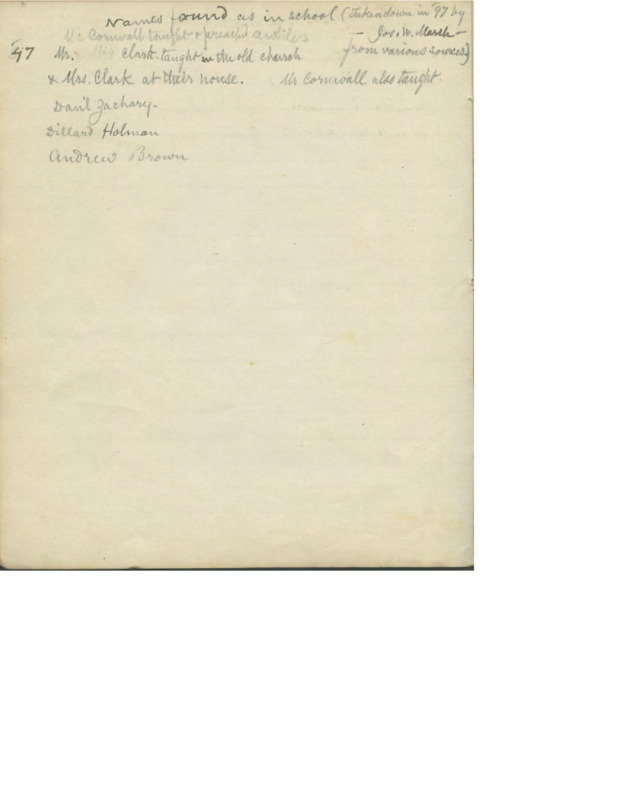
This was the earliest written student roster for Pacific University. It appears the names were divided among classes and location. Therefore, many of the names were repeated. This is important because it gives an idea of how many females were attending Pacific University. It also shows what they were given as an education.
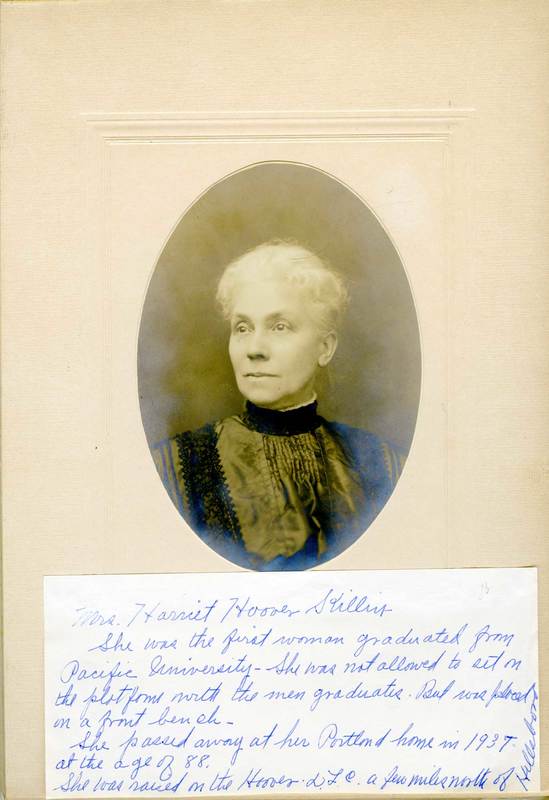
Harriet Hoover Killin was the first woman to graduate from Pacific University in 1869. The photo in this exhibit is one that was taken in 1937 when she was 88. It is believed that she is some how related to Herbert Hoover, because they both have family ties in Oregon.
Something important to note, is during graduation, classes were so small, every person was expected to give a speech. She was not allowed because she was a woman. Harriet Hoover Killin brought in a new wave to Pacific, and started the trend for all the rest of the woman after her.
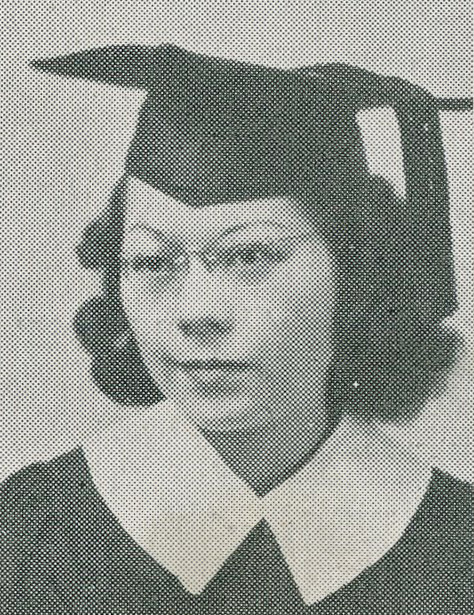
Madeleine Yamane was likely Pacific's first Asian-American graduate, who graduated in May 1941.
Madeleine Yamane attended Pacific at the same time as several other students of Japanese descent including Yukie Katayama Sumoge, Lillian Hirasawa Kurahara, and Saka Yoneyama Noma. Of the four, Madeleine Yamane was the only one who graduated before the Japanese attack on Pearl Harbor and she also was the only one of the four who was not interned during the war.
Yamane was a member of Kappa Delta sorority and served as it's Vice President in the school year 1939-40 and was also a member of the Young Women's Christian Association. She graduated with a BA in Literature.
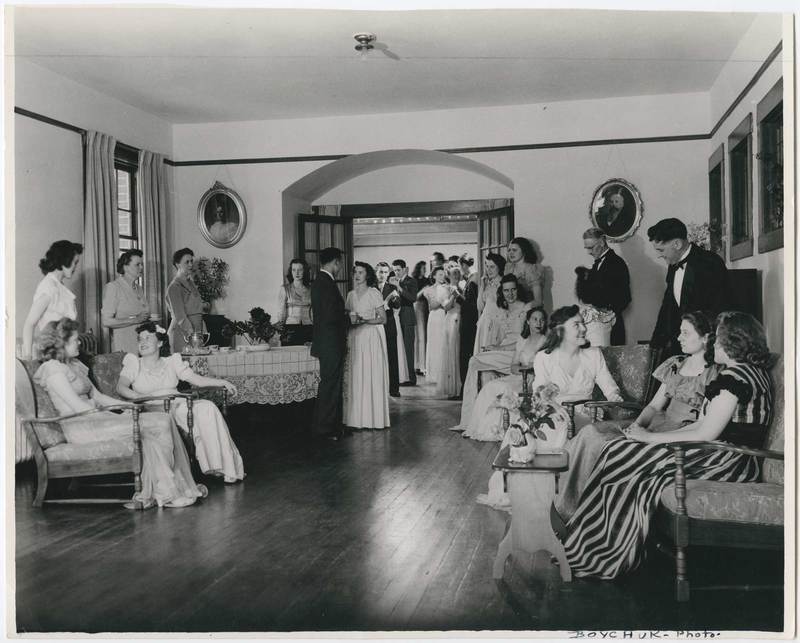
This photograph depicts part of a formal dance/social that took place in McCormick Hall between 1930-1945. No couple was allowed to sneak off on their own; this rule was enforced by the watchful chaperones stationed in each room whose duty it was to protect the female students' virtue.
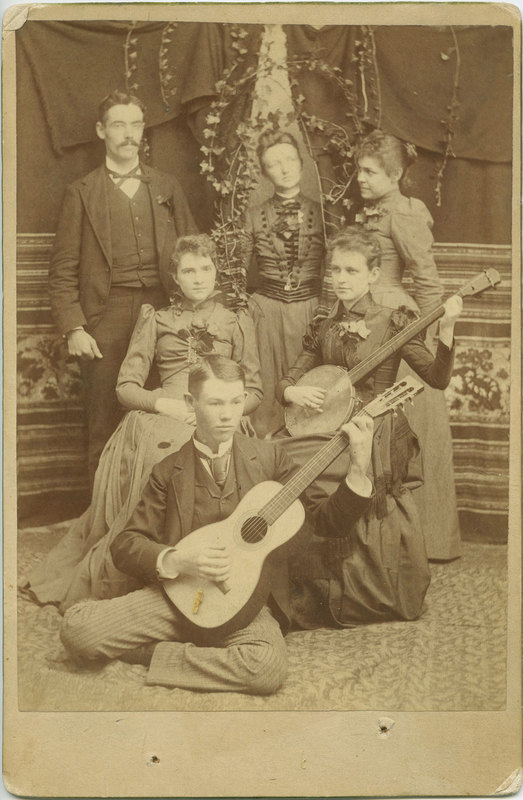
There is little to be known about the Ivy Club. All we know is that it was another form of a musical club. The significance of this is that women were participating in an activity alongside men in the same club.
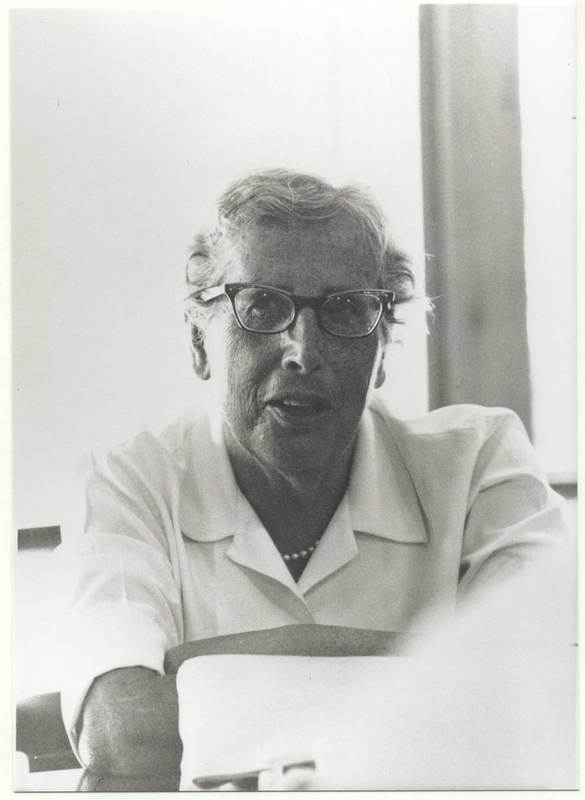
Cecile Froehlich was born in Germany and came to the United States after World War Two. She was a professor of electrical engineering at City college for 21 years from 1945-66. Some of Froehlichs accomplishments as an educator are that she was City colleges first female faculty member, first female department chair, and the first woman to head any engineering department anywhere in the United States.
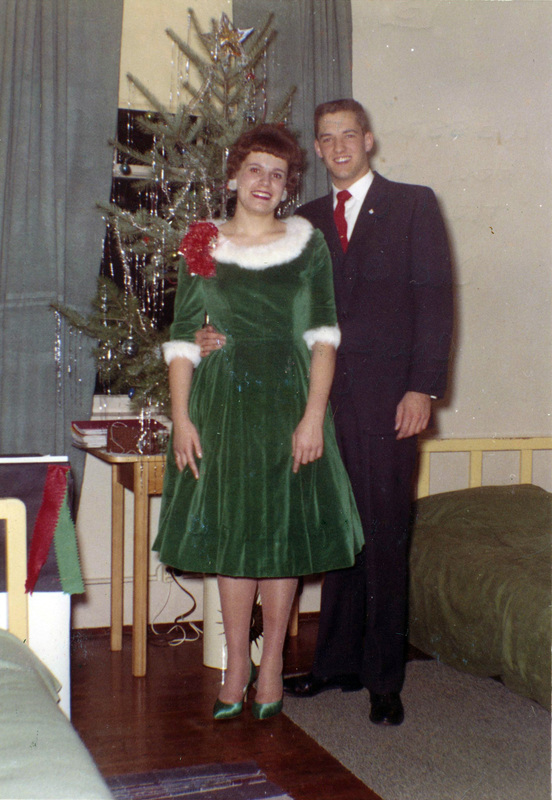
This photograph features Cheron Mayhall née Messmer (left) and Jim Carlson (right) standing in a Walter Hall dorm room. Carlson was Mayhall's date to the annual Wassail Party and following McCormick Hall Christmas Ball held on December 8th, 1961. Found in a donated scrapbook among other mementos from Cheron Mayhall's sophomore year at Pacific University, this photograph is one of many that detail Mayhall's extremely active social life. A member of both the Theta Nu Alpha sorority and the Boxerette service and honor society, there was rarely a weekend when Mayhall was not involved in a social activity.
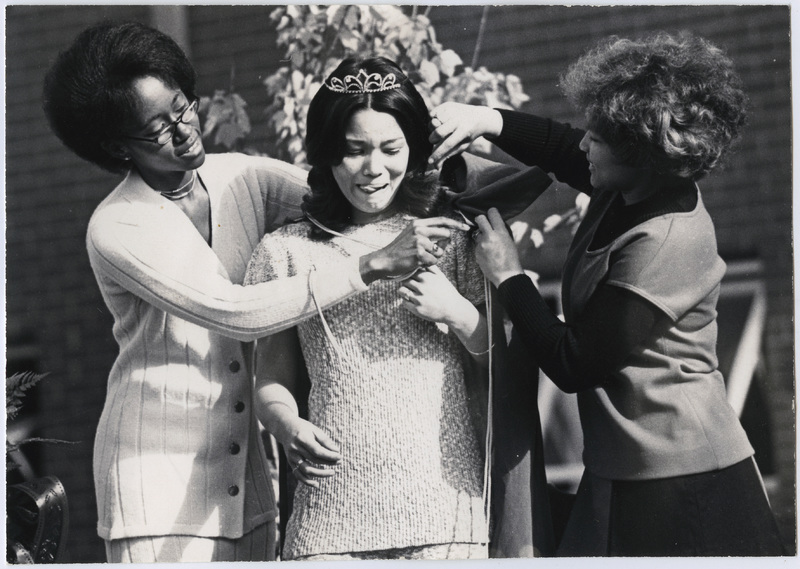
Taken on Friday, October 30th at the coronation of the 1970 Homecoming Queen, Jill Matsui, this photograph features, left to right: Willie Deckard, Jill Matsui, and an unidentified female student. The Coronation was part of the Victory Dance, sponsored by the Hawaiian Club (of which Jill Matsui was the Secretary) and organized by the Intercollegiate Knights, who were responsible for all the Homecoming weekend activities. Though not shown in this photograph, the 1970 Homecoming Court consisted of: Jill Matsui (Queen, Junior, Hawaiian Club representative); Marcia Englund (Princess, Junior, Gamma Sigma representative); Linda Jenkins (Princess, Junior, Black Student Union representative); Mary Ann Lazelle (Princess, Junior, Alpha Zeta representative); and Lynnette Siles (Princess, Junior, Sinfonia representative). Sinfonia, otherwise known as Phi Mu Alpha, is a professional music fraternity which at the time had a chapter at Pacific university. The girls all represented either one of the fraternities or one of the ethnic clubs on campus.
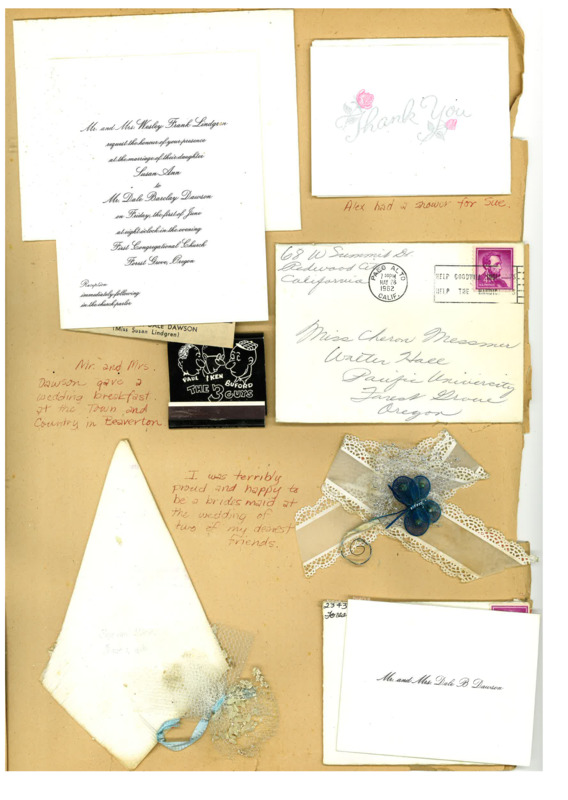
Put together by Cheron Mayhall née Messmer in one of her many scrapbooks, this page is dedicated to the commemoration of Susan Ann Lindgren's marriage to Dale Barclay Dawson. As Susan's bridesmaid, good friend, and fellow Pacific University student, Cheron was in the unique position to not only archive the events of the June 1st wedding, but also the post-wedding correspondence sent to her from Susan and Dale. In the upper left-hand corner of the scrapbook page is Cheron's initial invitation to the Lindgren-Dawson wedding, sent by Mr. and Mrs. Lindgren; the newspaper clipping announcing the marriage of Mr. and Mrs. Dale Dawson is tucked inside the card. Under the wedding invite lies the invitation to the wedding breakfast hosted by the groom's parents at the Town and Country, with a matchbox from the restaurant glued next to it. The upper right-hand corner of the page is taken by a thank-you card from the new Mrs. Susan Dawson to Cheron, thanking her for participating in the wedding ceremony and for coming to the wedding shower thrown by the other bridesmaid (Alex Allen). Immediately underneath the thank you note is a letter from Susan and Dale to Cheron, updating her on life as a newly married couple (the word 'Fine' is used more often than not to describe how things are). The bottom right envelope contains a quick note updating Cheron on how the honeymoon went; the envelope also holds a folded postcard from during the Dawsons' honeymoon, with the explanation being that they both had forgotten to send it while actually on the trip. Above the honeymoon letter Cheron pasted the ribbons and butterfly ornament that wrapped around the stems of her nosegay. In the bottom left-hand corner lie an embossed napkin from the wedding reception ('Susan and Dale' on the first line, 'June 1, 1962' on the second), accompanied by a small mesh bag partially full of very old rice grains originally mean to be thrown over the wedding party.
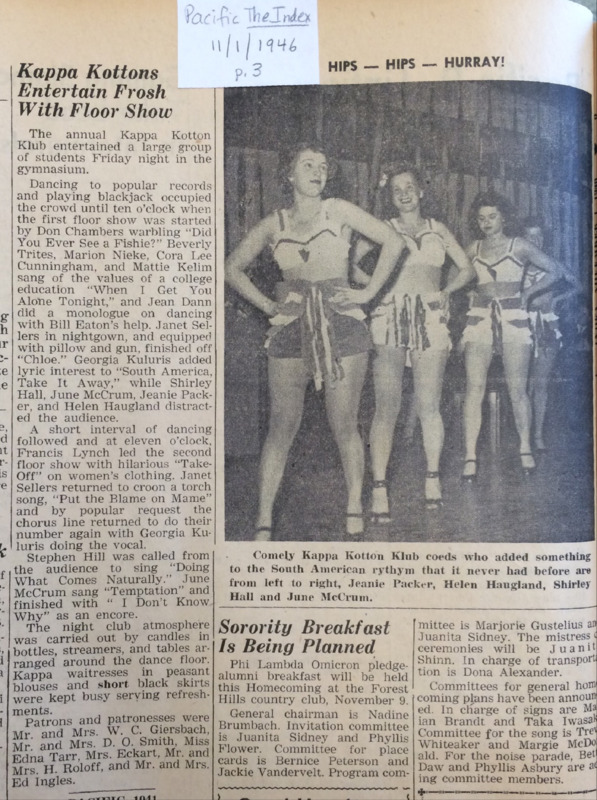
Three news articles titled on an event called the "Kappa Kotton Klub," published in the Pacific University between 1946-1948. The event was a fundraiser that was put on annually by Pacific University's Kappa Delta sorority for several years after World War II. The evening event began with socializing, dancing and variety acts, and was capped off with a risque chorus-line of sorority girls who dancing in skimpy outfits. According to former members of the sorority, this event was originally organized by a member who worked in a dance chorus in Portland and correctly judged that such a show could raise a lot of money. The event had racist connotations, however. The "Kotton Klub" was a reference to the "Cotton Club," a famous nightclub in Harlem where Black musicians and exotic dancers performed for all-white audiences in the 1920s-30s. With the sorority's name added to the event and all of the initials changed to the letter "K," the Kappa Kotton Klub had the acronym "KKK." In 1948, the event was themed as the "Deep South" and the variety acts included a barbershop quartet in blackface and other minstrel show references. No objections to the event or its name were recorded in the school newspaper.
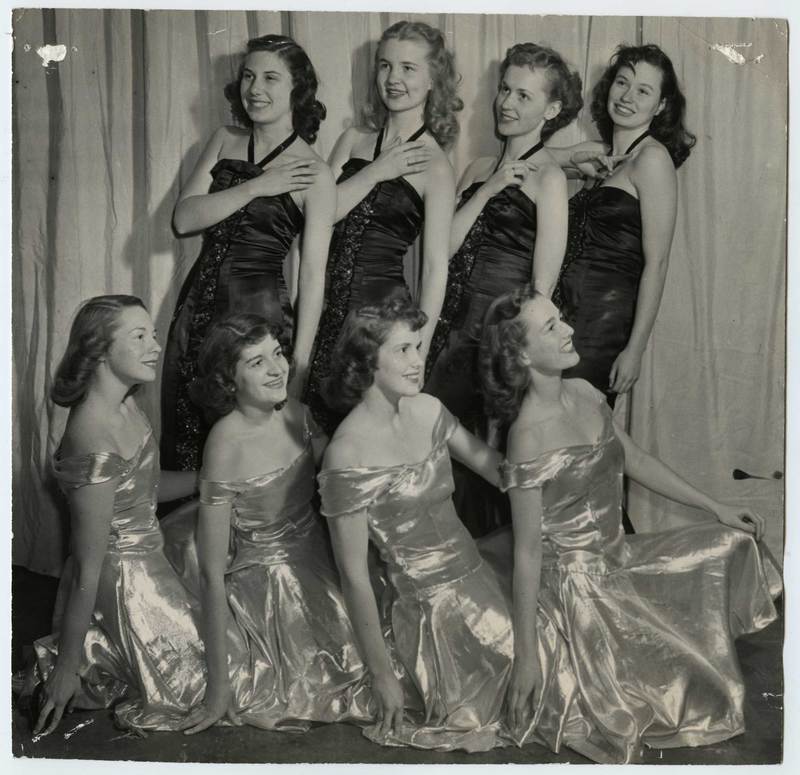
The photograph features, from the left: front row, Marjorie Jackson, Leona Blackmun, Ruth Casteel, Lael Peters; back row, Pat Dozier, Lorraine Mortensen, Nancy Sinclair, and Jane Babcock. These eight girls comprised the Belles of the Nineties - a female song and dance group who, in conjunction with the Folly Dollies and the Golden Gayeties, participated in the All-Northwest Barbershop Ballad Contest. The Belles of the Nineties were not part of the actual competition, their presence being requested for pure entertainment value instead. The contest took place on February 18th and 19th, 1949 in the Forest Grove High School's auditorium.
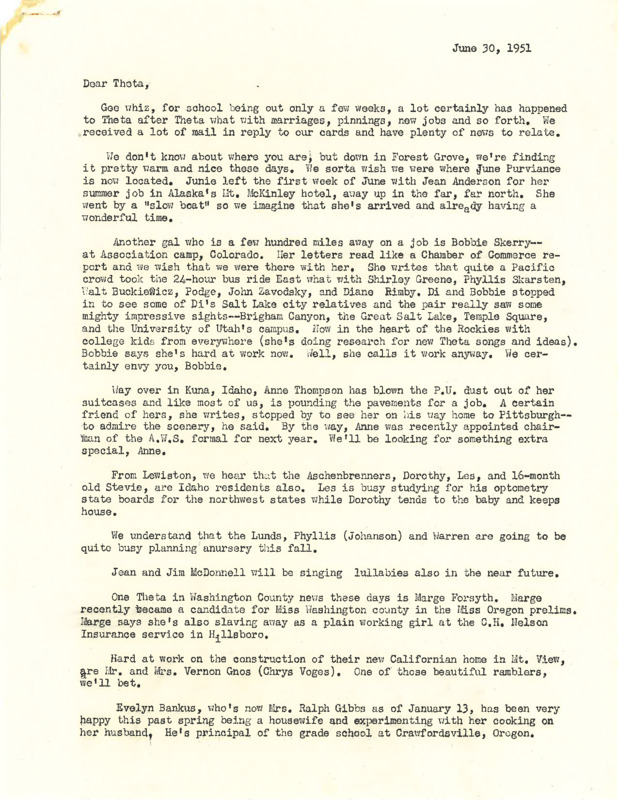
An extremely detailed 4 page newsletter from the Theta Nu Alpha sorority from June 30, 1951. The newsletter gives updates as to what a handful of Theta and Theta alums are up to over the summer. From detailed descriptions of summer jobs, internships, and trips to a copious amount of wedding updates from past, present, and future. The newsletter describes four weddings in the month of June as well as two upcoming weddings in July and one in August. The letter's focus is on the personal happenings of many individual Thetas. It must not have covered them all though because it states that another letter would be sent a month later on July 30, exactly one month after this newsletter.
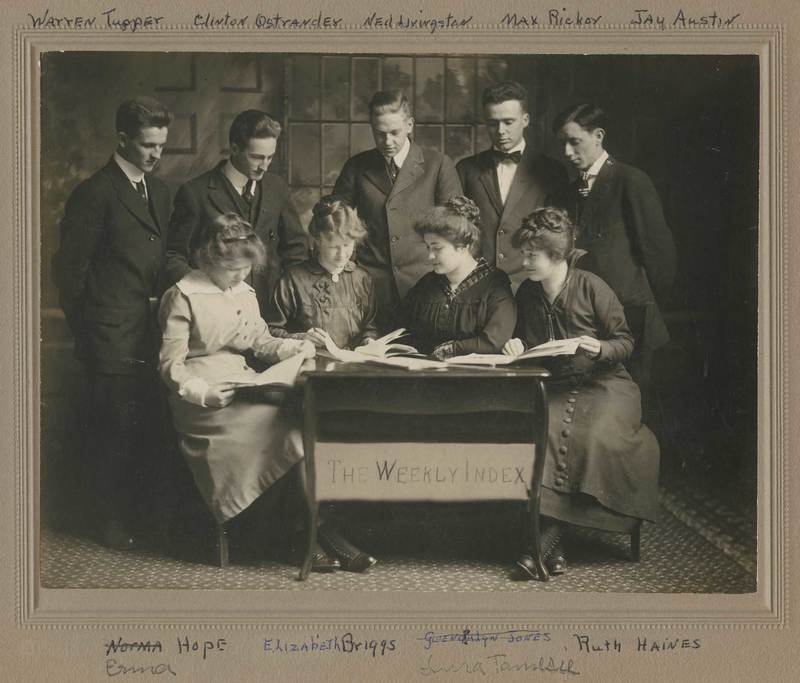
The Weekly Index was the name of the newspaper that Pacific University had and still is the name of the newspaper to this day. This photograph is staged and shows the different writers for the Weekly Index. It is important to notice that there are women who were part of the staff for writing the newspaper. Back in the early 1900's women were suppose to be limited to what they could do, and this photograph shows that Pacific University was working to treat women more equally.
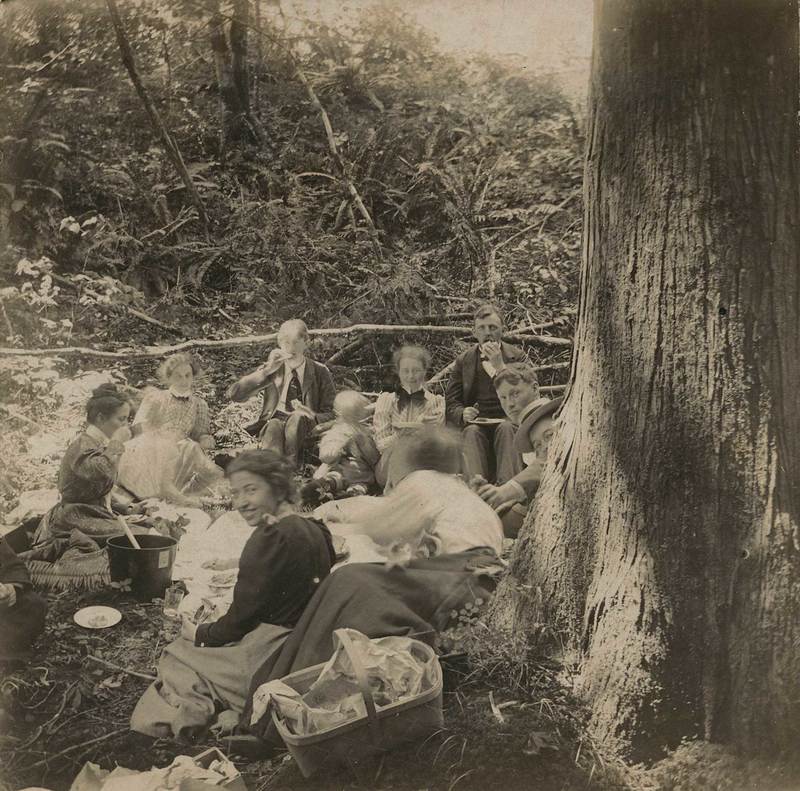
Little is known about this photograph other than the professor, who was Albert Raddin Sweetser. Professor Sweetser worked in the Chemistry and Biology Department, and is believed that he would sometimes take his class into the forest to have lunch. Also, two students are recorded in this picture, Louis P. Myers and Charles Bradley, but it is undefined as which ones they are
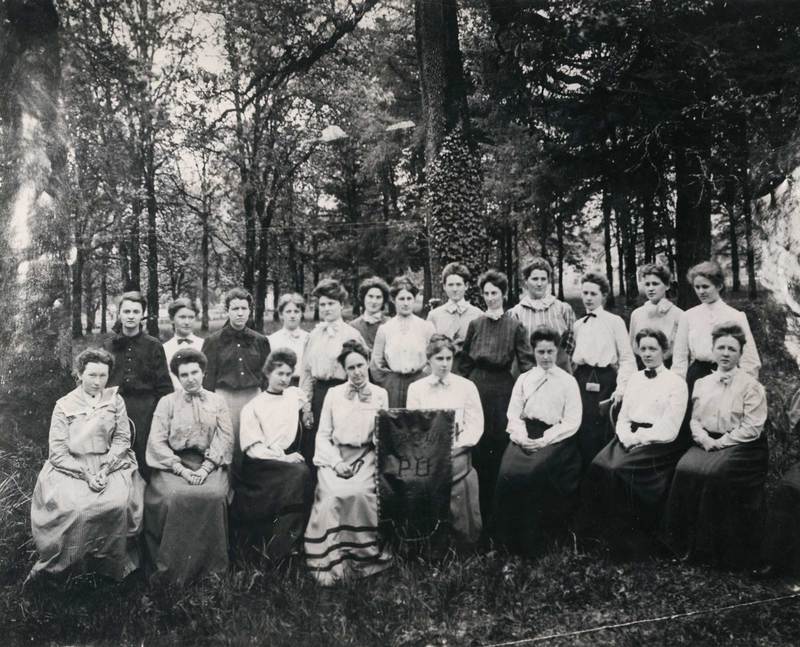
The debate team was a big deal on campus, especially in the early 1900's. The importance of this is that the women were able to have a separated team from the men and make it their own. Many of the debates and speeches took place in the spring, and the women's team was even on the front cover of the Weekly Index multiple times. The debates were a huge thing on campus, where many students and residences of Forest Grove would come and attend.
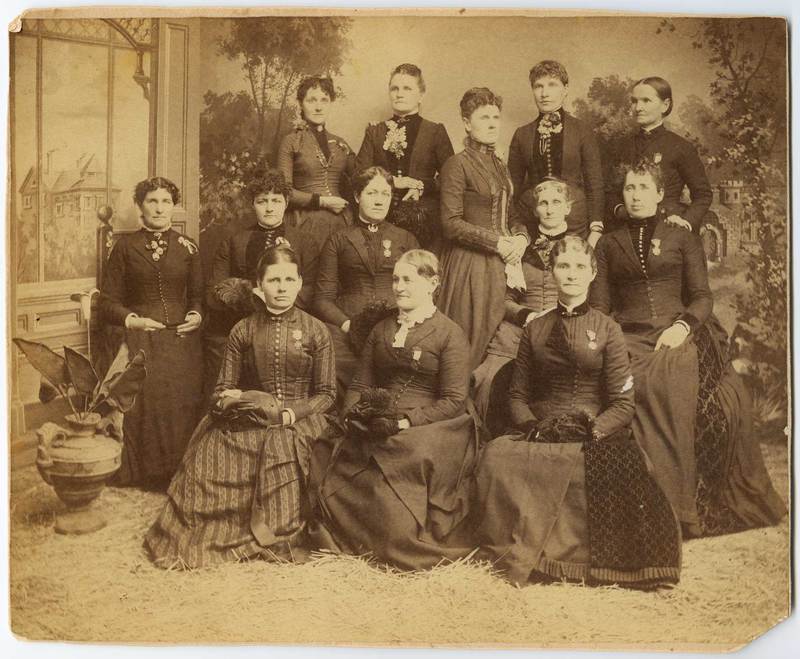
This photo shows thirteen women posing for the camera. Some of the have medals, while others don't. It is believed that the one's wearing medals were married to men who had been killed during the Civil War. The Women's Relief Corps at Pacific University consisted of women who were or widows of men who had fought in the Civil War. These women would help run activities and different events for Memorial Day, which included teaching patriotism and nationalism to all ages. Members of the Women's Relief Corps would also petition the Federal Government for nurses pensions.
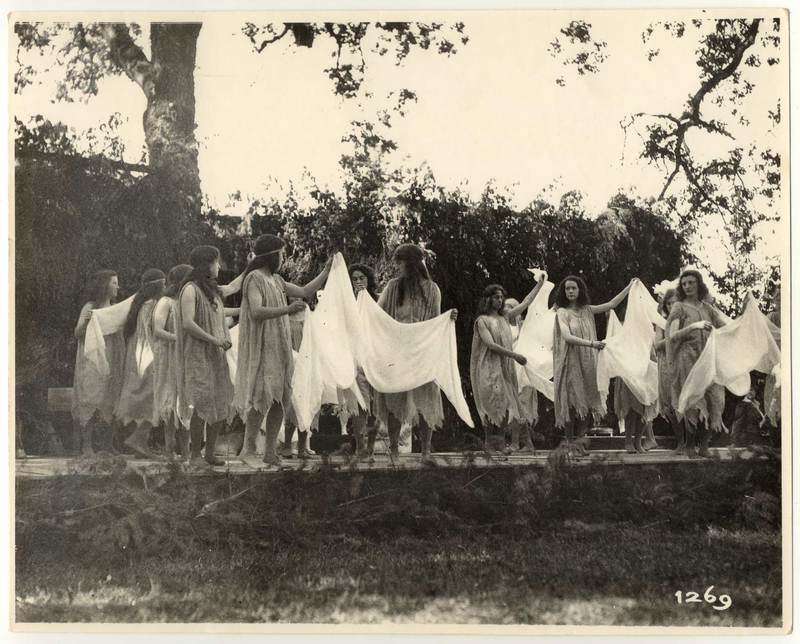
A photograph of a theatrical performance at Pacific University circa 1906-1908, possibly "The Bridge of the Gods: A Tale of Indian Oregon." This play, supposedly reenacting Native American myths, was based on a fictional story written by a white writer named Frederic Balch. It featured characters with names based on actual Native people, places and tribes such as "Multnomah," "Snoqualmie," and "Wallulah." Pacific University students dressed in redface to portray the characters. This photograph appears to show women students on an outdoor stage at Pacific University, dressed as Native girls. The play was very popular and was also performed in Portland, Seattle and other locations. It is also possible that this photograph shows another, unrelated performance; the staging matches that used during outdoor May Day performances around the same time.