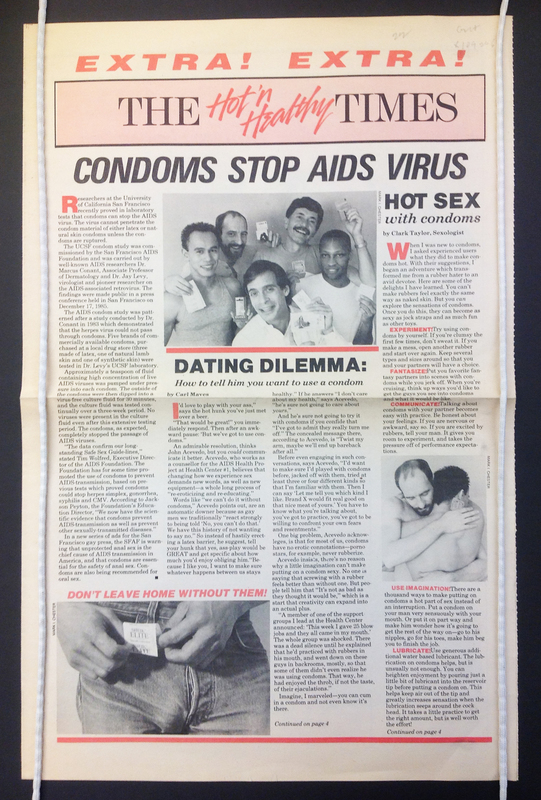
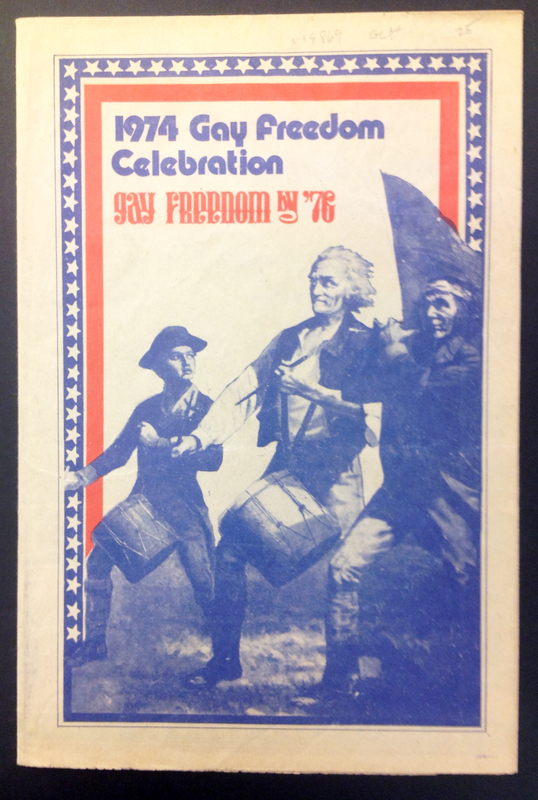
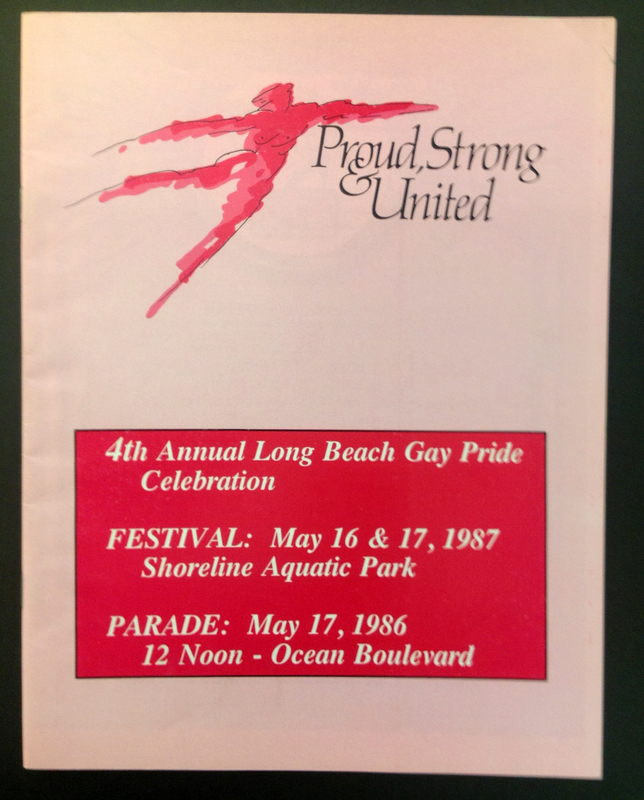
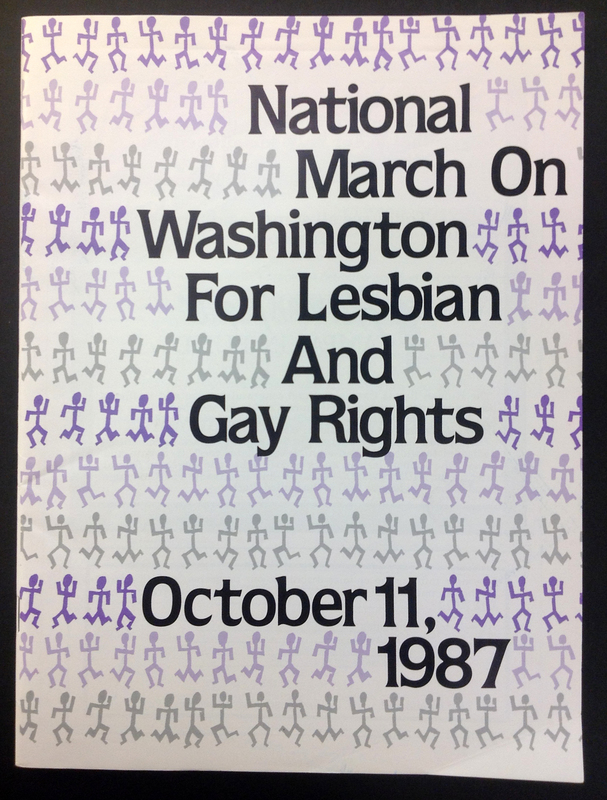
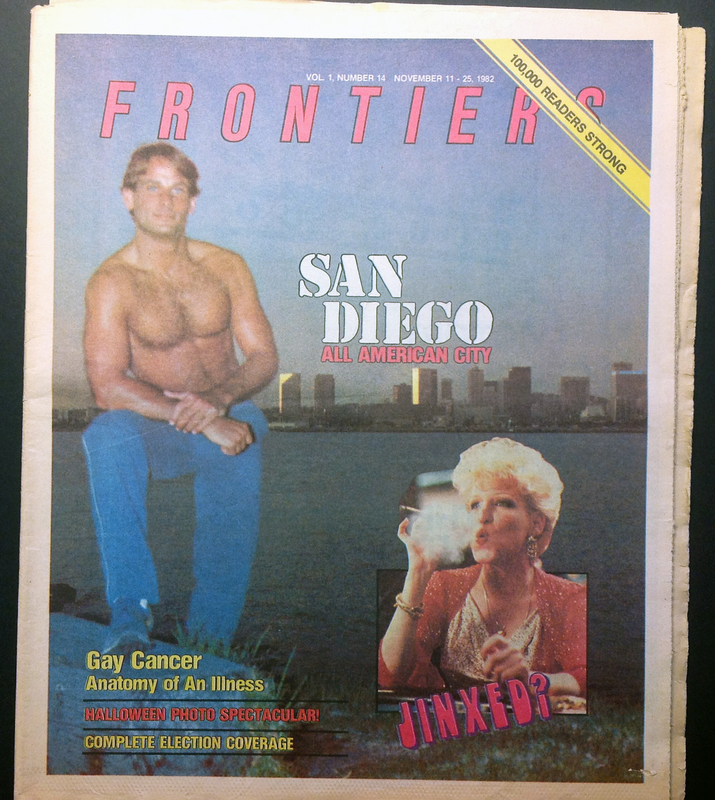
This Los Angeles gay weekly newspaper features an article on the so-called 'Gay Cancer' in November, 1982. The disease had had been given its official name, 'AIDS' less than four months earlier. The article provides news from the Centers for Disease Control, community organizations and doctors about how the disease was spreading. At this point, it was unknown whether a virus caused the illness. The article suggests that readers limit their number of anonymous sexual encounters and avoid hard drugs.
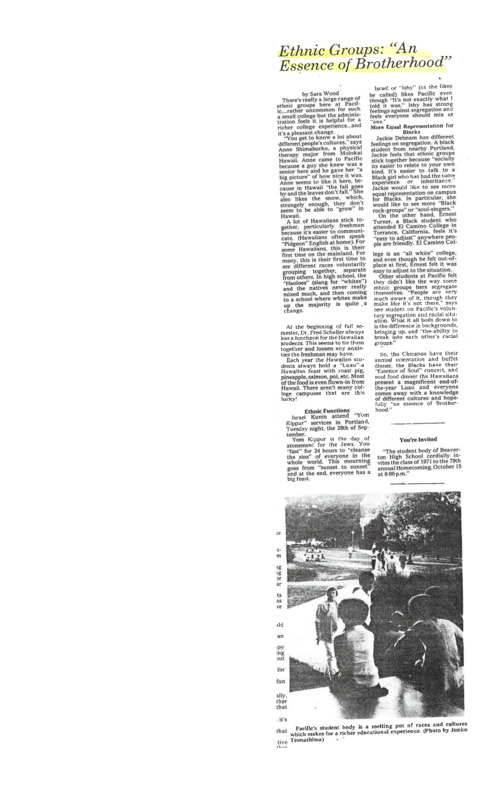
This news article written by Sara Wood offers a brief description of the main nonwhite ethnic groups present at Pacific in 1971. Wood mainly offers perspectives on group activities of the Hawaiians, especially the annual Lu'au which Pacific University is known for, and also discusses the topic of greater representation for the black student population. Also mentioned are Chicanos, and one Jewish student. On the topic of black students at Pacific, it references the opinions of two black students and shares a final thought of hope wishing for the emergence of 'an essence of Brotherhood' from sharing in these cultural events. Written in the backdrop of increased visibility and size of ethnic groups at Pacific that raised tensions especially about their ability to organize into campus groups.
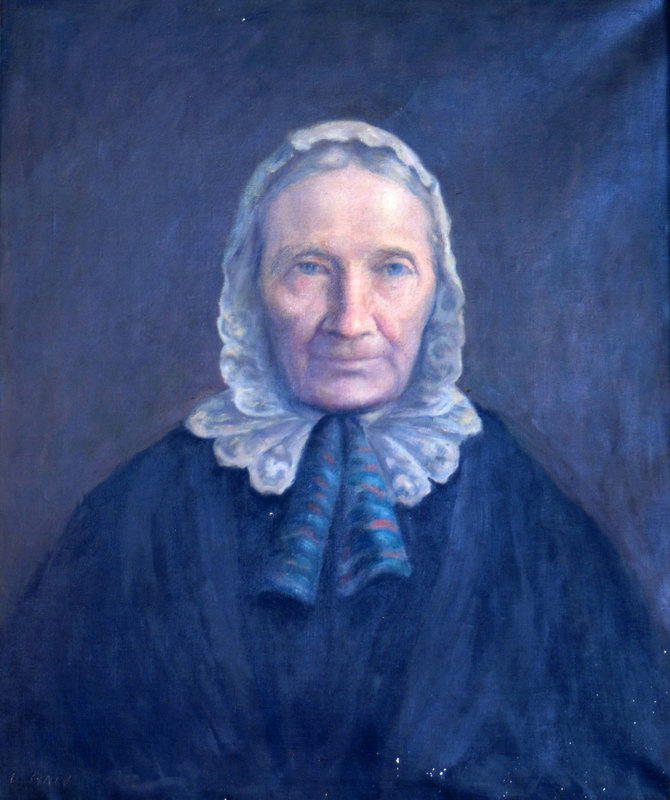
This is an oil painting of one of the founders of Pacific University, Tabitha Moffatt Brown. This portrait was made between 1900-1949 and is the only known existing painting of her. It was painted from the only known existing photograph of her. The portrait was painted by Brown’s great great granddaughter Lilian P. Bain. Brown made a vast contribution to Pacific. Her original vision was to turn it into a house for poor children. Students, whose parents could afford it, were to pay 1 dollar. Brown also decided to work the entire first year without pay. Her jobs included teaching, managing, and housekeeping. Brown is the only woman founder of Pacific University and is an important figure in Pacific University history.
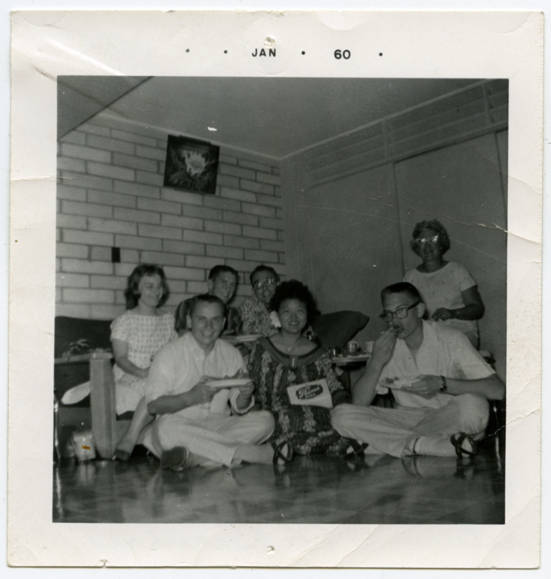
Members of a team of Pacific University faculty, staff and students, in a photo taken during the university's first recruitment trip to Hawaii. This trip probably took place in 1959; possibly in May. The college's Hawaiian Club formed in November ("Nineteen students in Hawaiian Club," The Index, Nov. 23, 1959, p. 2). This photograph was printed somewhat later, in January, 1960.
This photograph has been identified, presumably by alumni, as the "First Group that went to Hawaii for Recruiting." It was formerly owned by Professor Fred Scheller, based on a note on the back ("return to Fred Schellar").
Some of the people in this photograph have been identified based upon another photograph that appears to have been taken during the same trip: see PUA_PeoSlides_002. Seated in the back row, from left to right, are: Deanne Dayton (Class of 1961); Larry DePolo (Class of 1962); and Professor Fred Scheller. Seated in the front row from left to right are: John Randlett (Class of 1962); an unidentified woman who was likely a Pacific University alumna from Oahu; and Steve Hanson (Class of 1962). The standing woman may be a relative of the unidentified woman seated on the floor. These two women were likely hosting the visitors from Pacific.
Scheller taught speech and debate at Pacific. In May 1959, he led Dayton, DePolo, Randlett and Hanson on a trip to the University of Hawaii on Oahu for a speech tournament (see: Pacific University Index, May 18, 1959, p. 2). On the trip, they met with several Pacific University alumni families. During this trip, Scheller also spoke "at several high schools in an effort to recruit Hawaiian students, and will appear before ministerial and Pilgrim Fellowship groups" (Pacific University Index, May 4, 1959, p. 3). This was likely the first intentional recruitment trip in Hawaii by a member of Pacific's staff.
In November 1959, Scheller co-founded and became the advisor of Na Haumana O Hawaii, Pacific University's Hawaiian Student Club. He was a leader in recruiting students from Hawaii for Pacific University. Students from Hawaii would eventually make up a significant percentage of Pacific's student body.
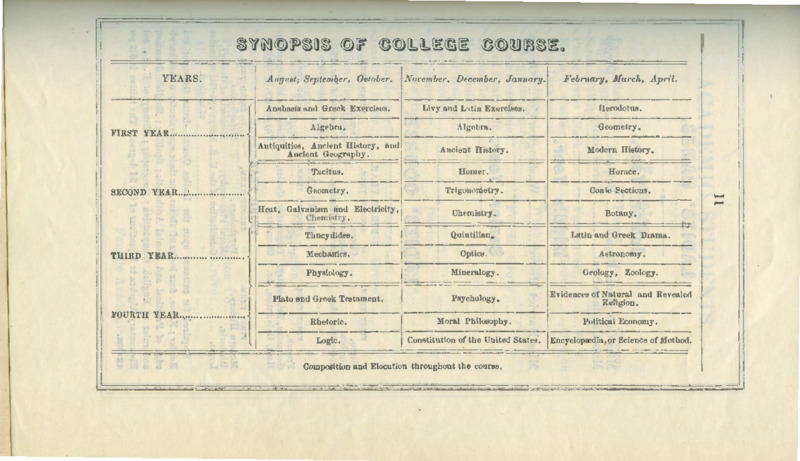
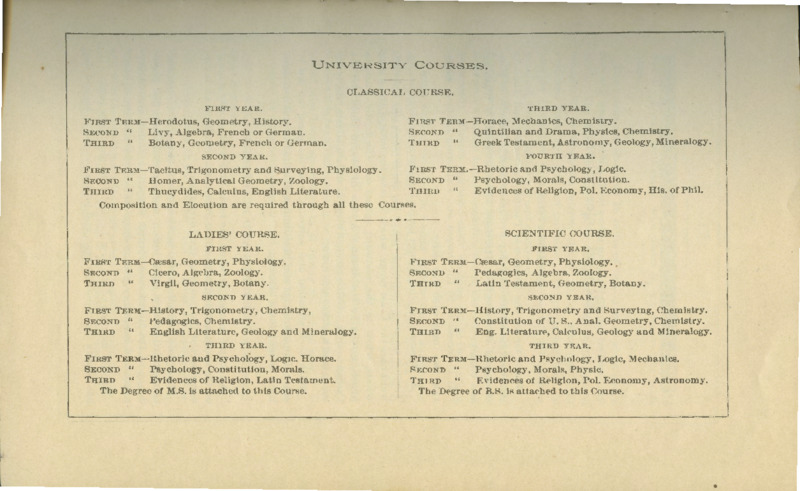
This is a course catalog of Pacific University courses for 1867. The courses have separate course objectives for male and female students at Pacific University, with small differences, such as the four year college curriculum for males and three years for females. Other differences include the difference in varsity of philosophers and sciences taught to the male and female students. The female students are taught about about Cicero and Virgil as specific philosophers courses, were as the men look at Herodotus, Theodotus, but not Cicero or Virgil. Women only study basic chemistry and biology, whereas males study these as well as zoology, geology and higher levels of science.
This resource is a descriptor of university classes from the 19th century with courses for the sciences schedule, the 'classical' schedule and women courses. The science and classic schedules are for male students, whereas as the females have their own ciricullum for studying education. The classic courses consist of four years of courses with an early focus upon the humanities and courses later on focusing on the general sciences. The scientific section was only three years, but they received education more sciences than the persons studying in the classical courses. The ladies courses is a hybrid of both the classical agenda and the scientific agenda, with the exception that they study Cicero and Virgil whereas as the male students don't touch on these figures. Only the sciences and the women section study Caesar for a class.
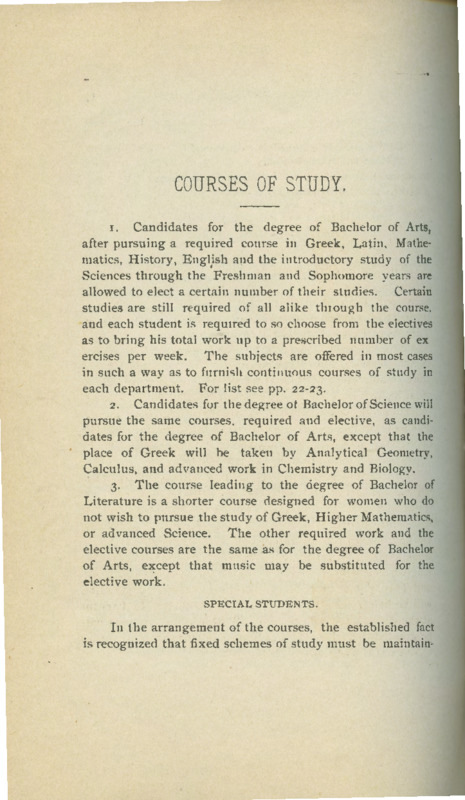
This is a Courses of Study introduction to a Study Catalog of Pacific University from the 19th century. It includes brief information on obtaining a degree in the bachelor of arts, sciences, and literature, as well as information on how to recieve a degree, students taking classes but not going for a degree, and in formation on teacher certificates.
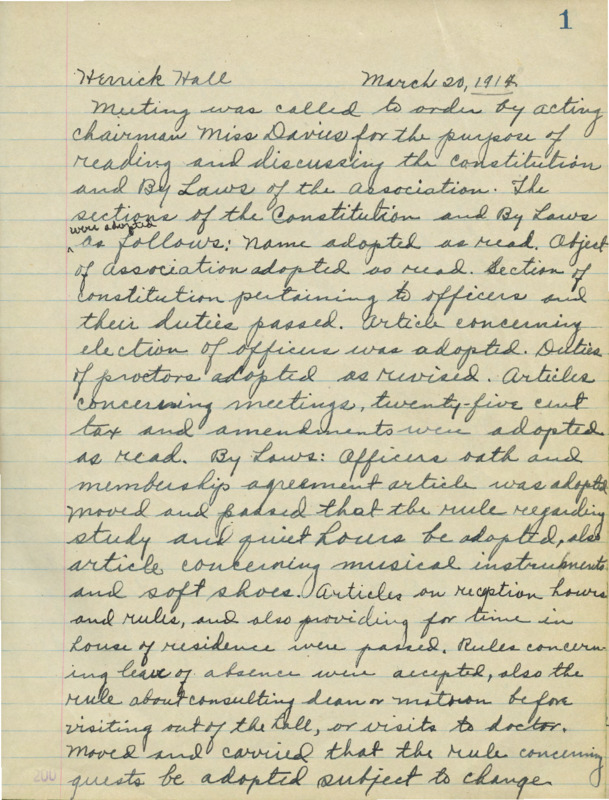
This text is the first entry in a book of meeting minutes taken by the Secretary-Treasurer for Herrick Hall at Pacific University that covers the time period March, 1914 to September, 1928. This entry was taken on March 20, 1914.
The meeting minutes entry describes the meeting being called by chairman Miss Davies. Her full name is Hazel Mary Davies and in March, 1914, she was a junior from Astoria, Oregon. After graduating from Pacific University, she became a public school teacher in Astoria, Oregon.
The student government for Herrick Hall at this time dealt with setting house rules with the Constitution and By-Laws, hosting dinners and dances for large events, holding fundraisers, and having officer elections. Some of the rules set in the constitution that were passed and revised in this entry describe study and quiet hours, usage of musical instruments and soft shoes, the setting of reception hours and rules, speaking with the dean or matron about leaving the hall, and rules regarding guests, room cleanliness, the missing of meals, lights, penalties, and the fines for missing meetings.
The original all-female dormitory was first built in 1883 and was called Ladies Hall. During the second university president Reverend John Russell Herrick's tenure, he spent much of his four years as president away from the university, but in that time, he was able to accomplish many things including raising $16,000 to build Ladies Hall. The first year the building was put to use was in 1884. It was renamed after President Herrick in 1887. The first Herrick Hall completely burned down on Sunday, March 11, 1906, from chimney sparks on the roof. A combination of women's fundraising and the Carnegie Foundation donation of $10,000 allowed the second Herrick Hall to be built in 1907. Until 1958, it was still an all-female residence hall. Herrick Hall burned down a second time in 1973.
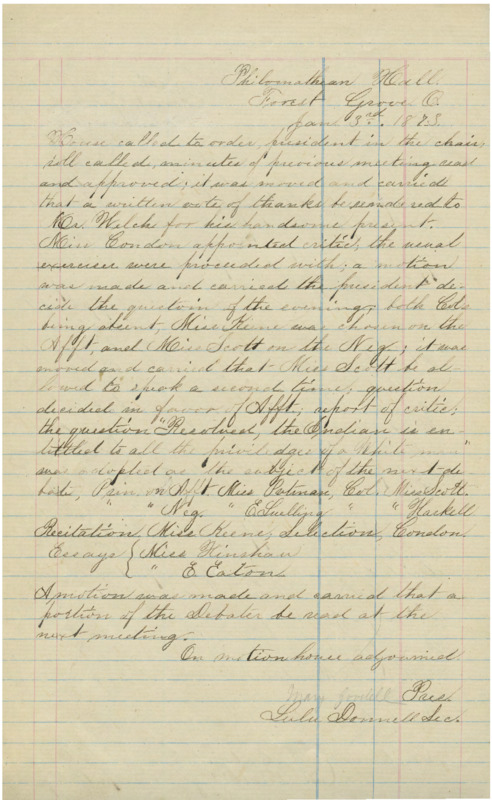
The Philomathean Society is a woman's Greek letter organization that was founded in 1871. Their members were, and still are referred to as Philos. In 1924, the group changed its name to the Phi Lambda Omicron Sorority, which is what it is referred to as today. In the 19th and early 20th century the organization mainly focused on debates, reading and music. The minutes from the weekly meeting of the Philomathean Society on January 3rd, 1873, written by secretary Lulu Donnel, include a description of calling the meeting to order, roll call, and approving the previous meetings minutes by the President, Mary Goodell. The document outlines the debate held at the meeting held between Maggie Keene, who argued the Affirmation, and Ella Scott, who argued the Negation. The topic they debated was, 'Resolved, the Indian is entittled to all the priviledges of a White man.' This document was extracted from a collection of the minutes of the Philmathean society from 1871 to 1879, written by hand in a single document.
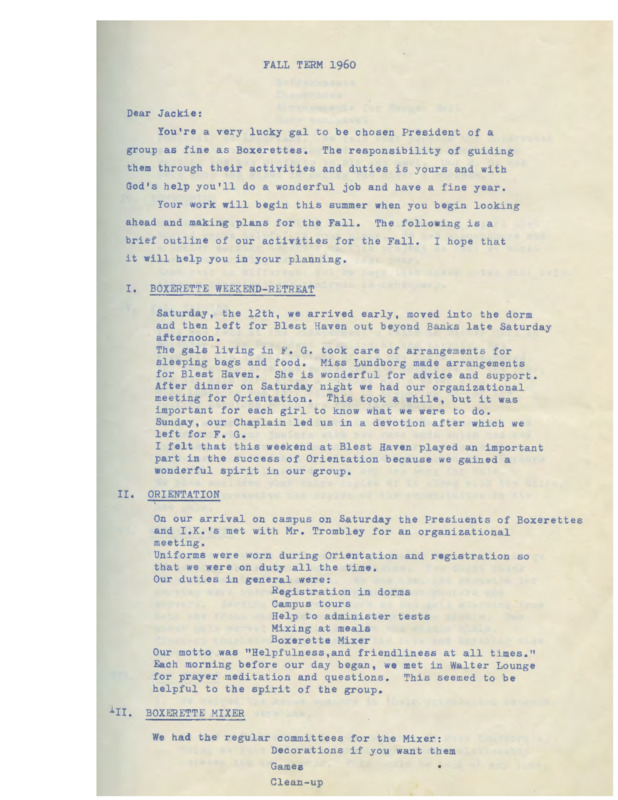
A letter to the incoming 1960 Boxerette Presidnet, Jackie Holbert from the outgoing 1959 President, Barbara Boates. The Boxerettes were an honorary service organization made up of women from Pacific University. The letter discusses responsibilities and expectations for the incoming President as well an outline of the events that the group hosted the previous year. Some of the events included the Boxerette Weekend retreat, Freshman Orientation, the Boxerette Mixer, Homecoming, and the Wassail Holiday Party. The letter comes from the collection of documents, the Boxerette Review which contains various documents of the boxerettes from 1951 to 1966.
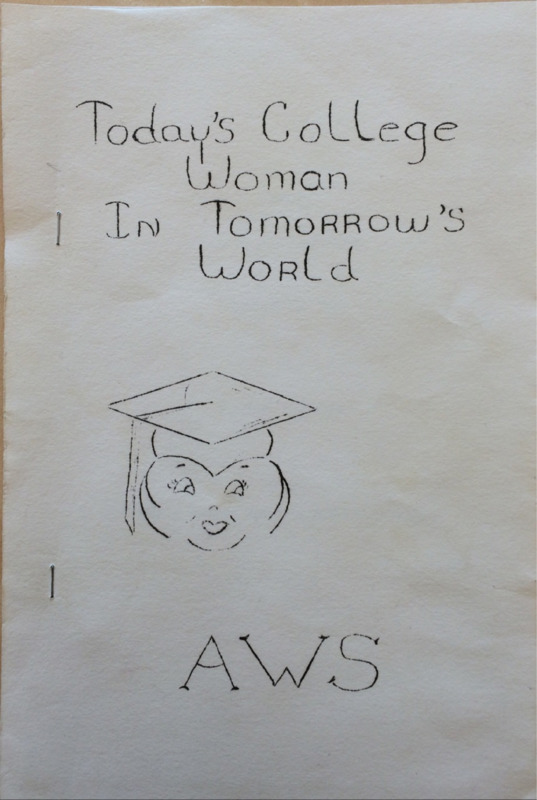
A four page program for the Associated Women Students Conference held on January 14, 1956. The theme of the conference was, 'Today's College Women In Tomorrow's World.' The main speaker at the conference was Gertrude Houk Fariss, who was the principal at St. Helen's hall in Portland. The day consisted of three allotted times for discussion groups that dealt with responsibilities and opportunities for women on college campuses. A.W.S also received help for running the conference from other service groups on campus including the Boxerettes, Theta Nu Alpha, Kappa Delta, Phi Lambda Omicron, and the Oak Leaf honorary Society.
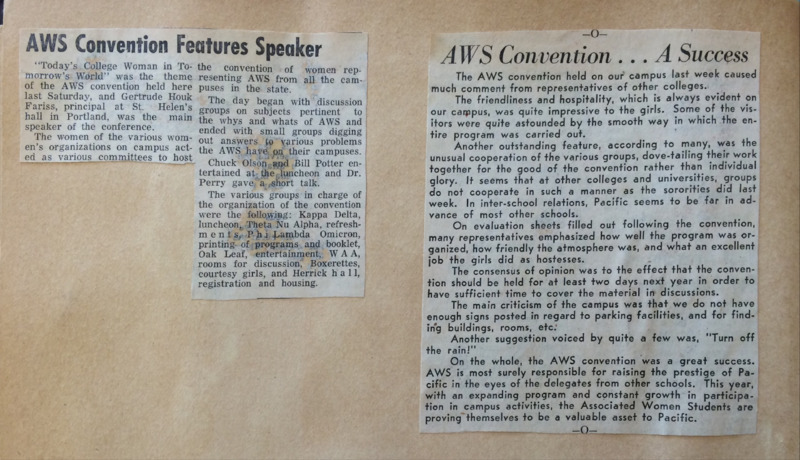
The two articles from the Pacific Index which concerned the Associated Women Students Conference held in 1956 give brief descriptions of the outcome of the conference. The first article titled, 'AWS Convention Features Speaker' gives a very neutral description of the day. The article mentions the main speaker for the day, Gertrude Houk Fariss, the theme of the day, 'Today's College Woman in Tomorrow's World,' and a description of some other groups who helped and what they did which included, 'Kappa Delta luncheon, Theta Nu Alpha refreshments, Phi Lambda Omicron, printing of programs and booklet, Oak Leaf, entertainment, Boxerettes, courtesy girls, and Herrik hall, registration and housing.' The second article however was much more descriptive of how the conference was viewed by attendees and others. The article was titled 'AWS Convention... A Success.' It touched on the, 'friendliness and hospitality' as well as, ' how well the program was organized, how friendly the atmosphere was, and what and excellent job the girls did as hostesses.' The article doesn't talk about any of the discussions or speakers at the conference and mentioned how the only complaint was the rain. Both articles from the Pacific Index are in a scrapbook of the Associated Women Students.