Richard Thompson was a Pacific University student who graduated in 1963. This snapshot, taken in June 1957, shows his mother and one of her friends with Boxer, the original mascot statue of Pacific University. Mrs. Thompson was an employee of the university. This photograph is from the collection of Richard Thompson, who retains the original print.
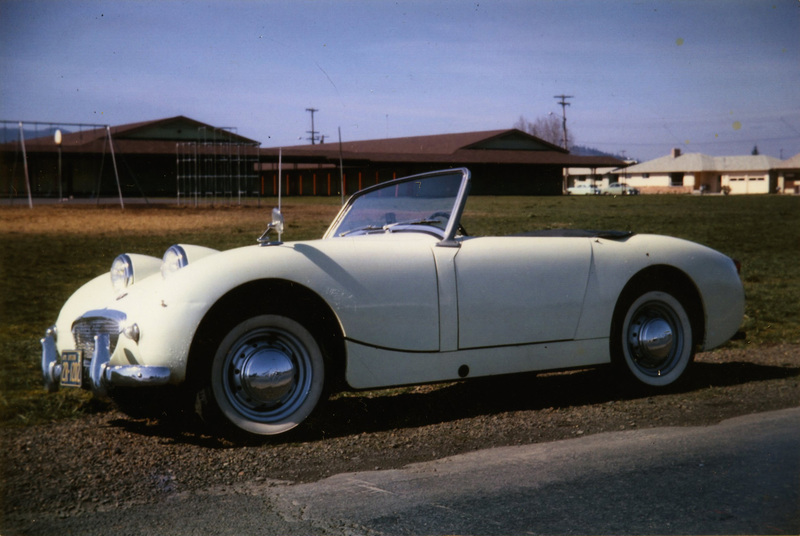
Richard Thompson was a Pacific University student who graduated in 1963. While he was enrolled, his fraternity Phi Beta Tau, won possession of the university's mascot, Boxer. In this photograph, taken around 1962, we see Richard Thompson's car, which was used as a getaway vehicle when transporting the Boxer mascot statue. The picture was probably taken near the old elementary school on the corner of SW Pacific Avenue and Highway 8 in Forest Grove. This photograph is from the collection of Richard Thompson, who retains the original print.
Richard Thompson was a Pacific University student who graduated in 1963. While he was enrolled, his fraternity Phi Beta Tau won possession of the university's mascot, Boxer. In this photograph, taken around 1962, Thompson is leaning next to Boxer, who has been placed on a Pacific University sweater, on top of a car hood. The picture was probably taken near the old elementary school on the corner of SW Pacific Avenue and Highway 8 in Forest Grove. This photograph is from the collection of Richard Thompson, who retains the original print.
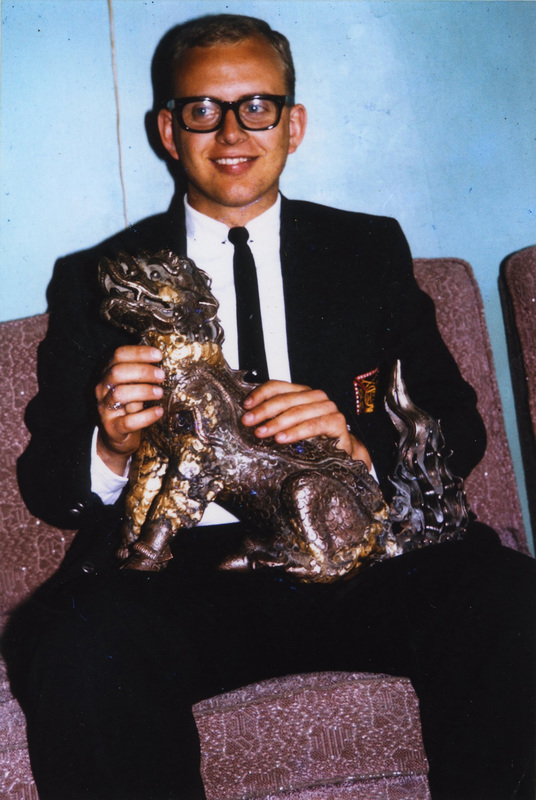
Richard Thompson was a Pacific University student who graduated in 1963. While he was enrolled, his fraternity Phi Beta Tau won possession of the university's mascot, Boxer. In this photograph, taken around 1962, Thompson is holding Boxer, who is mostly intact, with all of his appendages except the ears and horn present, but with many welding marks as evidence of having been ripped apart in previous fights. This photograph is from the collection of Richard Thompson, who retains the original print.
A soundless video recording of a fight over the 'Boxer' mascot of Pacific University in 1968. In the fight, also known as a 'Boxer Toss,' several teams of male students brawl over possession of the mascot, which was a bronze Chinese statue. It was filmed on campus in Trombley Square, between the Washburne University Center, Scott Hall, Marsh Hall and Old College Hall (which has since been moved to a new location). Hundreds of bystanders watch in the background. This brawl was part of a Pacific University tradition that was maintained for decades until the statue disappeared approximately one year after this film was made. It took place on April 18, 1968 and was described in an article, 'The Boxer Rebellion - 1968,' that appeared in the Pacific alumni magazine. The film was likely created from footage collected by the television crews that are described in the article. This video was converted from a 16mm film reel that was marked, 'Color Electro-Print of Boxer Fight,' from the King Film Lab in Portland, Oregon.
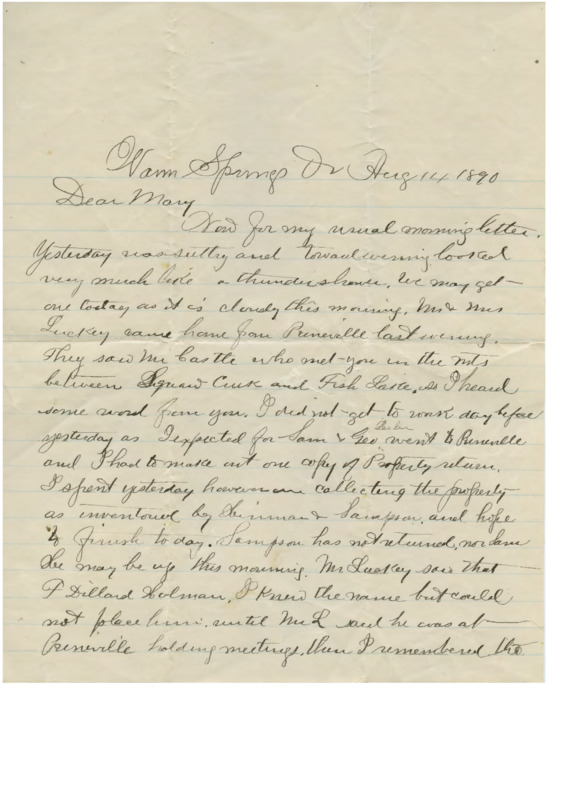
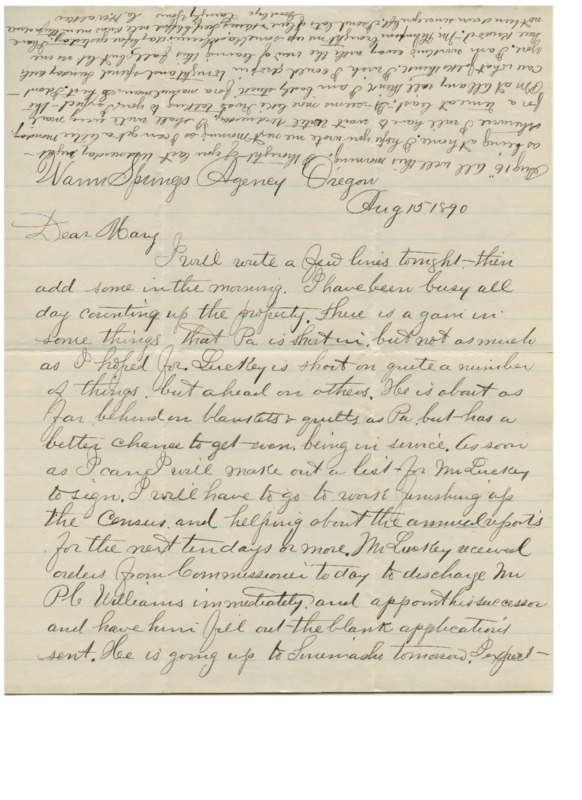
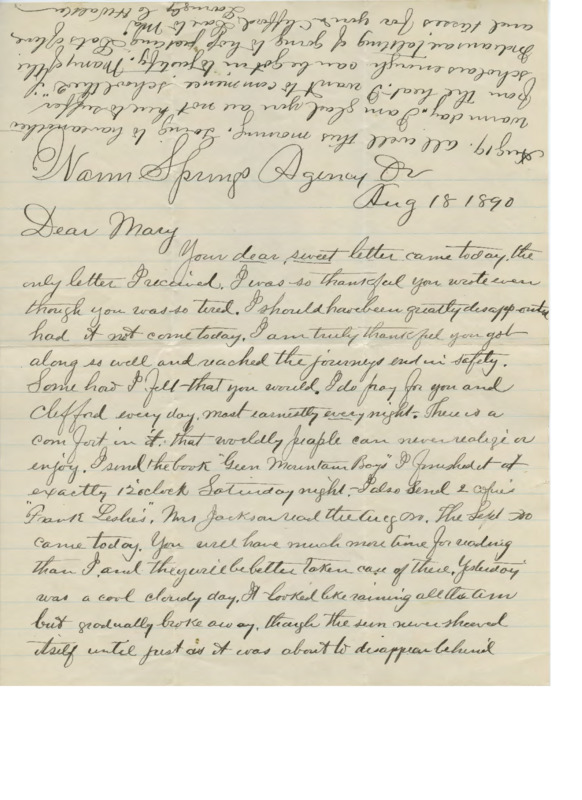
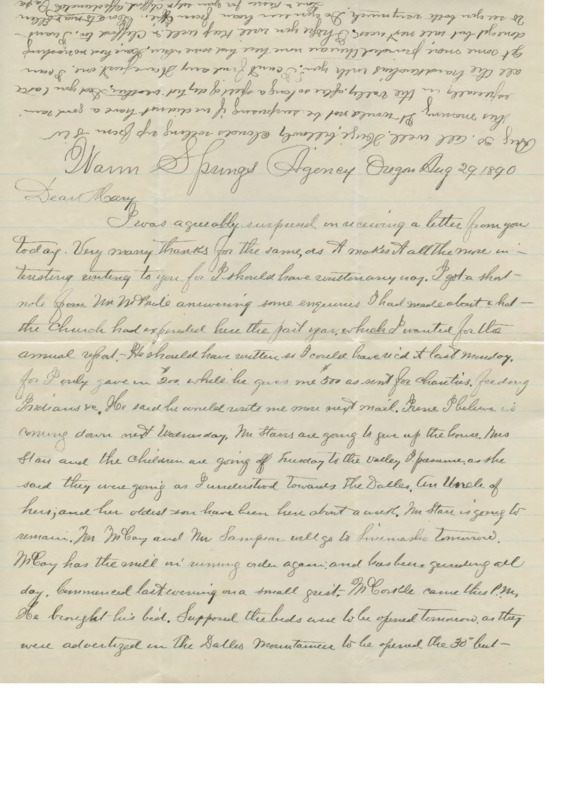
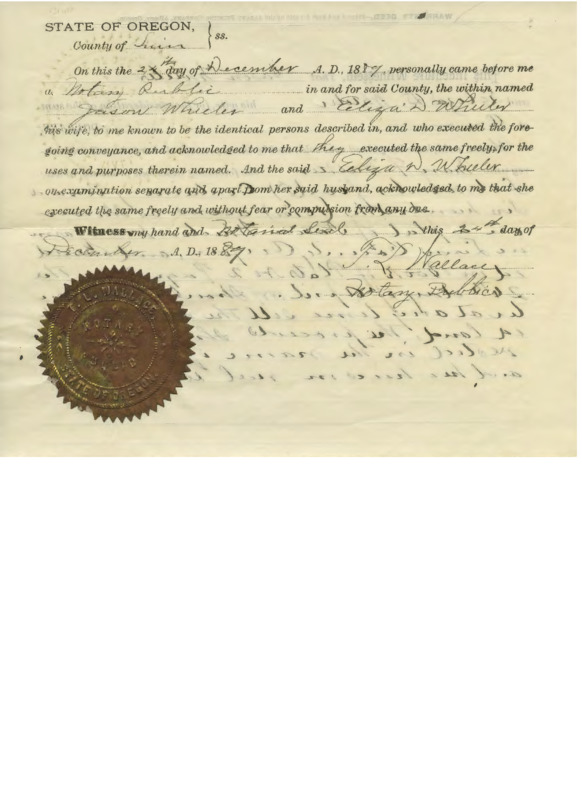
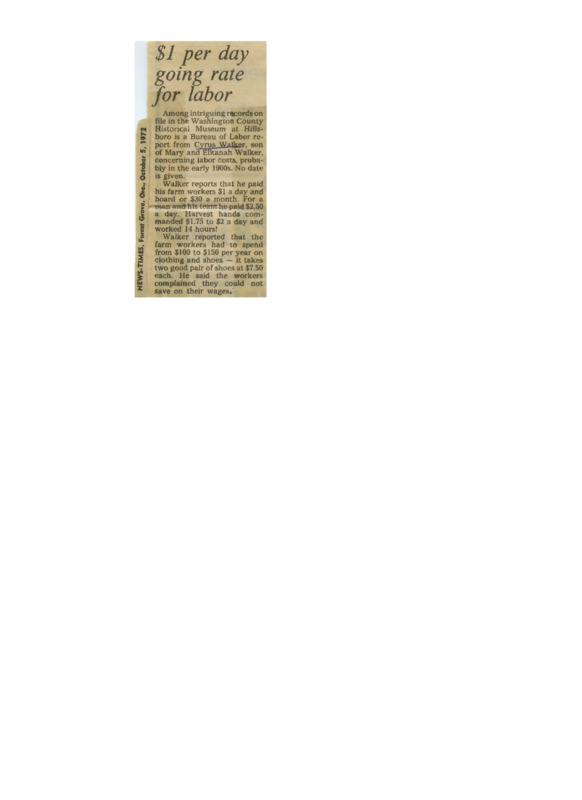
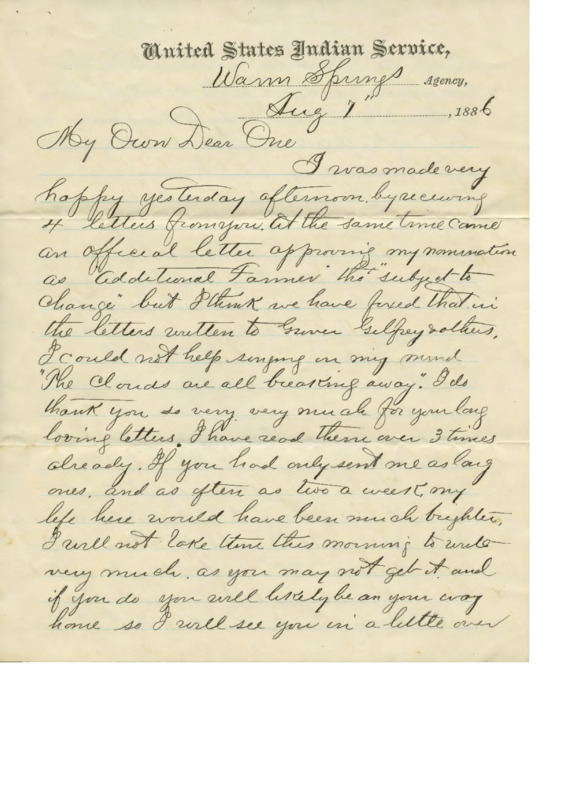
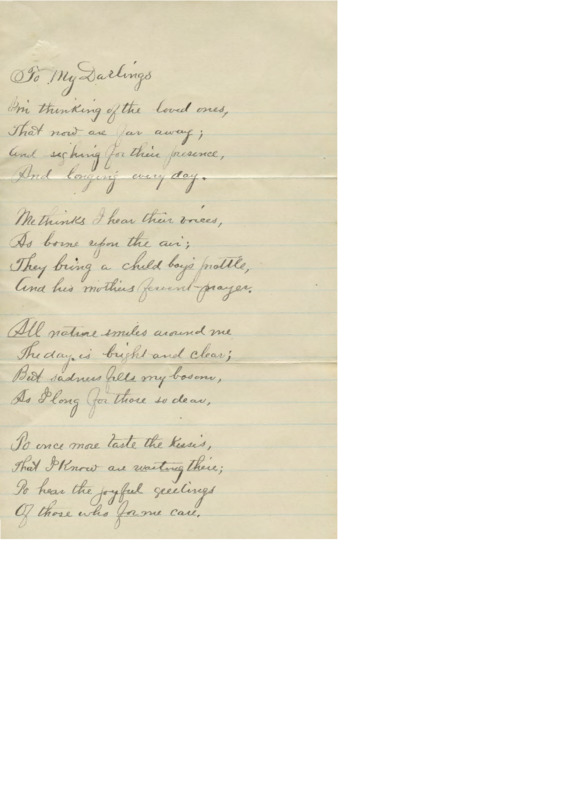
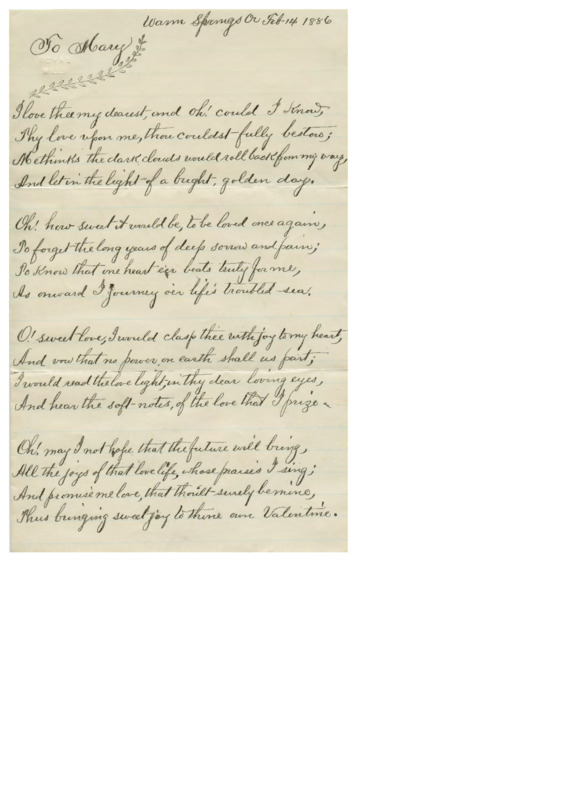
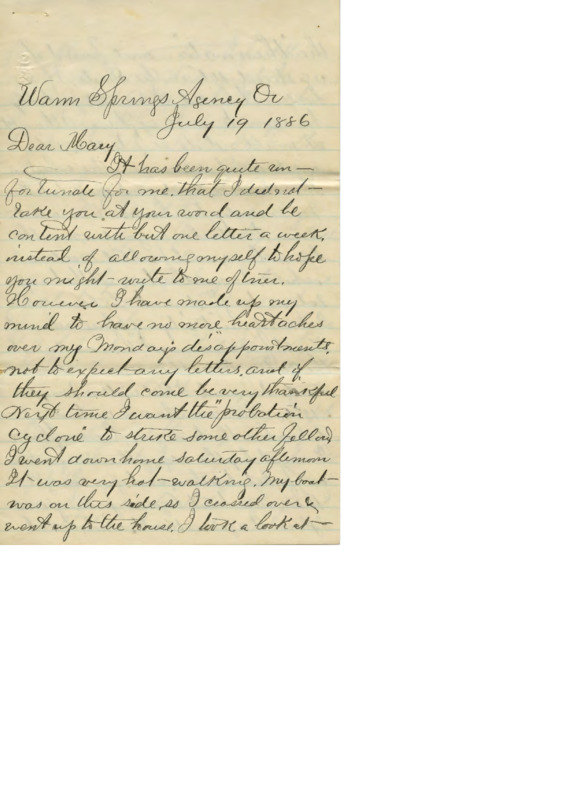
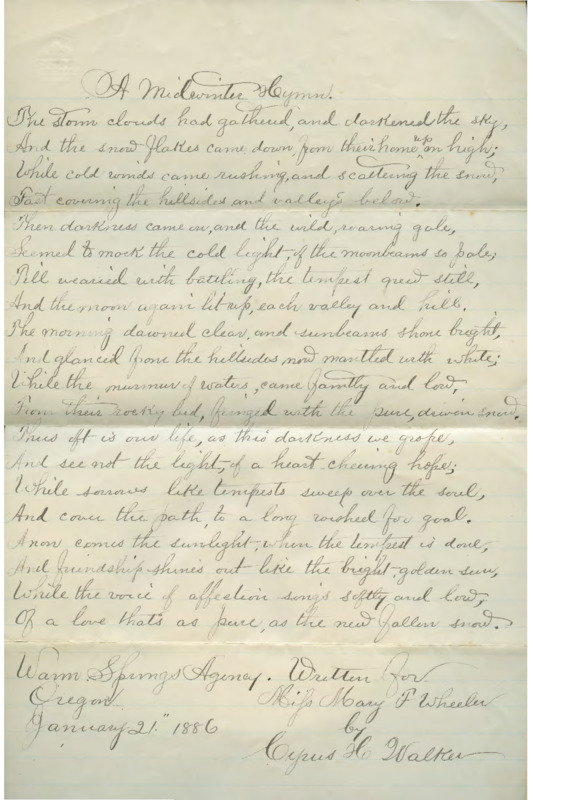
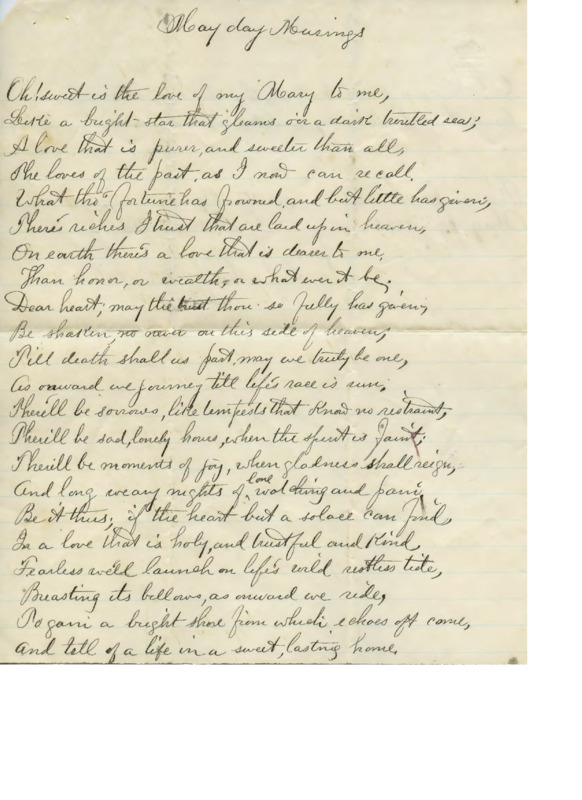
Cyrus Walker was the oldest son of the early Oregon Territory missionaries Elkanah and Mary Richardson Walker. He grew up at Tshimakain in the 1830s-40s, where he learned the native Spokane language. After joining the U.S. army during the Civil War and then attempting to make a living as a farmer, he became a teacher at the Warm Springs Indian Agency. These letters, documents and clippings shed light on his experiences as a missionary, a soldier, a pioneer and a teacher at Warm Springs. This collection was donated to Pacific University by Betty Thorne, a descendant of the Walkers.
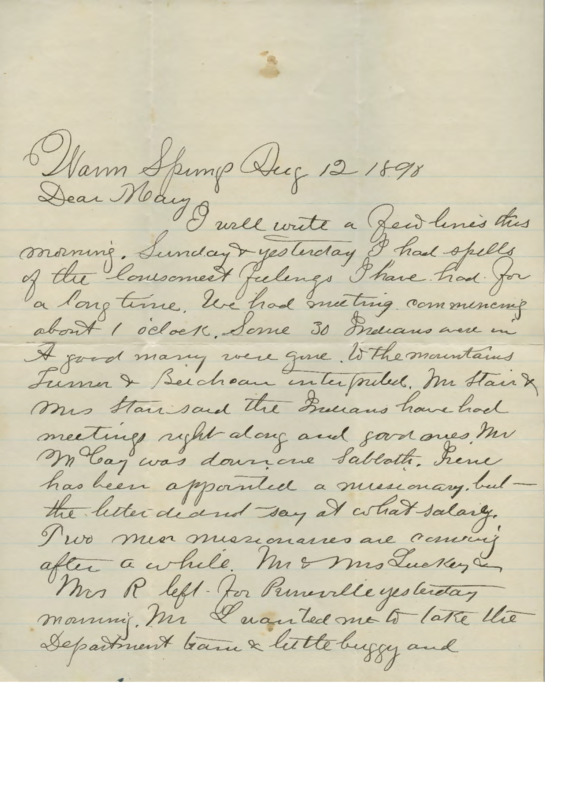
A letter from Warm Springs Indian Agency employee Cyrus Walker to his wife, Mary Wheeler Walker. The letter describes Sabbath "meetings" (i.e. church services) with Natives from the Warm Springs Agency; missionaries at Warm Springs; taking the census of tribal members at Simnasho; missing Mary and their son, Clifford; and Warm Springs school business.
Cyrus Walker was the oldest son of the early Oregon Territory missionaries Elkanah and Mary Richardson Walker. He grew up at Tshimakain in the 1830s-40s, where he learned the native Spokane language. After joining the U.S. army during the Civil War and then attempting to make a living as a farmer, he became a teacher at the Warm Springs Indian Agency. These letters, documents and clippings shed light on his experiences as a missionary, a soldier, a pioneer and a teacher at Warm Springs. This collection was donated to Pacific University by Betty Thorne, a descendant of the Walkers.
Cyrus Walker was the oldest son of the early Oregon Territory missionaries Elkanah and Mary Richardson Walker. He grew up at Tshimakain in the 1830s-40s, where he learned the native Spokane language. After joining the U.S. army during the Civil War and then attempting to make a living as a farmer, he became a teacher at the Warm Springs Indian Agency. These letters, documents and clippings shed light on his experiences as a missionary, a soldier, a pioneer and a teacher at Warm Springs. This collection was donated to Pacific University by Betty Thorne, a descendant of the Walkers.
Cyrus Walker was the oldest son of the early Oregon Territory missionaries Elkanah and Mary Richardson Walker. He grew up at Tshimakain in the 1830s-40s, where he learned the native Spokane language. After joining the U.S. army during the Civil War and then attempting to make a living as a farmer, he became a teacher at the Warm Springs Indian Agency. These letters, documents and clippings shed light on his experiences as a missionary, a soldier, a pioneer and a teacher at Warm Springs. This collection was donated to Pacific University by Betty Thorne, a descendant of the Walkers.
Cyrus Walker was the oldest son of the early Oregon Territory missionaries Elkanah and Mary Richardson Walker. He grew up at Tshimakain in the 1830s-40s, where he learned the native Spokane language. After joining the U.S. army during the Civil War and then attempting to make a living as a farmer, he became a teacher at the Warm Springs Indian Agency. These letters, documents and clippings shed light on his experiences as a missionary, a soldier, a pioneer and a teacher at Warm Springs. This collection was donated to Pacific University by Betty Thorne, a descendant of the Walkers.
Cyrus Walker was the oldest son of the early Oregon Territory missionaries Elkanah and Mary Richardson Walker. He grew up at Tshimakain in the 1830s-40s, where he learned the native Spokane language. After joining the U.S. army during the Civil War and then attempting to make a living as a farmer, he became a teacher at the Warm Springs Indian Agency. These letters, documents and clippings shed light on his experiences as a missionary, a soldier, a pioneer and a teacher at Warm Springs. This collection was donated to Pacific University by Betty Thorne, a descendant of the Walkers.
Cyrus Walker was the oldest son of the early Oregon Territory missionaries Elkanah and Mary Richardson Walker. He grew up at Tshimakain in the 1830s-40s, where he learned the native Spokane language. After joining the U.S. army during the Civil War and then attempting to make a living as a farmer, he became a teacher at the Warm Springs Indian Agency. These letters, documents and clippings shed light on his experiences as a missionary, a soldier, a pioneer and a teacher at Warm Springs. This collection was donated to Pacific University by Betty Thorne, a descendant of the Walkers.
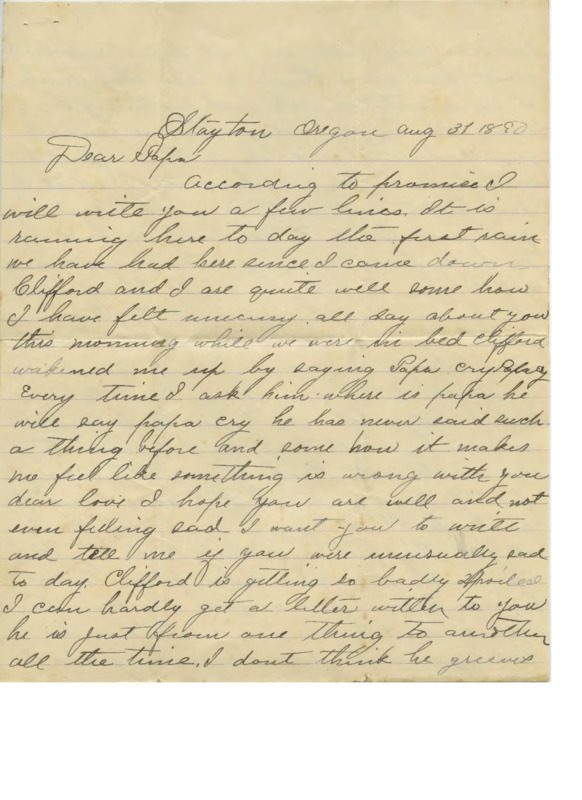
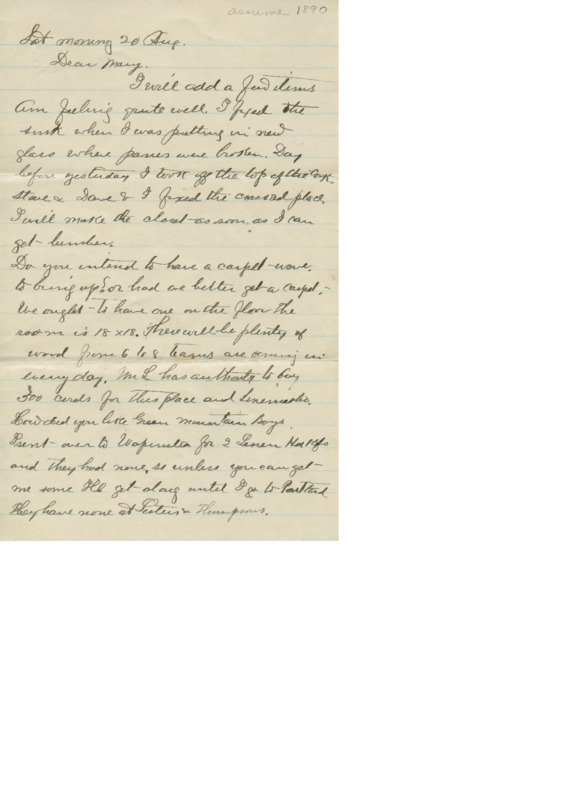
A letter from Cyrus Walker to his wife, Mary Wheeler Walker. At the time, Cyrus was a clerk at the Warm Springs Indian Agency, and his wife and their child were living temporarily in another county. The letter describes some house renovations and also the departure of the Agency doctor, "Dr. S." Cyrus Walker was the oldest son of the early Oregon Territory missionaries Elkanah and Mary Richardson Walker. He grew up at Tshimakain in the 1830s-40s, where he learned the native Spokane language. After joining the U.S. army during the Civil War and then attempting to make a living as a farmer, he became a teacher at the Warm Springs Indian Agency. These letters, documents and clippings shed light on his experiences as a missionary, a soldier, a pioneer and a teacher at Warm Springs. This collection was donated to Pacific University by Betty Thorne, a descendant of the Walkers.
Cyrus Walker was the oldest son of the early Oregon Territory missionaries Elkanah and Mary Richardson Walker. He grew up at Tshimakain in the 1830s-40s, where he learned the native Spokane language. After joining the U.S. army during the Civil War and then attempting to make a living as a farmer, he became a teacher at the Warm Springs Indian Agency. These letters, documents and clippings shed light on his experiences as a missionary, a soldier, a pioneer and a teacher at Warm Springs. This collection was donated to Pacific University by Betty Thorne, a descendant of the Walkers.
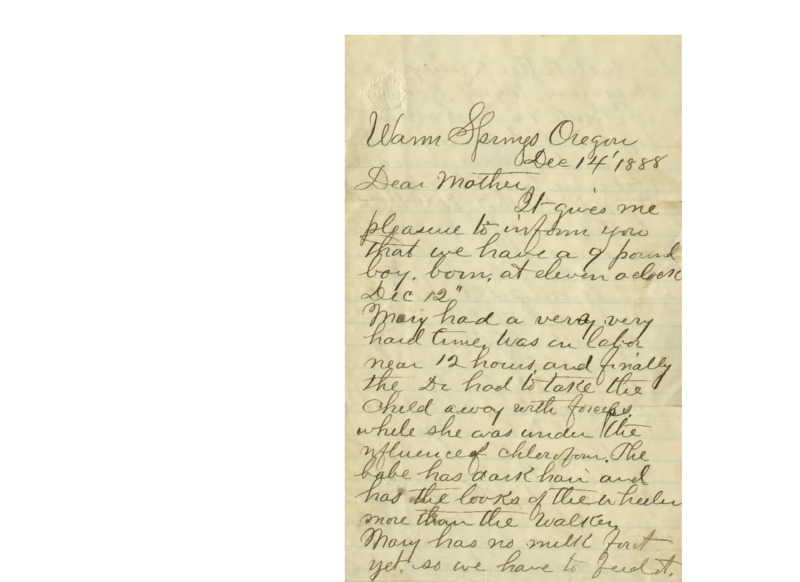
Reports details of the difficult birth of Clifford Walker, Cyrus and Mary Walker's first child. After twelve hours of labor the doctor had to use forceps to finish the delivery while the mother was anesthetized with chloroform.
Cyrus Walker was the oldest son of the early Oregon Territory missionaries Elkanah and Mary Richardson Walker. He grew up at Tshimakain in the 1830s-40s, where he learned the native Spokane language. After joining the U.S. army during the Civil War and then attempting to make a living as a farmer, he became a teacher at the Warm Springs Indian Agency. These letters, documents and clippings shed light on his experiences as a missionary, a soldier, a pioneer and a teacher at Warm Springs. This collection was donated to Pacific University by Betty Thorne, a descendant of the Walkers.
Cyrus Walker was the oldest son of the early Oregon Territory missionaries Elkanah and Mary Richardson Walker. He grew up at Tshimakain in the 1830s-40s, where he learned the native Spokane language. After joining the U.S. army during the Civil War and then attempting to make a living as a farmer, he became a teacher at the Warm Springs Indian Agency. These letters, documents and clippings shed light on his experiences as a missionary, a soldier, a pioneer and a teacher at Warm Springs. This collection was donated to Pacific University by Betty Thorne, a descendant of the Walkers.
Cyrus Walker was the oldest son of the early Oregon Territory missionaries Elkanah and Mary Richardson Walker. He grew up at Tshimakain in the 1830s-40s, where he learned the native Spokane language. After joining the U.S. army during the Civil War and then attempting to make a living as a farmer, he became a teacher at the Warm Springs Indian Agency. These letters, documents and clippings shed light on his experiences as a missionary, a soldier, a pioneer and a teacher at Warm Springs. This collection was donated to Pacific University by Betty Thorne, a descendant of the Walkers.
Cyrus Walker was the oldest son of the early Oregon Territory missionaries Elkanah and Mary Richardson Walker. He grew up at Tshimakain in the 1830s-40s, where he learned the native Spokane language. After joining the U.S. army during the Civil War and then attempting to make a living as a farmer, he became a teacher at the Warm Springs Indian Agency. These letters, documents and clippings shed light on his experiences as a missionary, a soldier, a pioneer and a teacher at Warm Springs. This collection was donated to Pacific University by Betty Thorne, a descendant of the Walkers.
Cyrus Walker was the oldest son of the early Oregon Territory missionaries Elkanah and Mary Richardson Walker. He grew up at Tshimakain in the 1830s-40s, where he learned the native Spokane language. After joining the U.S. army during the Civil War and then attempting to make a living as a farmer, he became a teacher at the Warm Springs Indian Agency. These letters, documents and clippings shed light on his experiences as a missionary, a soldier, a pioneer and a teacher at Warm Springs. This collection was donated to Pacific University by Betty Thorne, a descendant of the Walkers.
Cyrus Walker was the oldest son of the early Oregon Territory missionaries Elkanah and Mary Richardson Walker. He grew up at Tshimakain in the 1830s-40s, where he learned the native Spokane language. After joining the U.S. army during the Civil War and then attempting to make a living as a farmer, he became a teacher at the Warm Springs Indian Agency. These letters, documents and clippings shed light on his experiences as a missionary, a soldier, a pioneer and a teacher at Warm Springs. This collection was donated to Pacific University by Betty Thorne, a descendant of the Walkers.
Cyrus Walker was the oldest son of the early Oregon Territory missionaries Elkanah and Mary Richardson Walker. He grew up at Tshimakain in the 1830s-40s, where he learned the native Spokane language. After joining the U.S. army during the Civil War and then attempting to make a living as a farmer, he became a teacher at the Warm Springs Indian Agency. These letters, documents and clippings shed light on his experiences as a missionary, a soldier, a pioneer and a teacher at Warm Springs. This collection was donated to Pacific University by Betty Thorne, a descendant of the Walkers.
Cyrus Walker was the oldest son of the early Oregon Territory missionaries Elkanah and Mary Richardson Walker. He grew up at Tshimakain in the 1830s-40s, where he learned the native Spokane language. After joining the U.S. army during the Civil War and then attempting to make a living as a farmer, he became a teacher at the Warm Springs Indian Agency. These letters, documents and clippings shed light on his experiences as a missionary, a soldier, a pioneer and a teacher at Warm Springs. This collection was donated to Pacific University by Betty Thorne, a descendant of the Walkers.
Cyrus Walker was the oldest son of the early Oregon Territory missionaries Elkanah and Mary Richardson Walker. He grew up at Tshimakain in the 1830s-40s, where he learned the native Spokane language. After joining the U.S. army during the Civil War and then attempting to make a living as a farmer, he became a teacher at the Warm Springs Indian Agency. These letters, documents and clippings shed light on his experiences as a missionary, a soldier, a pioneer and a teacher at Warm Springs. This collection was donated to Pacific University by Betty Thorne, a descendant of the Walkers.