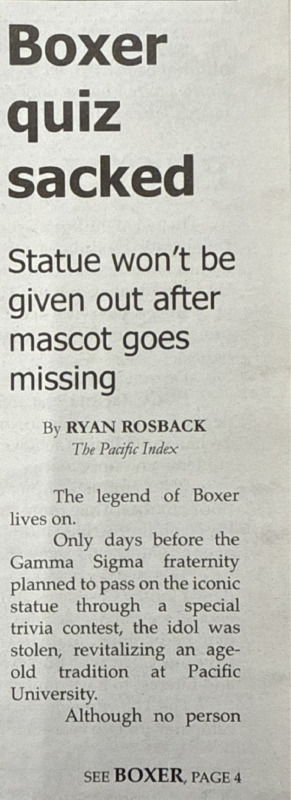
An article from The Index, Pacific University's student newspaper, describing how the Boxer II statue was stolen in March, 2008 just before a planned quiz content would have awarded it to a current student. Boxer II was a replica of the original "Boxer" statue, which was also Pacific University's mascot. There was a tradition of hiding, stealing and fighting over the statue as a symbol of college spirit. Members of the Gamma Sigma fraternity were holding Boxer II and planning to pass it on to current students, but it went missing before the quiz could take place.
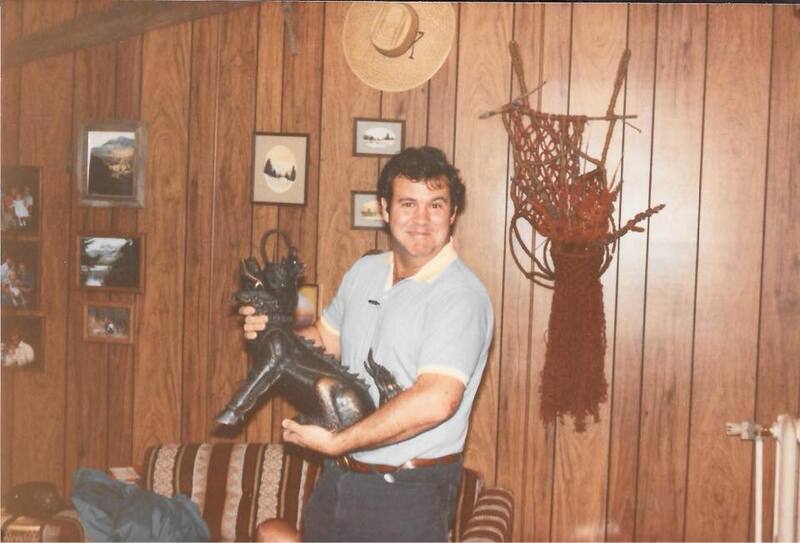
Pacific University student Ken Colman (Class of 1984) holding the "Boxer II" statue, probably in 1983 or 1984. Boxer II was a replica of the original "Boxer" statue, which was also Pacific University's mascot. There was a tradition of hiding, stealing and fighting over the statue as a symbol of college spirit. In Colman's memory, the "Men of Mac Hall" (i.e. residents of McCormick Hall) won control of Boxer II around that time period, and this photograph was taken "in the Head Resident’s apartment." This photograph was donated in digital format to the Pacific University Archives in 2025.
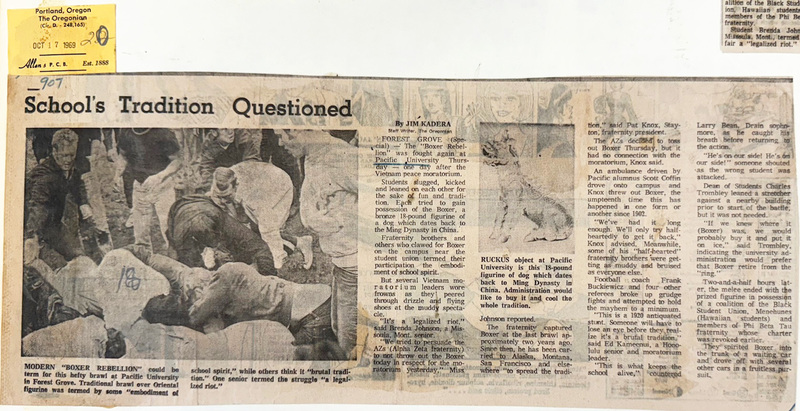
A newspaper article from The Oregonian titled "School's Tradition Questioned," regarding a "Boxer Toss" which occurred on Pacific University's campus on October 16, 1969. This would be the last time that the original Boxer statue was seen in public for 55 years, until it was returned in 2024. The article describes how the Alpha Zeta fraternity "threw out" Boxer into a crowd of students who fought over it. This had been a tradition at Pacific University for decades. However, this Boxer Toss took place one day after anti-Vietnam activists had organized a "Peace Moratorium" march in Forest Grove. The article describes how several students involved in organizing the march opposed the tradition as violent and antiquated.
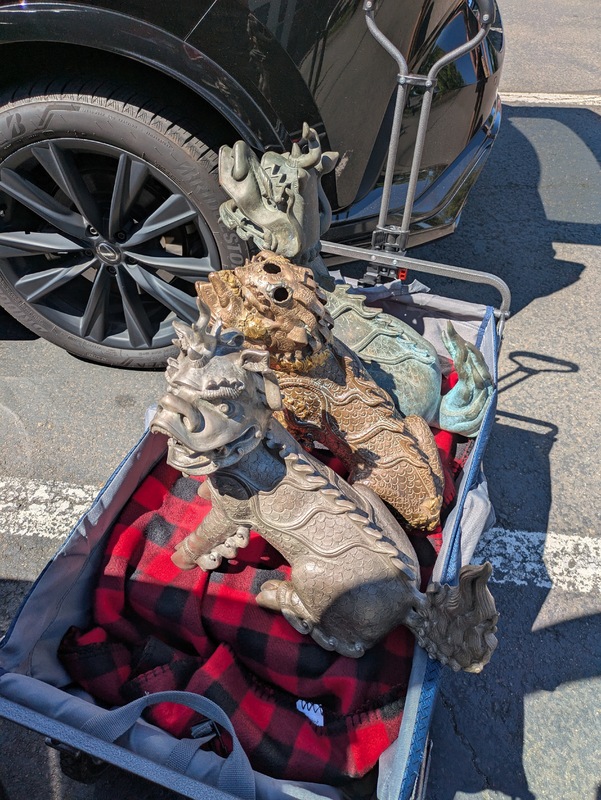
Three versions of Boxer, the statue that serves as Pacific University's mascot: the original bronze Boxer, which Pacific first acquired in the late 1890s (gold-colored, center); the second casting of Boxer II, created in 1983 (back, grey-green); and Boxer III, created in 2018 (front, lighter grey). The original Boxer had been missing between 1969-2024, when it was finally returned to the university. The first casting of Boxer II had been missing since the mid-2000s, but a second casting had just been returned to Pacific a few weeks before this event. The three statues are on a cart, being transported to their first-ever appearance together at a gathering of Gamma Sigma fraternity alumni on June 29, 2025. The photograph was taken by Martha Calus-McLain (Class of 2023), Pacific's Alumni Director.
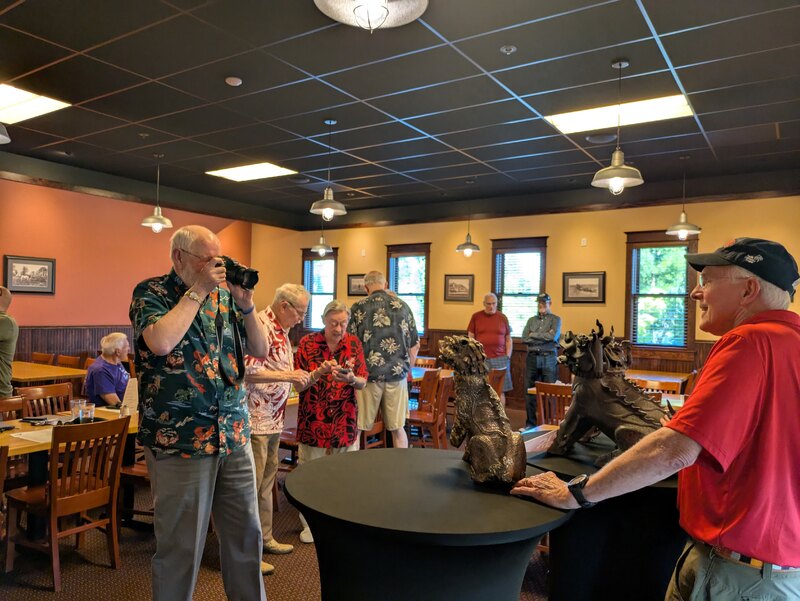
Alumni members of Pacific University's Gamma Sigma fraternity visiting with three versions of the statue that serves as Pacific University's mascot: the original bronze Boxer, which Pacific first acquired in the late 1890s (gold-colored, left); the second casting of Boxer II, created in 1983 (middle, dark grey); and Boxer III, created in 2018 (right, lighter grey). The original Boxer had been missing between 1969-2024, when it was finally returned to the university. The first casting of Boxer II had been missing since the mid-2000s, but a second casting had just been returned to Pacific a few weeks before this event. This was the first-ever time when all three Boxer statues were brought together at once.
Several of the alumni in this photograph remembered seeing the original Boxer before it went missing, and were also among those who raised funds to create Boxer III. Pete Truax (Class of 1969), wearing a maroon t-shirt in in the background, was one of the last students to "throw out" the original Boxer statue in a "Boxer Toss." Bruce Bishop (Class of 1968), pointing the camera, was one of the most active in the commissioning of Boxer III. The photograph was taken by Martha Calus-McLain (Class of 2023), Pacific's Alumni Director, who had seen the original Boxer II when it was on campus. Others pictured in this photograph include: Frank Baldwin (Class of 1967), wearing a baseball cap; Gerry Frye (Class of 1962), wearing red and black; and Scott Pike (Class of 1969, OD 1970) , in the foreground, next to the Boxers.
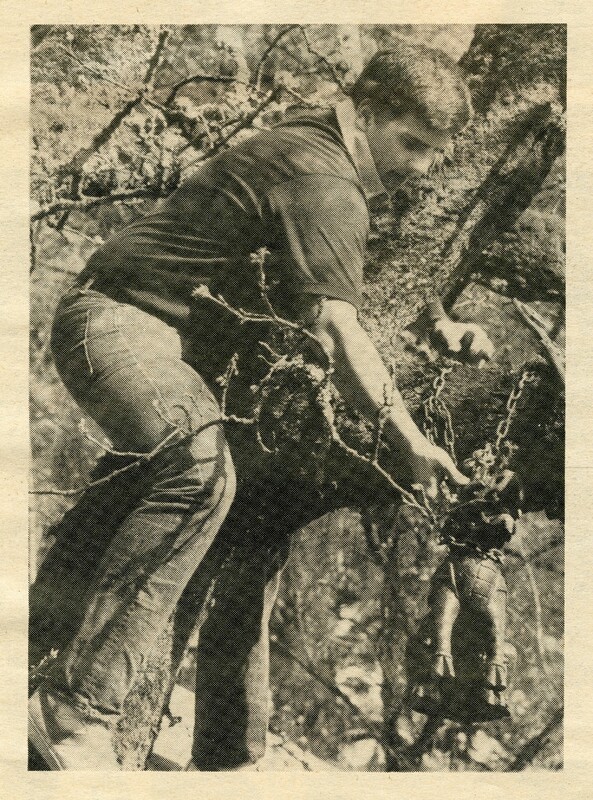
A photograph clipping from a newspaper, showing Pacific University student Bruce Fleskes retrieving "Boxer II" from where it was stashed in a tree on campus. This photograph is dated April 13, 1983. This was the first public appearance of the statue. Boxer II was a replica of Pacific University's original "Boxer" statue, which had been missing since 1969. There was a tradition of hiding, stealing and fighting over Boxer as a trophy representing college spirit. In 1982-3, students commissioned sculptor Pat Costello to create Boxer II as a replacement for the original missing statue. Just before this photograph was taken, the students who had commissioned the replica hid it in the tree and then announced to the campus that Boxer was back. Students like Bruce Fleske searched for Boxer II, found it, and then took it away, continuing the tradition.
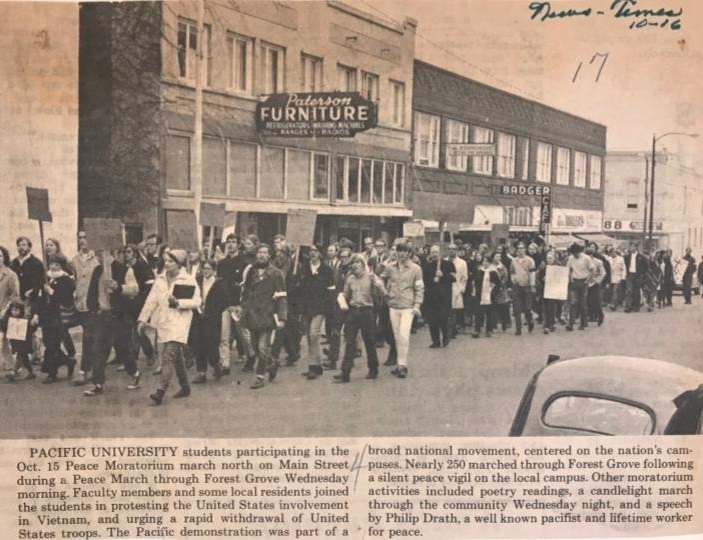
A newspaper article regarding a protest against the Vietnam War which took place in Forest Grove, Oregon on October 15, 1969. The photograph shows part of the estimated crowd of 250 protesters, which according to the article, included Pacific University faculty, students and local residents. The march occured in downtown Forest Grove. They were protesting "the United States involvement in Vietnam, and urging a rapid withdrawal of United States troops," following a silent vigil on campus. This was one of many Peace Moratorium marches that had been coordinated to occur on the same day across college campuses in the United States. The coordinators asked Pacific University to close classes for the day, although they appear not to have done so.
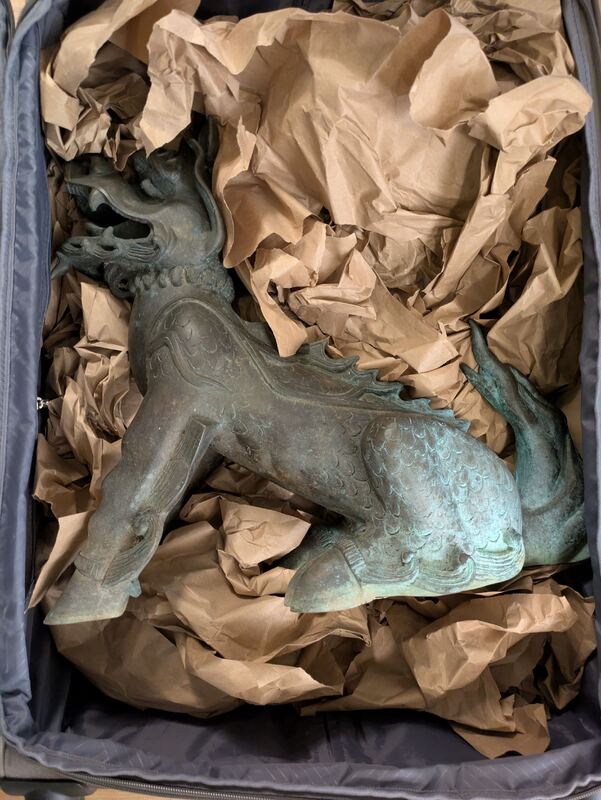
An alternate cast of the "Boxer II" bronze statue by sculptor Pat Costello, sitting in a box surrounded by packing paper. Pat Costello was commissioned by Pacific University students in 1982-83 to create Boxer II as a replica of the original "Boxer" statue, the mascot of Pacific University, which had been missing since 1969. Costello made two casts of Boxer II. The first cast was given in 1983 to the students who had commissioned the work. While the first cast of Boxer II went missing from public view in the mid-2000s, the second cast was kept as a yard ornament in one of the Costello family members' homes. The Costellos donated this second cast of Boxer II to Pacific University in the Spring of 2025. This photograph was taken while the statue was being transported from their home to Pacific.
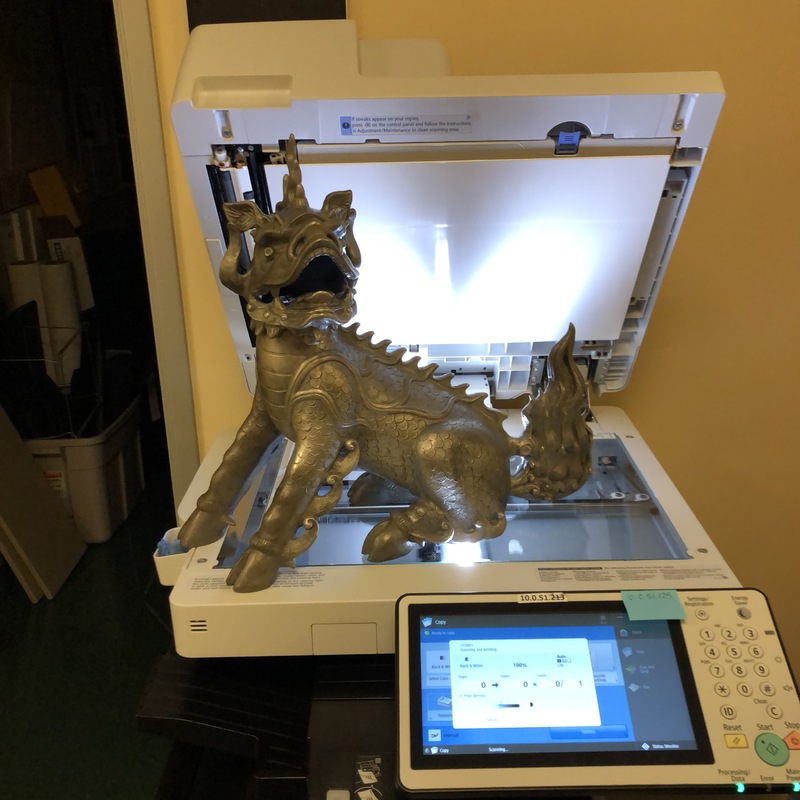
The "Boxer III" bronze statue sitting on a photocopy machine in Tran Library on the Pacific University campus in 2022. This image plays on the idea that Boxer III was a "copy" of the original Boxer statue. At the time that this photograph was made, the original Boxer had not been seen in public for 53 years.
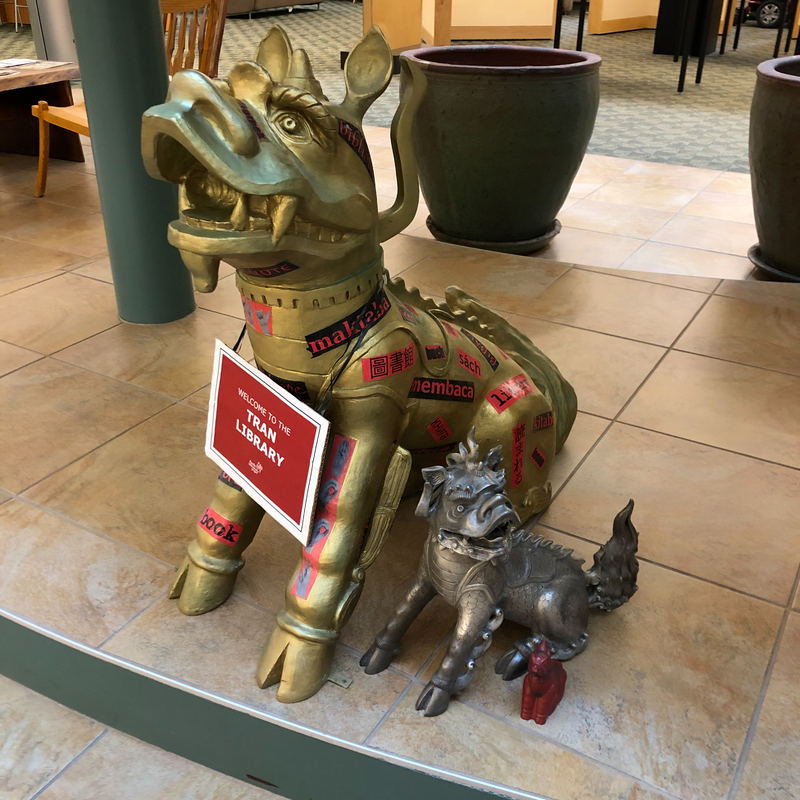
The "Boxer III" bronze statue (middle, steel-colored) sitting in between a larger decorated Boxer statue (created mid-2000s) and a small rubber replica of the "Boxer II" statue. This photograph was taken in the atrium of Tran Library on the Pacific University campus in 2022.
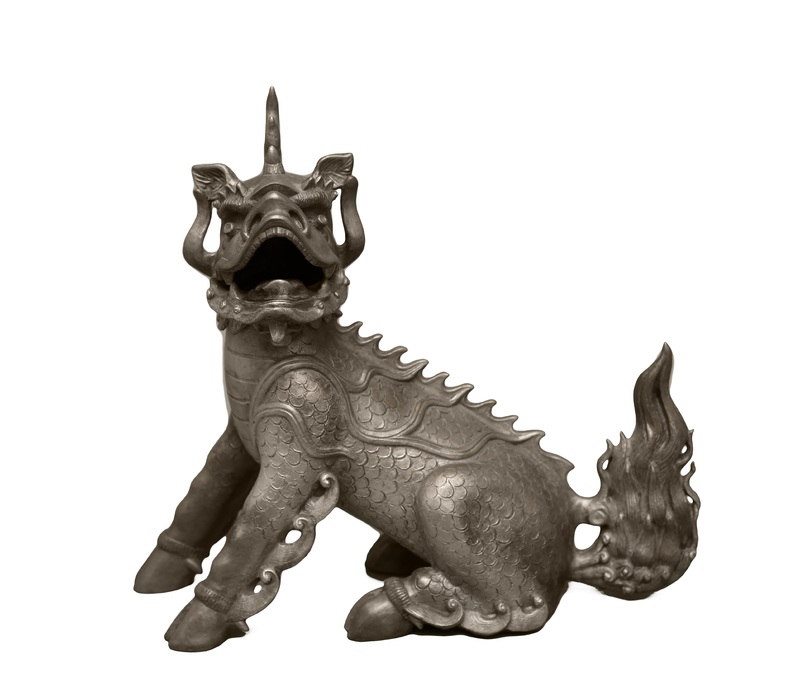
The "Boxer III" bronze statue on a plain white background. This photograph was created between 2018-2022, and was edited to delete the background so that the image could be more easily used for outreach purposes. Boxer III was made and donated to Pacific University in 2018.
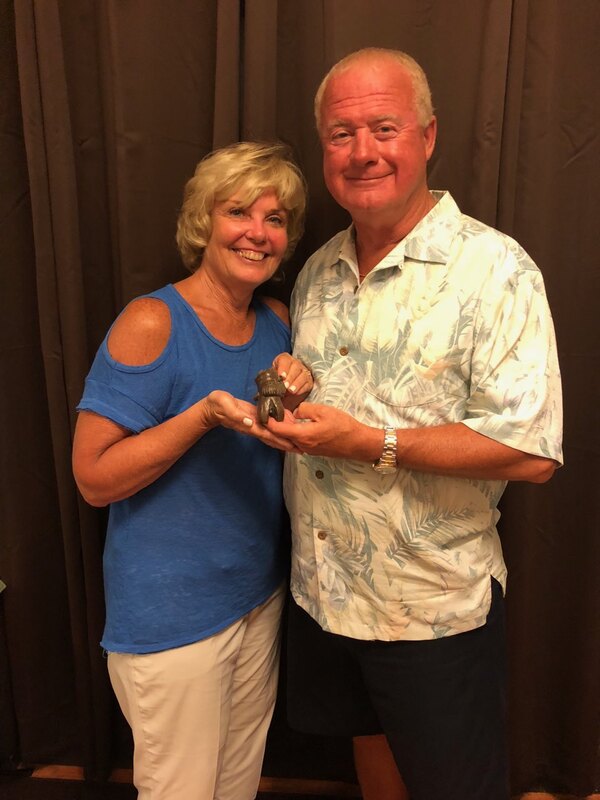
Two Pacific University alumni posing with the foot of the original "Boxer" statue, sometime after its return in 2008. Pieces of the original statue had been repeatedly broken off and then re-welded back onto the statue repeatedly during its history. This foot was most likely last broken off in 1968 or1969, just before the statue disappeared from public view for 55 years. Another foot remained in the hands of another group of alumni.
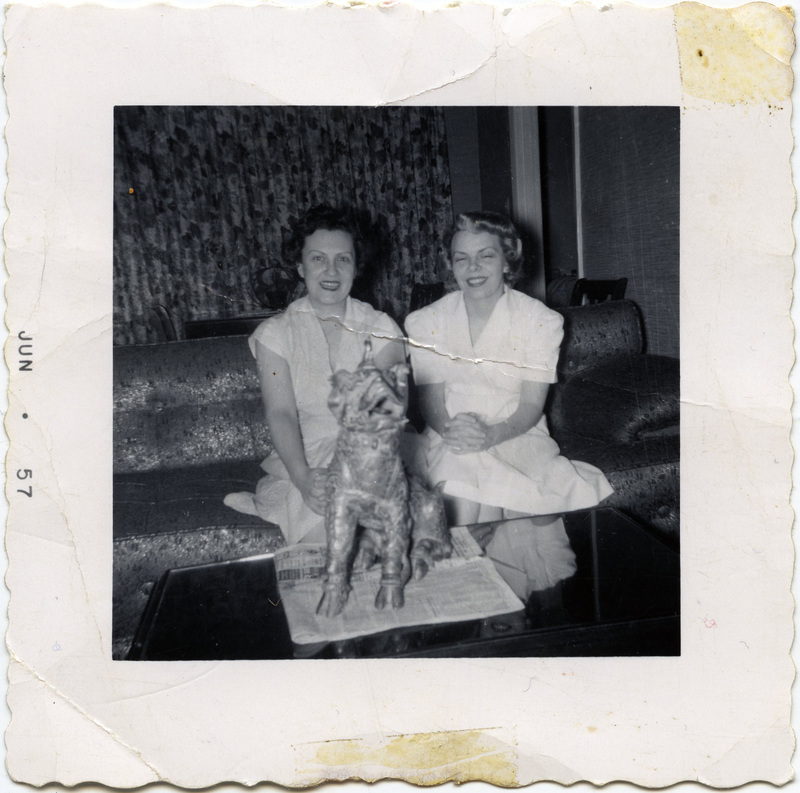
Two women, probably the mothers of Pacific University students, pose in their home with the original "Boxer" statue. This snapshot was taken around June, 1957.
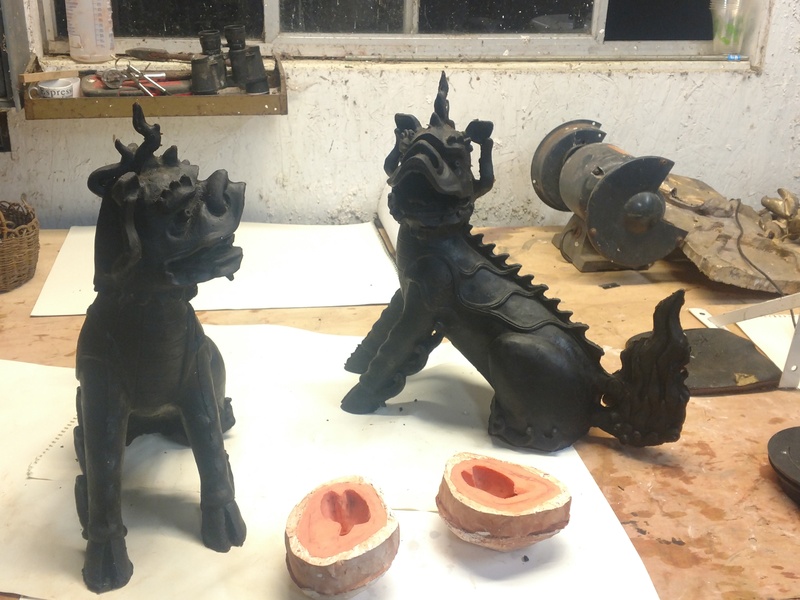
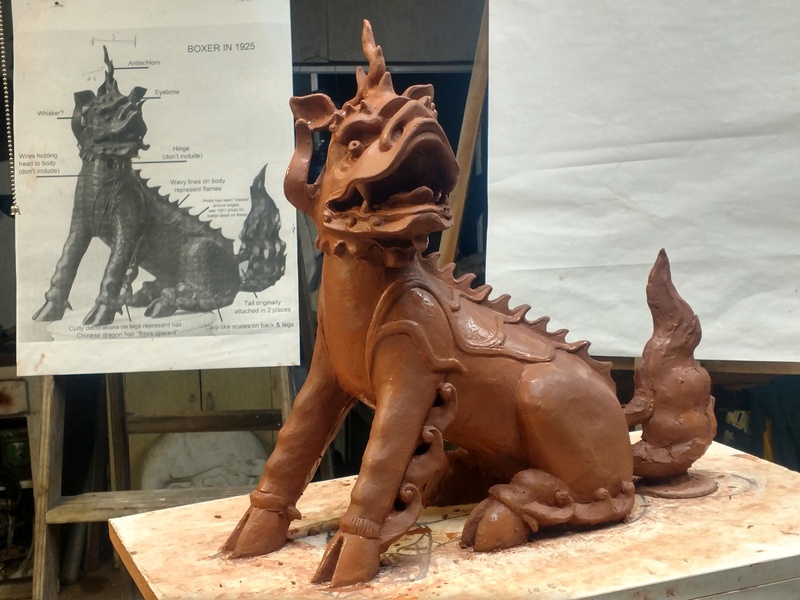
Two wax casts of "Boxer III" in the studio of the sculptor, Pat Castello. Creating a wax cast is an intermediate step in the process of creating a bronze sculpture: After making a clay model, the clay is wrapped in a mold, from which a wax cast is made. The wax casts are corrected and given finer details by the scupltor, who then chooses the best example, creates another mold around it, and then pours bronze into the mold. The wax melts out of the mold, leaving the bronze behind as the final stage of the sculpture.
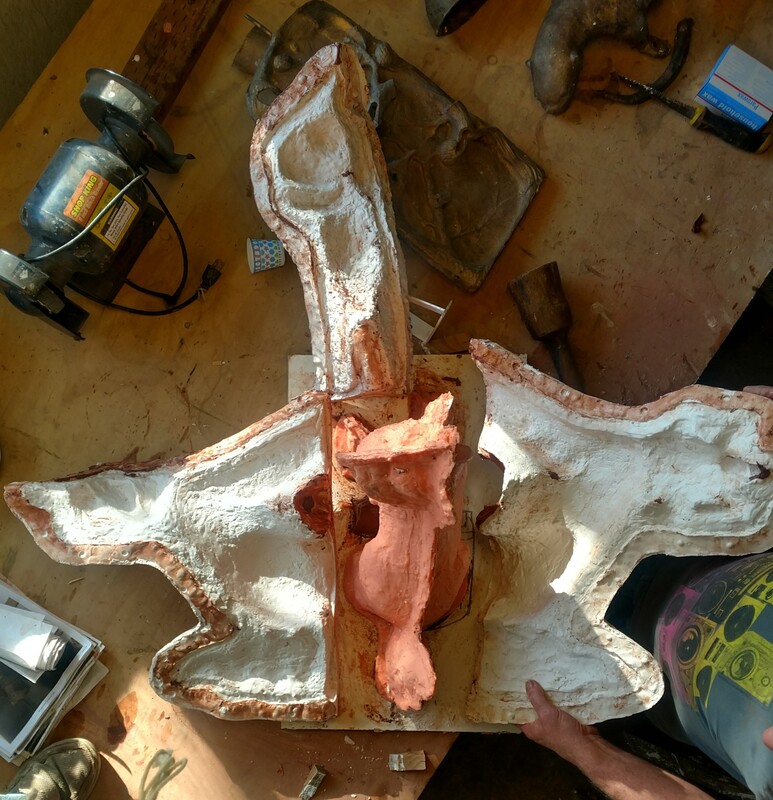
The rubber and caster plast of "Boxer III," which has been cut open in preparation for the next phase of work on the sculpture, in the studio of Pat Costello.
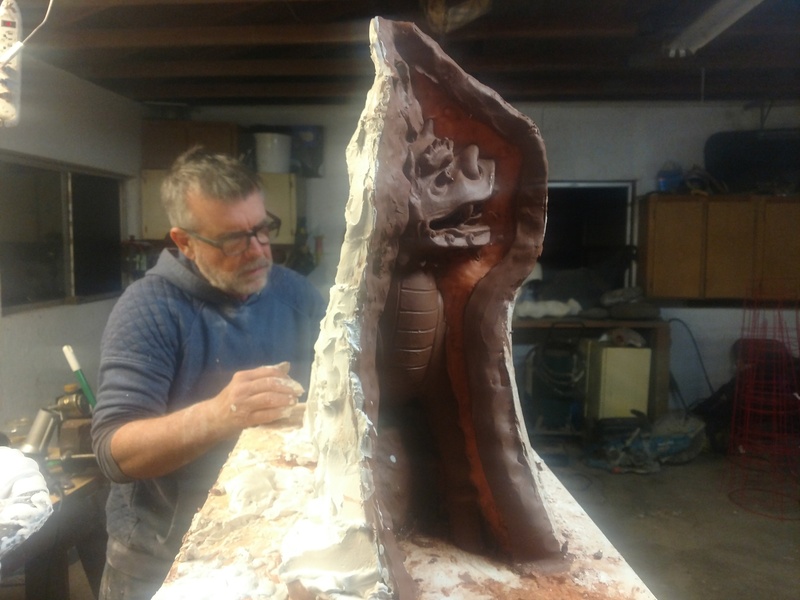
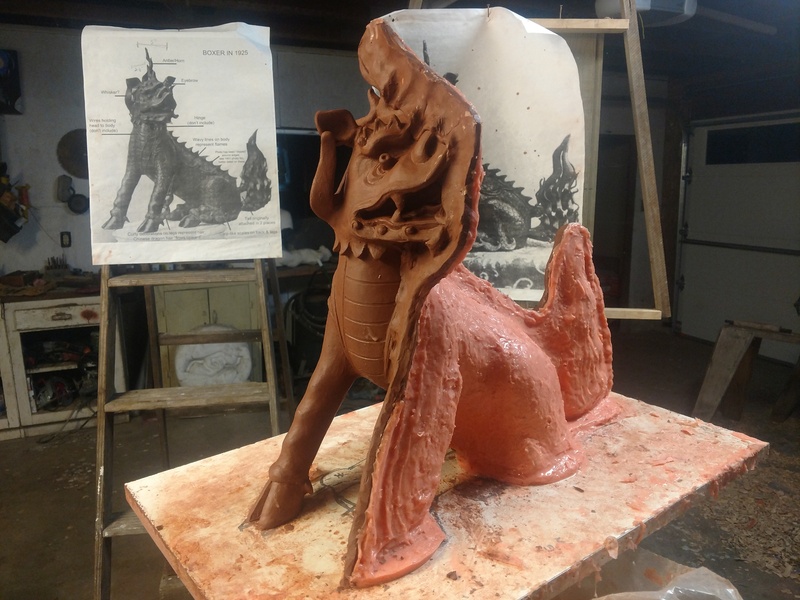
Pat Costello working on the mold of "Boxer III" in his studio. A finished clay version of the sculpture is being wrapped in a rubber-like substance and then covered in plaster to create a mold from which the next phase of the sculpture would be cast.
Preparatory work on the mold of "Boxer III" in the sculptor Pat Costello's studio. A finished clay version of the sculpture is being wrapped in a rubber-like substance in preparation for the creation of a plaster cast, from which the next phase of the sculpture would be made.
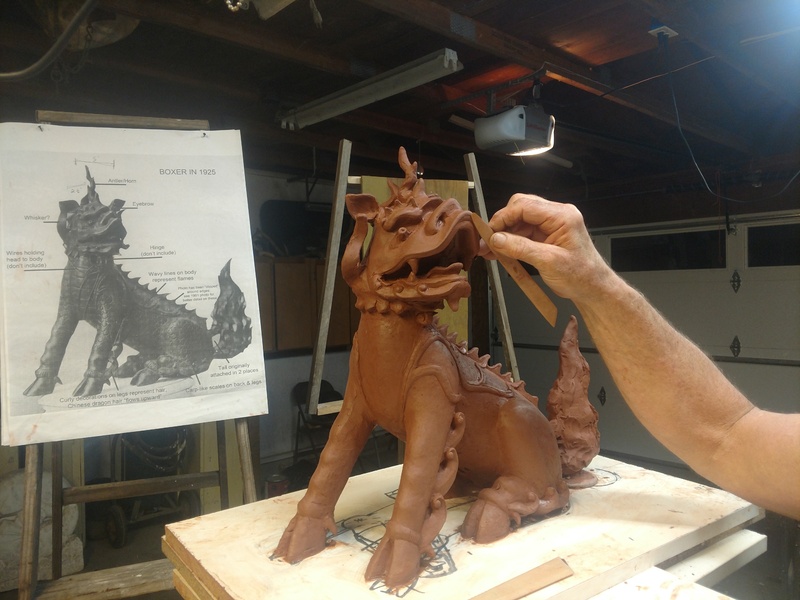
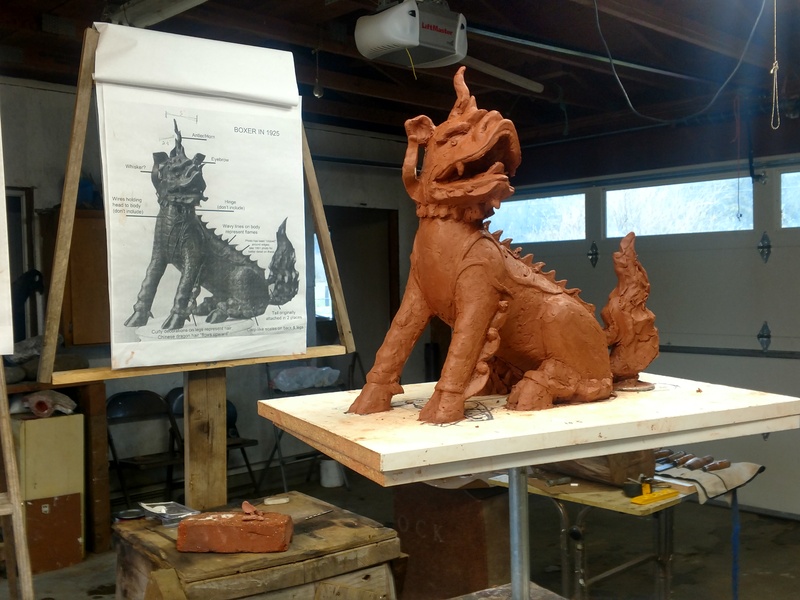
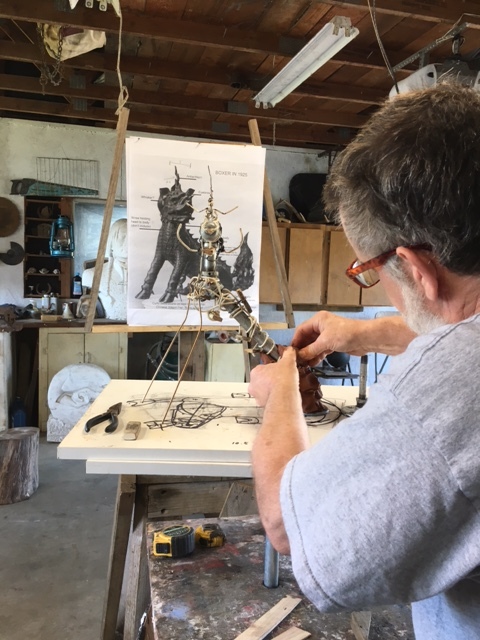
Sculptor Pat Costello building the armature (or skeleton) of "Boxer III." A life-size reference image is posted behind his work table, while a diagram is visible under the armature, showing the intended dimensions of the finished sculpture.
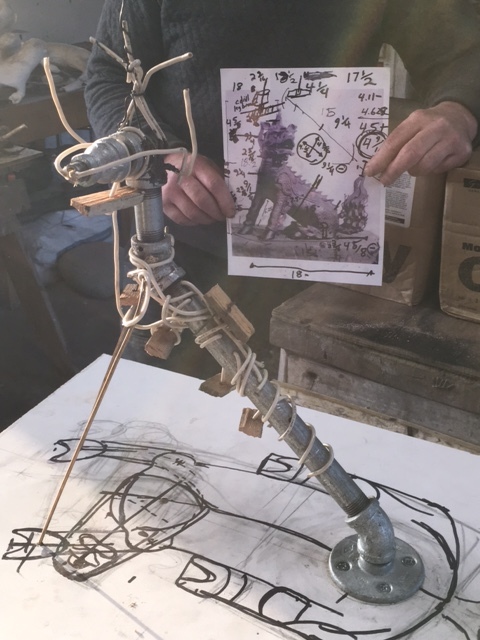
Sculptor Pat Costello displays the armature (or skeleton) of "Boxer III," while holding a reference image on which he has written notes and calculations. The armature will be used to support the first form of the sculpture in clay. A diagram is visible under the armature, showing the intended dimensions of the finished sculpture.
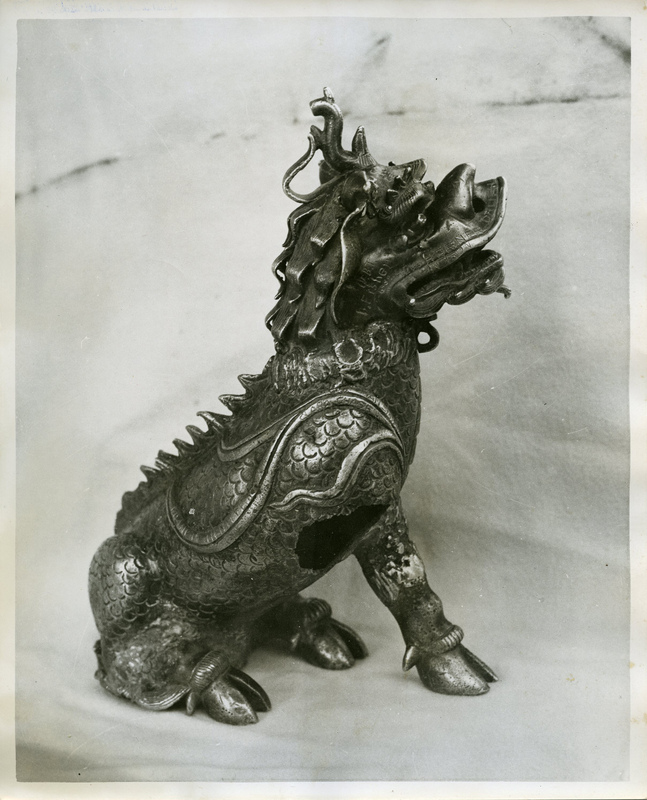
A side-view of Pacific University's original "Boxer" mascot statue, circa 1950. The photograph is in black-and-white, making the statue appear to be the color of steel: but it was in fact bronze, with gold-toned welding marks. In this image, Boxer is missing one leg and his tail. Welding marks are visible on his other leg and neck. This damage was sustained during "Boxer Tosses," when students would fight over possession of the statue. This photograph may have been taken by Ellis Lucia (Class of 1944), as it was found in his archival papers. Lucia became a photojournalist after graduating from Pacific, and may have taken this photograph in the late 1940s or early 1950s.
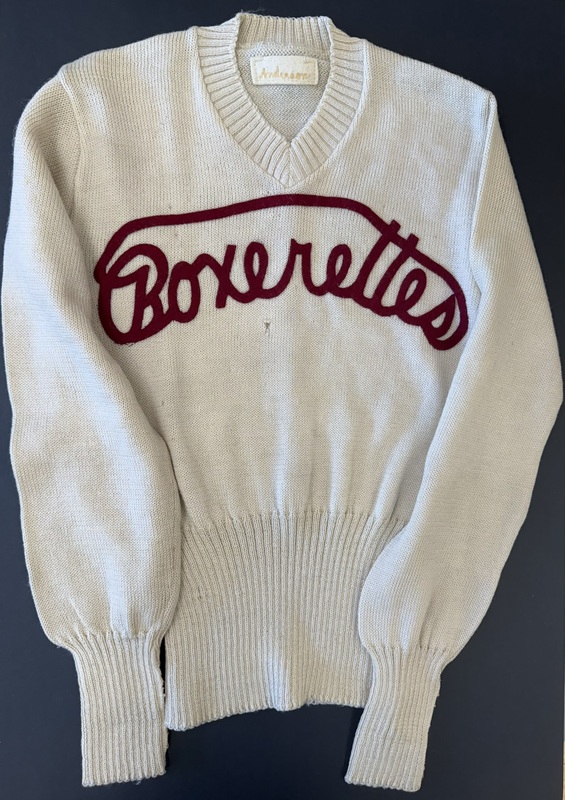
A white knitted sweater that belonged to a member of Pacific University's "Boxerettes" women's organization, probably in the 1950s. The Boxerettes were an honorary service organization made up of sophomore women from Pacific University, which was active from approximately the late 1940s through the early 1970s.
Boxerettes were elected and "tapped in" to the service club in the fall of their sophomore years. The women organized and/or volunteered to run many activities on campus, such as setting up and chaperoning dances, ushering during plays, co-hosting the annual Christmas Wassail party, selling tickets and programs at sports events, and assisting with new student orientations. They were regarded as being some of the most active and visible students on campus.