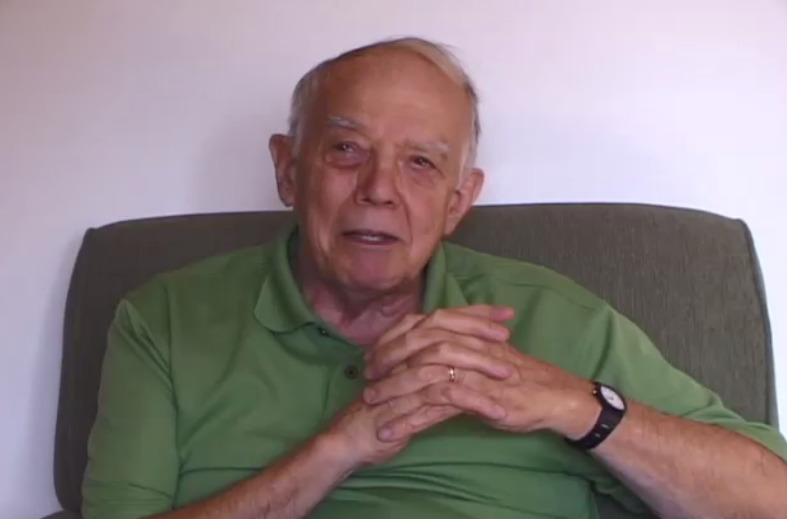
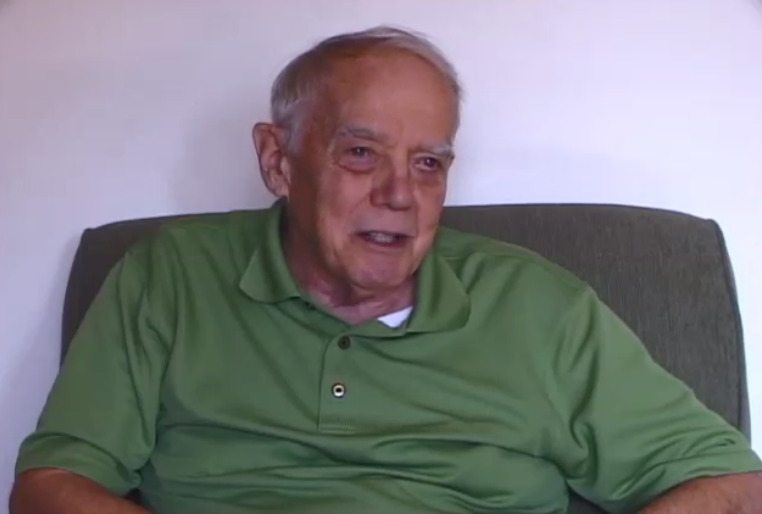
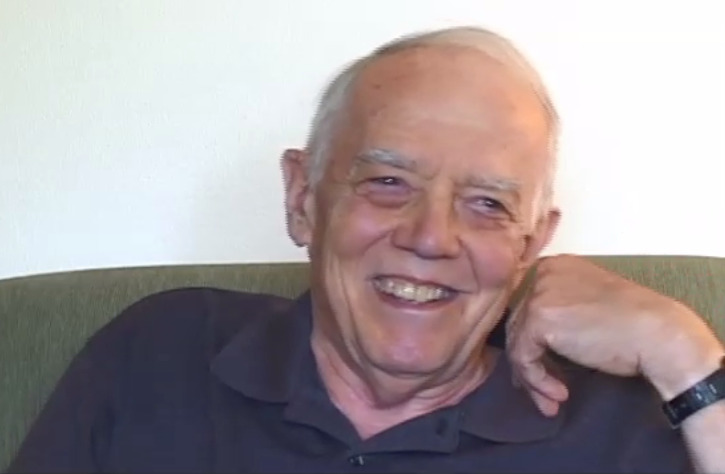
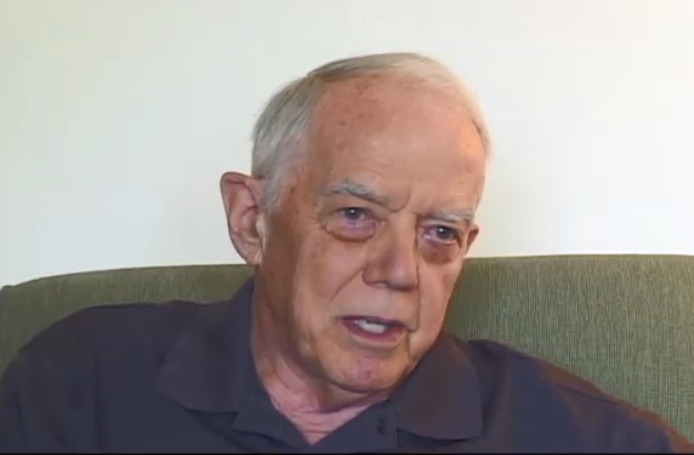
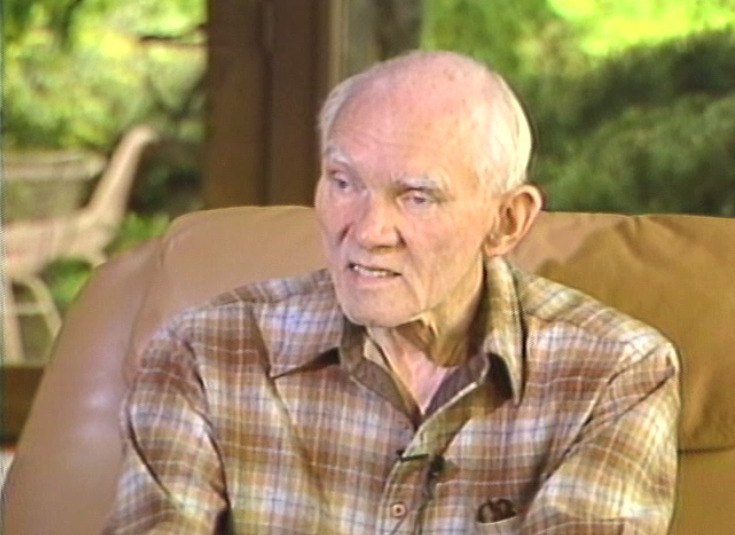
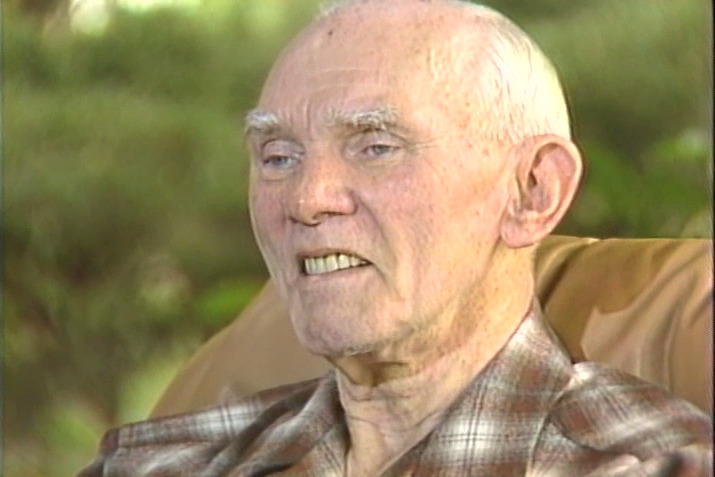
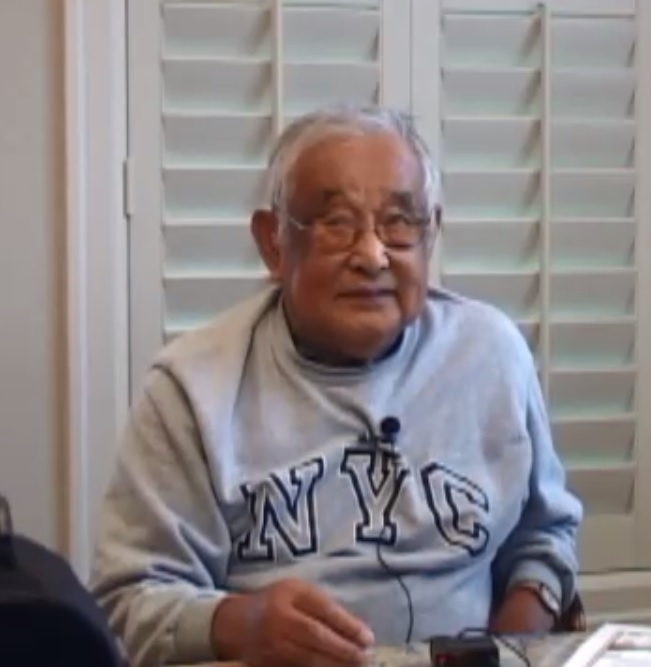
A video recording of an oral history of Agnes Hendren on the Great Depression and riding the railroads as a woman. There is a transcript of this interview.
A video recording of a history talk by Oral Bullard on the history of the Columbia Gorge, including the building of the original Columbia River Highway by Sam Lancaster and the creation of the dams. Recorded at PCC Rock Creek and sponsored by the Washington County Historical Society.
A video recording of a history talk by Dr. Chuinard on the Lewis & Clark Trail, recorded at PCC Rock Creek and sponsored by the Washington County Historical Society. The video primarily shows the slideshow that accompanies the talk.
A video recording of Forest Grove from 1937. Local newspaper publisher Hugh McGilvra and Police chief Gary K.Tyler introduce the film. The film focuses on local schools, businesses and services and the people involved with them. McGilvra talks throughout the silent film describing the images. At the end of the film, Tyler notes that this is the police department's first effort to use video to communicate with the public and they hope to use it more. Donated to the Washington County Museum by Forest Grove Police Services in 1983.
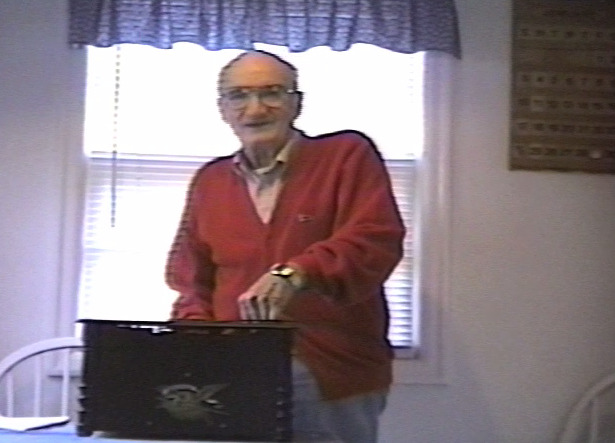
A video recording by Paul Cappoen of the home of Gerome and Rose Cappoen and their six children on Cappoen road. The Cappoens had lived there since 1912. Paul, their oldest son, shares information his family as he records videotape of their family home on Cappoen road. Later Paul is shown playing a crank organ.
A video recording on DVD titled Howard Vollum Interviews, conducted by Jim Castles. Howard Vollum (May 31, 1913-February 5, 1986), an engineer, scientist, and philanthropist, was the co-founder of Tektronix Corporation, and endowed the Vollum Institute.
A video recording on DVD titled Howard Vollum Interviews, conducted by Jim Castles. Howard Vollum (May 31, 1913-February 5, 1986), an engineer, scientist, and philanthropist, was the co-founder of Tektronix Corporation, and endowed the Vollum Institute.
An audio recording of an oral history of Arthur Iwasaki, including his family's farming history in Washington County, starting out with a dairy farm and moving to strawberries and vegetables in the late 1920s; his experiences in World War Two and discrimination against Japanese people; buying his own farm after the war and building a nursery business.
A video recording of an oral history of Jim Darr, former Hillsboro mayor, including the founding of Hillsboro Community Arts and the Hillsboro farmer's market; changing the city charter, and the economic development of Hillsboro in the 1980s.
A video recording of an oral history of Shirley Huffman, including her experience as a Hillsboro city councilor from 1979-1984, first female mayor of Hillsboro from 1985-1993, working on getting blue MAX line to Hillsboro and facilitating tech companies to locate in Hillsboro. File includes photos. There is a transcript of this interview.
A video recording of an oral history of Megan Havens on the founding of Forest Grove and the early years of the Forest Grove City Library. There is a transcript of this interview.
A video recording of an oral history of Ruth Loomis, longtime resident of Forest Grove, on her childhood and family in Forest Grove and the history of the Forest Grove library. There is a transcript of this interview.
This is one part of a document that focused on the Conservatory Music Club, along with other music clubs that were on campus. The Conservatory Music Club wanted to focus on developing musical skills while continuing to learn academically. Other clubs consisted of the Ladies' Glee Club. which continued to grow and develop until they even started going on tours.
This passage is about Elizabeth Miller, one of the first 5 woman teachers in the latter part of 1851. Elizabeth Milller moved to Forest Grove from Vermont, and details he journey to a friend. That section is cut out and put in this memoir as memory.
Little is known about Elizabeth Miller or her teaching style, but it is important to look at this document because she was the first. She laid the ground work out for teachers after her. The thing to note though is as soon as she got married, she left teaching. This is what there is not much known. Many women leave their job, and do not come back to the cutthroat place of academics.
The Pacific University Self-Study Reports are a series of decennial reports that lay out University goals, collect and interpret data related to student admissions, graduations, faculty size increases, university finances and more. The reports can act as a valuable measure of race and gender related issues both in what they directly say and what is left out.
In the 1997 Report, racial and gender diversity are approached more thoroughly in words than in previous decades, however there is no reported statistical breakdown of racial groups as there was in the 1977 reports. However, Diversity was established as a Strategic Goal (#10, p. xviii). Gender and ethnic diversity statistics were considered as an important component for Residence Life student staffing (IX-244), and a section (IX-280-286) is devoted to an overview on Diversity Services, the Office of Multicultural Services (which began in 1990) and the Office of Disability Studies. One expressed concern was a decrease in black students and males overall because of the dissolution of the football program. This directly counteracted University efforts to maintain a 50:50 balance of male:female students.
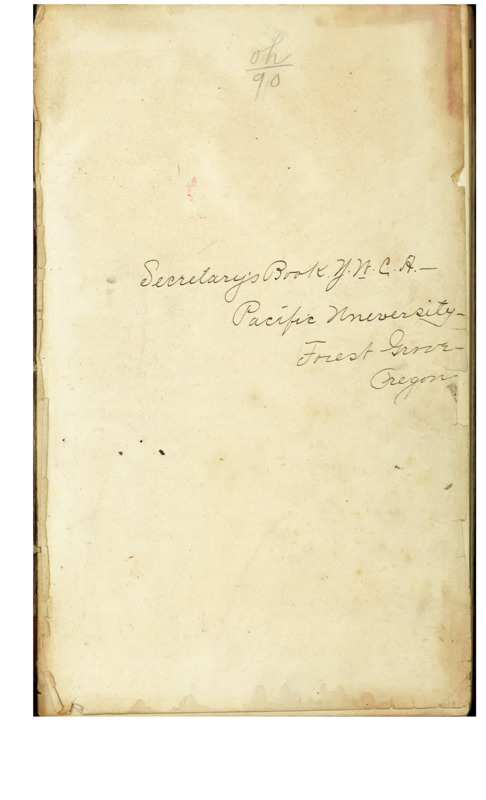
The YWCA is a constitution regarding the women's club on campus. The YWCA was club just specifically women which began in the late 1800's. This constitution explained the different academic achievements that would have to be required to become part of this club. It also goes into detail about how the women will be expected to attend Bible studies and learn about their own faith.