An audio recording by Oregon Congressman Les AuCoin, in which he criticizes the granting of mining claims to amateur miners on government land. He notes that streambeds in the Siskiyou Wilderness and other places in Oregon were being degraded by gold mining operations, which provided little public benefit and great environmental harm. This is one episode from AuCoin's biweekly radio show on Jefferson Public Radio (JPR), which ran after he had retired from office. The majority of episodes feature his commentary on current political events, often focusing on issues important to southern Oregon where JPR is based. This episode aired on Dec. 5, 2001. The title is from a transcript.
A transcription of a 1841 diary in which Alvin Thompson Smith writes about topics such as his daily life at the Spaldings Mission in modern-day Washington; his religious life; working the wheel, loom, and at the lumbermill; his interactions with "Indians;" his traveling company that included Peter B. Littlejohn and Congregational Minister Harvey L. Clark (or Clarke); traveling to Waiilatpu, Walla Walla, and Vancouver; visiting physician Marcus Whitman; some farming; and moving West from the Spalding mission through John Day River and the Willamette River before arriving in an area on the Tualatin Plains that is now modern-day Forest Grove. In the last part of 1841, Smith described how he started working on building a new house for himself and his wife.
A transcription of a 1840 diary in which Alvin Thompson Smith writes about topics such as pondering crossing the Rocky Mountains; living in Quincy, Illinois; the tasks and chores of daily life; his marriage to Abigail Raymond; traveling to Independence, Missouri; repairing his wagon and purchasing mules; interacting with "Indians;" his troubles traveling on the Great Plains with a company that included Congregational Minister Harvey L. Clark (or Clarke); his interactions with buffalo hunters; his passing through of the Black Hills region, Independence Rock, the Columbia River region, and Snake River; prayer and his religious life, and staying at Henry Spalding's Presbyterian mission in modern-day Washington for the winter of 1840-1841.
A black and white photograph by Allan J. de Lay featuring a man -- most likely local journalist and writer Ellis Lucia -- in a buggy at the Gay Nineties parade in the 1950s or 1960s. Lucia is holding a Washington County News-Times newspaper which headline reads: "Ballad Town U.S.A. Beset by Song."
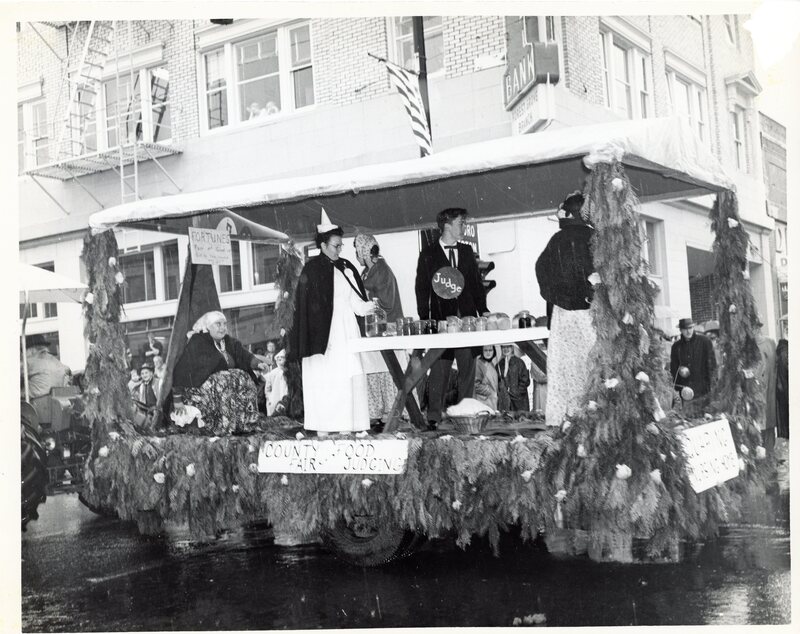
A black and white photograph by Allan J. de Lay featuring the Quaring Nursing Home's county fair food judging parade float at the 1961 Gay Nineties parade.
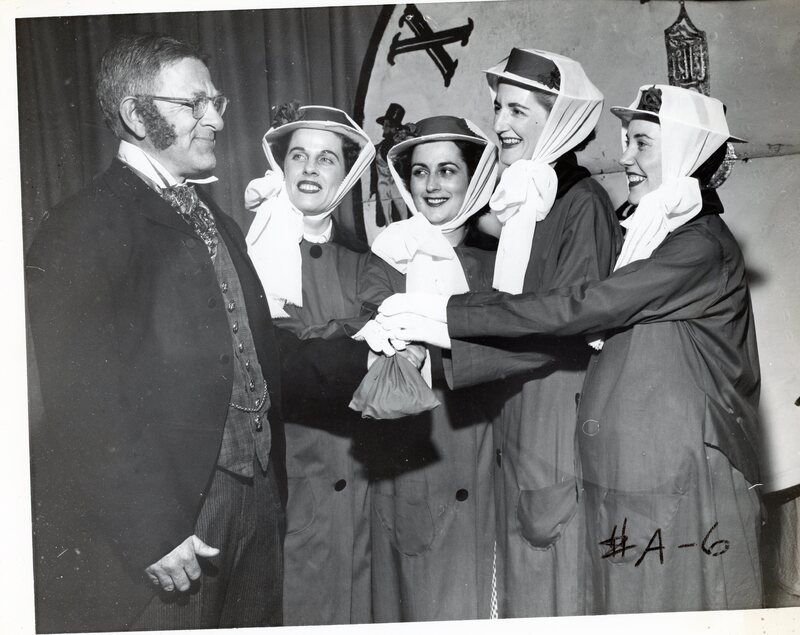
A photograph featuring the Northwest High Flyers of Seattle, Washington, who were the 1957 women's champions of the All-Northwest Barbershop Ballad Contest. On the left side of the photograph is Charles Kaufman, who is seemingly congratulating the group on their win. The photographer is unknown, but it may have been Allan J. de Lay, a staff photographer for The Oregonian who took numerous photographs of the event over the years.
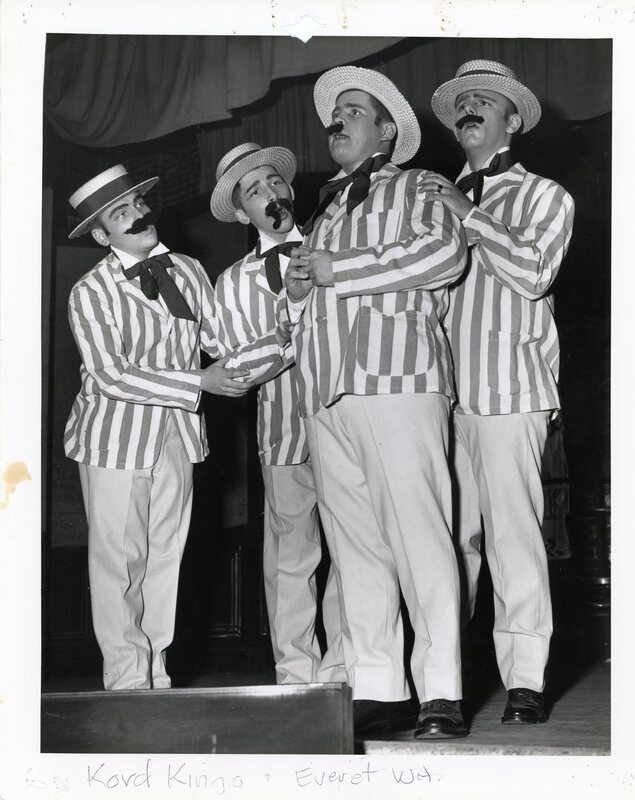
A photograph by Allan J. de Lay featuring the Kord Kings Quartet from Everett, Washington, performing at the 1954 All-Northwest Barbershop Ballad Contest. Based on a handwritten description on the back of the print, pictured from left to right in the photograph are Jerry DuChene, John Howell, Bob Erickson, and Doug Evans. They won second place in the contest that year.
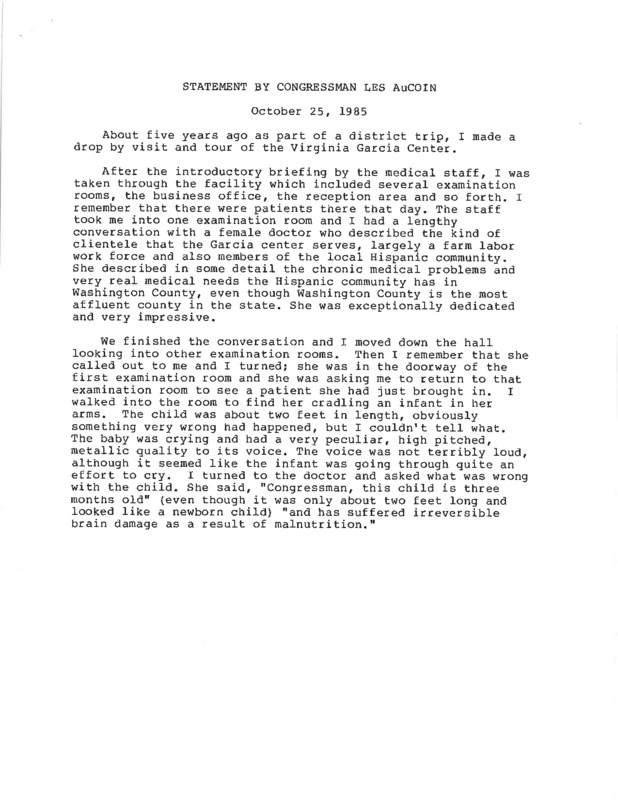
A statement by U.S. Congressman Les AuCoin regarding the Virginia Garcia Center dated October 25, 1985. In his statement, Congressman AuCoin recalled his visit to the Virginia Garcia Center in Washington County, which primarily serves the local Hispanic community and farm and migrant workers. He described how the doctor introduced him to a three month old patient who suffered from malnutrition induced permanent brain damage as a result of a medically uninformed mother. Congressman AuCoin explained how the story demonstrated "the kind of additional work that is required in the field of health care for a population in desperate need of medical information and medical care." This is one of a collection of digitized objects from the Les AuCoin Papers (MS.147) at the Pacific University Archives. AuCoin served in the Oregon House of Representatives (1971-1975) and in the United States House of Representatives from Oregon's 1st District (1975-1993).
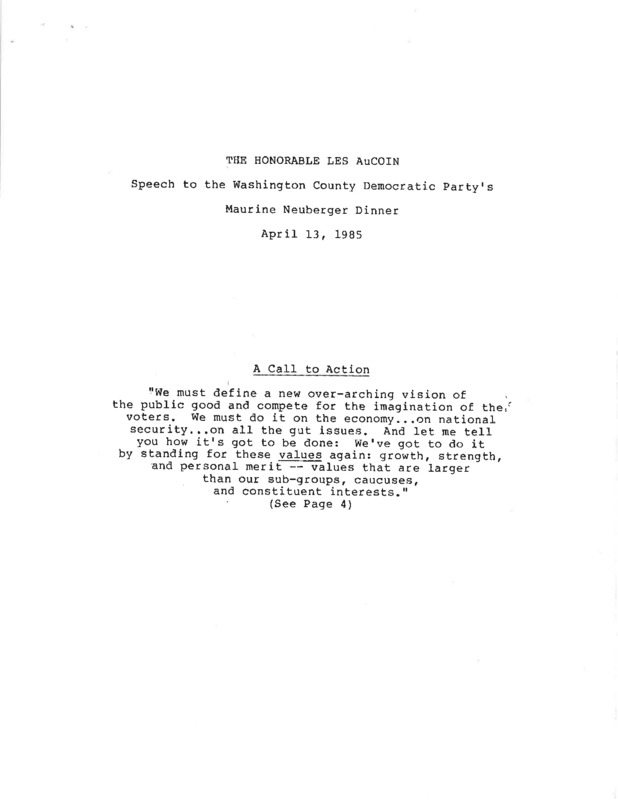
A speech by U.S. Congressman Les AuCoin delivered to the Washington County Democratic Party's Maurine Neuberger Dinner. In his speech, Congressman AuCoin celebrated the political careers of Maurine and Richard Neuberger. He also described the "Reagan phenomenon" in the world of politics, some of the weaknesses of the Democratic Party, and how the Democratic Party could make a comeback. This is one of a collection of digitized objects from the Les AuCoin Papers (MS.147) at the Pacific University Archives. AuCoin served in the Oregon House of Representatives (1971-1975) and in the United States House of Representatives from Oregon's 1st District (1975-1993).
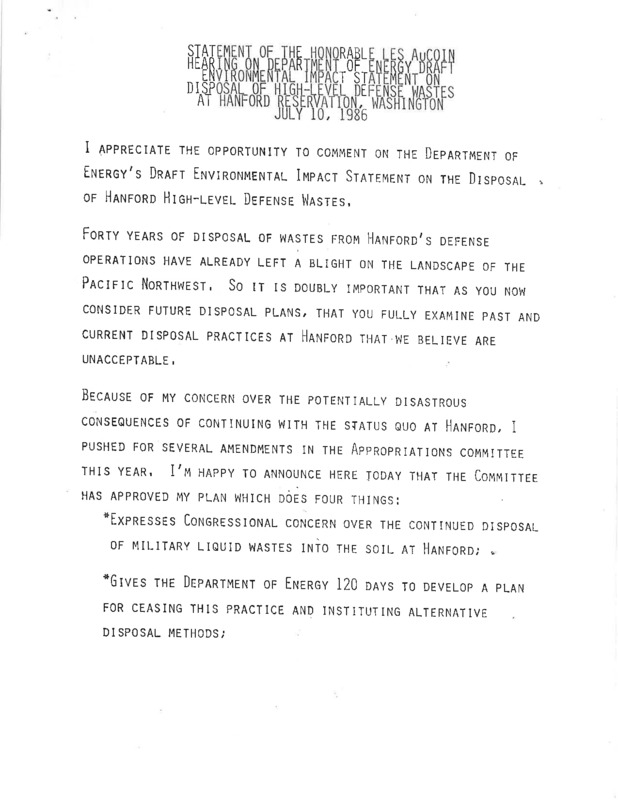
A speech by U.S. Congressman Les AuCoin before a hearing regarding the "Department of Energy's Draft Environmental Impact Statement on the Disposal of Hanford High-Level Defense Wastes." The speech was given on July 10, 1986. In his speech, Congressman AuCoin discussed the plans of the Appropriations Committee to express concern over the Department of Energy's continued disposal of military wastes at the Hanford Nuclear Site. The Hanford Site (also known as the Hanford Nuclear Site and the Hanford Nuclear Reservation) is a now decommisioned nuclear production site in Washington State that hosted the world's first plutonium production reactor. It currently hosts the sole nuclear power plant in the Northwest. This is one of a collection of digitized objects from the Les AuCoin Papers (MS.147) at the Pacific University Archives. AuCoin served in the Oregon House of Representatives (1971-1975) and in the United States House of Representatives from Oregon's 1st District (1975-1993).
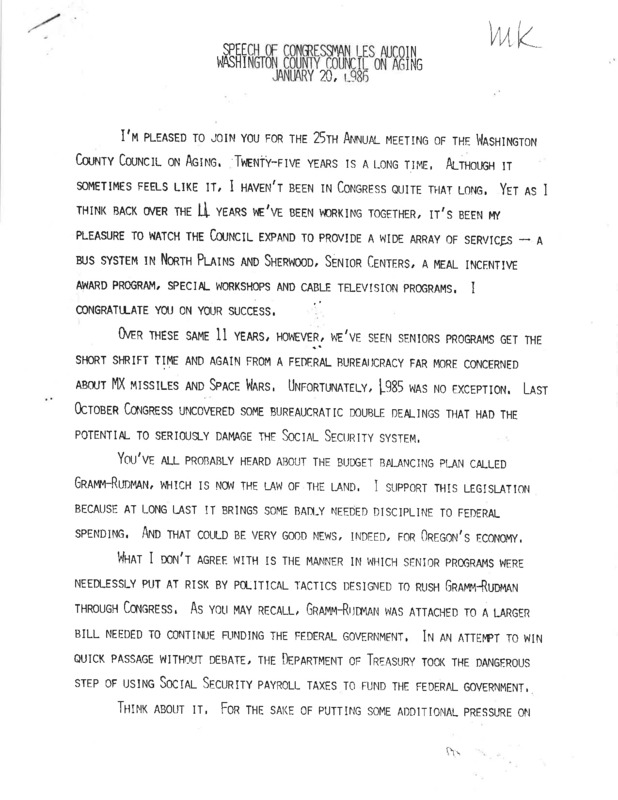
A speech by U.S. Congressman Les AuCoin given at the 25th annual Washington County Council on Aging meeting on January 20, 1986. In his speech, Congressman AuCoin stated his support for the Gramm-Rudman Acts, though expressed his concerns with the manner in which the bills went through Congress, including senior programs being put in jeopardy. He also discussed the federal budget deficit, Social Security, and Medicare. This is one of a collection of digitized objects from the Les AuCoin Papers (MS.147) at the Pacific University Archives. AuCoin served in the Oregon House of Representatives (1971-1975) and in the United States House of Representatives from Oregon's 1st District (1975-1993).
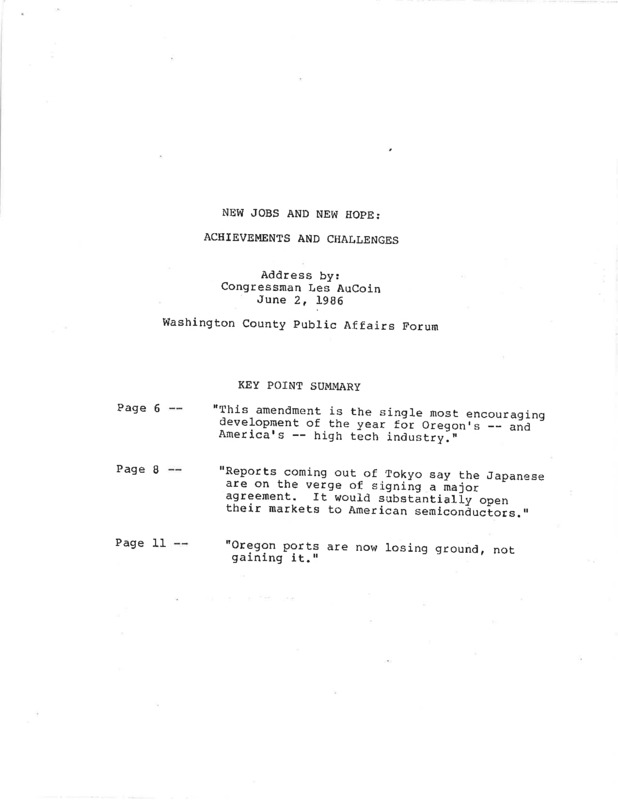
An address by U.S. Congressman Les AuCoin titled "New Jobs and New Hope: Achievements and Challenges," given at the Washington County Public Affairs Forum. In his address, Congressman AuCoin discussed innovation and his hopes for increased economic growth in Washington County, Oregon. He also discussed his proposed resolution for fair semiconductor trade practices between the U.S. and Japan, and expressed his hopes for the federal budget deficit to be eliminated by the year 2000. This is one of a collection of digitized objects from the Les AuCoin Papers (MS.147) at the Pacific University Archives. AuCoin served in the Oregon House of Representatives (1971-1975) and in the United States House of Representatives from Oregon's 1st District (1975-1993).
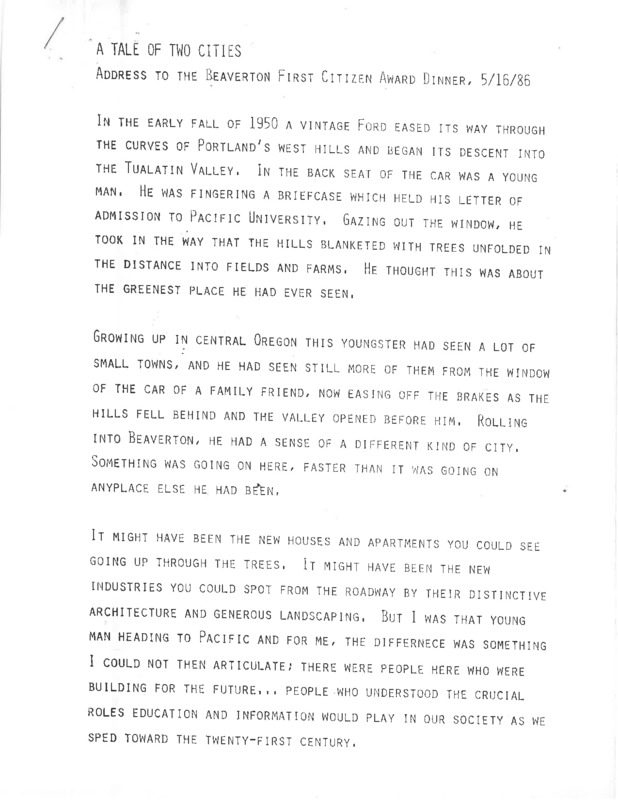
An address by U.S. Congressman Les AuCoin titled "A Tale of Two Cities," given at the Beaverton First Citizen Award Dinner on May 16, 1986. In his address, Congressman AuCoin recalled when he first arrived in Washington County to attend Pacific University and his experiences with the city of Beaverton, Oregon. He compared the city of Beaverton as it was when he first arrived in the early 1960s to the Beaverton of the 1980s. This is one of a collection of digitized objects from the Les AuCoin Papers (MS.147) at the Pacific University Archives. AuCoin served in the Oregon House of Representatives (1971-1975) and in the United States House of Representatives from Oregon's 1st District (1975-1993).
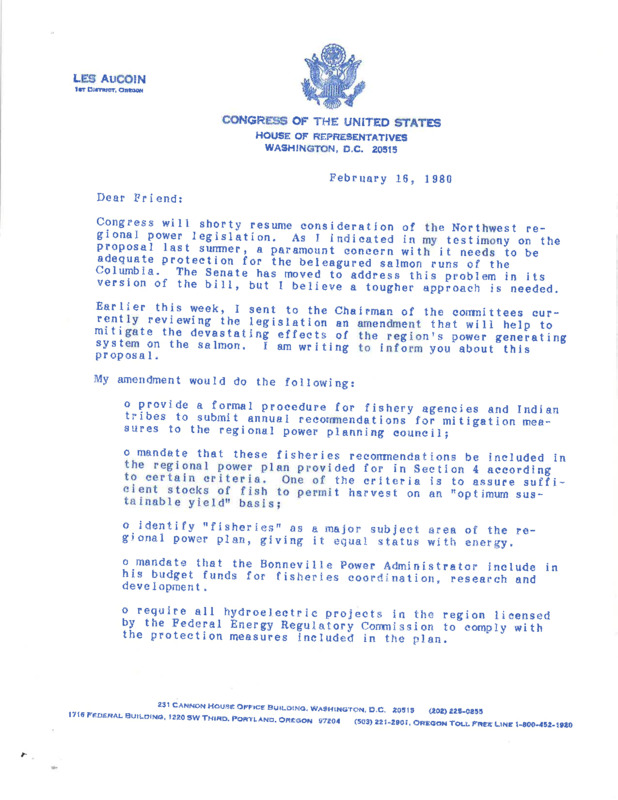
A statement to a congressional colleague by U.S. Congressman Les AuCoin regarding Northwest regional power legislation. In his statement, Congressman advocated for his proposed amendment to the legislation, which aimed to help "mitigate the devastating effects of the region's power generating system on the salmon." This is one of a collection of digitized objects from the Les AuCoin Papers (MS.147) at the Pacific University Archives. AuCoin served in the Oregon House of Representatives (1971-1975) and in the United States House of Representatives from Oregon's 1st District (1975-1993).
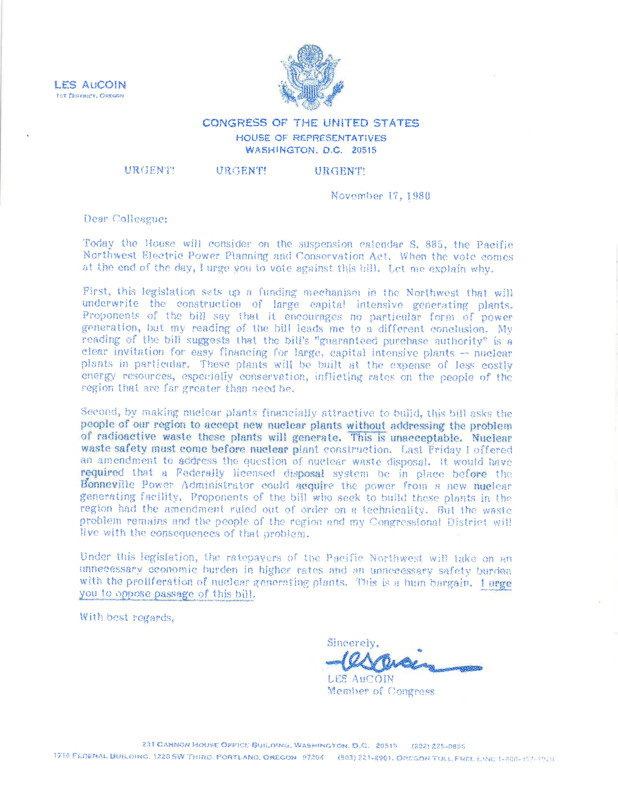
A letter to a congressional colleague by U.S. Congressman Les AuCoin regarding the Pacific Northwest Electric Power Planning and Conservation Act (S. 885). In his letter, Congressman AuCoin urged opposition to S. 885. He expressed his concerns with the bill encouraging the construction of nuclear power plants in place of less expensive energy resources. He also described his issue with S. 885 encouraging the building of nuclear power plants without stating any guidelines for radioactive nuclear waste. This is one of a collection of digitized objects from the Les AuCoin Papers (MS.147) at the Pacific University Archives. AuCoin served in the Oregon House of Representatives (1971-1975) and in the United States House of Representatives from Oregon's 1st District (1975-1993).
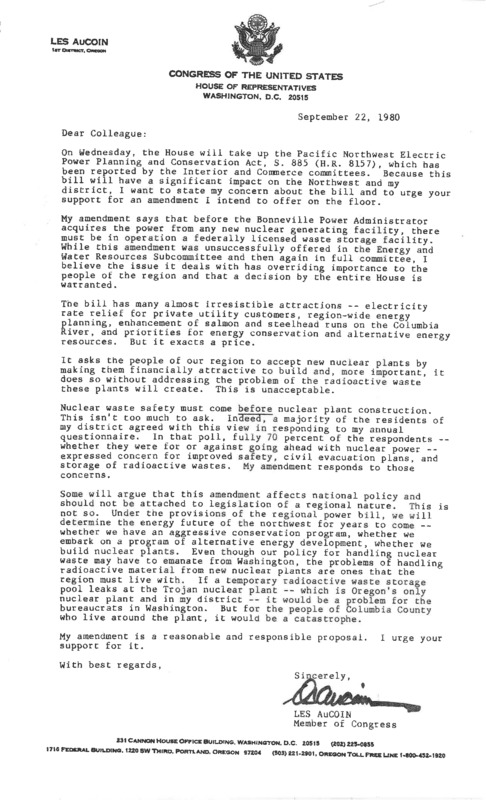
A letter to a congressional colleague by U.S. Congressman Les AuCoin regarding the Pacific Northwest Electric Power Planning and Conservation Act (H.R. 8157 and S. 885). In his letter, Congressman AuCoin expressed his concerns with the bill, and asked for support for his proposed amendment. He described his concerns of there being a lack of nuclear waste safety guidelines, and explained that his proposed amendment would ensure that "before the Bonneville Power Administrator acquires the power from any nuclear generating facility, there must be in operation a federally licensed waste storage facility." This is one of a collection of digitized objects from the Les AuCoin Papers (MS.147) at the Pacific University Archives. AuCoin served in the Oregon House of Representatives (1971-1975) and in the United States House of Representatives from Oregon's 1st District (1975-1993).
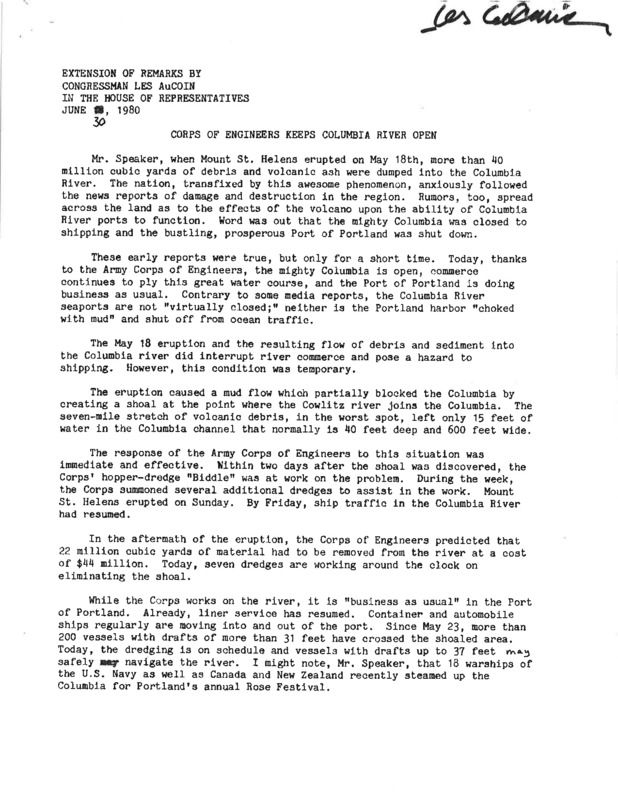
A statement by U.S. Congressman Les AuCoin for the Extension of Remarks section of the Congressional Record titled "Corps of Engineers Keeps Columbia River Open," given on June 30, 1980. In his statement, Congressman AuCoin discussed the eruption of Mount St. Helens and applauded the response of the Army Corps of Engineers in quickly reopening the Columbia river for ship traffic for the Port of Portland. This is one of a collection of digitized objects from the Les AuCoin Papers (MS.147) at the Pacific University Archives. AuCoin served in the Oregon House of Representatives (1971-1975) and in the United States House of Representatives from Oregon's 1st District (1975-1993).
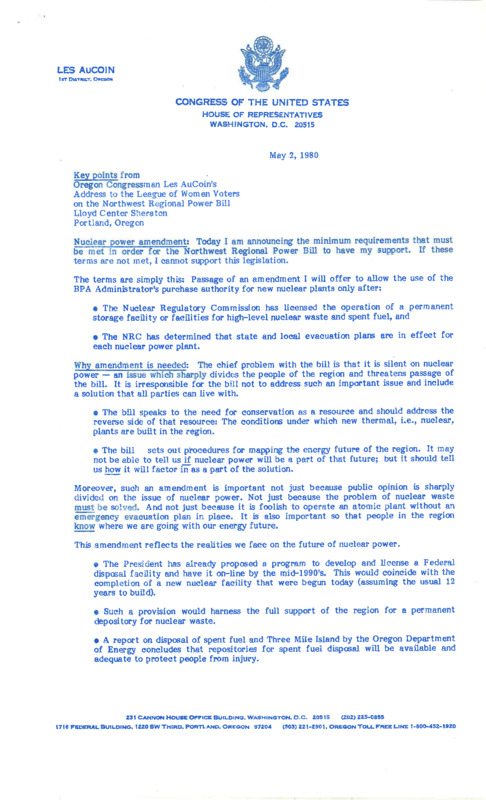
A list of key points that were put together from U.S. Congressman Les AuCoin's Address to the League of Women Voters on the Northwest Regional Power Bill, given at the Lloyd Center Sheraton Hotel in Portland, Oregon on May 2, 1980. The key points from Congressman AuCoin's speech include him advocating for a nuclear power amendment for the Northwest Regional Power Bill, addressing why he felt it was needed, describing the proposed purchase authority of the Bonneville Power Administration, and stating that he would oppose the bill if such an amendment was not adopted. This is one of a collection of digitized objects from the Les AuCoin Papers (MS.147) at the Pacific University Archives. AuCoin served in the Oregon House of Representatives (1971-1975) and in the United States House of Representatives from Oregon's 1st District (1975-1993).
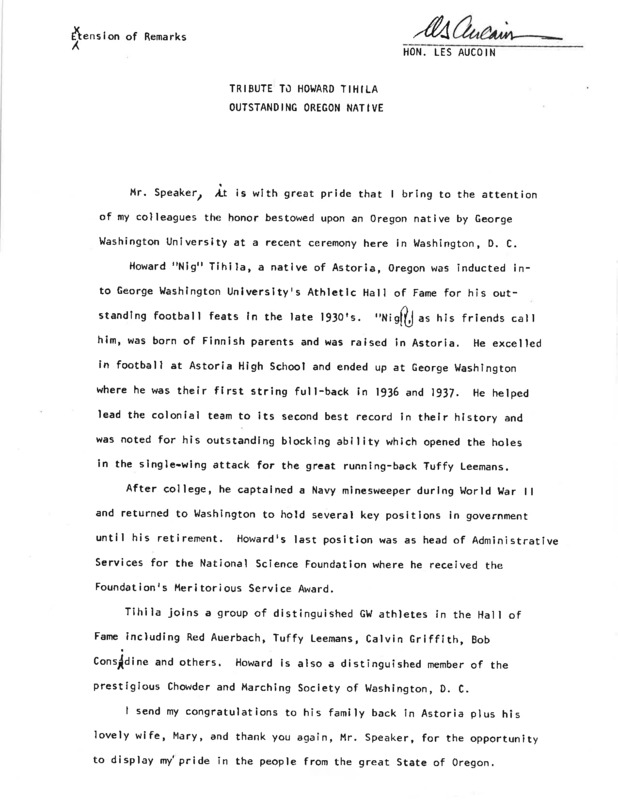
A draft version of a statement by U.S. Congressman Les AuCoin titled "Tribute to Howard Tihila, Outstanding Oregon Native" and eventually submitted to the Extension of Remarks. In his statement, U.S. Congressman Les AuCoin paid tribute to Howard "Nig" Tihila, an Astoria, Oregon native who was inducted into George Washington University's Athletic Hall of Fame in Washington, D.C. for his time on the university's football team in the 1930s. This is one of a collection of digitized objects from the Les AuCoin Papers (MS.147) at the Pacific University Archives. AuCoin served in the Oregon House of Representatives (1971-1975) and in the United States House of Representatives from Oregon's 1st District (1975-1993).
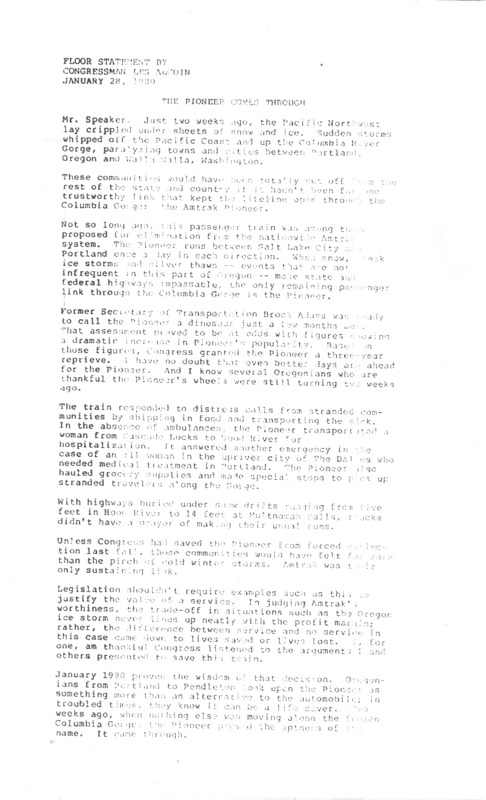
A speech by U.S. Congressman Les AuCoin titled "The Pioneer Comes Through" given on the House floor on January 28, 1980. In his speech, Congressman AuCoin described Amtrak's helpful role in keeping the Amtrak Pioneer passenger train open and thus a lifeline open for Oregonians during the January 1980 snowstorms that affected Oregon and Washington. This is one of a collection of digitized objects from the Les AuCoin Papers (MS.147) at the Pacific University Archives. AuCoin served in the Oregon House of Representatives (1971-1975) and in the United States House of Representatives from Oregon's 1st District (1975-1993).
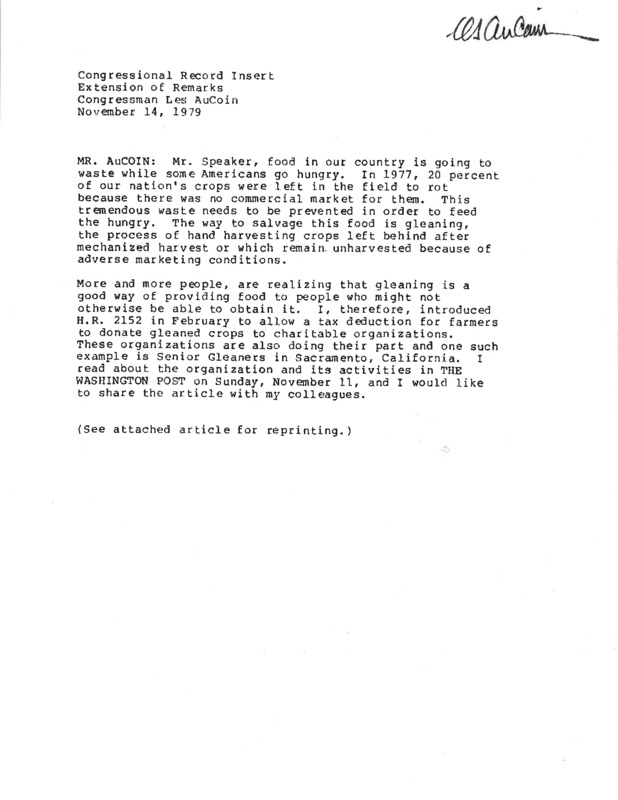
A short statement on gleaning by U.S. Congressman Les AuCoin for the Congressional Record Extension of Remarks given on November 14, 1979. In his short statement, Congressman AuCoin advocated for gleaning and gave context to a Washington Post article that he inserted in the Congressional Record Extension of Remarks. The article that Congressman AuCoin referred to in his statement is not attached to this document. This is one of a collection of digitized objects from the Les AuCoin Papers (MS.147) at the Pacific University Archives. AuCoin served in the Oregon House of Representatives (1971-1975) and in the United States House of Representatives from Oregon's 1st District (1975-1993).
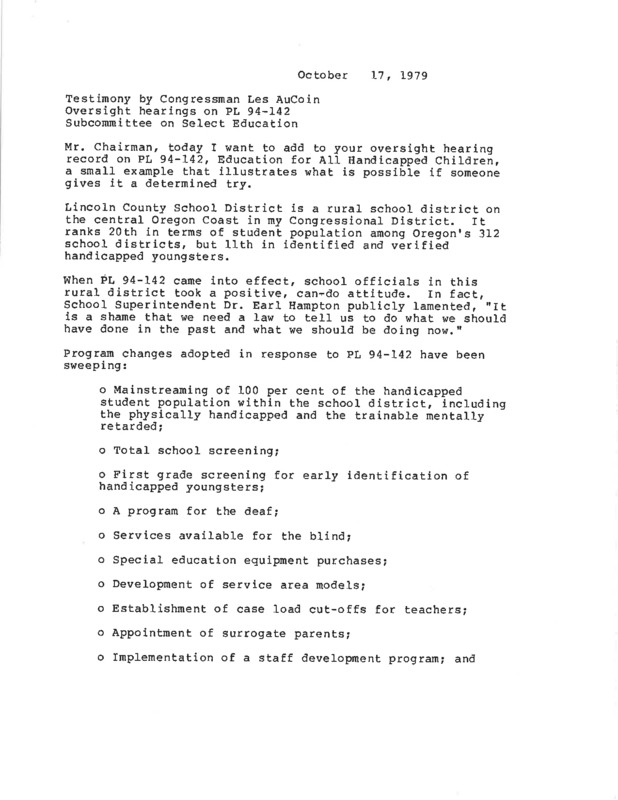
Testimony of U.S. Congressman Les AuCoin for the oversight hearings of Public Law 94-142, the Education for All Handicapped Children Act (EHA or EAHCA) of 1975. EHA required public schools to provide children with disabilities equal access to education. In his testimony, Congressman Les AuCoin shared the positive impact of the law on Lincoln County School District in his congressional district, explaining how "The foremost achievement is 100 per cent mainstreaming of handicapped children." Congressman AuCoin encouraged Congress to continue to assist the funding of the law's services. This is one of a collection of digitized objects from the Les AuCoin Papers (MS.147) at the Pacific University Archives. AuCoin served in the Oregon House of Representatives (1971-1975) and in the United States House of Representatives from Oregon's 1st District (1975-1993).
Testimony of U.S. Congressman Les AuCoin, given before the Subcommittee on Energy and Power of the Committee on Energy and Commerce on July 30, 1979. In his speech, Congressman AuCoin advocated for H.R. 3508, the Northwest Regional Power Bill, also known as the Pacific Northwest Electric Power Planning and Conservation Act, and explained how the bill solved issues of "power allocation, supply, cost, conservation, and long-range planning" in the Pacific Northwest. Congressman AuCoin also expressed his concerns with the bill regarding the construction of nuclear power plants. An amended version of the bill eventually became law in 1980. The version of this document held by the Pacific University Archives is a photocopy, with a moderate photocopying error on the last page, page five. This is one of a collection of digitized objects from the Les AuCoin Papers (MS.147) at the Pacific University Archives. AuCoin served in the Oregon House of Representatives (1971-1975) and in the United States House of Representatives from Oregon's 1st District (1975-1993).
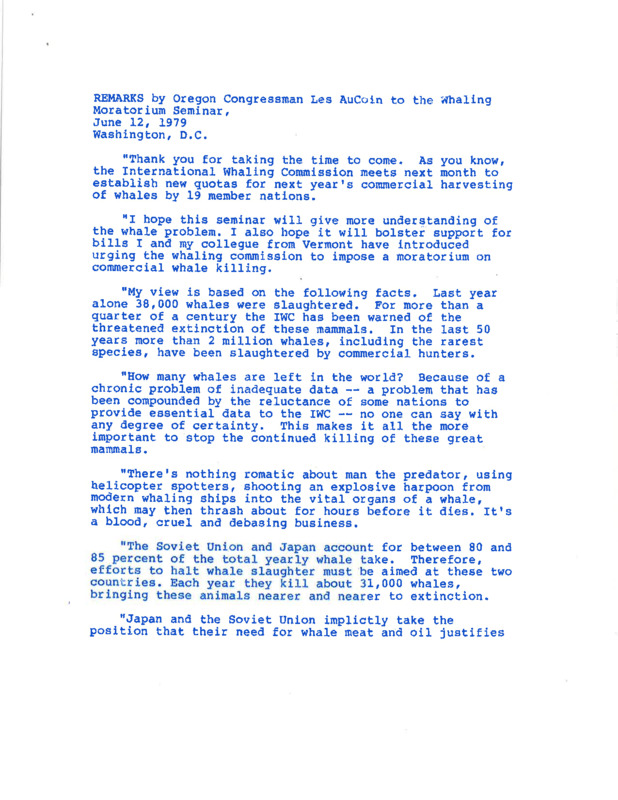
Remarks by U.S. Congressman Les AuCoin at the Whaling Moratorium Seminar in Washington, D.C., on June 12, 1979. In his remarks, Congressman AuCoin advocated for a moratorium of the commercial killing of whales, including through the sponsoring of House Concurrent Resolution 92 of the 96th Congress, which aimed to put such a moratorium in effect. He explained how Japan and the Soviet Union accounted for the vast majority of whales killed per year, with the Soviet Union primarily taking interest in whale oil. This is one of a collection of digitized objects from the Les AuCoin Papers (MS.147) at the Pacific University Archives. AuCoin served in the Oregon House of Representatives (1971-1975) and in the United States House of Representatives from Oregon's 1st District (1975-1993).