Victor Atiyeh served as governor of Oregon from 1979-1987. This is one part of an oral history interview that was originally recorded on over 60 cassette tapes by the Oregon Historical Society. It is accompanied by a typed transcript. This portion covers: Oregon budget crisis, 1986; 1986 Legislative issues: child pornography, armor-piercing bullets, new prisons and jails, home confinement, juvenile offenders, gas price displays, under-16 seat belt law and auto-emissions inspections; process of vetoing bills as governor; 1986 Legislative issues: regulation of hazardous materials, statewide trauma care system, controlling hospital costs, smoking in Jury rooms, adequate water for migrant workers, additional regulations on new hydro-electric plants, ended election-day voter registration, and restrictions on phone companies; comparing wages of men and women in Oregon, 1986.
Victor Atiyeh served as governor of Oregon from 1979-1987. This is one part of an oral history interview that was originally recorded on over 60 cassette tapes by the Oregon Historical Society. It is accompanied by a typed transcript. This portion covers: The Oregon Balanced Tax Plan Cartoon Book, 1985; tax burden of the 1985 tax plan on individuals and businesses; support for the 1985 tax plan; thoughts on Larry Campbell and Jason Boe; constitutional spending limit for Oregon, mid-1980s; sales tax failure in Oregon Legislature, 1985; property taxes and sales tax in Oregon, mid-1980s; popularity of Atiyeh in Oregon, 1986; thoughts on Interior Secretary Don Hodell, mid-1980s; land exchange between Bureau of Land Management and Forest Service, 1986; offshore oil and gas exploration in Oregon, 1986; border disputes between California and Oregon, mid-1980s; Atiyeh’s relationship with Governor of California, George Deukmejian.
Victor Atiyeh served as governor of Oregon from 1979-1987. This is one part of an oral history interview that was originally recorded on over 60 cassette tapes by the Oregon Historical Society. It is accompanied by a typed transcript. This portion covers: Atiyeh’s tax plan in the 1985 legislative session; the Oregon Education Association and Atiyeh’s 1985 tax plan; Oregon Education Association versus Atiyeh’s tax plan, 1985; Atiyeh’s view on education in Oregon; equalization formulas for school districts in Oregon, mid-1980s; Atiyeh responding to Foster Church comments on sales tax, 1985.
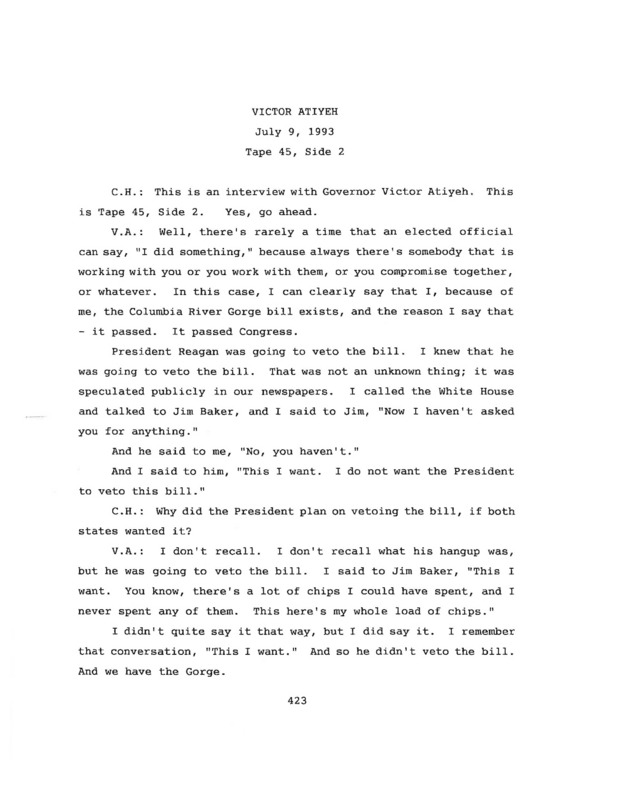
Victor Atiyeh served as governor of Oregon from 1979-1987. This is one part of an oral history interview that was originally recorded on over 60 cassette tapes by the Oregon Historical Society. It is accompanied by a typed transcript. This portion covers: Columbia River Gorge Commission and preservation of natural habitat, mid-1980s; federal versus state control in the Columbia River Gorge mid-1980s; personal heath complications as Governor, mid-1980s; taxation in Oregon: local control over school taxes, sales tax, timber taxes; regressive nature of sales tax.
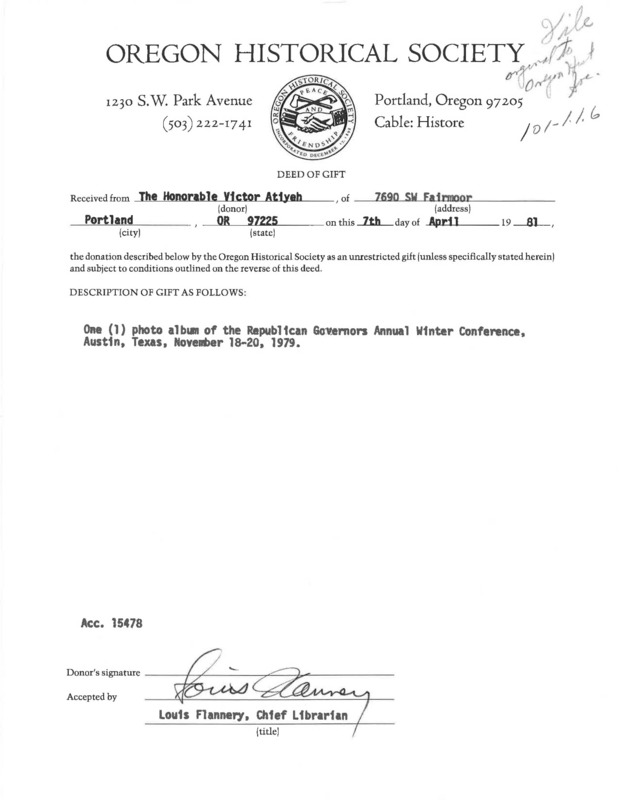
Donation receipt from the Oregon Historical Society for Atiyeh's donation of a photo album from the Republican Governors Annual Winter Conference in Austin, Texas.
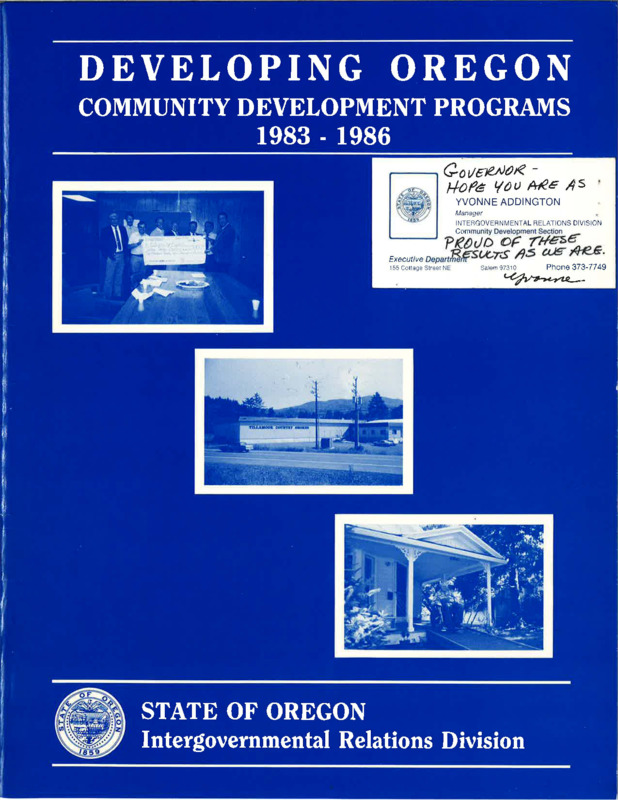
Report from the Intergovernmental Relations Division on the intensive work of the department in developing and improving the quality of life for Oregon communities.
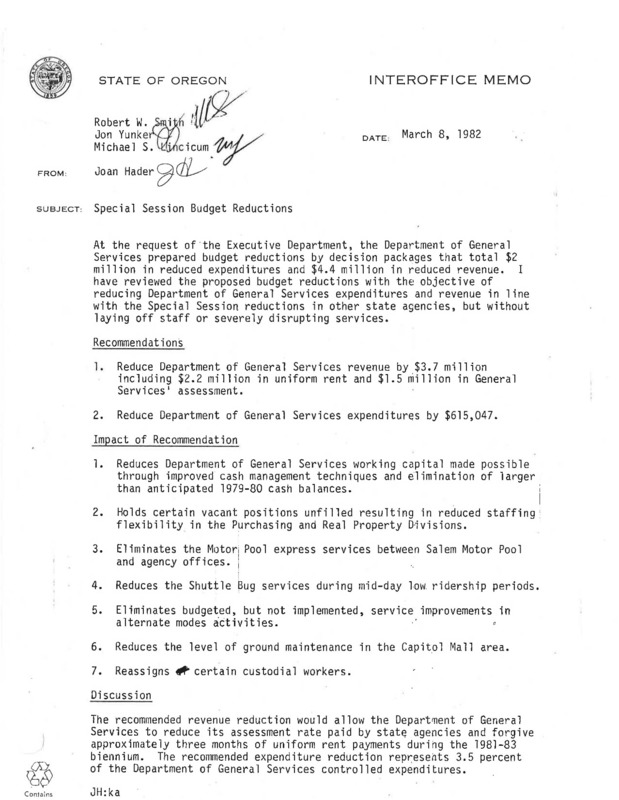
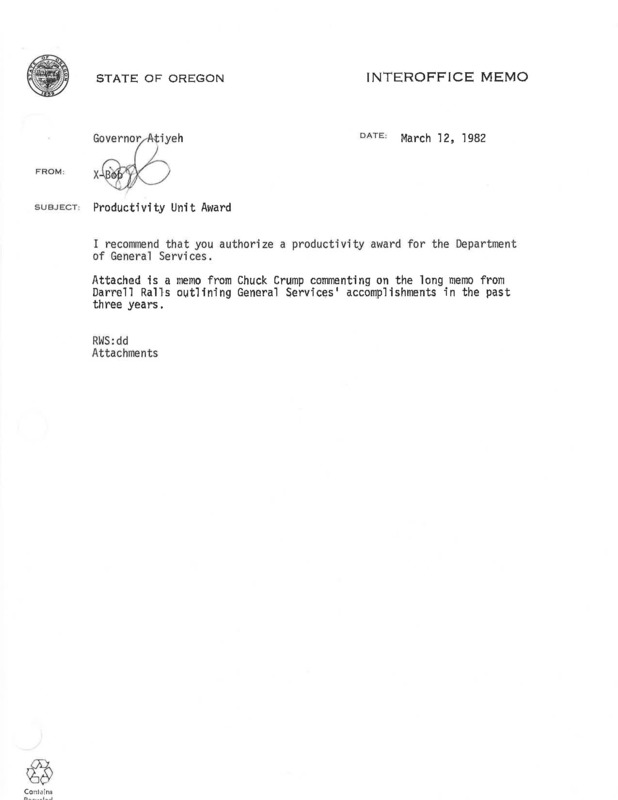
Memo from Bob Smith sent to Atiyeh regarding the nomination of the Productivity Unit Award includes attached accomplishments of the Department of General Services.
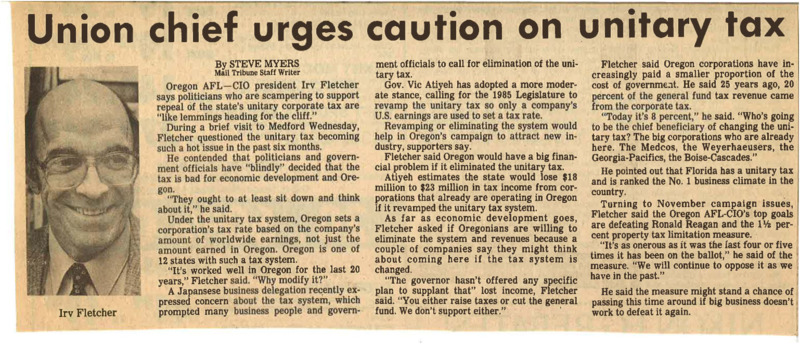
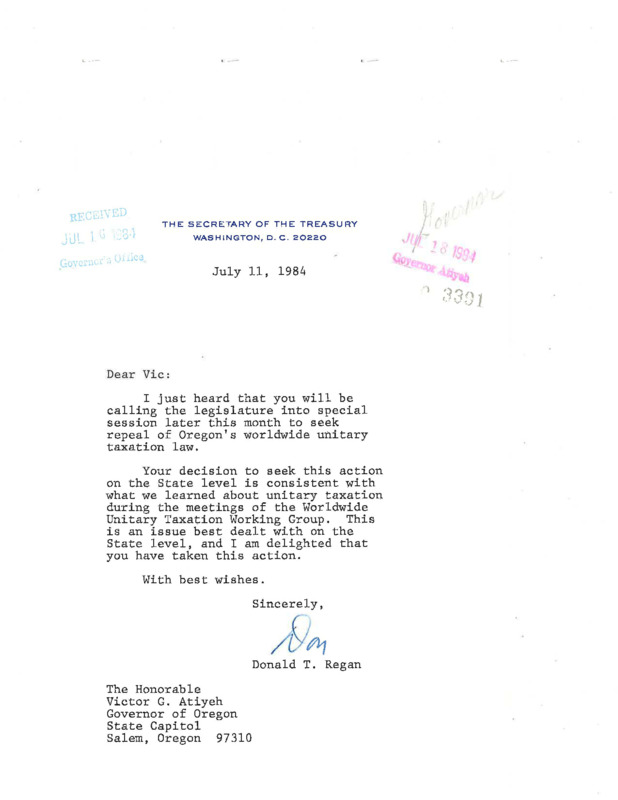
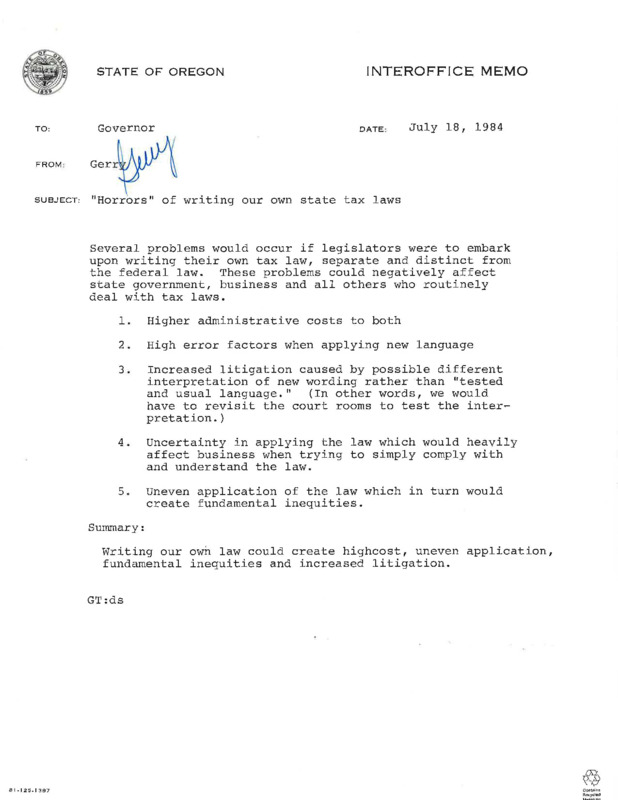
Letter from Donald T. Regan to Atiyeh commending him for calling the legislators into a special session to repeal unitary taxation. Unitary taxation was a tax policy that was regarded as being unfriendly to business interests.
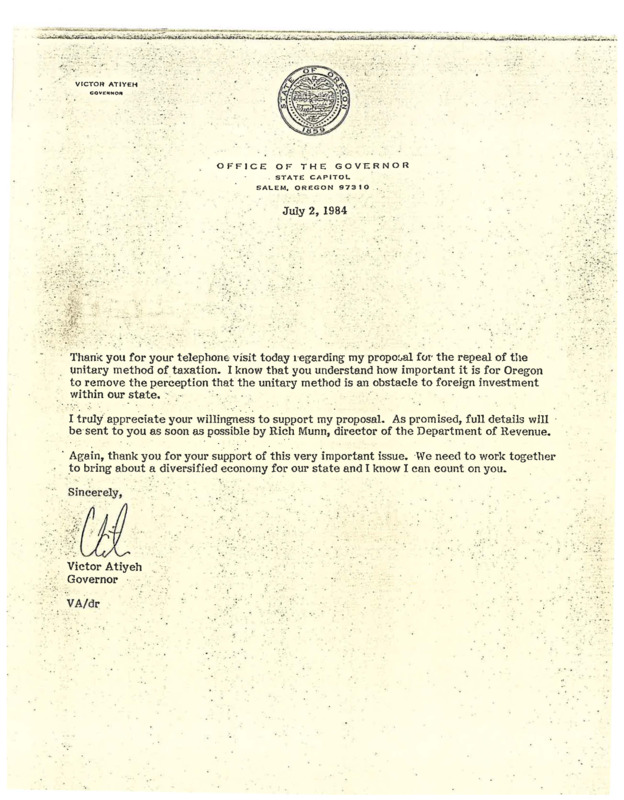
Printed summary of legislators who supported Atiyeh's proposal for a change in corporate taxation, including letter from Atiyeh thanking these legislators for their support.
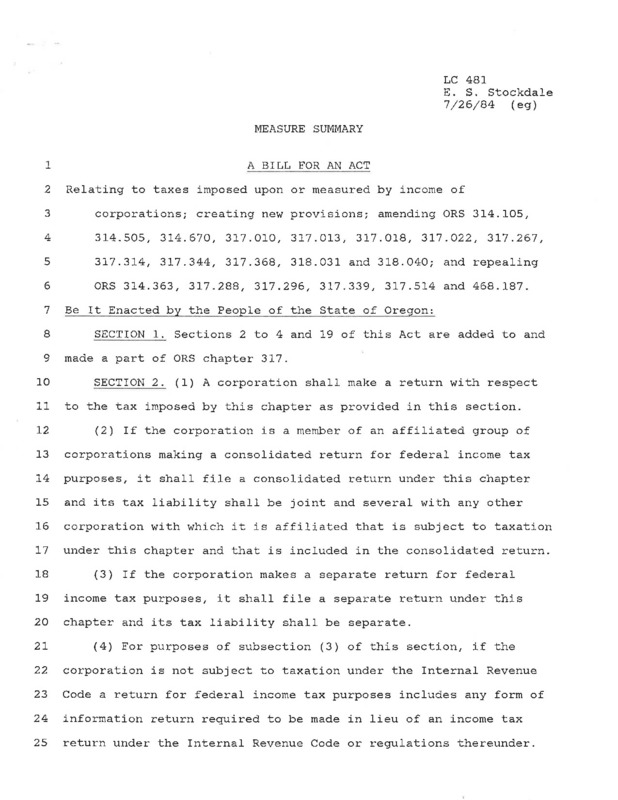
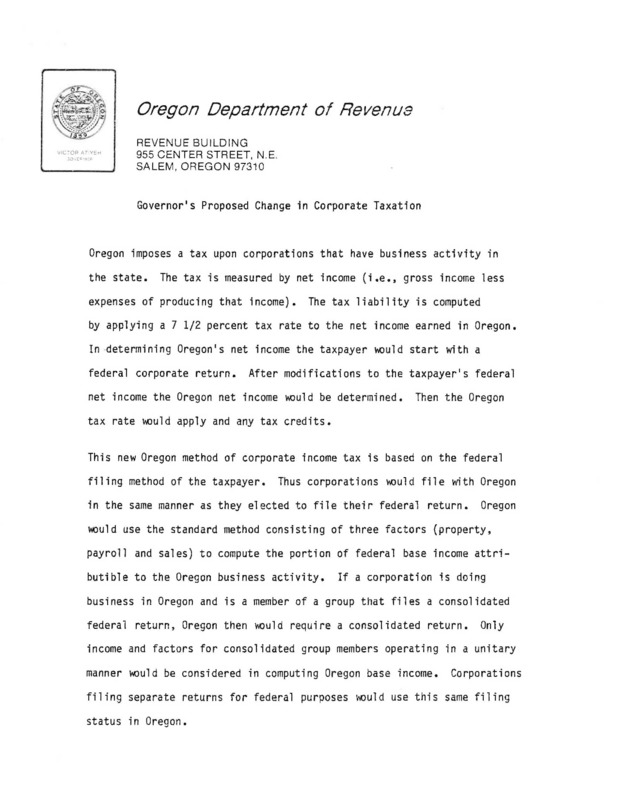
Printed report from the Oregon Department of Revenue on Atiyeh's proposal for a change in corporate taxation and eventually a repeal of unitary taxation.
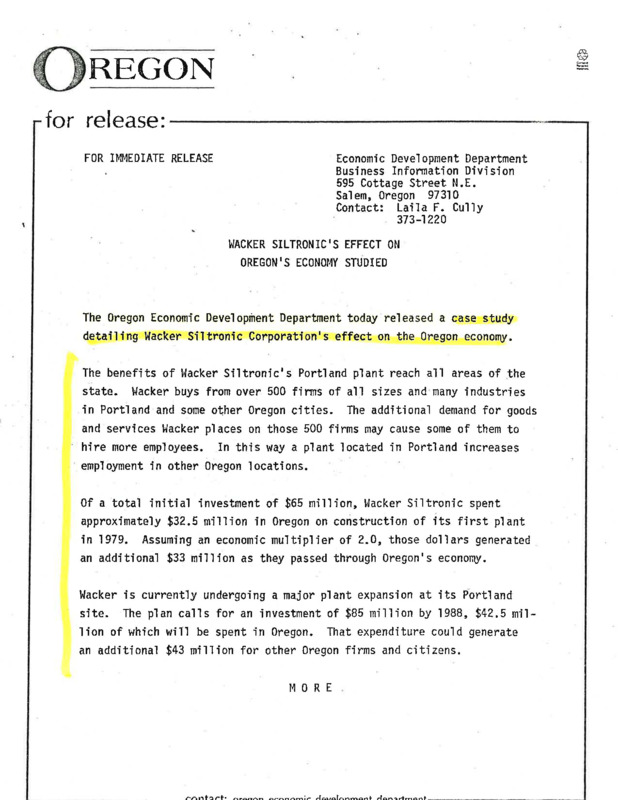
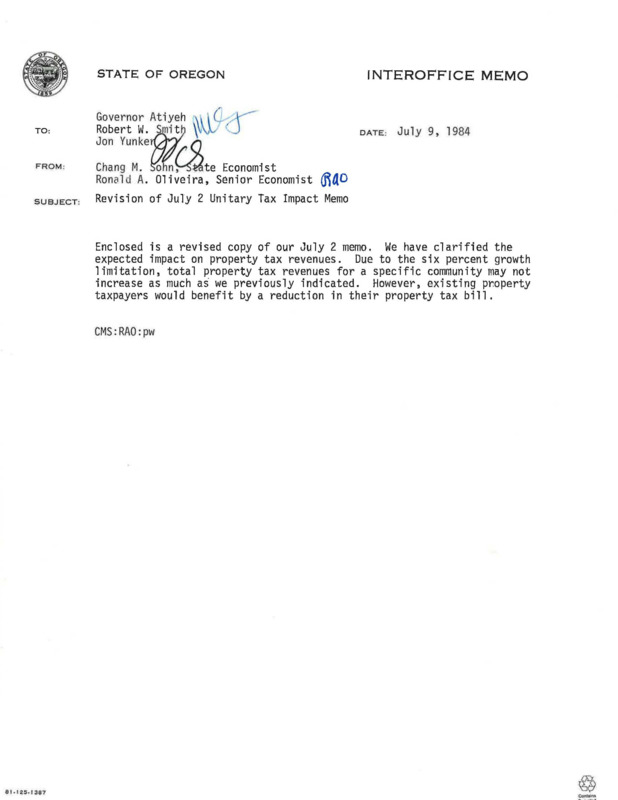
Memorandum from Chang M. Sohn, Economist, and Ronald A. Oliveira, Senior Economist, with attached information on the impact of the proposed unitary tax change including information on potential employment gains.
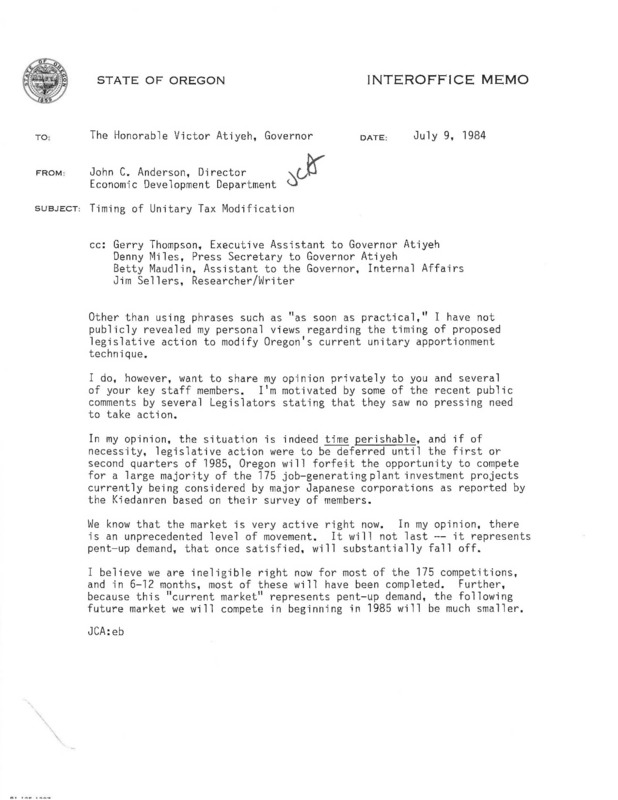
Memo from John C. Anderson, Director of Economic Development Department, to Atiyeh regarding his opinion on the timing of the proposal for unitary taxation.